Artwork
Saint Mark and Saint Luke
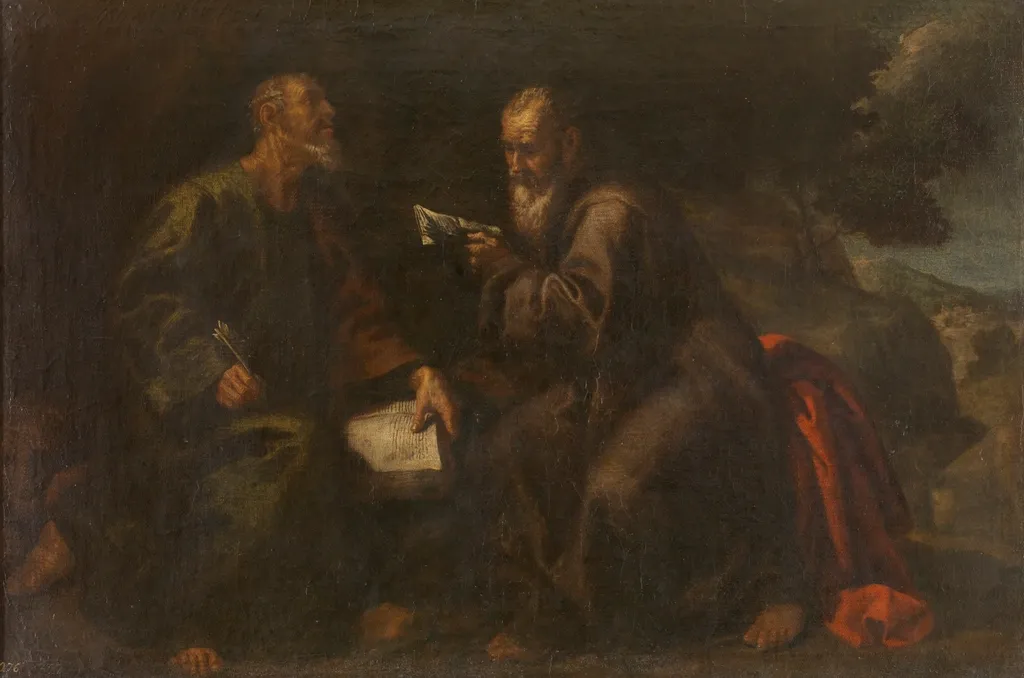
Saint Mark and Saint Luke is an oil painting by the Early Baroque Italian artist Juan Ribalta. It dates from 1625 and is held in the collection of the Museo del Prado.
About this work
Overview
In 1625 the Spanish Baroque artist Juan Ribalta painted a work titled Saint Mark and Saint Luke. Executed in oil on canvas, the composition presents two elderly, bearded figures seated outdoors, each clutching a book. The painting is part of the Museo del Prado’s collection and exemplifies Ribalta’s early‑Baroque style.
Subject & Meaning
The two men represent the Evangelists Mark and Luke, traditionally associated with the written Gospel. One figure holds a quill and a small volume, while the other studies a folded sheet, suggesting the act of recording and interpreting the Christian narrative. Their attentive gazes convey a contemplative exchange about sacred text.
Technique & Style
Ribalta employs a stark chiaroscuro, with deep shadows enveloping the figures and a faint illumination catching the edge of the book. The contrast of light and dark heightens the sense of intimacy and focus, while the dark robes and crumpled red cloth add texture and visual weight to the scene.
History & Provenance
Born to the painter Francisco Ribalta, Juan Ribalta absorbed the influence of Caravaggio’s dramatic lighting, which is evident in this work. Throughout his career he produced religious subjects and portraiture, and Saint Mark and Saint Luke now resides in the Prado, reflecting the museum’s acquisition of Spanish Baroque holdings.
Own this work as a print
Artist & collection
Artist
Juan Ribalta (1597 – October 1628) was a Spanish painter of the Baroque period. He was born and died in Valencia. His father, Francisco Ribalta, was a famous painter, active in the style of Caravaggio. Some sources said…