Artwork
Still Life with Game Fowl
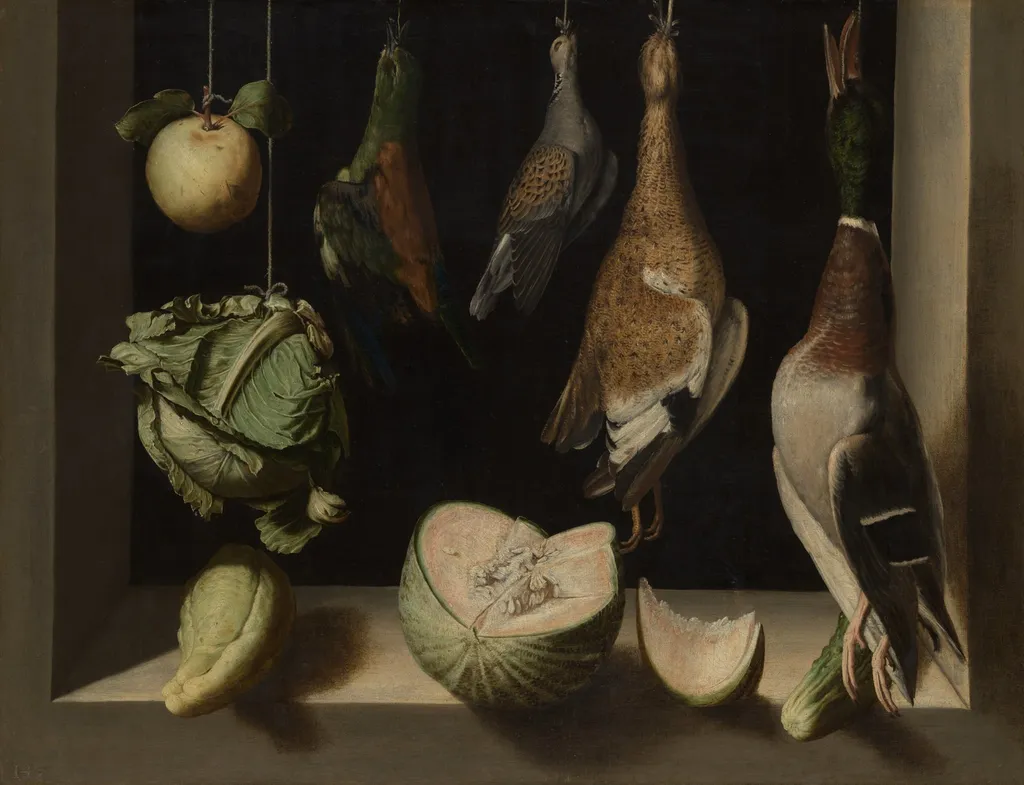
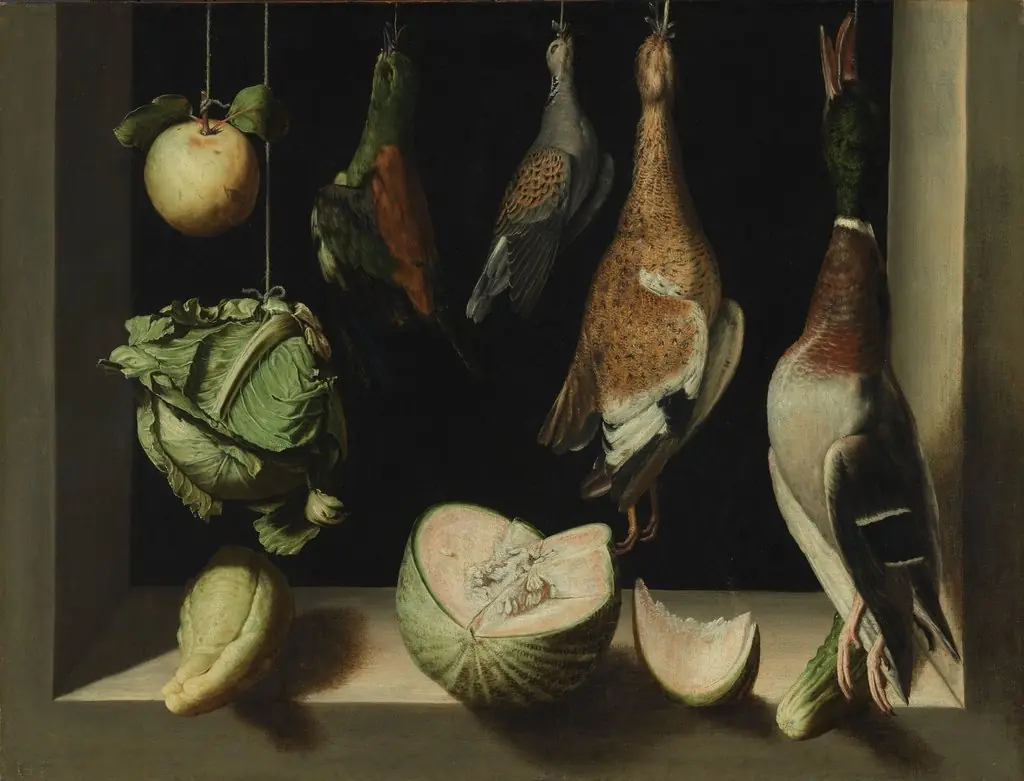
Still Life with Game Fowl is an oil painting by the Baroque artist Juan Sánchez Cotán. It dates from 1602 and is held in the collection of the Art Institute of Chicago. This oil on canvas painting, acquired by the Art Institute as its earliest European still life, dates from around 1602.
About this work
Overview
The work reflects the transition in Juan Sánchez Cotán’s career, created just before he withdrew from secular art to join the Carthusian order.
This oil on canvas painting, acquired by the Art Institute as its earliest European still life, dates from around 1602. It represents a pivotal moment in the development of the genre, when artists in Spain began to treat everyday objects as subjects worthy of careful, independent study. The work reflects the transition in Juan Sánchez Cotán’s career, created just before he withdrew from secular art to join the Carthusian order.
Subject & Meaning
The composition features game birds—quail and partridge—suspended alongside vegetables including a quince, cabbage, and melon. These items, arranged with deliberate precision, suggest both the abundance of the natural world and its transience. The objects are not merely decorative; their careful placement implies a contemplative order, aligning with the artist’s later spiritual转向, even before his monastic life.
Technique & Style
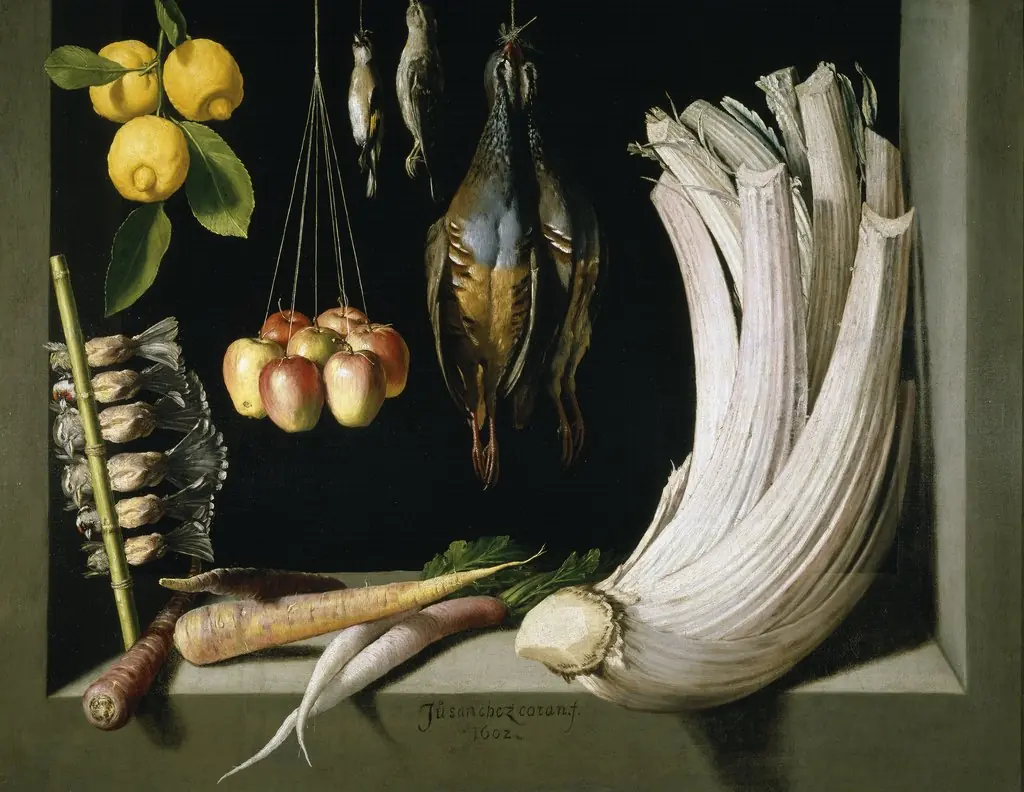
Cotán employs a shallow, niche-like space to contain the objects, enhancing their sculptural presence. Each form is rendered with meticulous detail, emphasizing texture and surface. A sharp, directional light casts strong contrasts between illumination and shadow, a technique known as chiaroscuro, which gives volume and depth to the still life. The arrangement follows a subtle diagonal, guiding the viewer’s eye through the composition with quiet rhythm.
History & Provenance
Painted shortly before Cotán abandoned his professional career in Toledo to become a lay brother at the Charterhouse of Granada in 1603, this work stands as one of his final secular commissions. Its survival is significant, as he ceased producing still lifes after entering religious life. The painting remained in Spain for centuries before entering the Art Institute’s collection, where it now serves as a rare early example of Spanish still-life painting.
Context
In early 17th-century Spain, still life emerged as a distinct genre, separate from religious or historical themes. Artists like Cotán responded to a growing interest in naturalism and the observable world. His approach—minimalist yet exacting—differed from the opulent Dutch still lifes of the same period, reflecting a quieter, more ascetic sensibility rooted in Spanish religious culture and the Counter-Reformation.
Legacy
Cotán’s disciplined compositions influenced later Spanish painters and contributed to the evolution of still life as a serious artistic pursuit. His use of spatial restraint and chiaroscuro anticipated elements of Baroque realism. Though he produced few secular works after 1603, this painting endures as a testament to his mastery of form and light, bridging the material and the metaphysical in early modern European art.
Artist & collection