Artwork
Rommelpot player
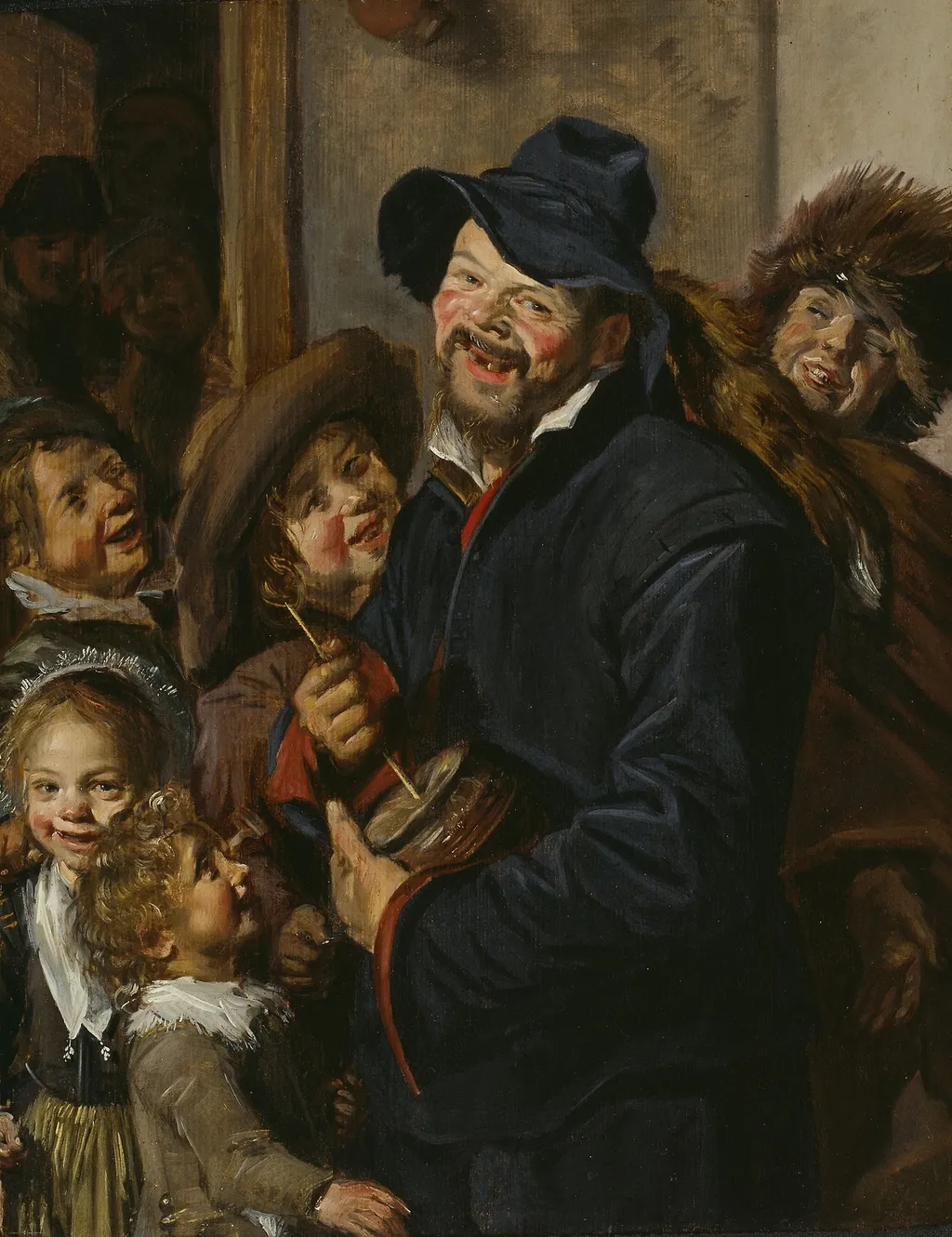
Rommelpot player is an oil painting by the Dutch Golden Age artist Judith Leyster. It dates from 1630 and is held in the collection of the Art Institute of Chicago.
About this work
Overview
Judith Leyster’s 1630 oil painting, titled *Rommelpot player*, portrays a convivial street scene in which a man, smiling beneath a dark hat, plays a friction drum while a boy and a girl watch attentively. The composition gathers figures of varied ages around the performer, creating a bustling tableau that captures a moment of everyday amusement in the Dutch Golden Age.
Subject & Meaning
The central figure operates a *rummelpott*, a simple drum sounded by rubbing a stick along its surface, an instrument popular in informal festivities. By focusing on ordinary people engaged in music-making, Leyster emphasizes the value of common leisure activities, reflecting contemporary interest in genre scenes that celebrate daily life rather than heroic or religious themes.
Technique & Style
Leyster employs a warm palette of earthy browns and deep reds, rendering the textures of coarse clothing and the drum’s wooden body with loose yet precise brushwork. Light falls softly across the figures, highlighting facial expressions and the gleam of the instrument, while the overall composition balances movement and stillness, a hallmark of her genre paintings.
History & Provenance
Although Leyster enjoyed a respectable reputation during her lifetime, her works were often reassigned to male contemporaries after her death. *Rommelpot player* was finally re‑attributed to her in the late nineteenth century, restoring her authorship. The painting now resides in the collection of the Art Institute of Chicago, where it remains on public display.
Own this work as a print
Artist & collection
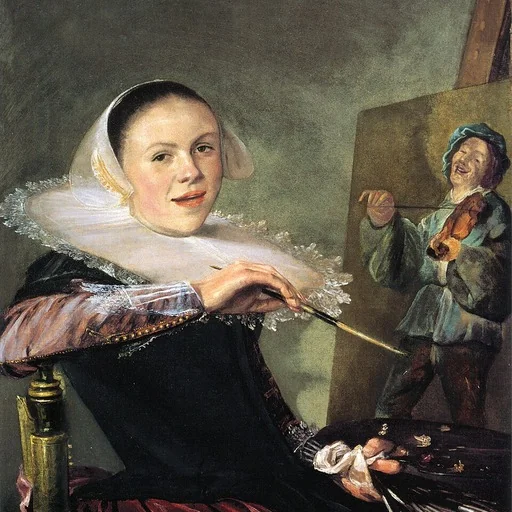
Artist
Judith Leyster lived in Haarlem, the Netherlands, in the 1600s—a time when painting was mostly a man’s game.