Artwork
The Longshoremen's Noon
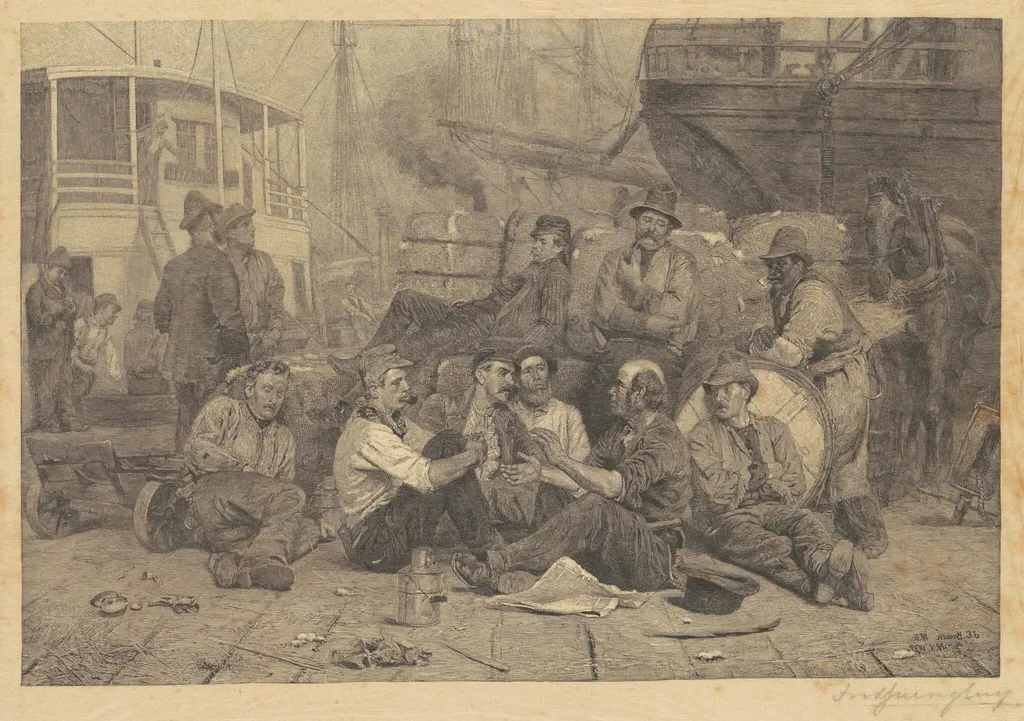
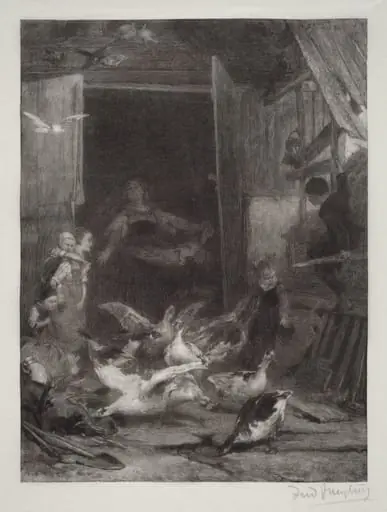
The Longshoremen's Noon is an ink print by the Impressionist artist Frederick Juengling. It dates from 1886 and is held in the collection of the National Gallery of Art.
About this work
Overview
Created in 1886 by Frederick Juengling, this wood engraving captures a quiet moment among dockworkers during their midday break. Rendered in black ink on thin wove paper, the print presents a candid group portrait of laborers at rest. Its monochrome palette and hand-drawn texture emphasize the raw, unidealized nature of the scene, reflecting the artist’s interest in everyday working life.
Subject & Meaning
The scene depicts a cluster of longshoremen relaxing on a dockside, some seated on crates, others leaning against ship structures or staircases. Pipes and playing cards suggest brief respite from physical labor. Their postures and expressions convey weariness and quiet camaraderie, offering a modest, unsentimental glimpse into the rhythms of maritime work without romanticizing or dramatizing it.
Technique & Style
Juengling employed fine, hand-carved lines to build form and shadow through cross-hatching, a method common in 19th-century printmaking. The dense, irregular strokes create a textured, sketch-like surface that enhances the gritty realism of the scene. The lack of smooth gradation and the deliberate roughness of the lines reinforce the unpolished character of the subjects and their environment.
History & Provenance
The print was produced during Juengling’s active period as a commercial engraver, likely for publication in a periodical or illustrated journal.
The print was produced during Juengling’s active period as a commercial engraver, likely for publication in a periodical or illustrated journal. While specific ownership records are limited, its survival in institutional collections suggests it was recognized for its documentary value. No evidence indicates it was part of a larger series, but it aligns with contemporaneous efforts to depict urban labor.
Context
In the late 1880s, American printmakers increasingly turned to scenes of industrial and manual labor as subjects worthy of artistic attention. Juengling’s work reflects this trend, paralleling the rise of social realism in visual culture. Unlike idealized depictions of workers, this image avoids narrative or moralizing, focusing instead on the unvarnished reality of downtime among dockhands.
Legacy
Though not widely exhibited during Juengling’s lifetime, the engraving endures as a quiet example of late 19th-century American printmaking that prioritized observation over embellishment. It contributes to a modest but significant body of work that documented the lives of working-class Americans with dignity and restraint, influencing later realist traditions in graphic art.
Artist & collection


 Plusieurs gardes nationaux qui n'avaient pas songé...
 Μεταφορά τραυματιών κατά τον ελληνοτουρκικό πόλεμο του 1897
 Une Rencontre en pleine eau
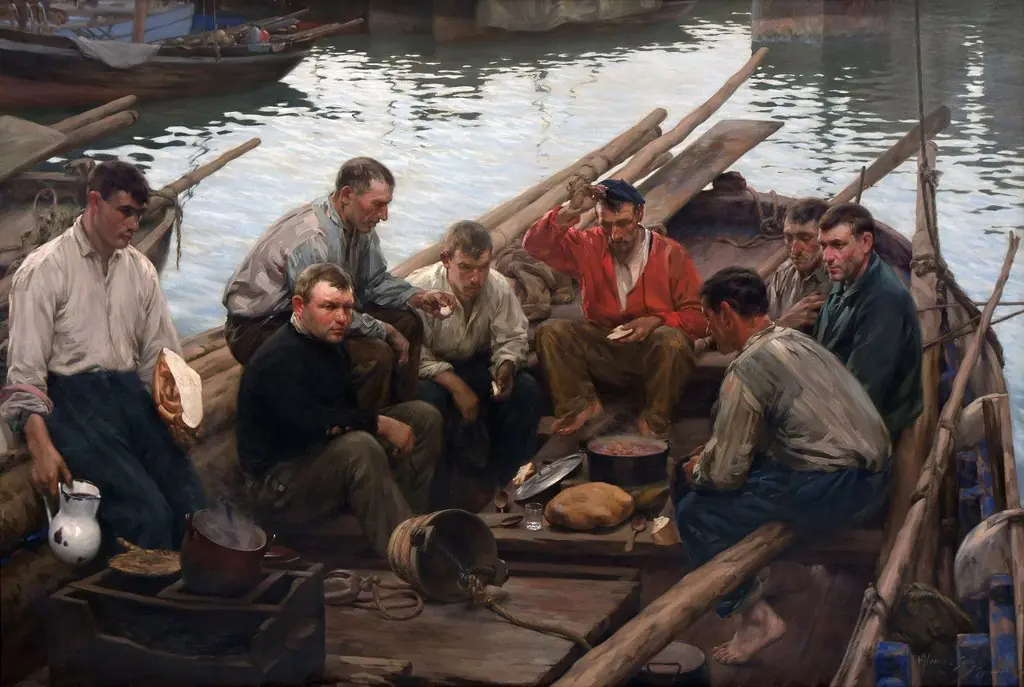 El pan nuestro de cada día
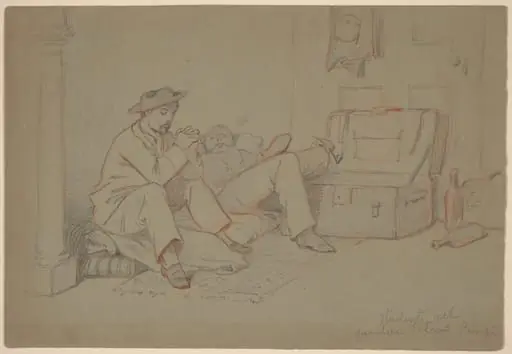 Students in the Latin Quarter, Paris
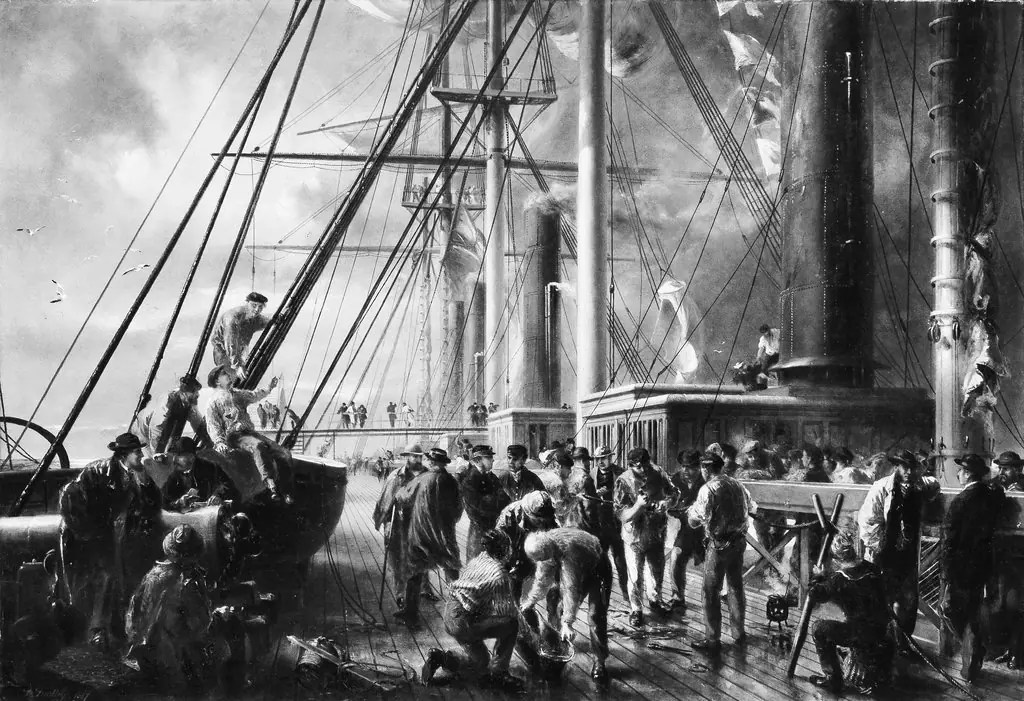 Making the Splice between the Shore End and the Ocean Cable
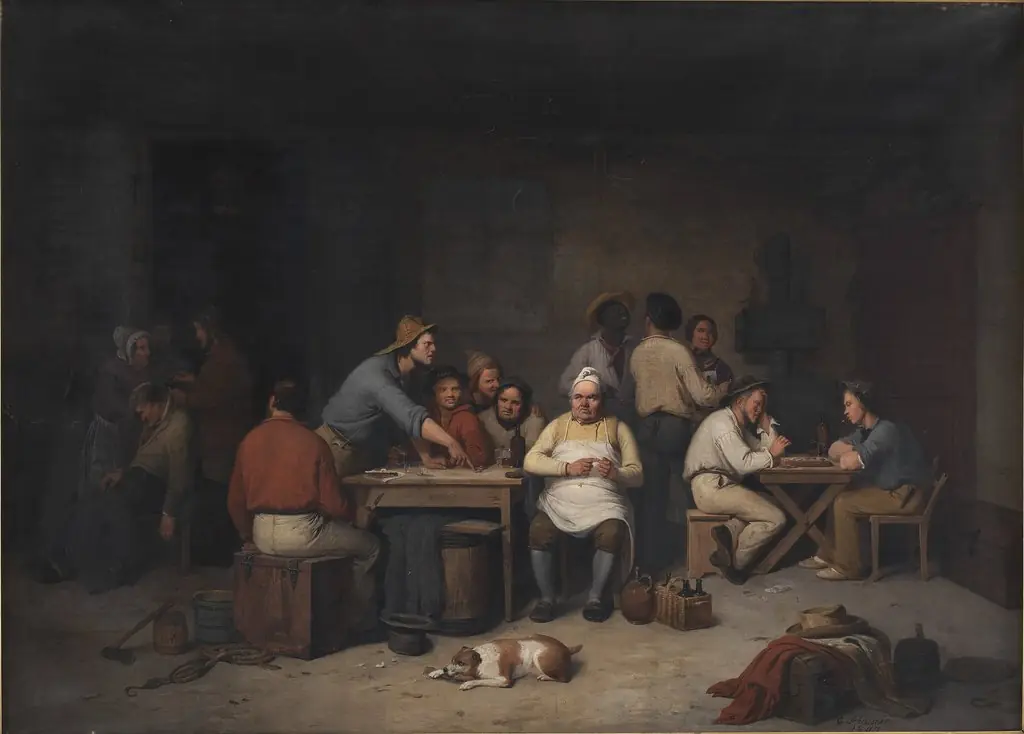 En scene i værtshuset Brokkensbod
 En scene i værtshuset Brokkensbod
 Marine: Fishing Boats on Shore, Man with Oars, Ship in Distance