Artwork
Students in the Latin Quarter, Paris
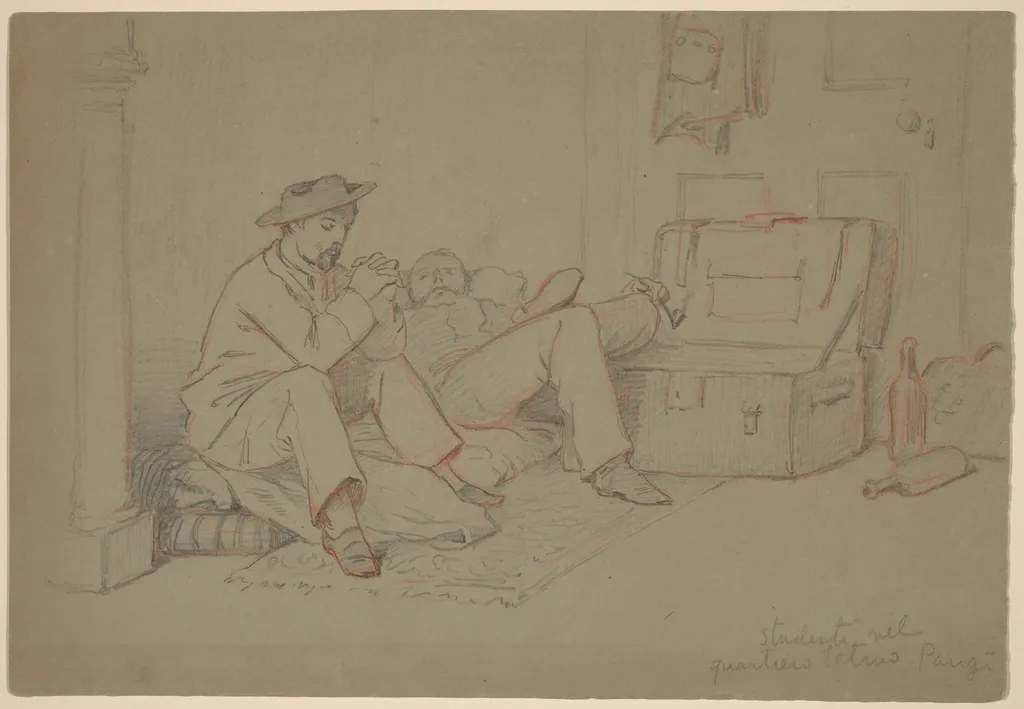
Students in the Latin Quarter, Paris is a graphite drawing by the Impressionist artist Elihu Vedder. It dates from 1858 and is held in the collection of the National Gallery of Art.
About this work
Overview
Executed in graphite and red colored pencil on green wove paper, it reflects Vedder’s early engagement with European artistic traditions during his time abroad.
Created around 1858, this drawing by American artist Elihu Vedder captures a quiet moment in Paris’s Latin Quarter. Executed in graphite and red colored pencil on green wove paper, it reflects Vedder’s early engagement with European artistic traditions during his time abroad. The work belongs to a series of observational sketches he made while studying in France, prior to his later fame for illustrating *The Rubaiyat of Omar Khayyam*.
Subject & Meaning
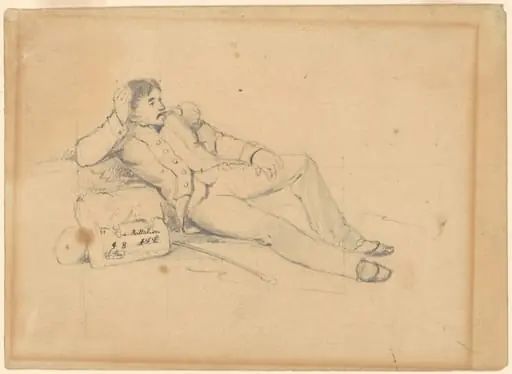
The scene portrays two young men in a modest interior—one seated on the floor with a pipe and hat, the other reclining on a couch with an open book. Their postures suggest a pause in study or conversation, evoking the rhythm of student life in 19th-century Paris. The presence of a trunk implies transient residence, hinting at the itinerant nature of academic life in the Latin Quarter, a hub for international learners.
Technique & Style
Vedder employed fine graphite lines and selective red pencil accents to define form and texture without heavy shading. The green paper provides a neutral undertone, enhancing the tonal contrast of the medium. Cross-hatching is used sparingly to suggest volume, particularly in the folds of clothing and the trunk’s surface, reflecting a disciplined, observational approach rooted in academic draftsmanship.
History & Provenance
The drawing was made during Vedder’s years in Paris, where he trained at the École des Beaux-Arts and absorbed the realist tendencies of French art. It remained in his personal collection until his death in 1923, after which it entered a public collection. Its preservation offers insight into his formative years before he turned toward allegorical and symbolic subjects.
Context
In the late 1850s, the Latin Quarter was a center for students, writers, and artists from across Europe and America. Vedder’s sketch aligns with a broader trend among American expatriates to document everyday life abroad, distinguishing their work from grand historical or mythological themes. The drawing reflects a growing interest in intimate, unidealized scenes as subjects worthy of artistic attention.
Legacy
Though less known than his later illustrations, this drawing exemplifies Vedder’s early command of line and composition. It stands as a quiet testament to the transnational exchange of artistic practice in the 19th century and contributes to the record of American artists engaging with European urban culture during their formative years.
Artist & collection

Artist
Elihu Vedder (26 February 1836 – 29 January 1923) was an American symbolist painter, book illustrator and poet from New York City.

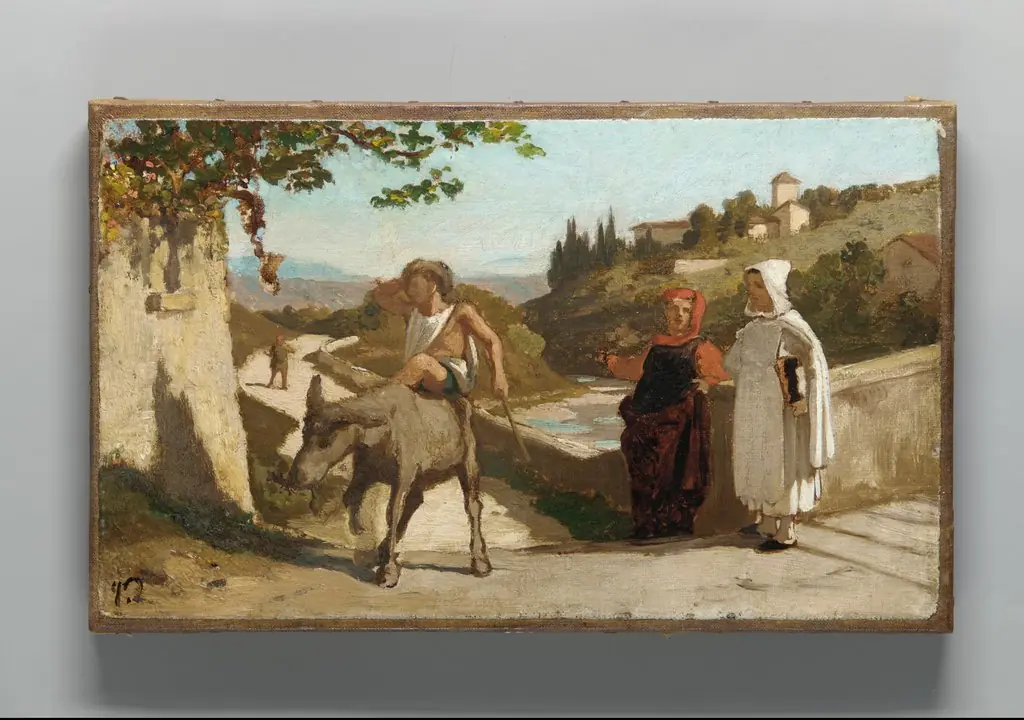 The Fable of the Miller, His Son, and the Donkey
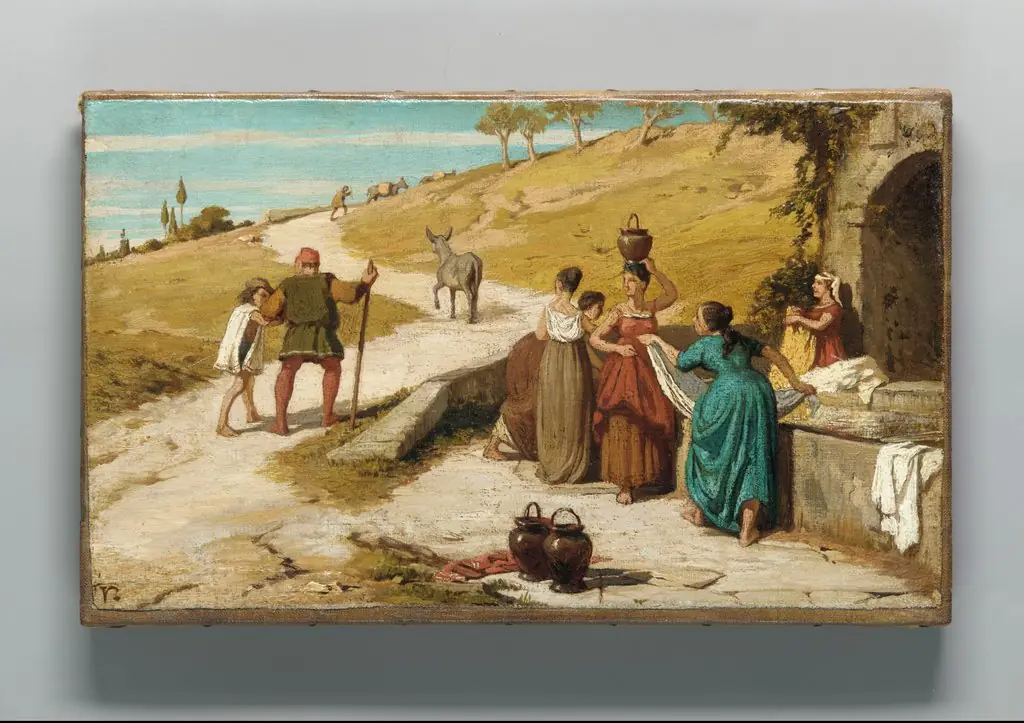 The Fable of the Miller, His Son, and the Donkey
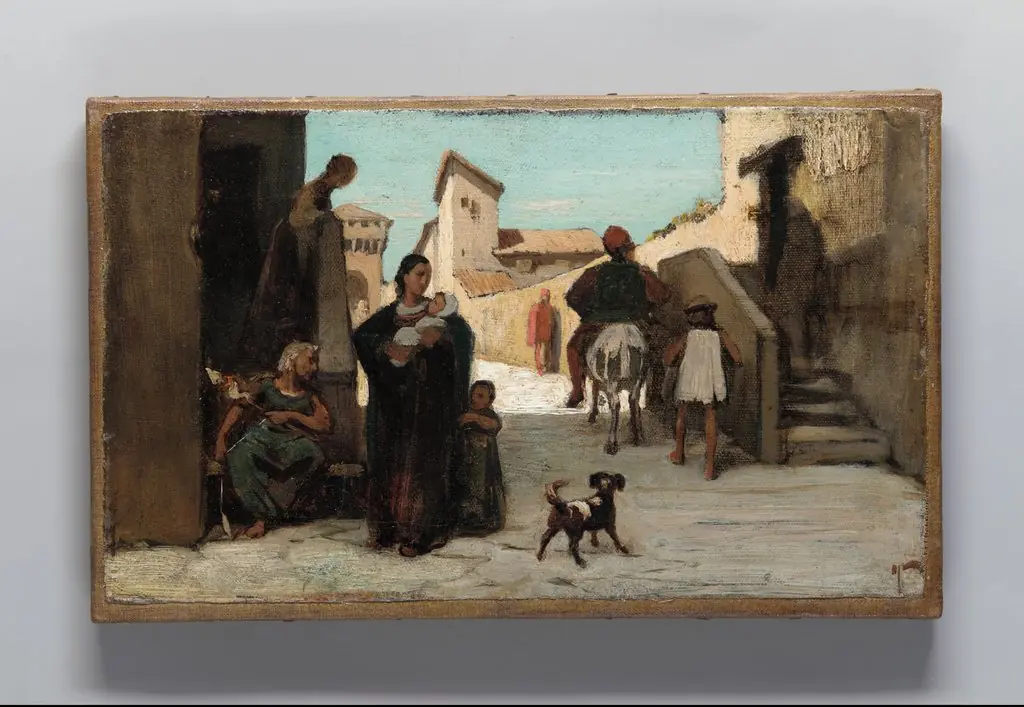 The Fable of the Miller, His Son, and the Donkey
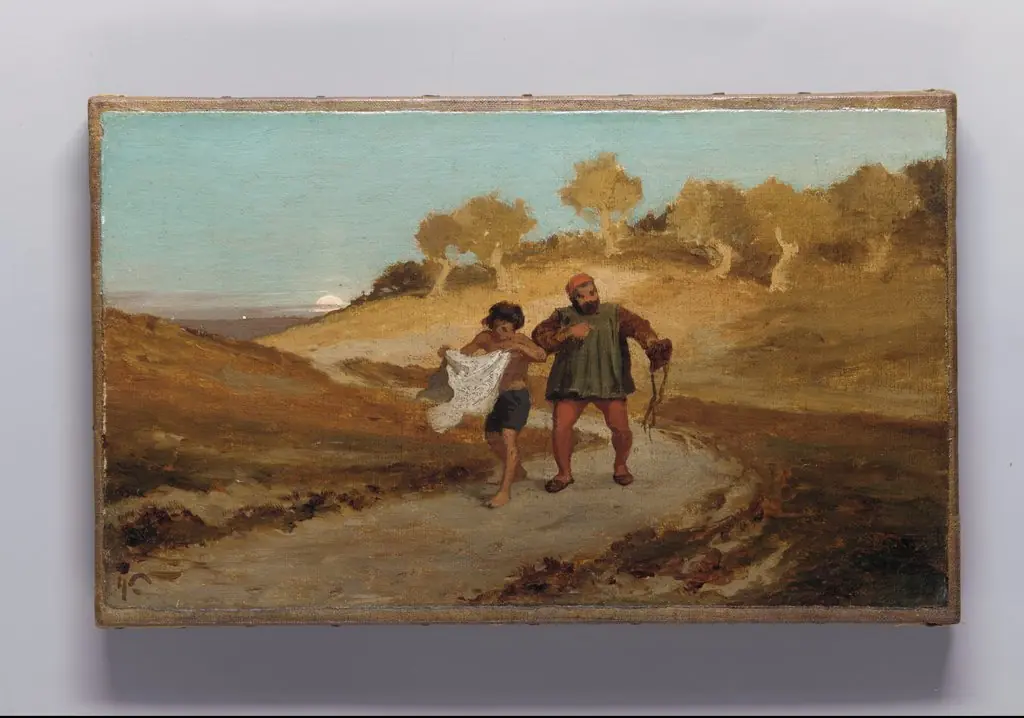 The Fable of the Miller, His Son, and the Donkey
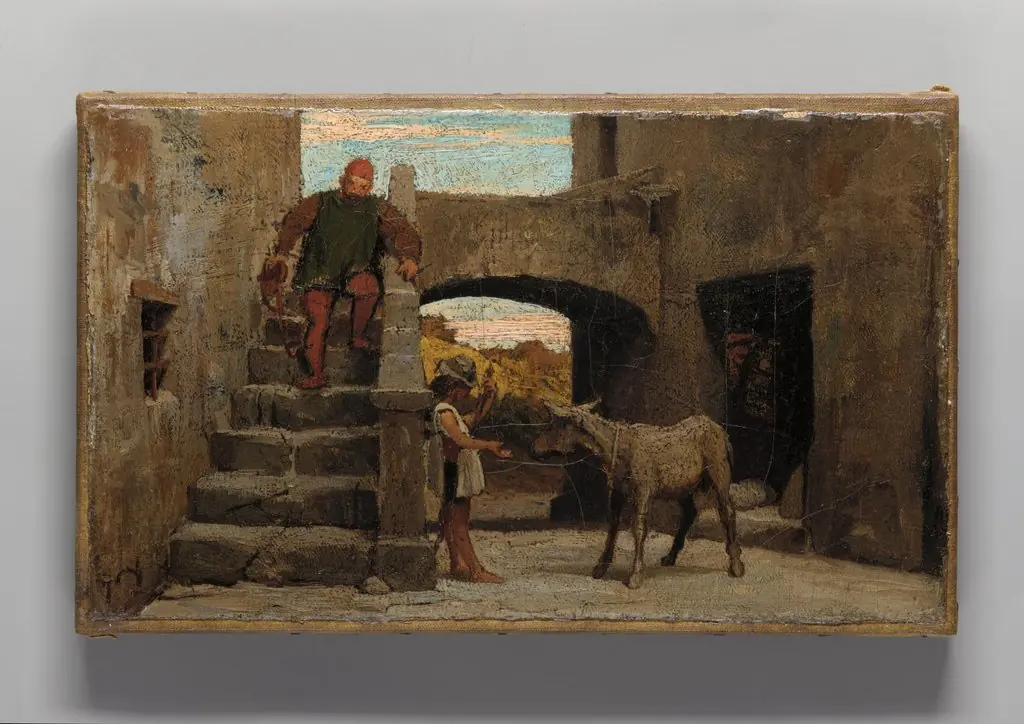 The Fable of the Miller, His Son, and the Donkey
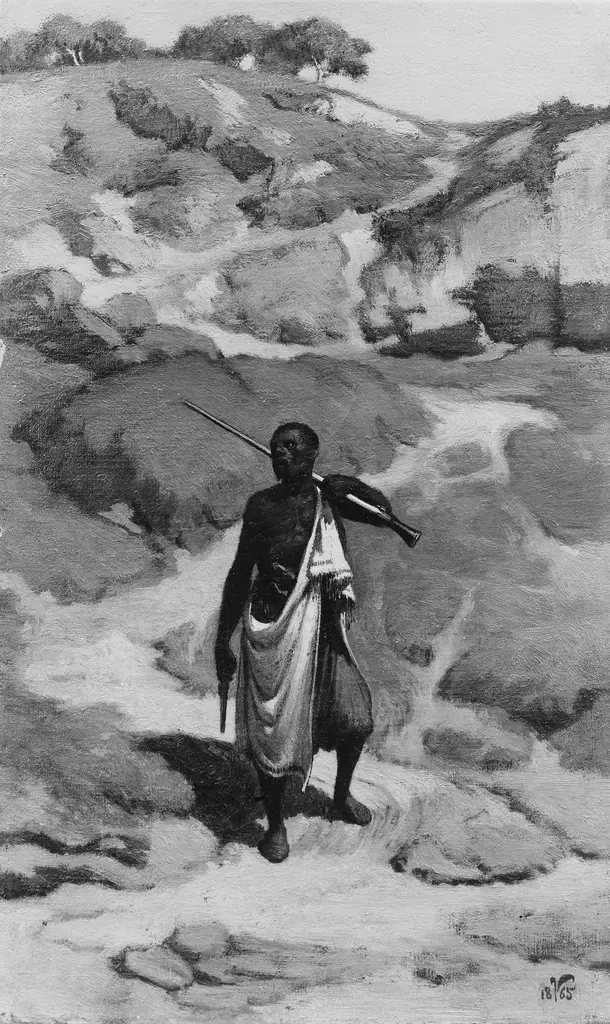 The African Sentinel
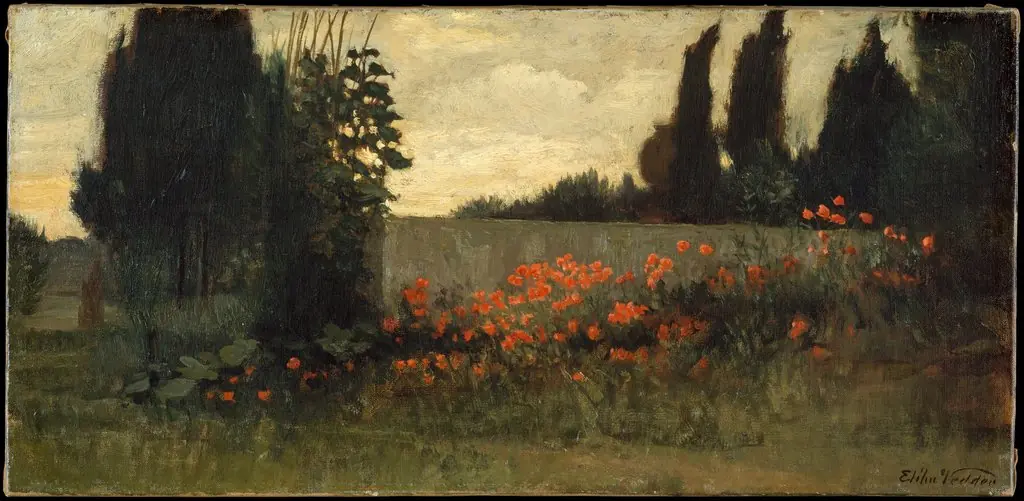 Cypress and Poppies
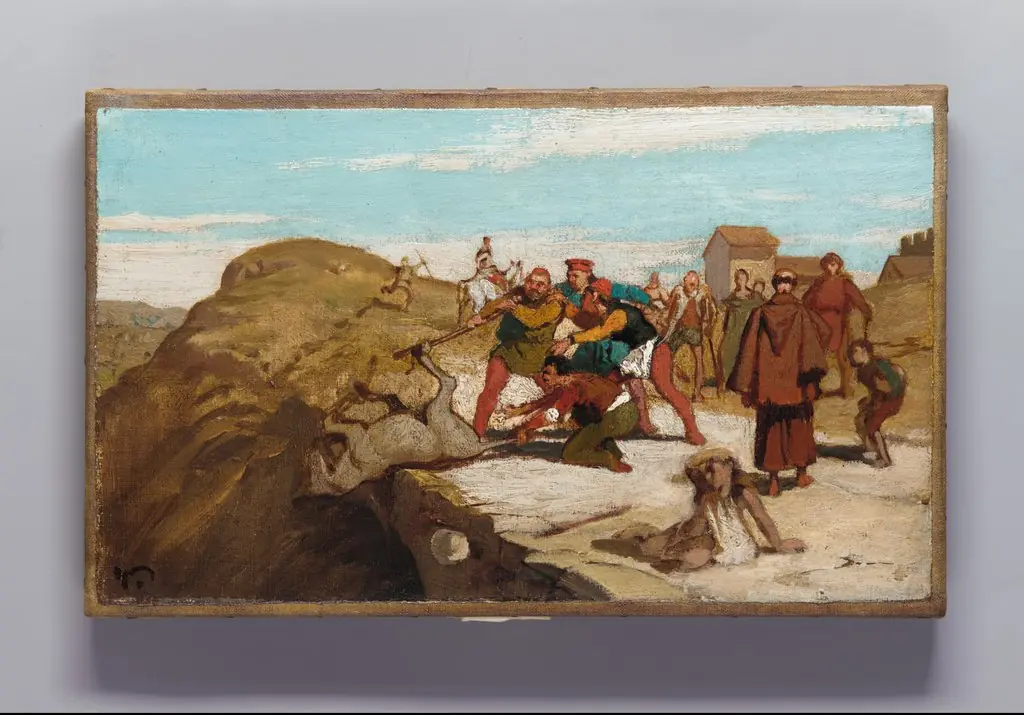 The Fable of the Miller, His Son, and the Donkey
![Two Soldiers Resting [verso], by Winslow Homer](https://artifactworldgallery.com/img/winslow-homer--two-soldiers-resting-verso--989d55e6cbbf0806-w320.webp)
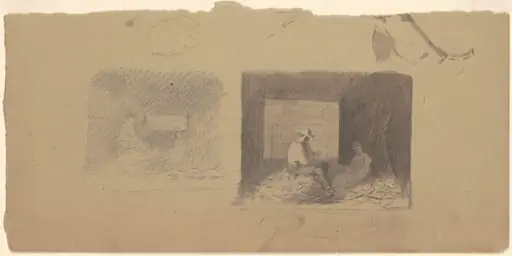
![From Alexandria to Ship Point [recto], by Winslow Homer](https://artifactworldgallery.com/img/winslow-homer--from-alexandria-to-ship-point-recto--b706e6db6edee2bc-w320.webp)