Artwork
Folk-Healer
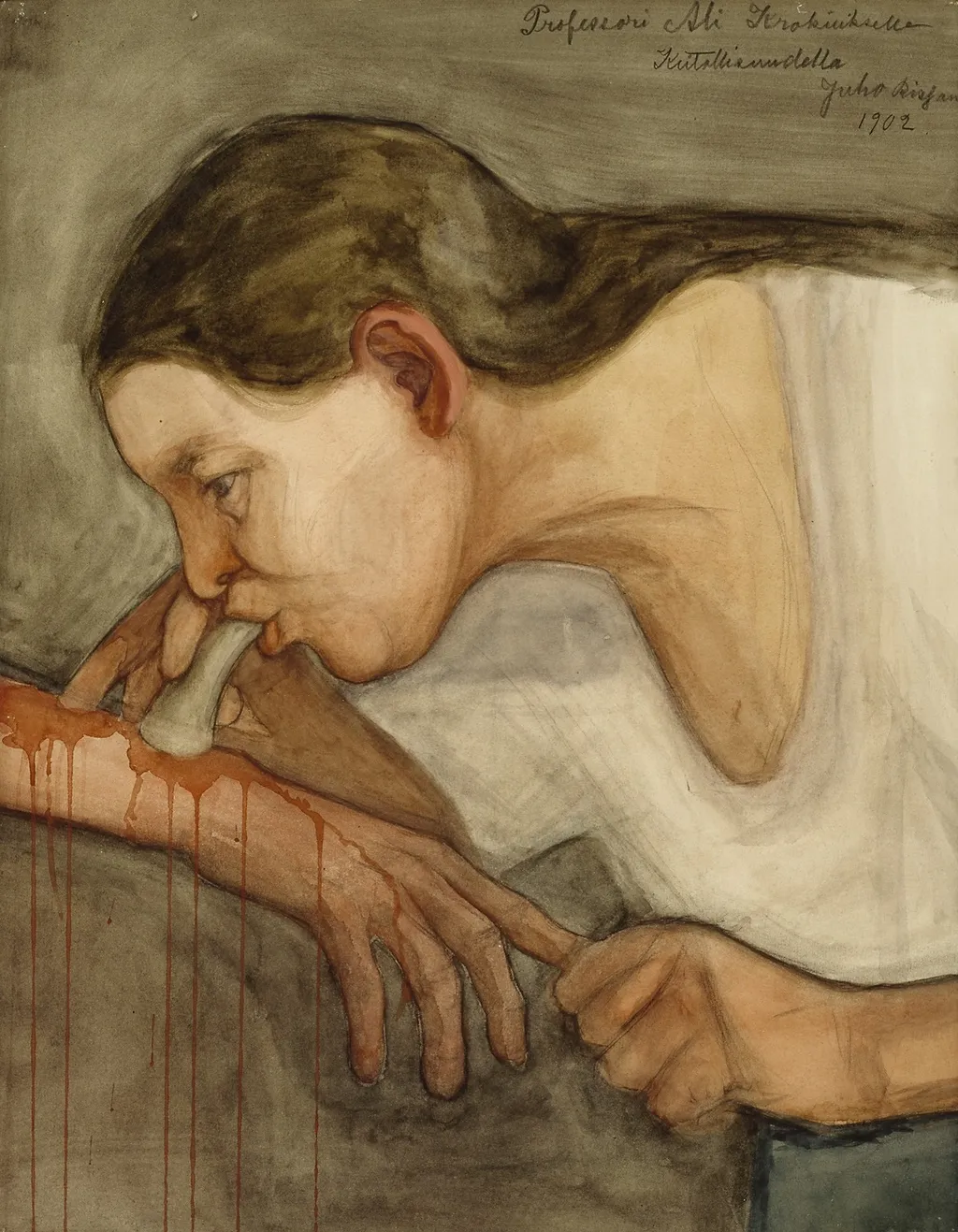
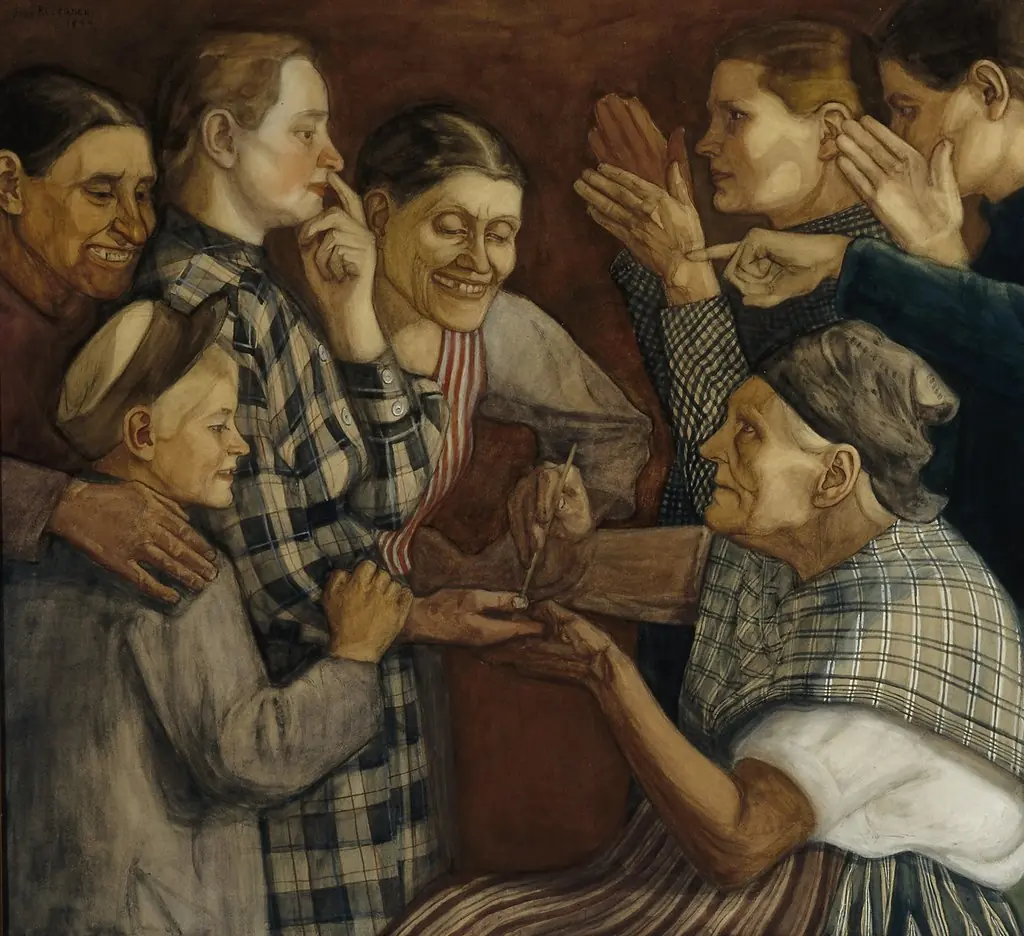
Folk-Healer is an unspecified painting by the Realist artist Juho Rissanen. It dates from 1900 and is held in the collection of the Finnish National Gallery.
About this work
Overview
Its composition isolates two figures against a deep, shadowed backdrop, emphasizing physical contact and emotional gravity without overt narrative explanation.
Folk-Healer is a 1900 oil painting by Finnish artist Juho Rissanen, currently housed in the Ateneum Art Museum in Helsinki. The work presents a quiet yet unsettling moment drawn from rural healing practices, rendered with restrained intensity. Its composition isolates two figures against a deep, shadowed backdrop, emphasizing physical contact and emotional gravity without overt narrative explanation.
Subject & Meaning
The painting portrays a woman engaged in a traditional remedy—extracting what is believed to be poison or ill humors by suction from a wounded arm. Blood stains the skin, and her focused expression suggests ritualistic determination. The scene reflects pre-modern folk medicine in Finland, where such practices persisted in remote communities, blending superstition with tangible care amid limited access to formal healthcare.
Technique & Style
Rissanen employs a muted palette dominated by dark browns and grays, with stark contrasts highlighting the pale arm and the woman’s face. Brushwork is tight and deliberate, avoiding theatricality; the blood is rendered with clinical precision, not sensationalism. The absence of context—no room, no tools—forces attention onto the act itself, enhancing its psychological weight.
History & Provenance
Completed in 1900, the painting entered the Ateneum’s collection shortly after its creation, likely acquired during a period when Finnish national identity was being cultivated through art that documented indigenous customs. It has remained in the museum’s holdings since, consistently displayed as part of late 19th- to early 20th-century Finnish realism.
Context
At the turn of the century, Finland was under Russian rule, and artists increasingly turned to local traditions as expressions of cultural autonomy. Rissanen’s depiction of folk healing aligns with broader efforts to record vanishing rural lifeways, not as exoticism but as authentic human experience—part of a movement that valued the dignity of ordinary, often overlooked practices.
Legacy
Folk-Healer endures as a quiet testament to the intersection of medicine, belief, and gender in early modern Finland. It avoids romanticization, instead offering a sober record of bodily care rooted in tradition. The work continues to prompt reflection on how societies have historically managed pain, illness, and the unknown through embodied ritual.
Artist & collection