Artwork
Lattianpesijät
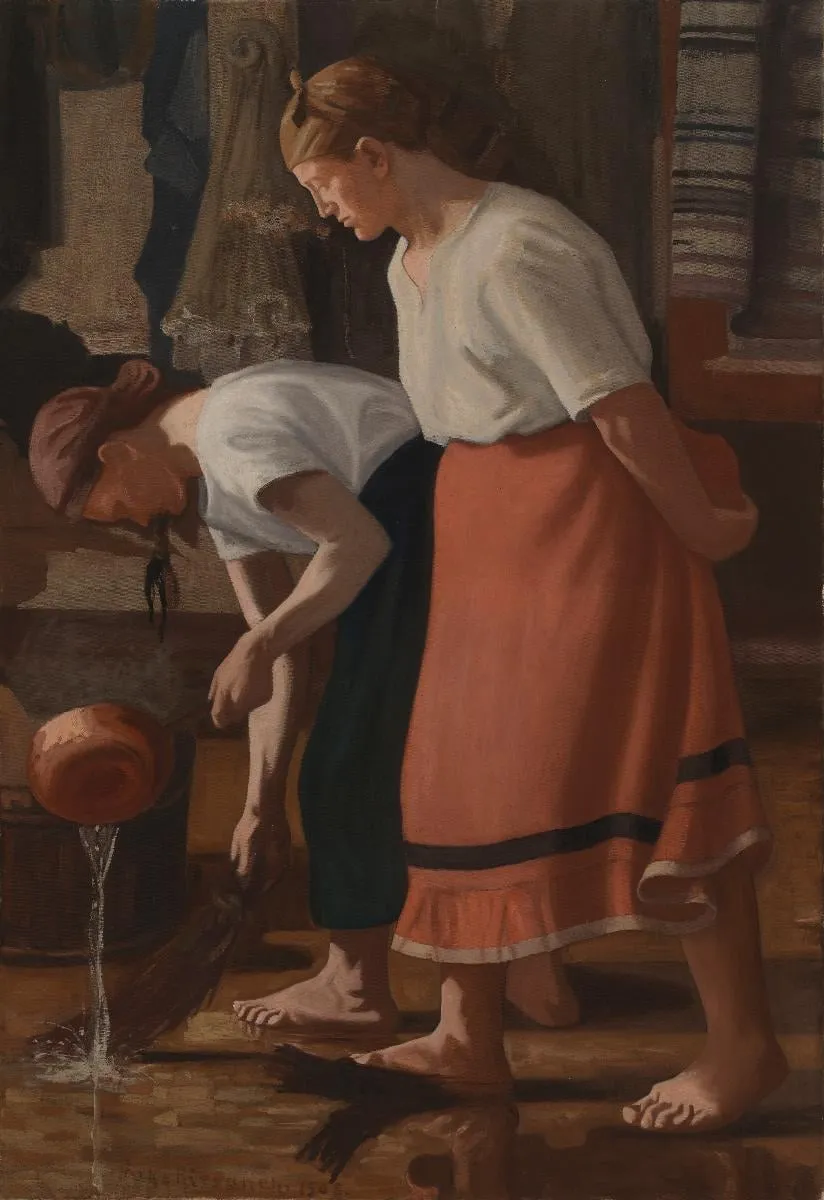
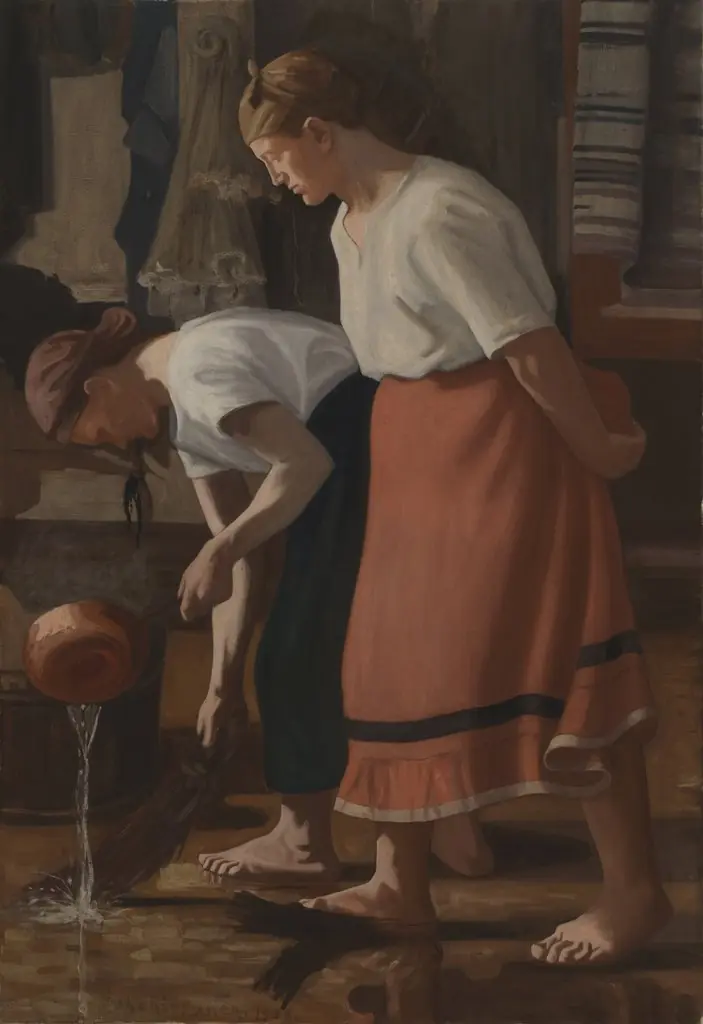
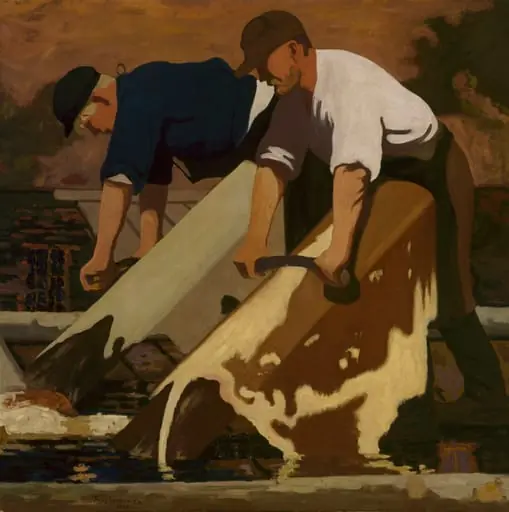
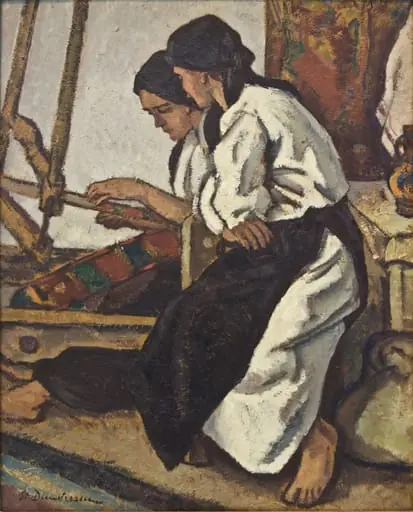
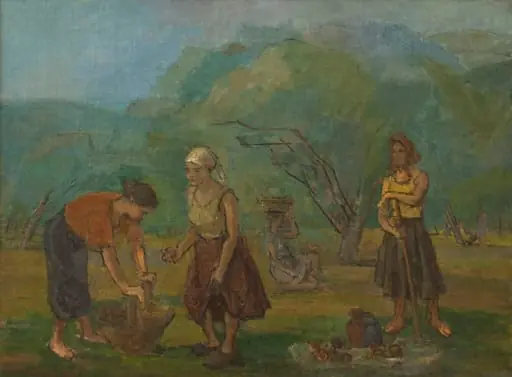
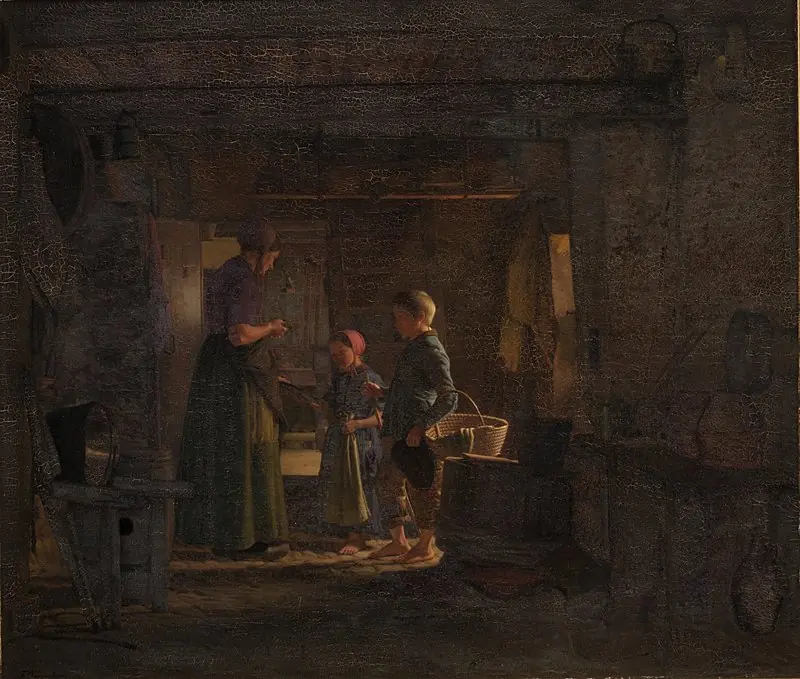
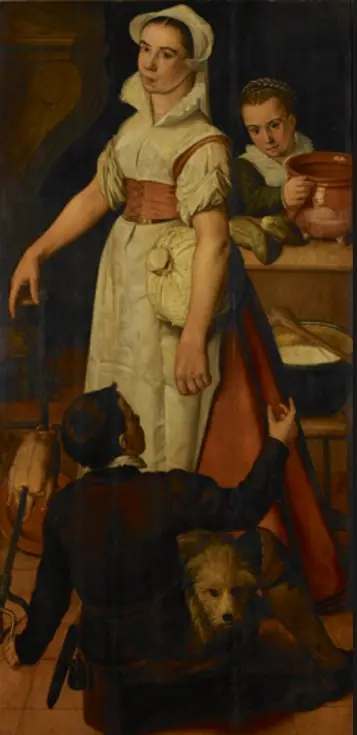
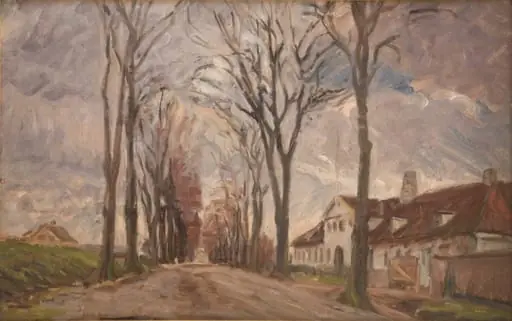
Lattianpesijät is an unspecified painting by Juho Rissanen. It is held in the collection of the Finnish National Gallery. This image portrays two women engaged in the quiet act of washing feet within a modest interior.
About this work
Overview
No overt narrative is present, yet the intimacy of the gesture invites contemplation of daily rituals and shared labor.
This image portrays two women engaged in the quiet act of washing feet within a modest interior. The scene, rendered in warm tones and soft brushwork, emphasizes stillness and mutual care. The setting—wooden floors, hanging textiles, and woven baskets—suggests a rural, domestic space. No overt narrative is present, yet the intimacy of the gesture invites contemplation of daily rituals and shared labor.
Subject & Meaning
The figures, both dressed in simple garments, are depicted in a moment of physical service that implies trust and closeness. Their postures and focused attention suggest a routine act, possibly rooted in cultural or familial tradition. The absence of facial detail shifts emphasis to the gesture itself, framing the scene as an ode to unspoken bonds rather than individual identity.
Technique & Style
The artist employs muted, earthy hues and gentle transitions to evoke warmth and calm. Brushstrokes are loose yet deliberate, avoiding sharp definition in favor of atmospheric harmony. Light falls evenly across the room, softening edges and unifying the figures with their surroundings. The composition is deliberately unadorned, reinforcing the humility of the moment.
History & Provenance
The work is attributed to Juho Rissanen, a Finnish painter active in the late 19th and early 20th centuries. Though little documented, his oeuvre often centered on rural life and domestic scenes. This piece likely originated from his broader interest in portraying everyday Finnish households with quiet dignity, though its exact date and early ownership remain unverified.
Context
Created during a period of rising national consciousness in Finland, the image reflects a broader artistic trend toward valuing peasant life and home-centered rituals. While not overtly political, such scenes subtly affirmed cultural identity through ordinary acts. Similar works by contemporaries often depicted women in domestic roles, framing them as anchors of community continuity.
Legacy
Rissanen’s work, including this piece, remains largely outside mainstream art historical narratives. It survives primarily in regional collections and private holdings, valued for its unembellished portrayal of rural Finnish life. Its quiet realism offers a counterpoint to more dramatic or idealized depictions of the era, preserving a subtle record of domestic intimacy.
Artist & collection