Artwork
The Cottage by the Roadside, Stormy Sky
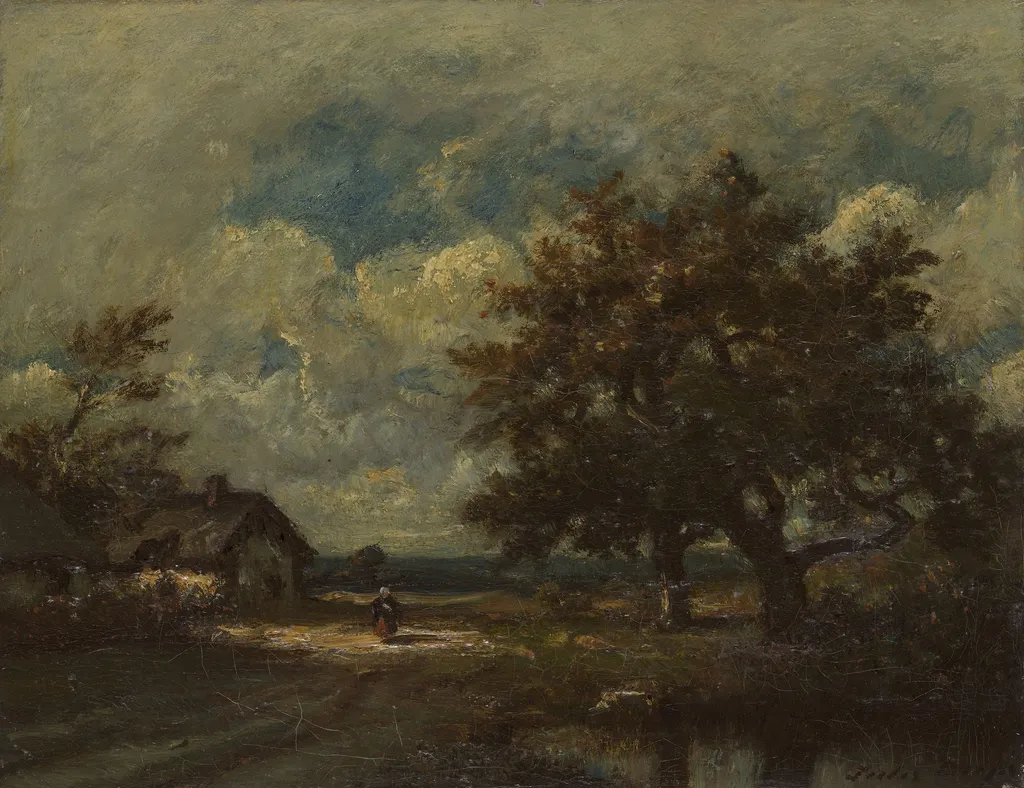
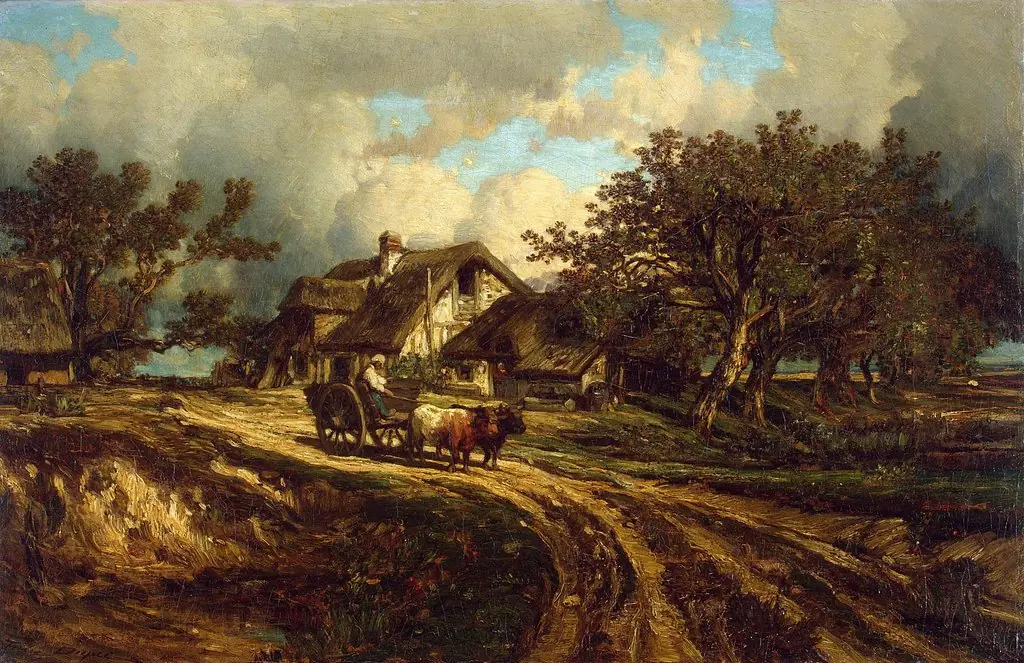
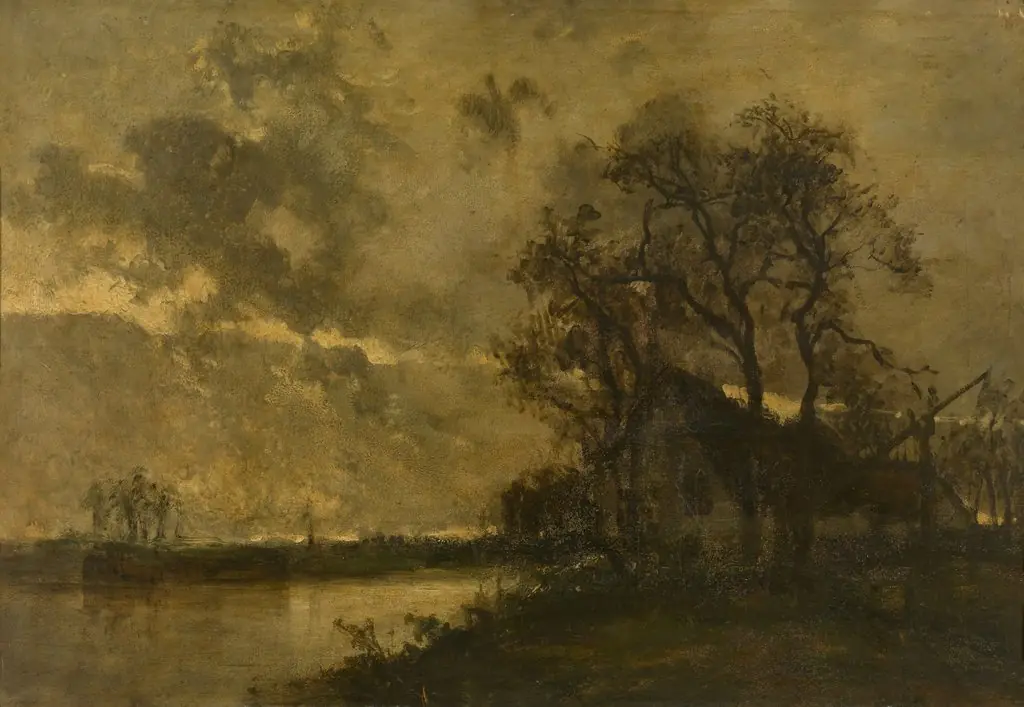
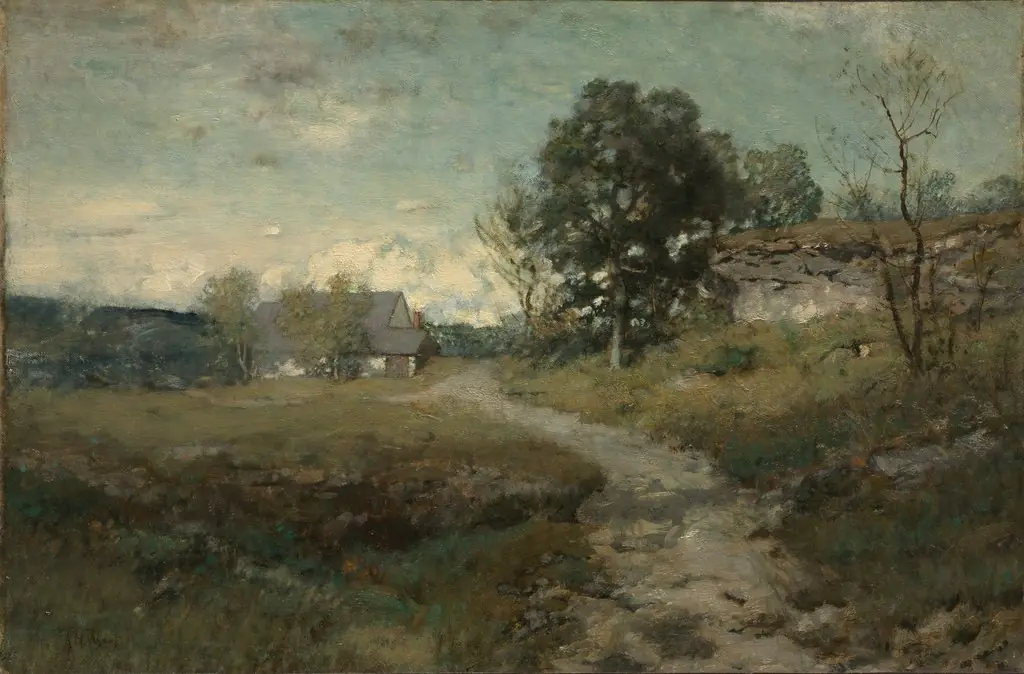
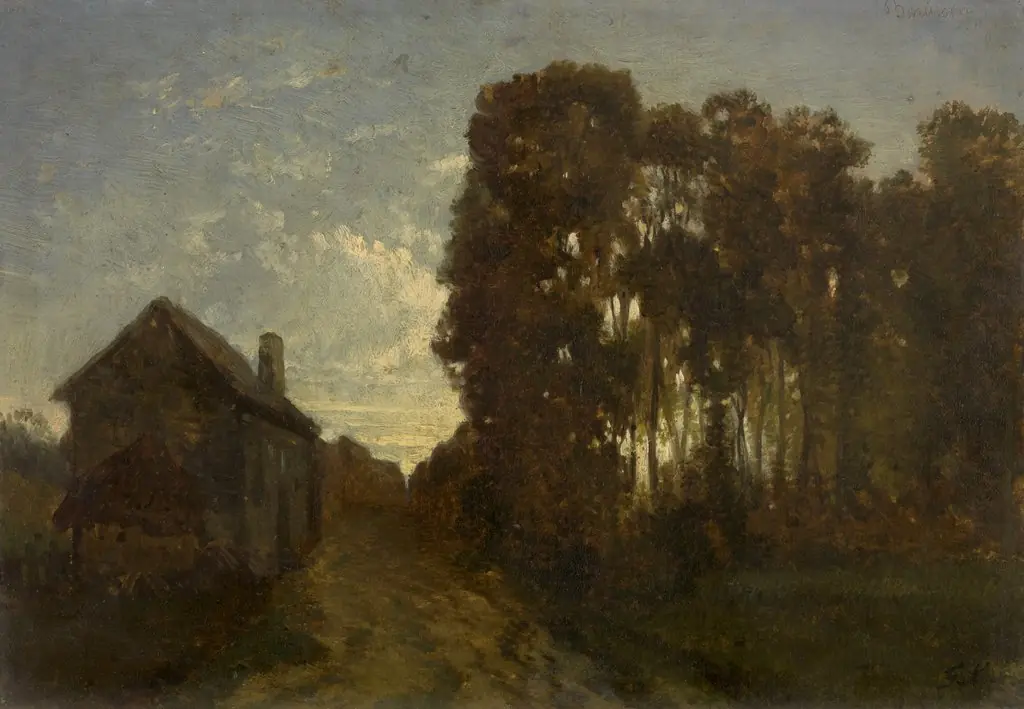
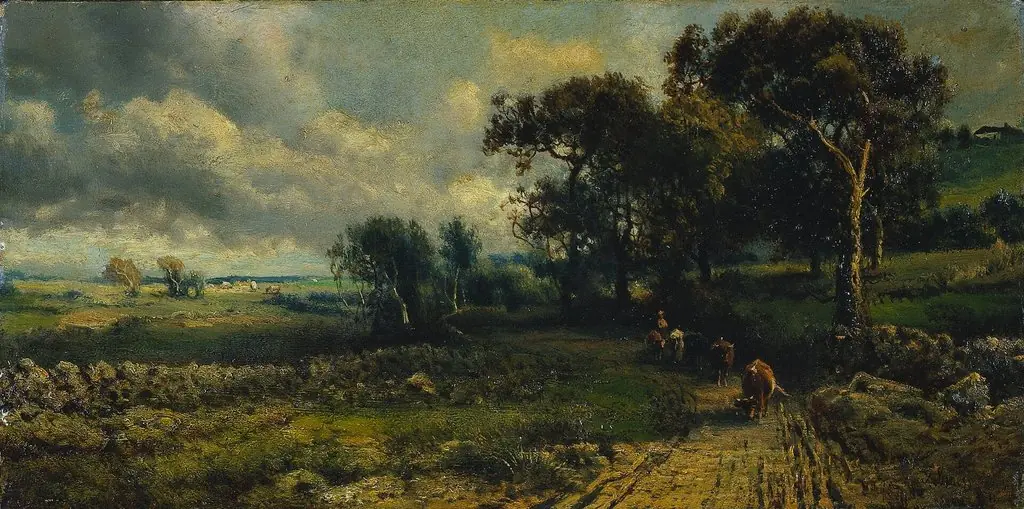
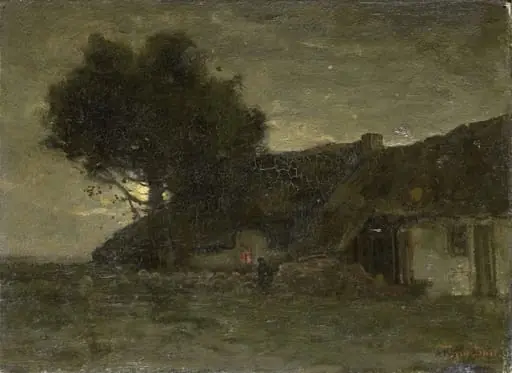
The Cottage by the Roadside, Stormy Sky is an oil painting by the Barbizon school artist Jules Dupré. It dates from 1860 and is held in the collection of the Art Institute of Chicago.
About this work
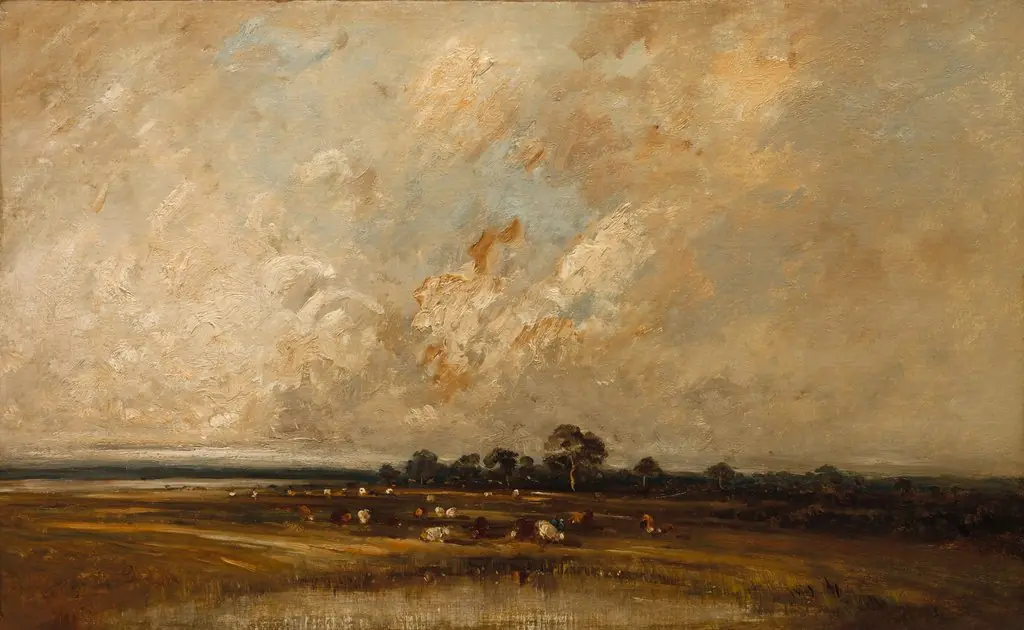
In the foreground, the cottage and surrounding foliage are rendered in warm, earthy tones, while the sky above is a swirling mix of grays and blues.
The Cottage by the Roadside, Stormy Sky is a landscape painting by Jules Dupré, created in 1860. The painting depicts a serene scene with a small cottage nestled beside a road, set against a dramatic stormy sky. The artist's use of oil paint brings depth and texture to the scene.
In the foreground, the cottage and surrounding foliage are rendered in warm, earthy tones, while the sky above is a swirling mix of grays and blues. The contrast between the calm, natural setting and the turbulent sky creates a sense of tension and drama.
The painting's use of chiaroscuro, with strong contrasts between light and dark, adds to the overall mood and atmosphere. To learn more about this technique, look up chiaroscuro.
Overview
Painted in 1860 by Jules Dupré, this oil landscape captures a modest cottage beside a rural road beneath a turbulent sky. A key member of the Barbizon school, Dupré focused on unidealized rural environments, rejecting academic grandeur in favor of direct observation. The work exemplifies the movement’s commitment to portraying nature as it appeared, without embellishment, using the expressive potential of oil paint to convey transient atmospheric conditions.
Subject & Meaning
The scene presents a humble dwelling nestled among trees, quietly situated along a path, suggesting quiet rural life. Above it, the sky churns with dark clouds and shifting light, introducing a sense of unease. The contrast between the grounded, stable cottage and the volatile heavens evokes a quiet tension—neither overtly ominous nor peaceful, but contemplative. Nature is neither benevolent nor hostile; it simply is, indifferent to human habitation.
Technique & Style
Dupré employed thick, layered oil paint to build texture in the foliage and earth, while the sky was rendered with looser, more fluid strokes to suggest movement. Chiaroscuro is used subtly, with patches of pale light breaking through the clouds to illuminate the ground, enhancing depth. The palette favors muted earth tones below and cool grays and blues above, reinforcing the divide between the solid earth and the shifting atmosphere.
History & Provenance
Created during Dupré’s mature period, the painting reflects his ongoing engagement with the Barbizon landscape tradition. It entered the collection of the Art Institute of Chicago in the early 20th century, likely through a private acquisition or donation. Its presence there underscores the institution’s early commitment to French Realist painting, aligning with broader American interest in European naturalism during that era.
Context
In mid-19th century France, artists increasingly turned away from historical and mythological subjects to depict ordinary rural life. The Barbizon painters, working near the Forest of Fontainebleau, sought truth in direct observation. Dupré’s focus on weather and light aligned with contemporary scientific interest in meteorology and the effects of atmosphere, making his landscapes both artistic and quietly observational.
Legacy
Though less celebrated than some of his peers, Dupré’s work contributed to the foundation of modern landscape painting by prioritizing mood and naturalism over idealization. His handling of light and weather influenced later Impressionists, who expanded his techniques into broader explorations of transient effects. This painting remains a quiet testament to the Barbizon school’s enduring shift in how nature was seen and painted.
Own this work as a print
Artist & collection
Artist
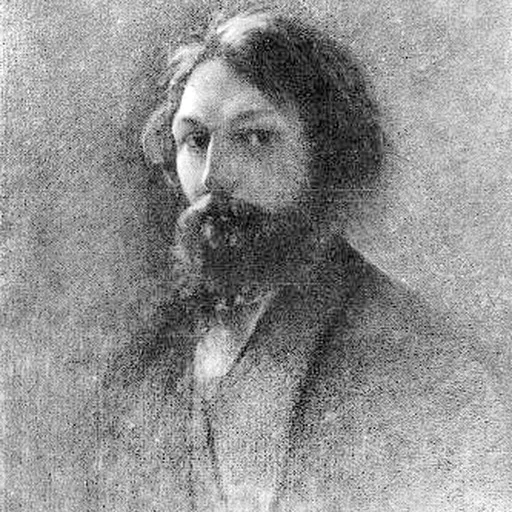
Jules Louis Dupré (French pronunciation: ; April 5, 1811 – October 6, 1889) was a French painter, one of the chief members of the Barbizon school of landscape painters.