Artwork
Village Landscape
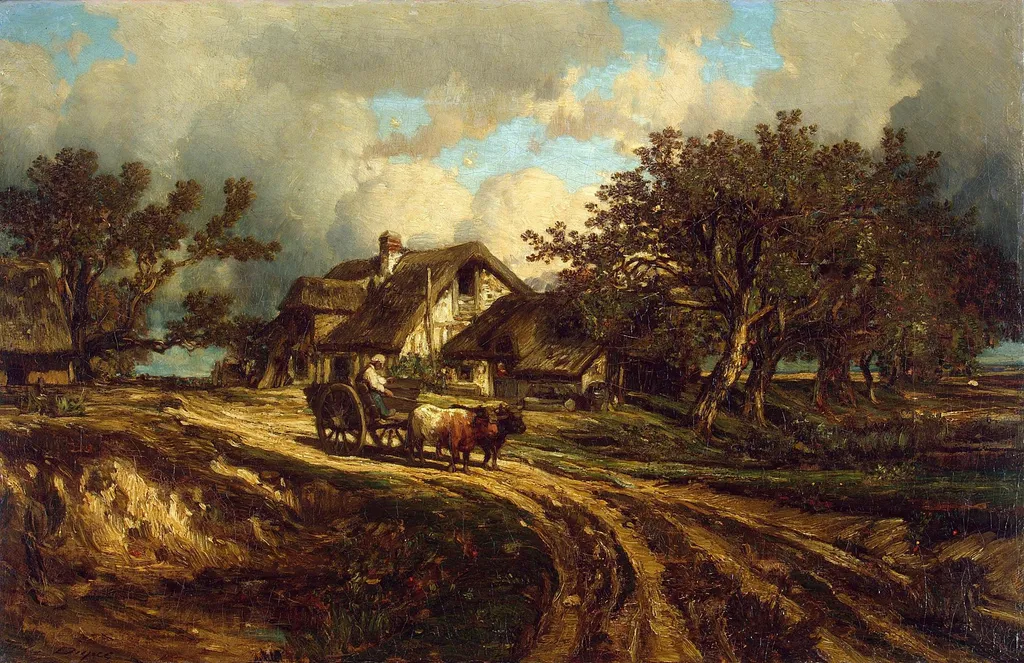
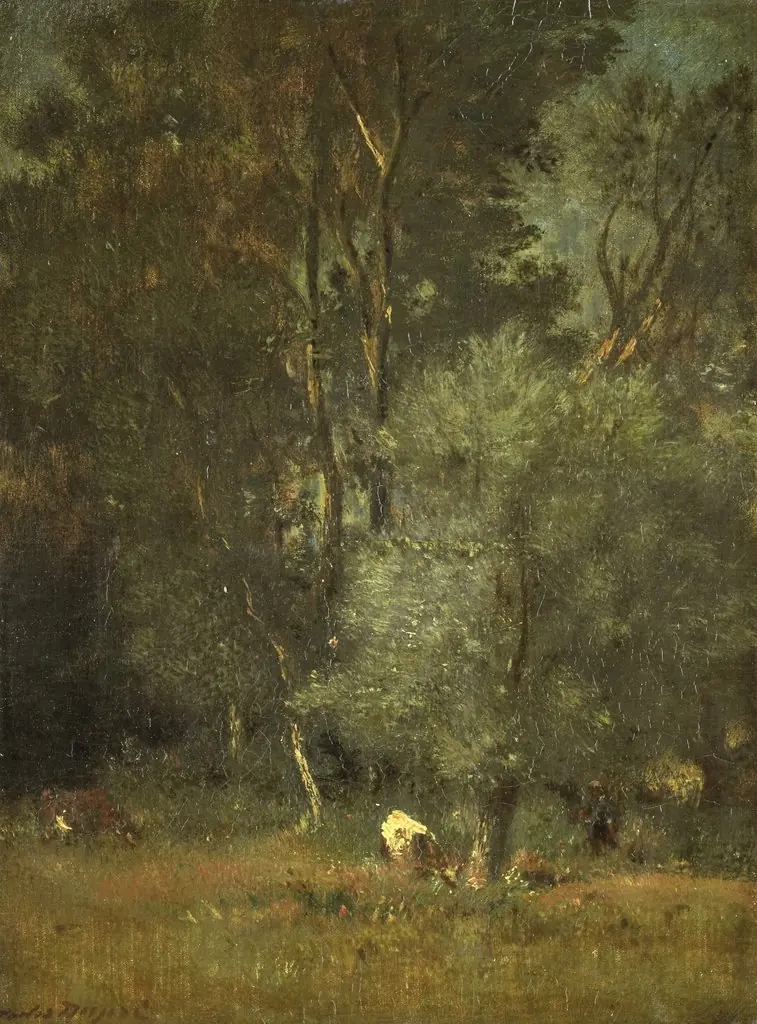
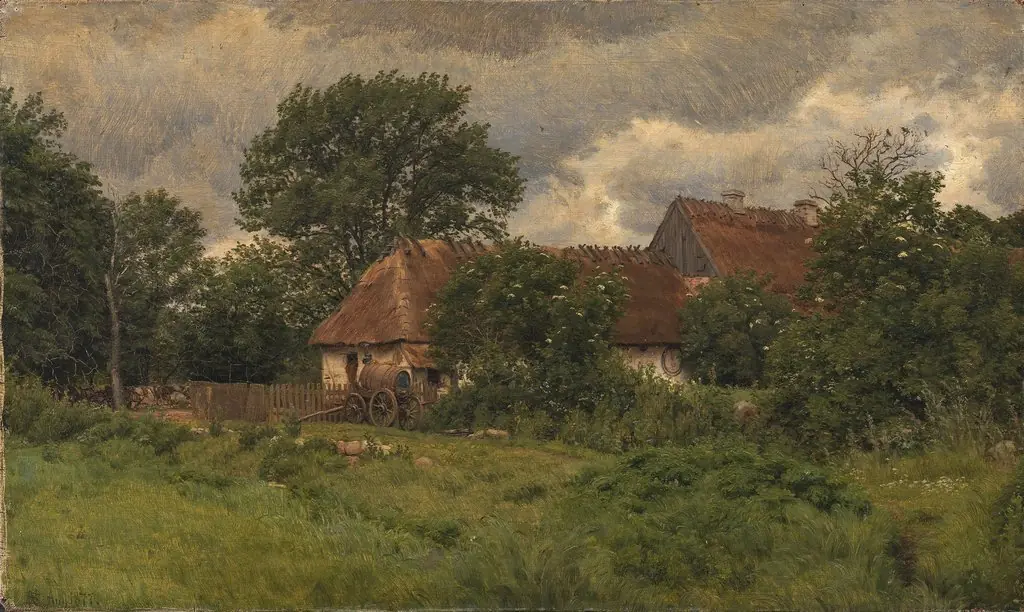
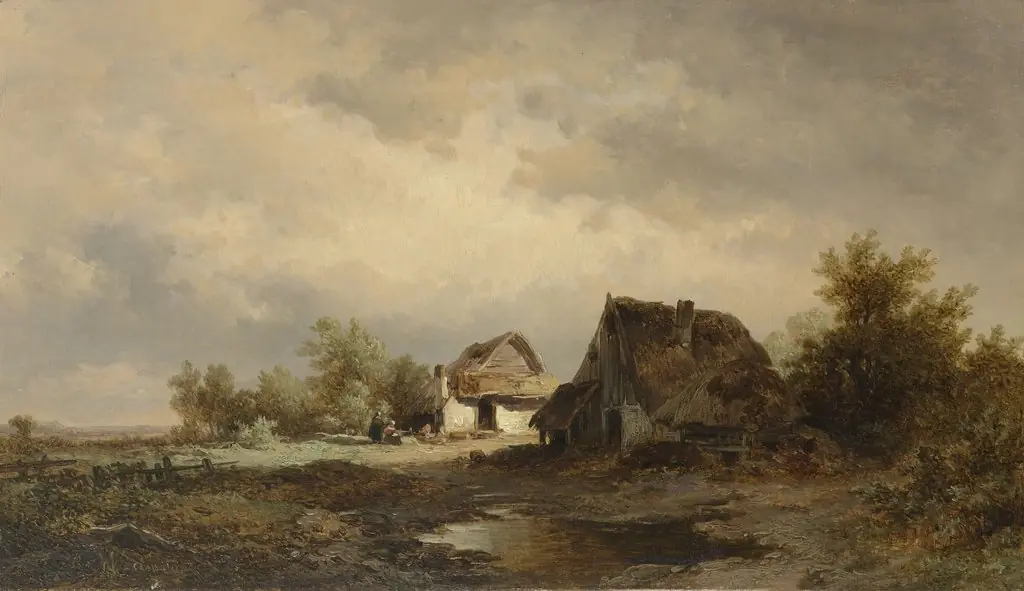
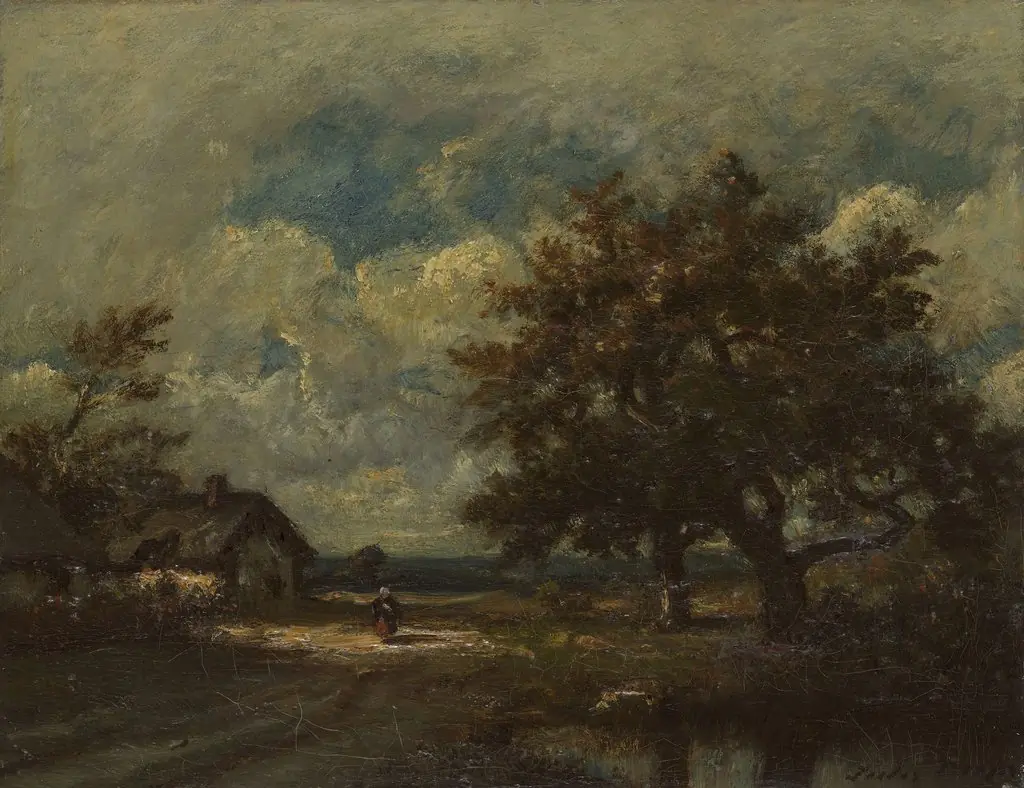
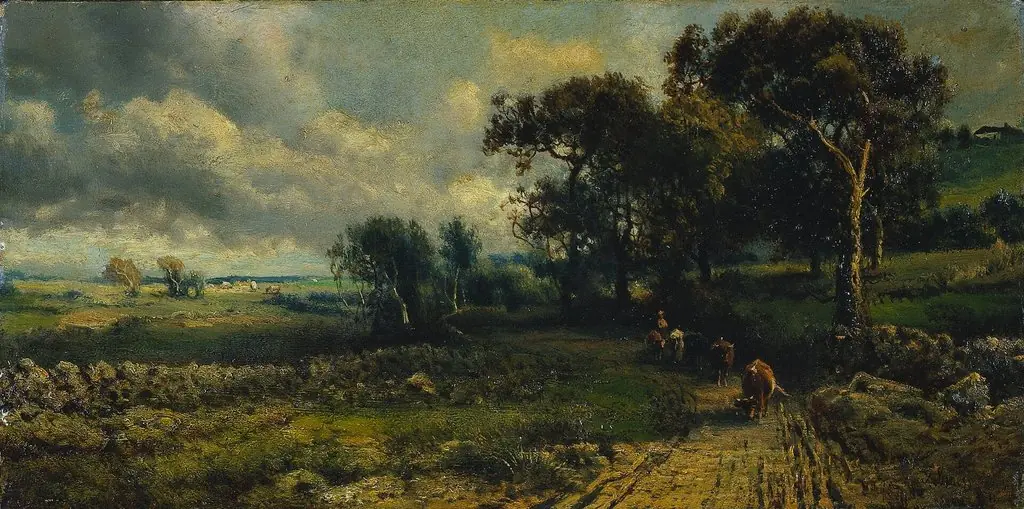
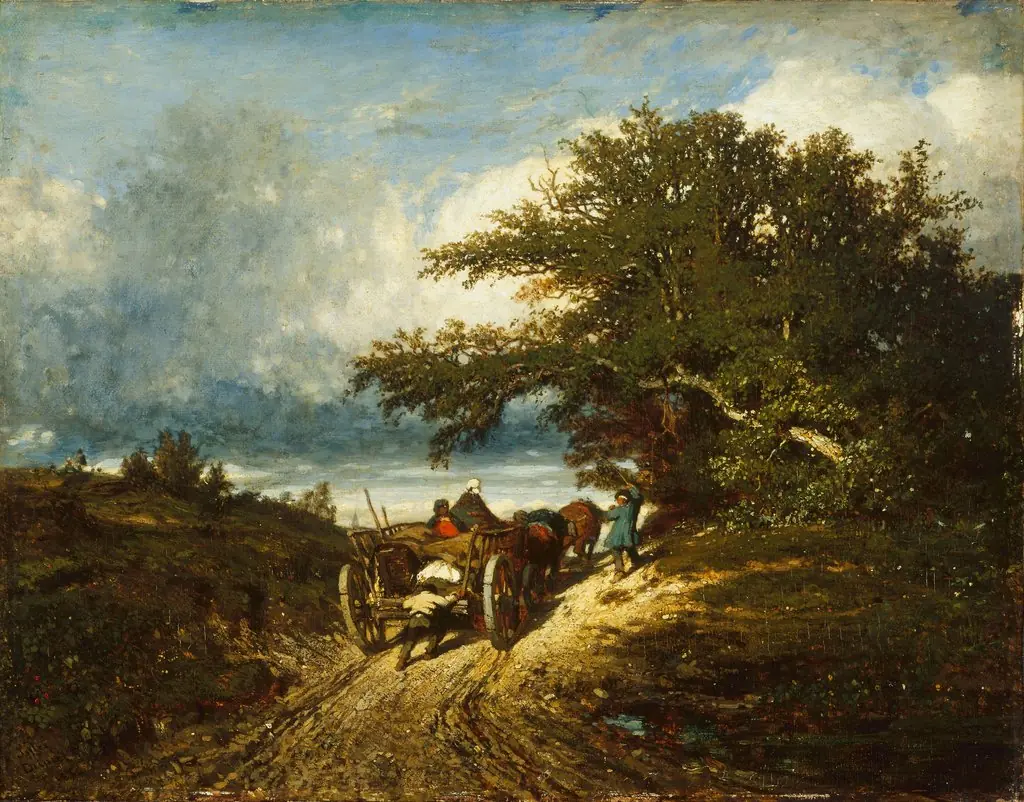
Village Landscape is an oil painting by the Barbizon school artist Jules Dupré. It dates from 1840 and is held in the collection of the Hermitage Museum.
About this work
Overview
Created in 1840 by Jules Dupré, a prominent member of the Barbizon school, this oil painting titled *Village Landscape* depicts a quiet rural scene. The work is part of the State Hermitage Museum’s collection and exemplifies the school’s focus on realistic portrayals of countryside settings.
Subject & Meaning
The composition centers on a winding dirt track that cuts through a modest village, bordered by trees and a thatched-roof cottage. A man seated in a cart drawn by two oxen adds a human element, suggesting everyday labor and the tranquil rhythm of agrarian life.
Technique & Style
Dupré employs warm tonalities and soft, blended brushwork to convey atmospheric depth. The textures of foliage and the thatch are rendered with careful attention, while the balanced arrangement of path, trees, and structures guides the viewer’s eye across the canvas, reflecting the Barbizon emphasis on naturalistic observation.
History & Provenance
After its completion, the painting entered the holdings of the State Hermitage Museum, where it remains on display. Its acquisition reflects the museum’s broader interest in 19th‑century French landscape art and the enduring relevance of the Barbizon movement within European painting history.
Own this work as a print
Artist & collection
Artist
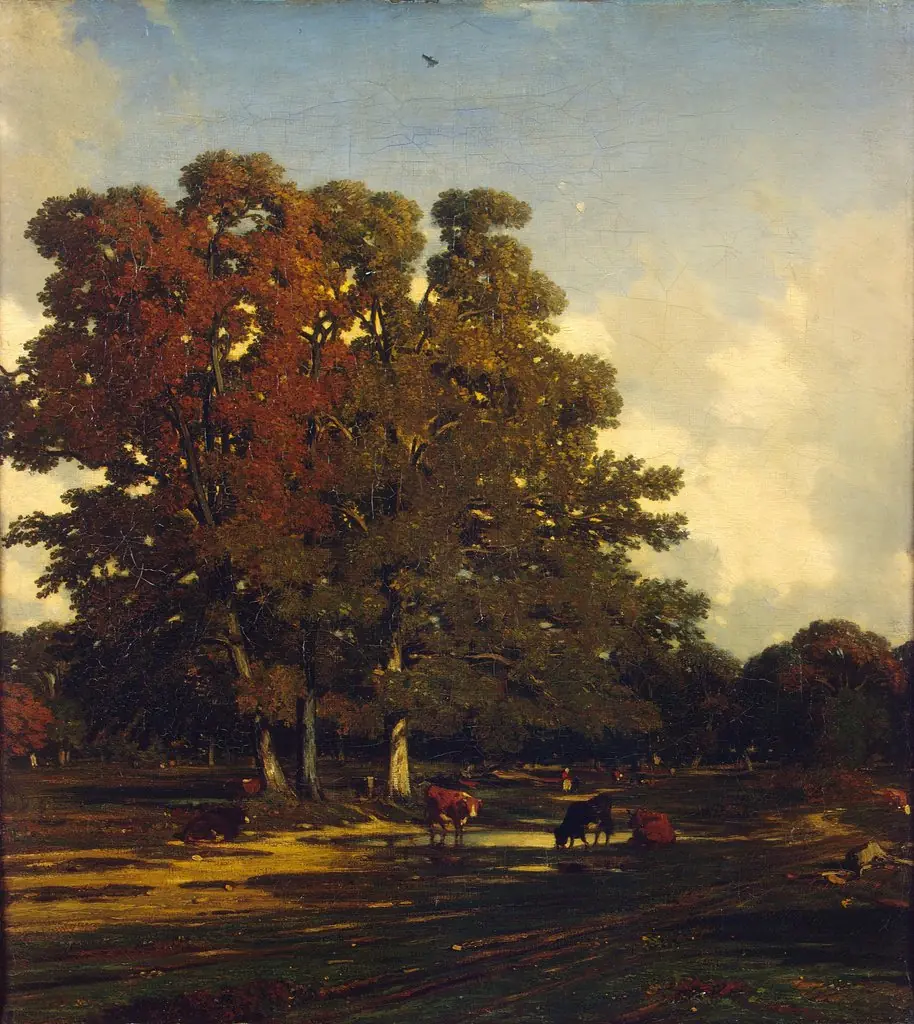
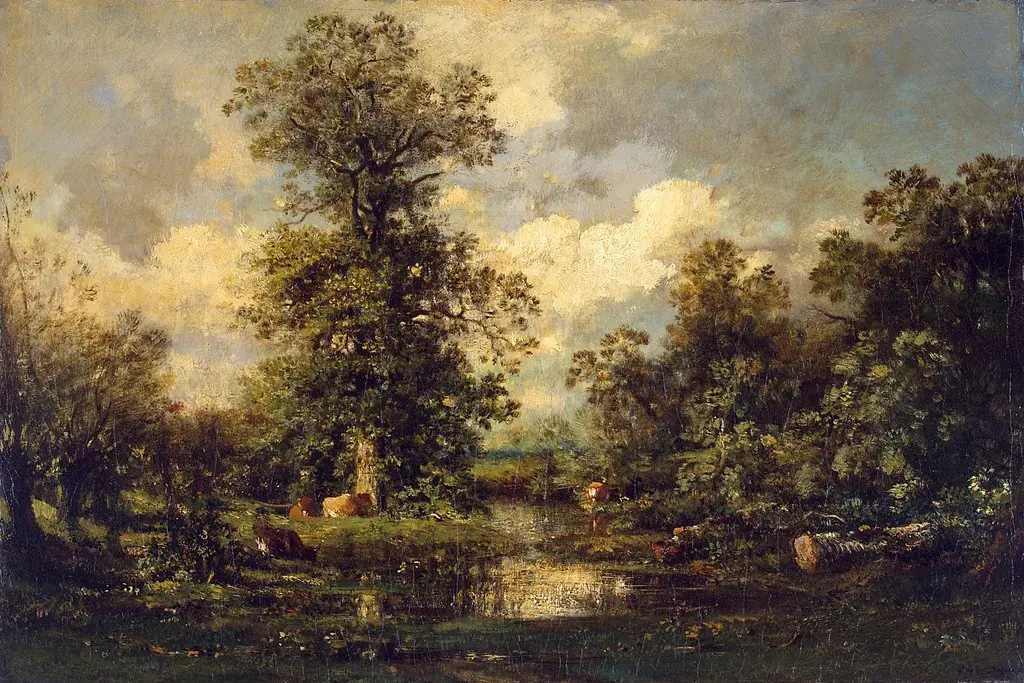
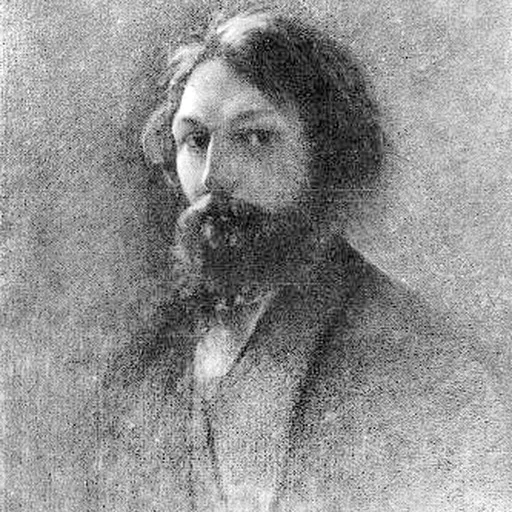
Jules Louis Dupré (French pronunciation: ; April 5, 1811 – October 6, 1889) was a French painter, one of the chief members of the Barbizon school of landscape painters.