Artwork
Untitled
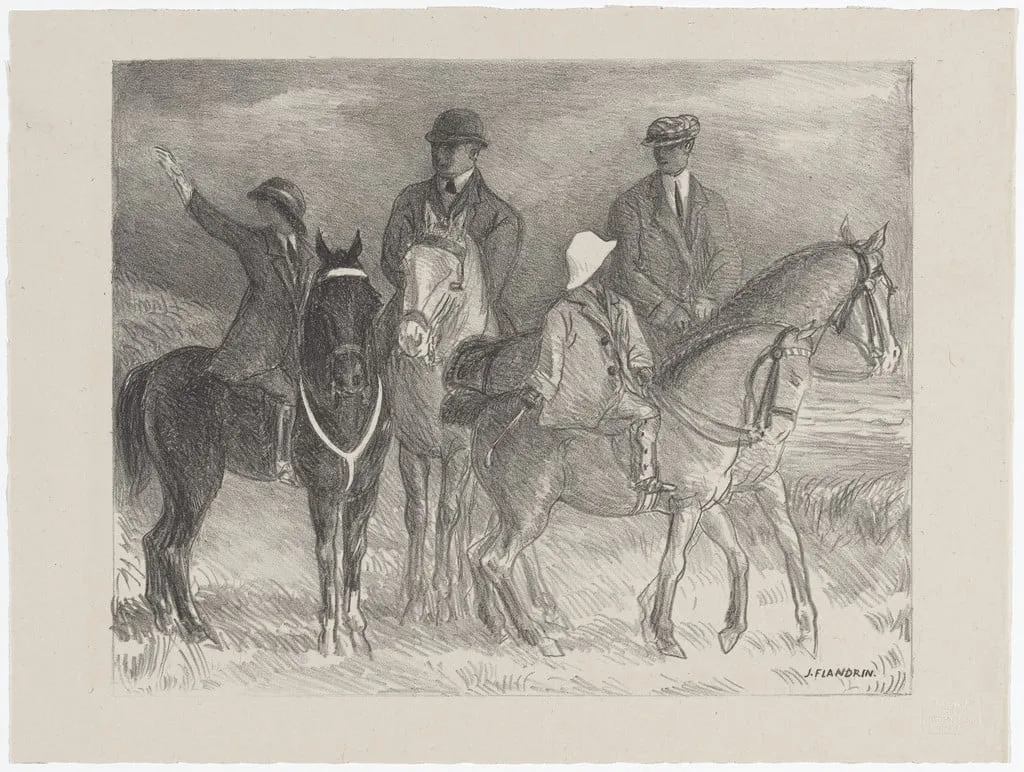
Untitled is an ink print by Jules Flandrin. It dates from 1924 and is held in the collection of the Museum of Modern Art.
About this work
Overview
Known for his work in painting and printmaking, Flandrin produced this piece during a period when his style was shifting toward greater emotional intensity.
Created around 1924, this lithograph is one of sixteen in a portfolio by French artist Jules Flandrin. Known for his work in painting and printmaking, Flandrin produced this piece during a period when his style was shifting toward greater emotional intensity. The work is part of The Museum of Modern Art’s collection and reflects his engagement with expressive line and atmospheric tone, characteristic of his post-war output.
Subject & Meaning
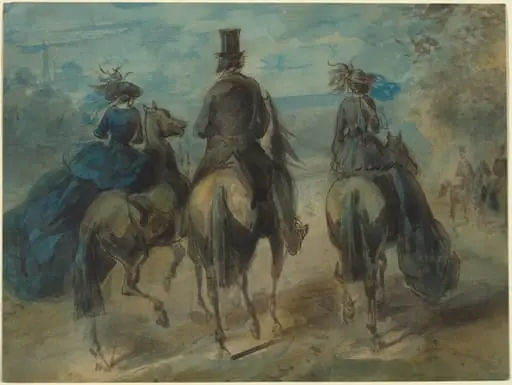
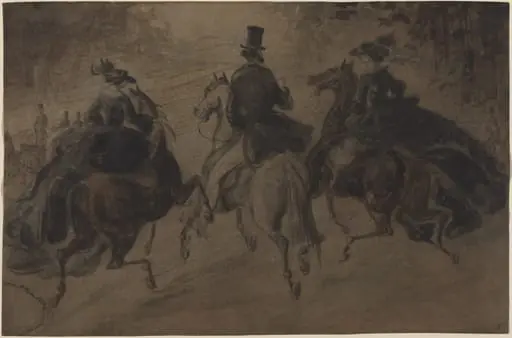
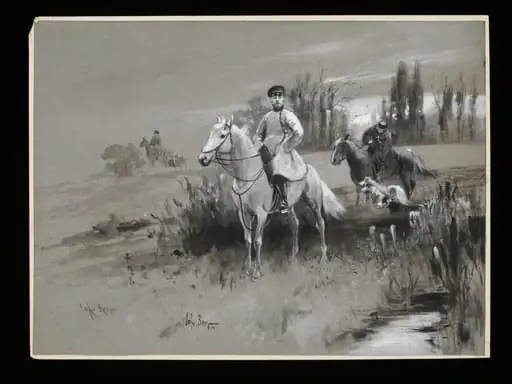
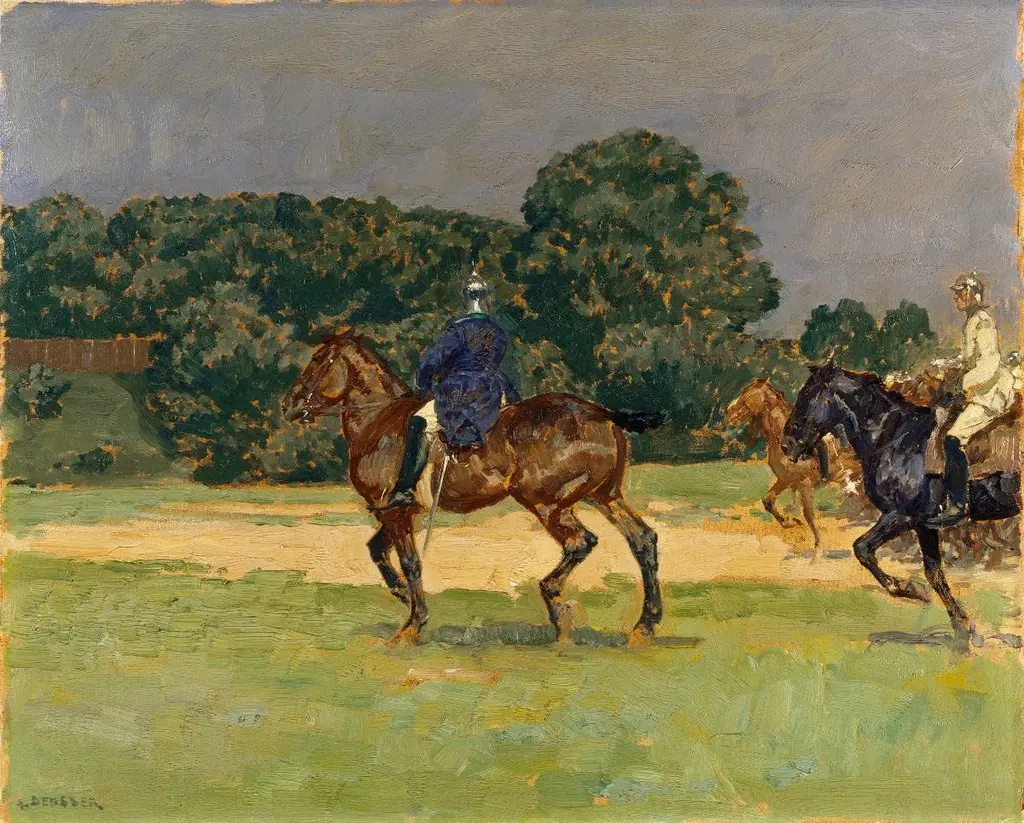
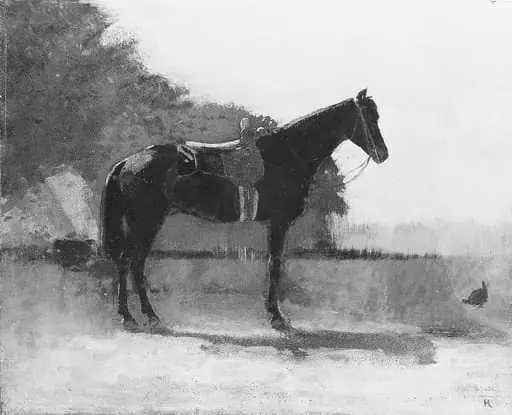
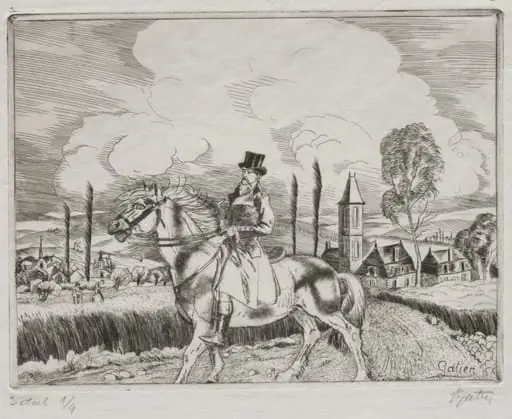
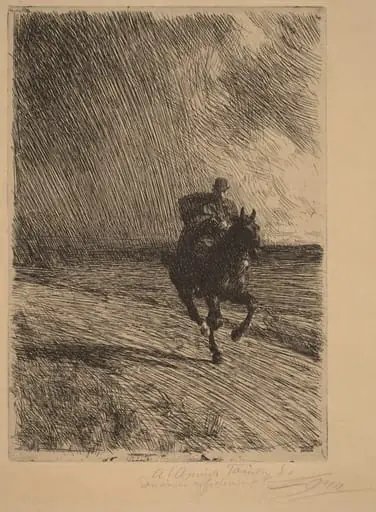
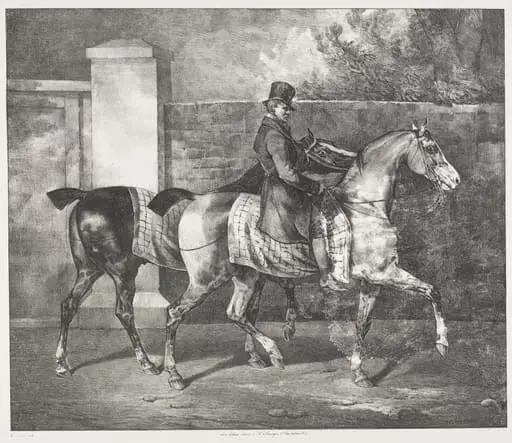
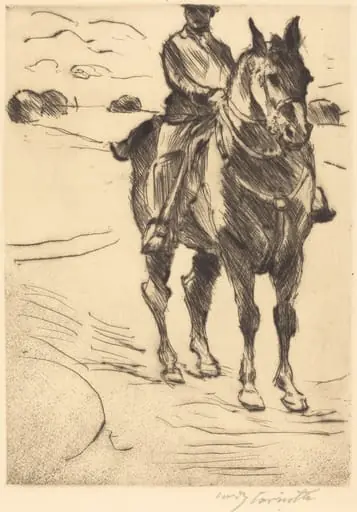
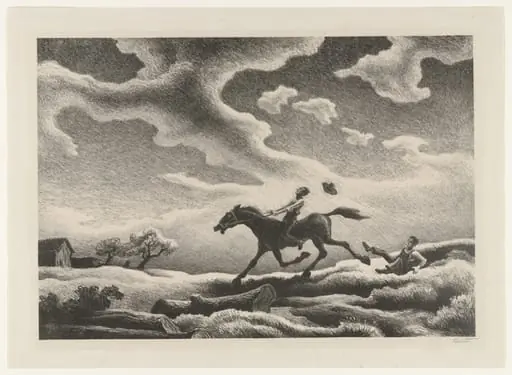
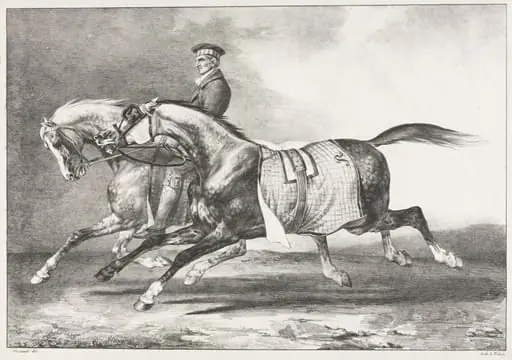
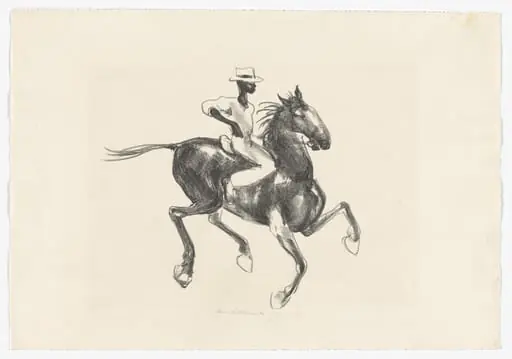
The image depicts four riders in an open landscape: two men on the right, one gesturing upward, and a woman seated between them wearing a broad hat. The figures are rendered without narrative detail, suggesting a moment of transit or quiet observation. The absence of context invites interpretation, emphasizing mood over story—perhaps evoking rural life, memory, or the fleeting nature of movement.
Technique & Style
Flandrin employed lithography to achieve fluid, spontaneous lines that mimic sketching. The ink’s variable absorption creates soft gradations and textured shadows, enhancing the sense of immediacy. Loose, rapid strokes define the riders and horses, avoiding precise contours in favor of dynamic suggestion. This approach aligns with his move away from academic precision toward a more intuitive, expressive mode.
History & Provenance
Flandrin, trained under Gustave Moreau and associated with Matisse and Rouault, produced this lithograph during a phase of personal and artistic transformation following World War I. The portfolio was likely made for private circulation or limited publication, reflecting the era’s interest in artist-led print collections. It entered MoMA’s collection as part of its broader effort to document early 20th-century printmaking practices.
Context
In the 1920s, many European artists turned to printmaking as a means of personal expression outside commercial demands. Flandrin’s work reflects this trend, blending traditional techniques with modern sensibilities. His wartime experiences deepened his focus on human presence and emotional resonance, distinguishing his prints from the decorative tendencies of earlier Symbolist influences.
Legacy
Though less widely known than his contemporaries, Flandrin’s lithographs contribute to the understanding of interwar French printmaking as a vehicle for introspective art. His use of sketch-like line and tonal variation influenced later artists exploring the expressive potential of lithography. This work remains a quiet example of how personal experience reshaped printmaking in the early 20th century.
Artist & collection
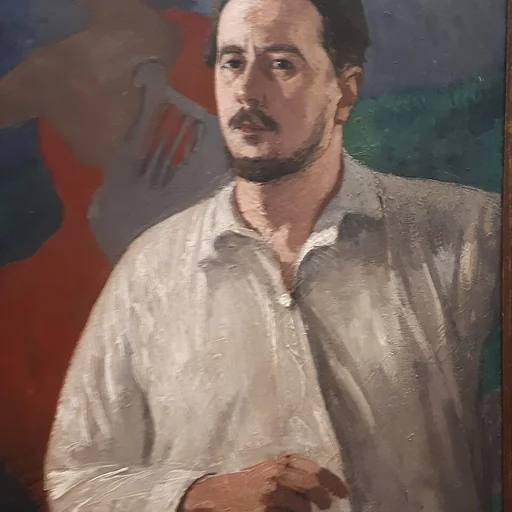
Artist
Jules Flandrin (1871–1947) was a French painter, printer and draughtsman, born at Corenc, near Grenoble, on 9 July 1871.