Artwork
Diana ja Endymion I
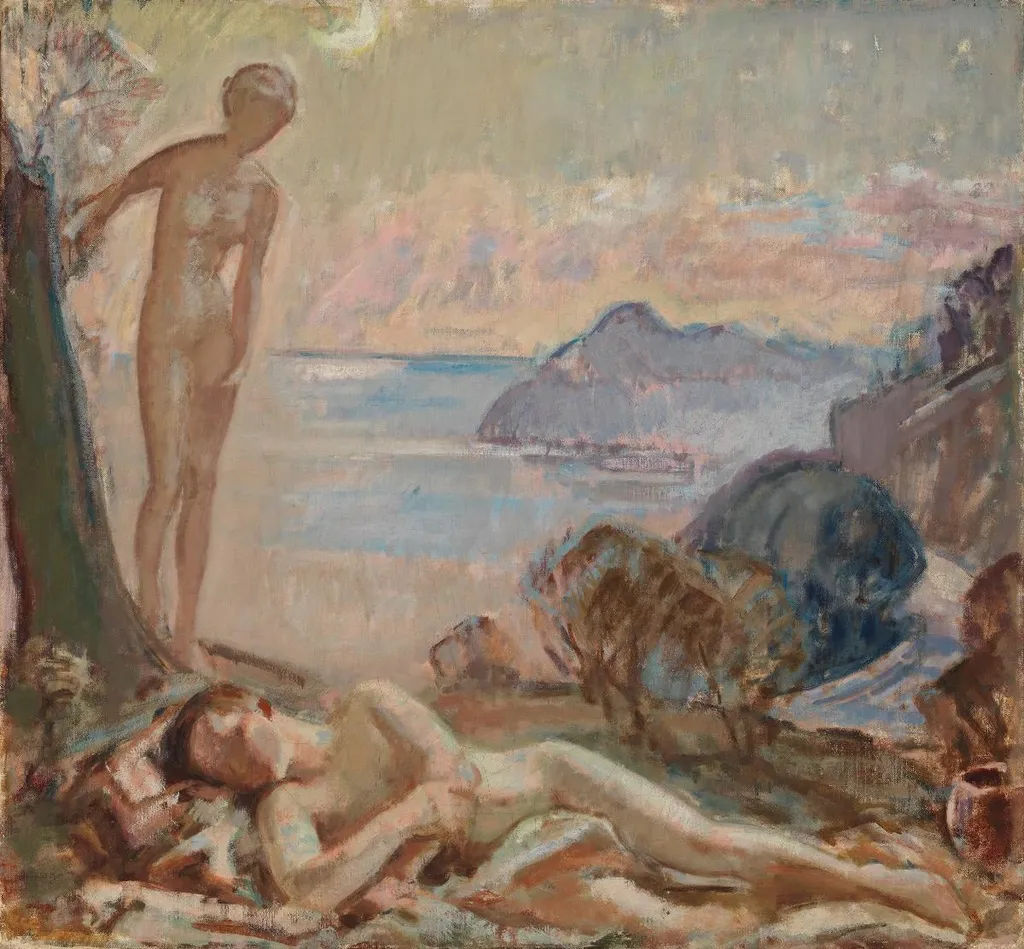
Diana ja Endymion I is an unspecified painting by Magnus Enckell. It is held in the collection of the Finnish National Gallery.
About this work
Overview
It portrays a mythological moment drawn from classical legend, rendered with a softened, luminous palette that marks a departure from his earlier, darker tones.
Diana ja Endymion I is a symbolic painting by Finnish artist Magnus Enckell, created during his later period after 1902. It portrays a mythological moment drawn from classical legend, rendered with a softened, luminous palette that marks a departure from his earlier, darker tones. The composition emphasizes mood over narrative clarity, aligning with Symbolist ideals that favored emotional resonance over literal storytelling.
Subject & Meaning
The painting illustrates the myth of Diana, the moon goddess, and Endymion, a mortal shepherd beloved by her. One figure stands quietly by the water, perhaps Diana gazing toward the distant island where Endymion sleeps; the other, reclining among rocks, may represent the sleeping Endymion. The ambiguity of identity and the stillness of the scene suggest contemplation, longing, and the boundary between the divine and the mortal.
Technique & Style
Enckell employs loose, fluid brushwork and thin layers of paint to evoke a hazy, atmospheric quality. The sky and water are rendered in pale blues and pinks, while the rocks appear in muted earth tones, creating a quiet harmony. The figures are simplified, their forms blended into the landscape, and the impasto is subtle, used sparingly to suggest texture without disrupting the dreamlike stillness of the scene.
History & Provenance
Painted after Enckell’s exposure to French colorism and his return to Finland, this work reflects his evolving aesthetic following 1902. It belongs to a series exploring mythological themes during a time when Finnish artists were redefining national identity through symbolic imagery. The painting remained within Finnish collections, associated with Enckell’s role in the Septem group, which championed expressive color and modernist sensibilities.
Context
In early 20th-century Finland, artists like Enckell moved away from realism toward introspective, symbolic subjects influenced by European trends. Mythology offered a vehicle for exploring inner states rather than historical or social themes. Enckell’s use of color and mood aligned with broader Nordic Symbolist currents, distinguishing his work from the more nationalistic styles prevalent among his contemporaries.
Legacy
Diana ja Endymion I exemplifies Enckell’s contribution to Finnish modernism through his emphasis on emotional tone and chromatic harmony. His shift toward luminous palettes influenced younger artists in the Septem group and helped broaden the scope of Finnish painting beyond realism. The work remains a quiet but significant example of how myth was reinterpreted in service of personal and aesthetic introspection.
Artist & collection
Artist
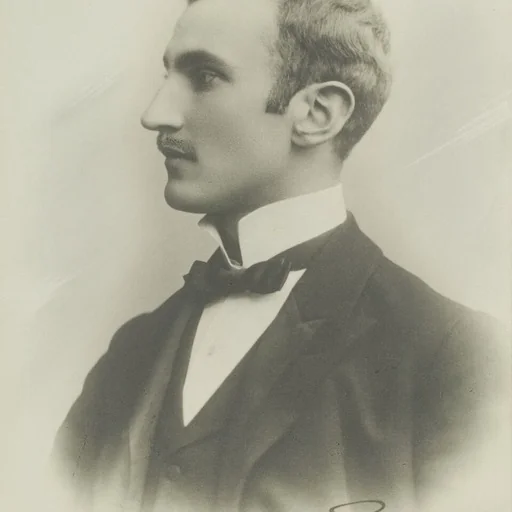
Knut Magnus Enckell (9 November 1870 – 27 November 1925) was a Finnish symbolist painter.

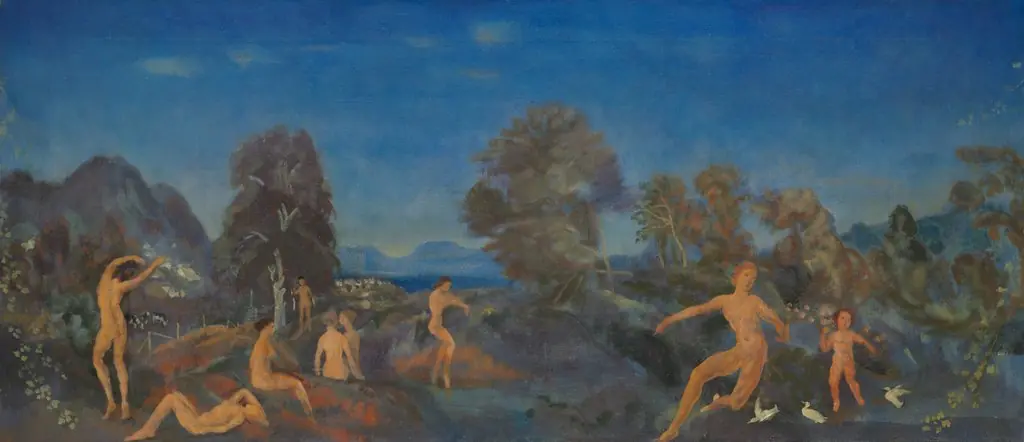 Hermes and the Infant Dionysus
 Hermes and the Infant Dionysus
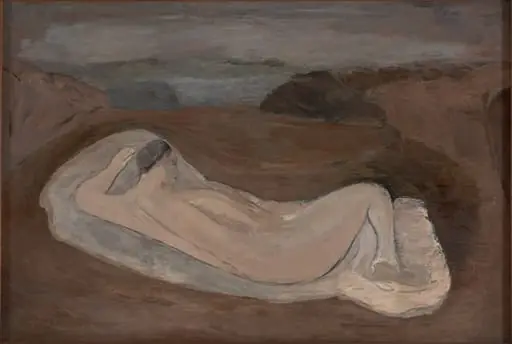 Ελεύθερη σύνθεση από χρωματιστές μάζες
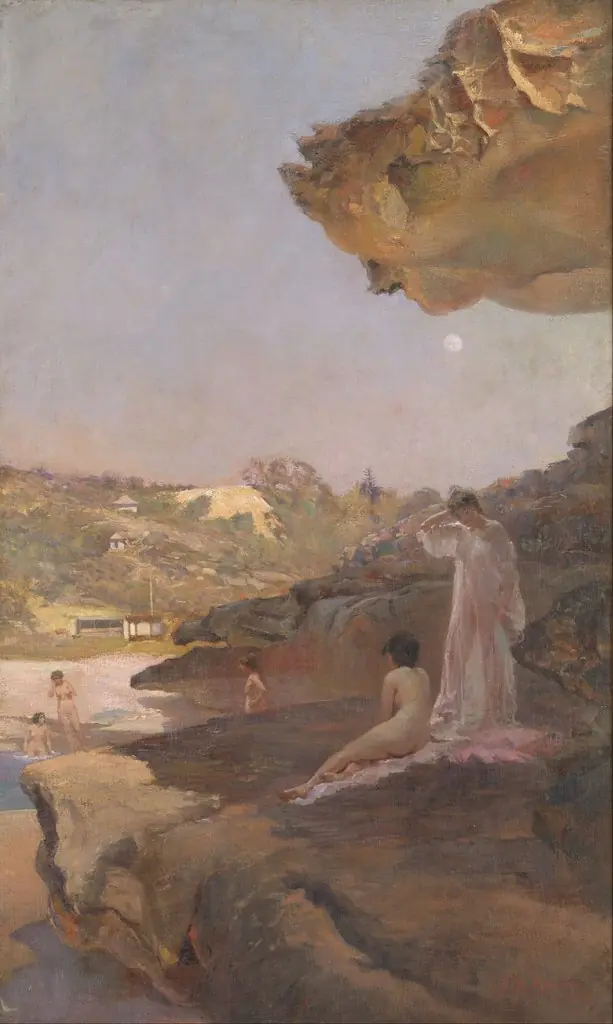 Tamarama Beach, forty years ago, a summer morning
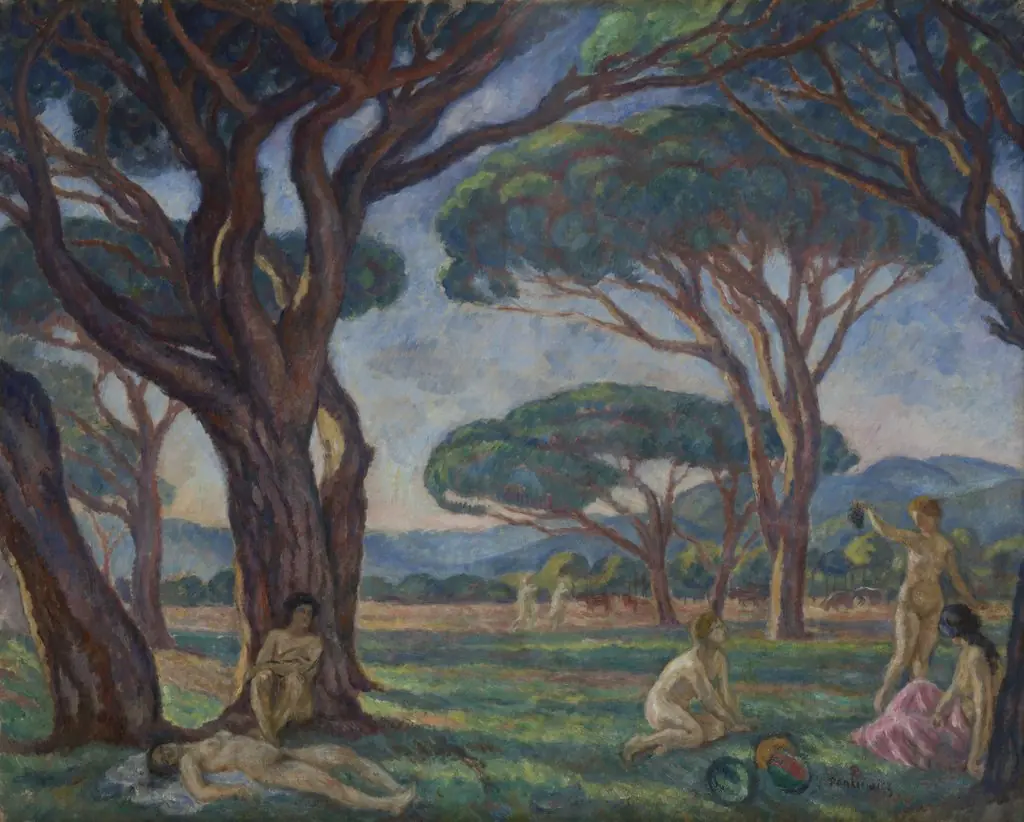 Landscape from Provence with Idyllic Scenes
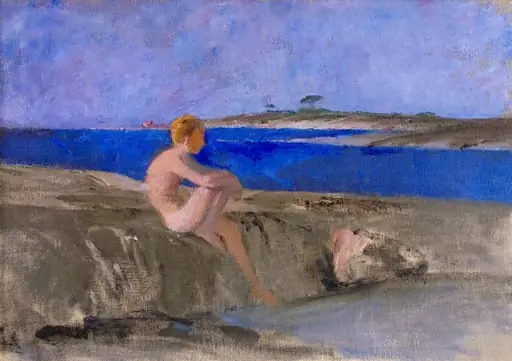 Sininen meri
 Nymph and Faun
 Boy Lying on his Stomach
 Paratiisilintu, luonnos
 Dekoratiivinen maalaus
 Baigneurs (Bathers)
 Women bathing