Artwork
Ausias March leyendo sus trovas al Príncipe de Viana
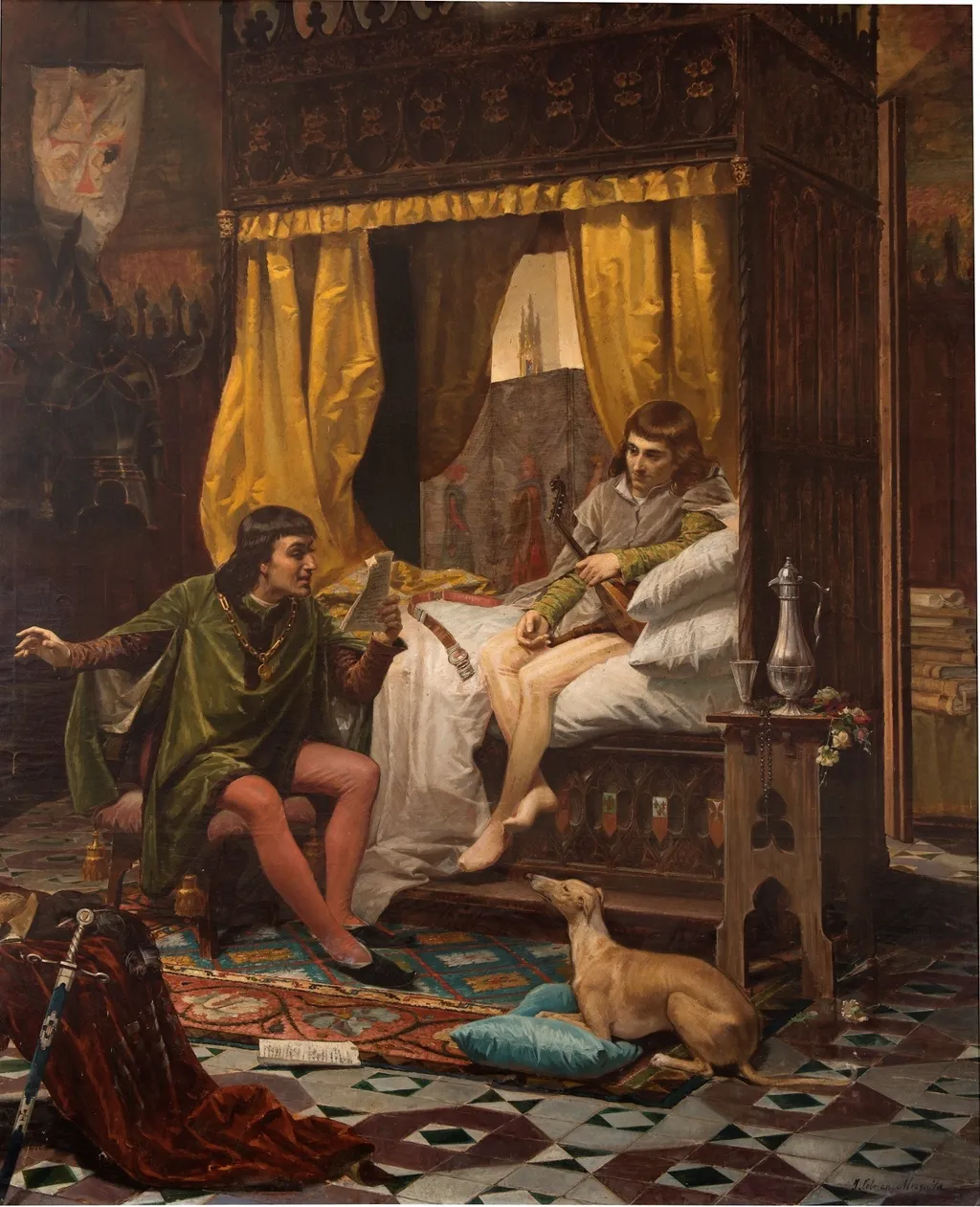
Ausias March leyendo sus trovas al Príncipe de Viana is an oil painting by the Post-Impressionist artist Julio Cebrián Mezquita. It dates from 1892 and is held in the collection of the Museo del Prado.
About this work
Overview
Created in 1892 by Spanish painter Julio Cebrián Mezquita, this oil on canvas is part of the Prado Museum’s collection. The composition captures an interior scene illuminated by a single source of light, revealing a richly appointed chamber with dark wooden walls, gilded trim, and heavy drapery that frames a distant, muted landscape.
Subject & Meaning
The work presents two male figures within the same room. One, dressed in green, is seated on the floor absorbed in a small book, while the other reclines on a bed covered with white linens, a sword held loosely in his hand. A dog lies nearby, and a table bears a pitcher and glass, suggesting a moment of quiet leisure or contemplation.
Technique & Style
Mezquita employs chiaroscuro to model the figures, allowing light to spill across the floor tiles—arranged in a red‑blue checkerboard—and the textured fabrics, while the surrounding shadows deepen the sense of space. The brushwork is precise in the decorative elements, such as the gold trim and patterned rug, yet looser in the rendering of the figures’ clothing.
History & Provenance
The painting entered the Museo del Prado’s holdings after its acquisition in the early twentieth century, where it has remained on display as part of the museum’s representation of late nineteenth‑century Spanish genre painting. Its provenance prior to the Prado is documented through exhibition records and catalogues from the artist’s lifetime.
Own this work as a print
Artist & collection