Artwork
Ullswater from the foot of Gowbarrow Fell
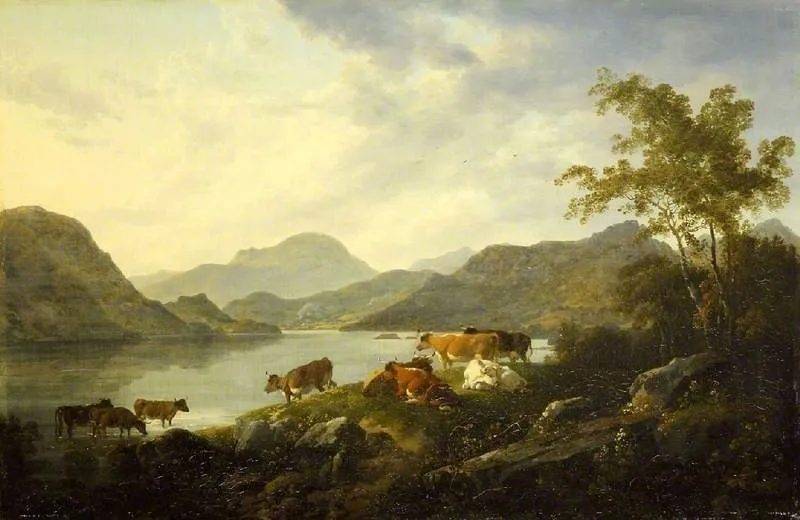
Ullswater from the foot of Gowbarrow Fell is an oil painting by Julius Caesar Ibbetson. It dates from 1808 and is held in the collection of the Fitzwilliam Museum.
About this work
Overview
The piece reflects his dual practice in oil and watercolour, though this work demonstrates his command of the more demanding oil medium.
Painted in 1808 by Julius Caesar Ibbetson, this oil-on-canvas work captures a quiet stretch of Ullswater in the Lake District, viewed from the slope of Gowbarrow Fell. Unlike many of his contemporaries who favored dramatic vistas, Ibbetson focused on understated naturalism, rendering the landscape with careful attention to light and texture. The piece reflects his dual practice in oil and watercolour, though this work demonstrates his command of the more demanding oil medium.
Subject & Meaning
The scene presents a pastoral moment: grazing cattle along the lake’s edge, distant farm buildings nestled among hills, and the still waters reflecting the surrounding moorland. There is no human activity beyond the animals, suggesting a quiet harmony between land and livelihood. The composition avoids grandeur, instead emphasizing stillness and the rhythms of rural life, aligning with early 19th-century English sensibilities toward nature as a place of quiet contemplation.
Technique & Style
Ibbetson employed layered glazing to achieve subtle transitions in tone, particularly in the lake’s surface and the distant fells. Brushwork is restrained, with soft edges defining forms rather than sharp outlines. The palette leans on muted blues, earthy greens, and warm browns, avoiding theatrical contrasts. His method prioritizes atmospheric coherence over detail, allowing the viewer’s eye to move naturally across the expanse without focal disruption.
History & Provenance
The painting entered the Fitzwilliam Museum’s collection in the 19th century, likely through a private donation or acquisition tied to the museum’s early focus on British art. Ibbetson’s works were relatively modest in public recognition during his lifetime, and few of his oil landscapes survive in institutional collections. This piece remains one of the more complete examples of his mature style, preserved with minimal alteration since its creation.
Context
Created during a period when landscape painting in Britain was shifting from topographical record to emotional expression, Ibbetson’s work aligns with the quiet realism of early Romanticism. While artists like Turner explored sublime drama, Ibbetson documented the everyday scenery of northern England with precision and restraint. His paintings reflect a growing interest in regional identity and the domesticated natural world, rather than distant or exotic locales.
Legacy
Though not widely celebrated in his time, Ibbetson’s careful observations of the Lake District contributed to a broader documentation of England’s rural landscapes. His use of oil to capture subtle light effects influenced later regional painters who sought authenticity over idealization. Today, the painting serves as a quiet record of a specific place and moment, valued for its sincerity rather than its novelty.
Artist & collection
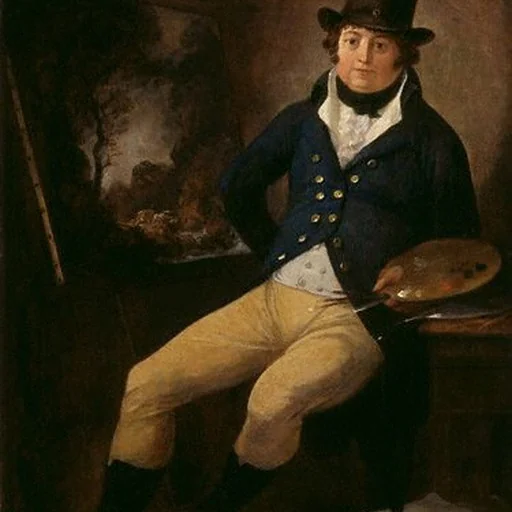
Artist
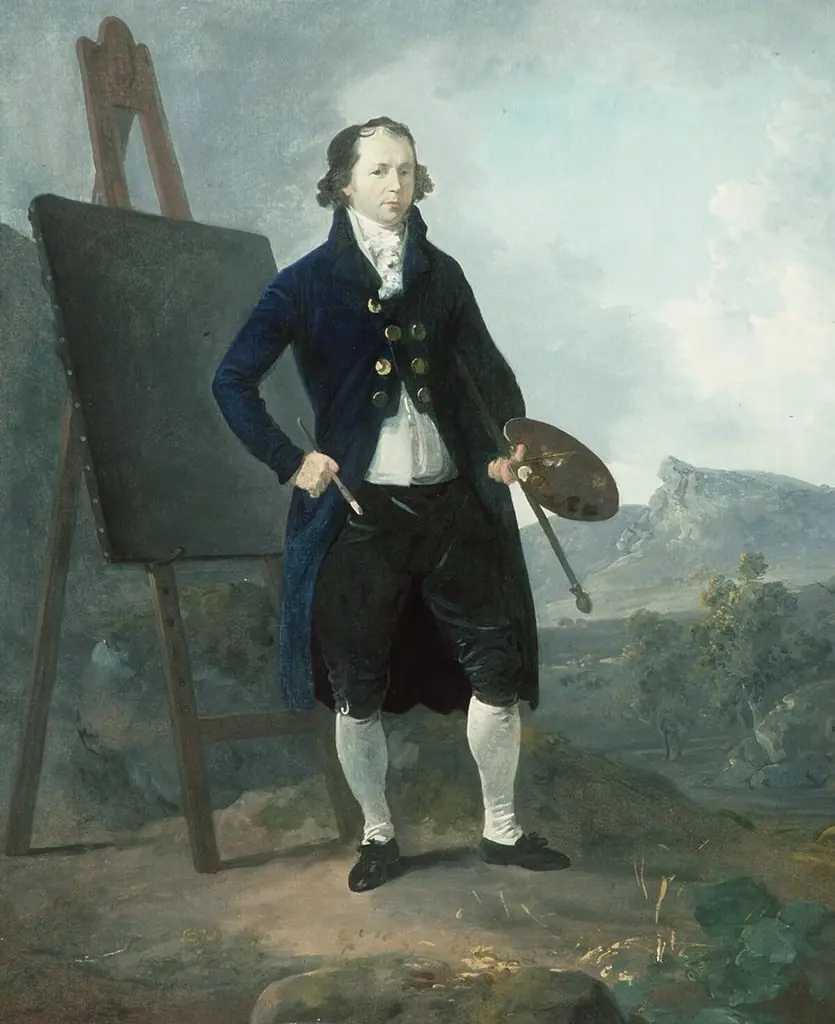
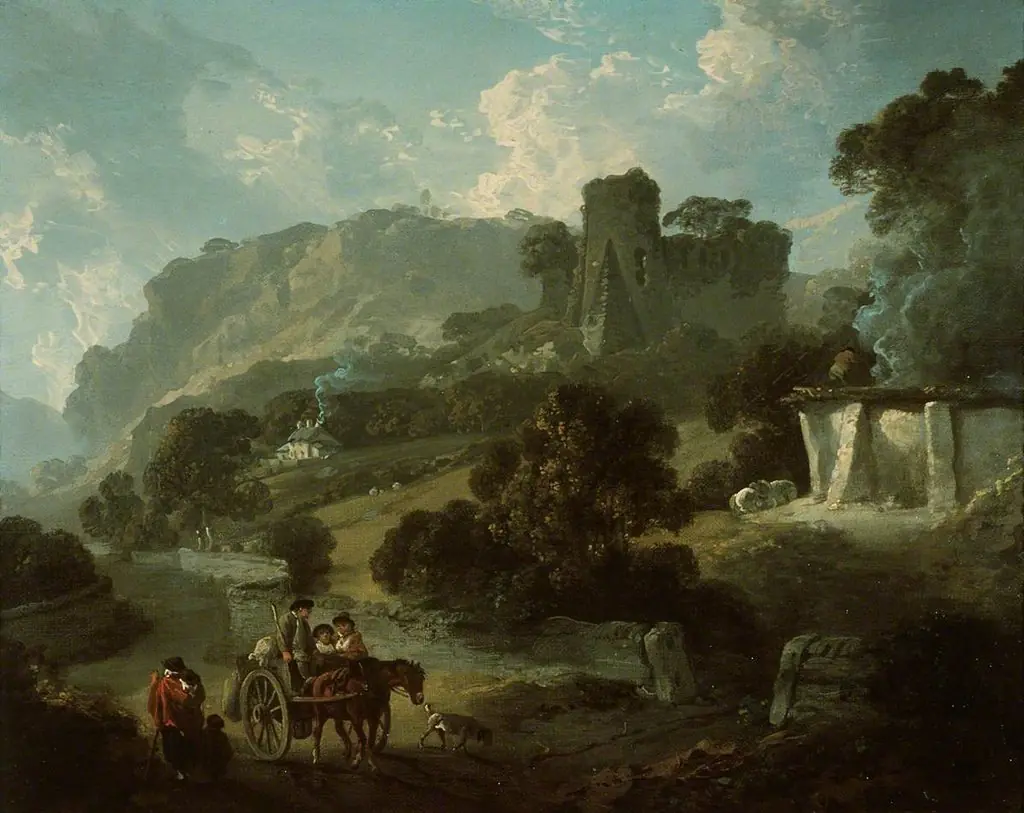
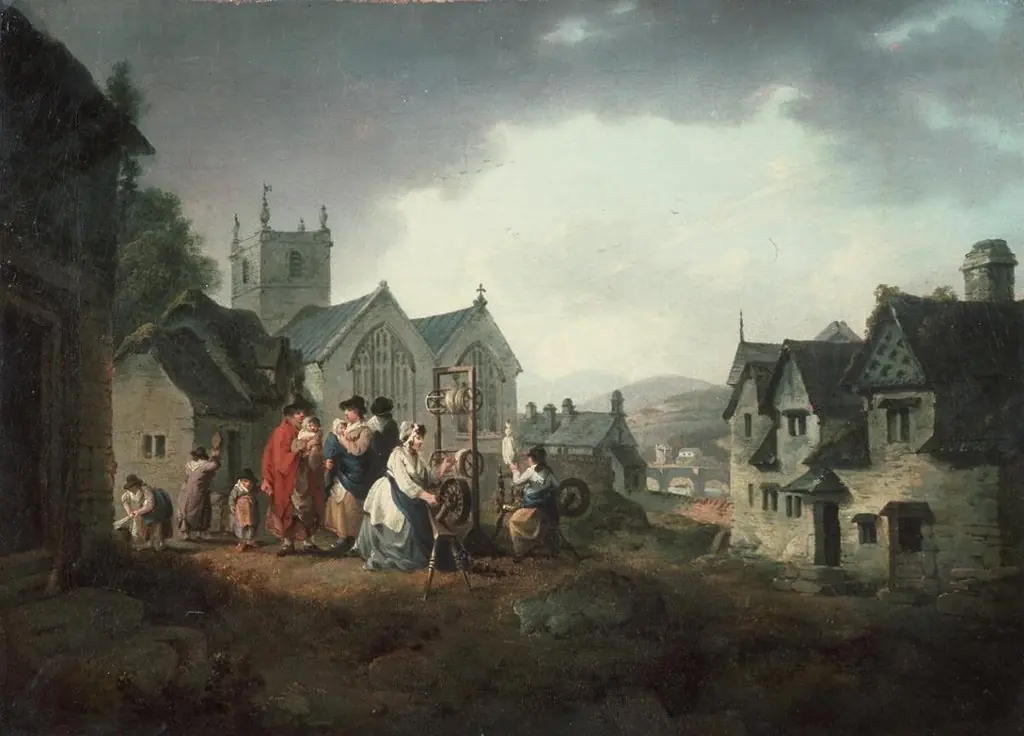
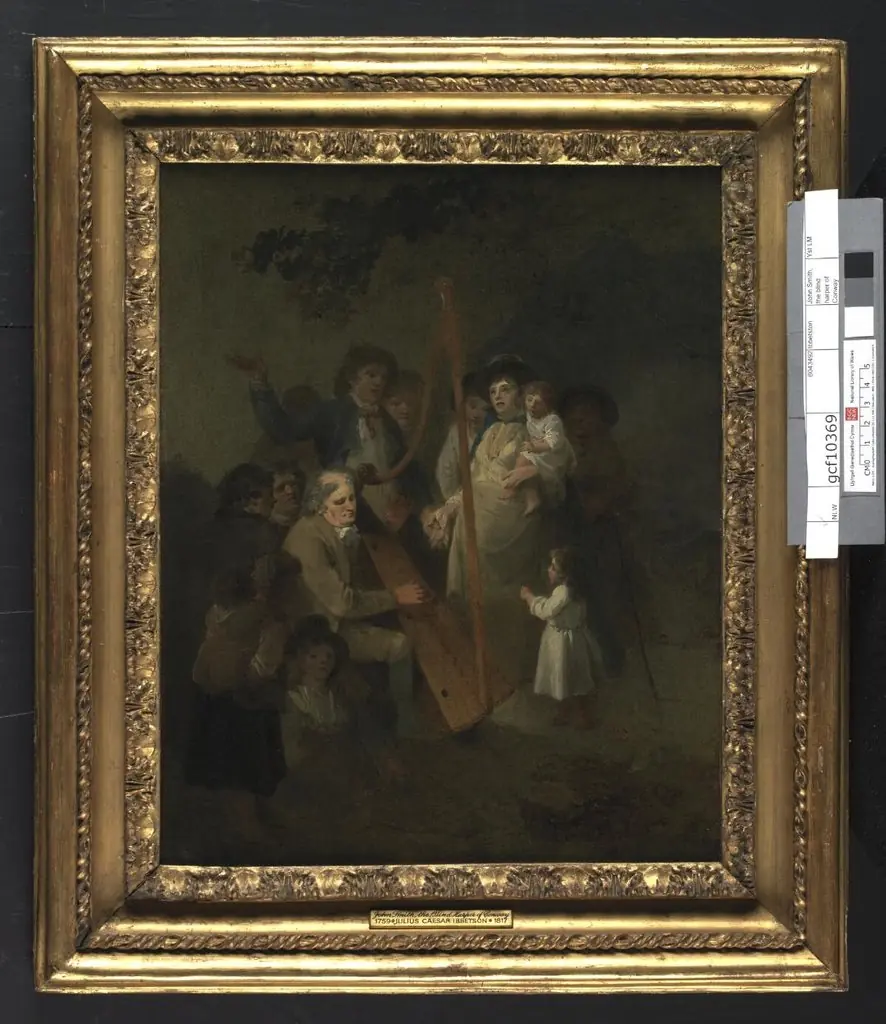
Julius Caesar Ibbetson (29 December 1759 – 13 October 1817) was a British 18th-century landscape and watercolour painter.

 Loch Etive, Argyllshire
 Loch Doon, Ayrshire
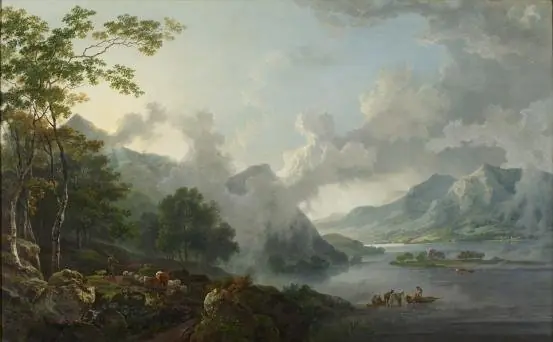 View of Windermere Lake, early morning
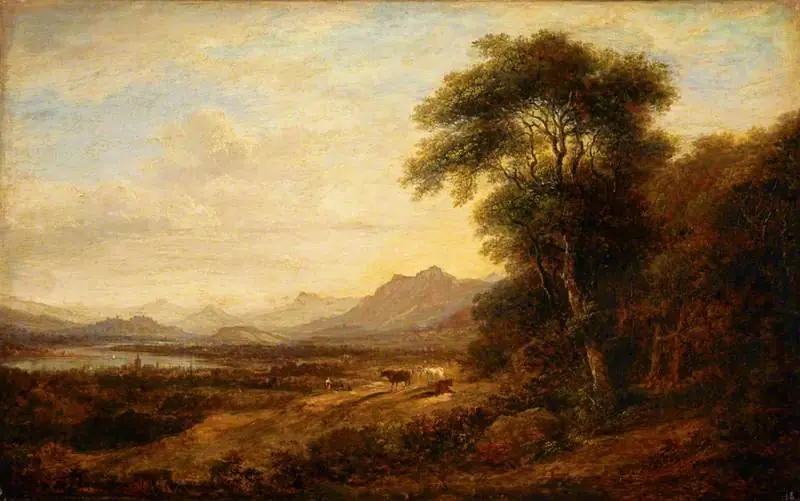 The Windings of the Forth (or The Forth near Alloa, Stirling in the distance)
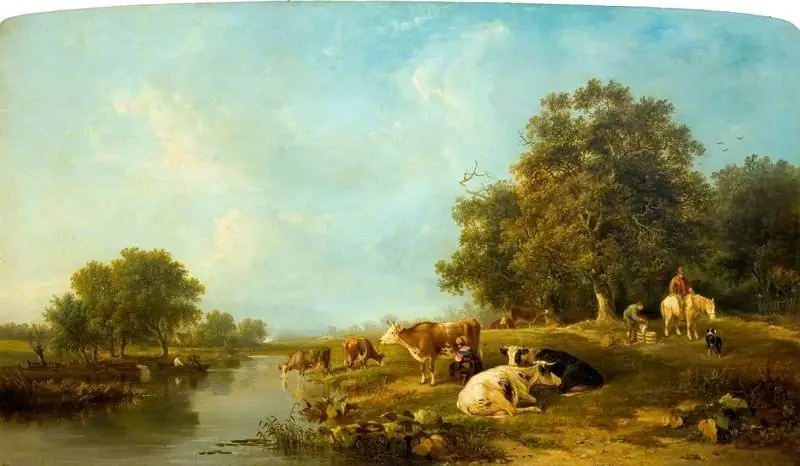 Landscape with Cattle: Milking Time
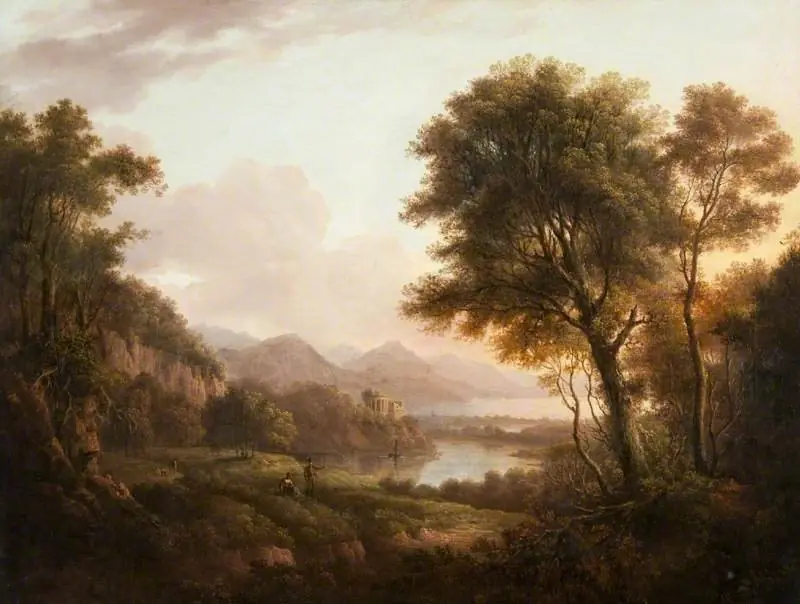 Landscape, Loch Katrine
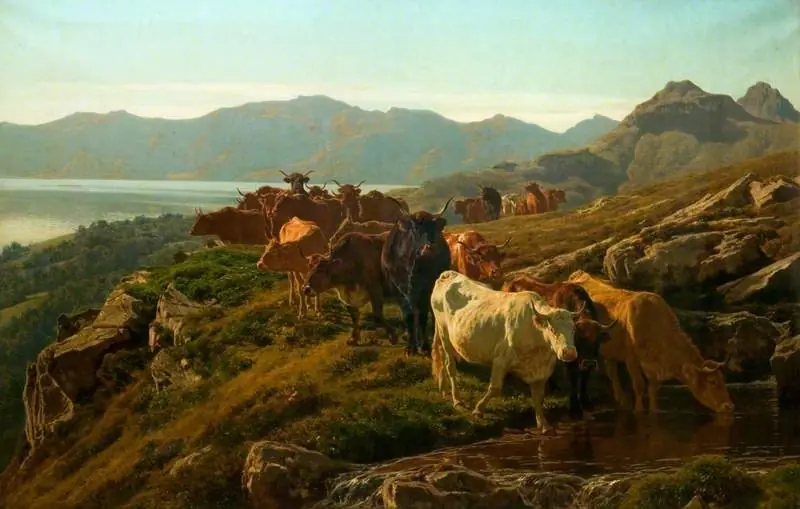 Highland Scene with Cattle
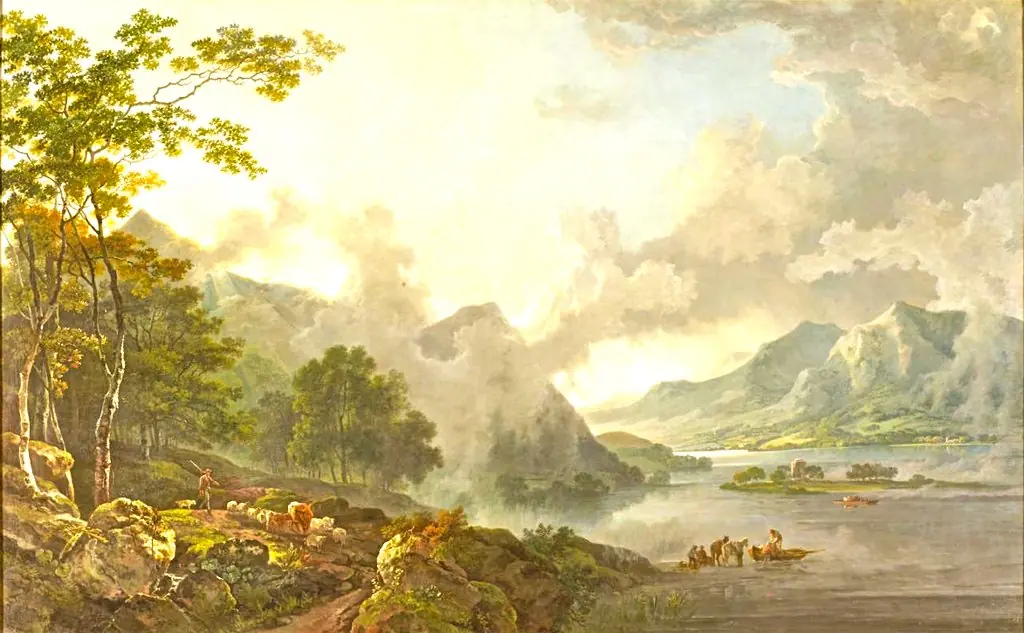 Lake Windermere with Belle Island
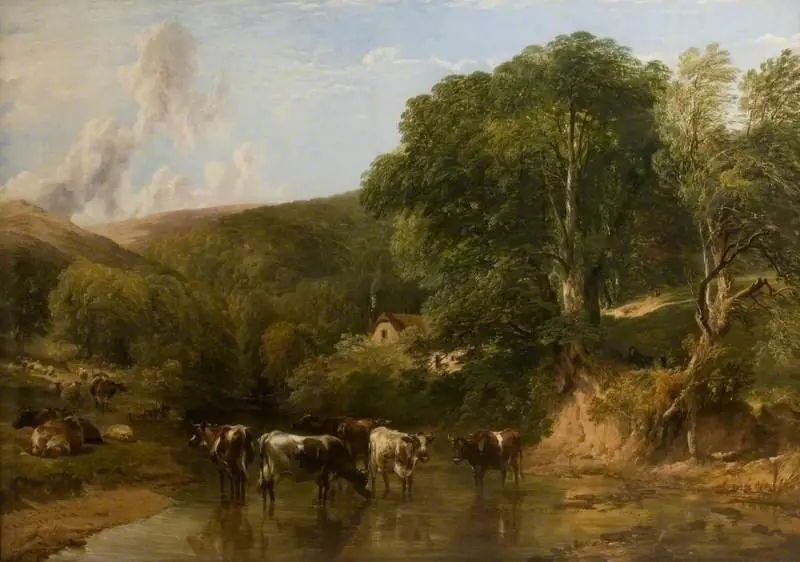 Wooded Glen
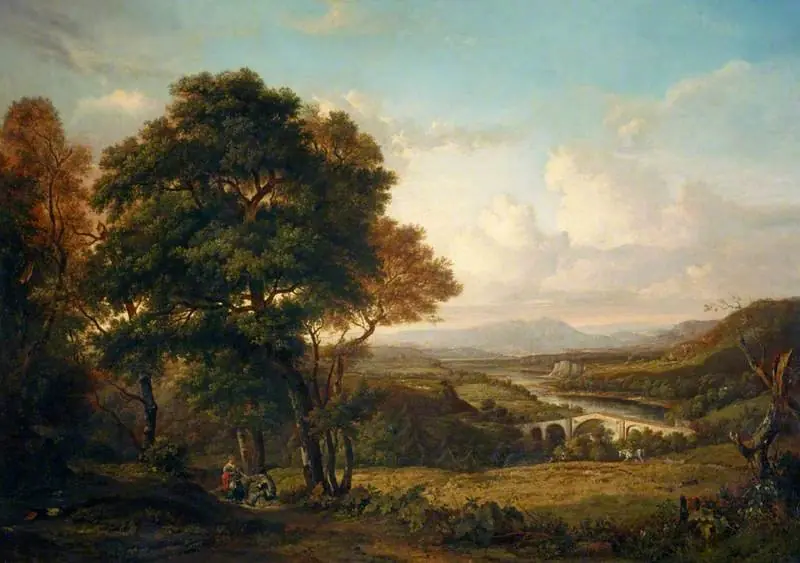 The Valley of the Tweed
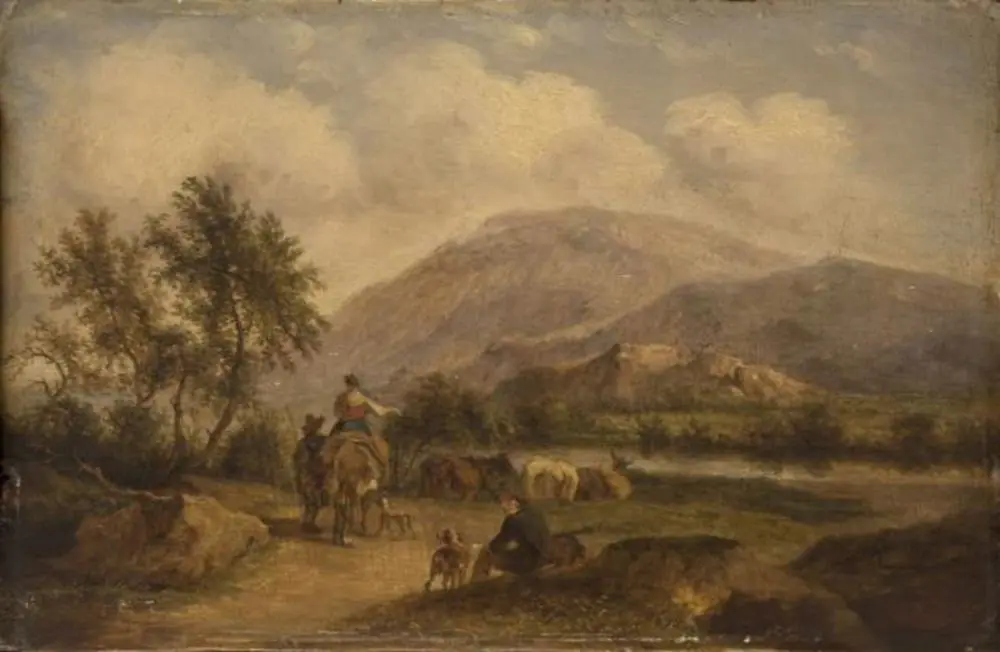 Landscape with Cattle, Italy
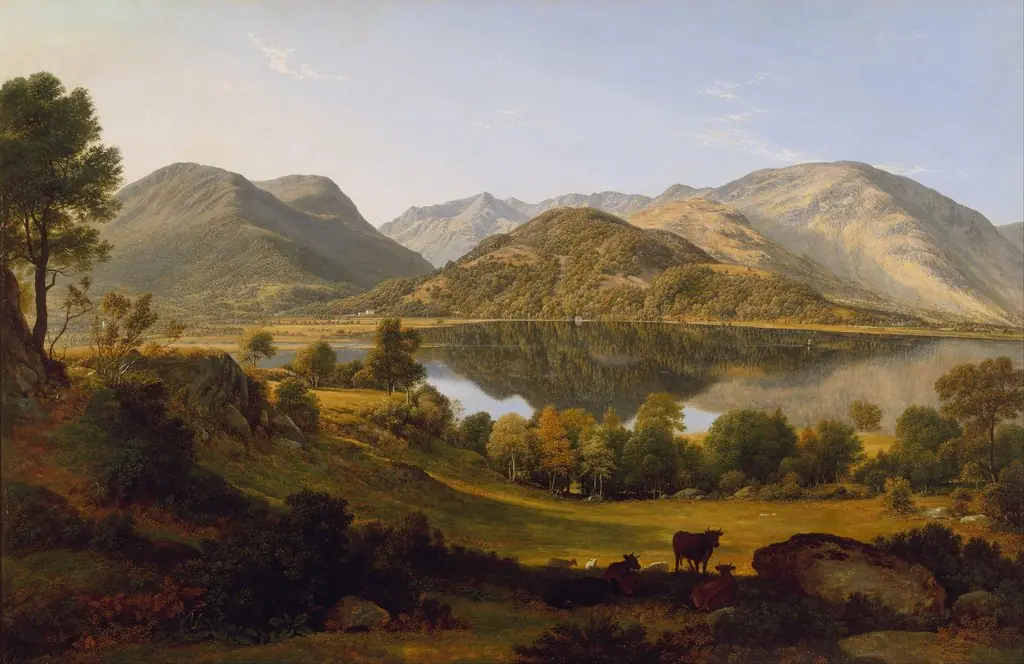 Ullswater, early morning