Artwork
Street Scene in Subiaco, Italy
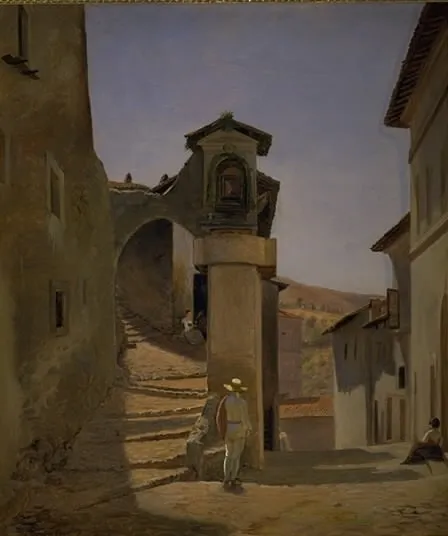
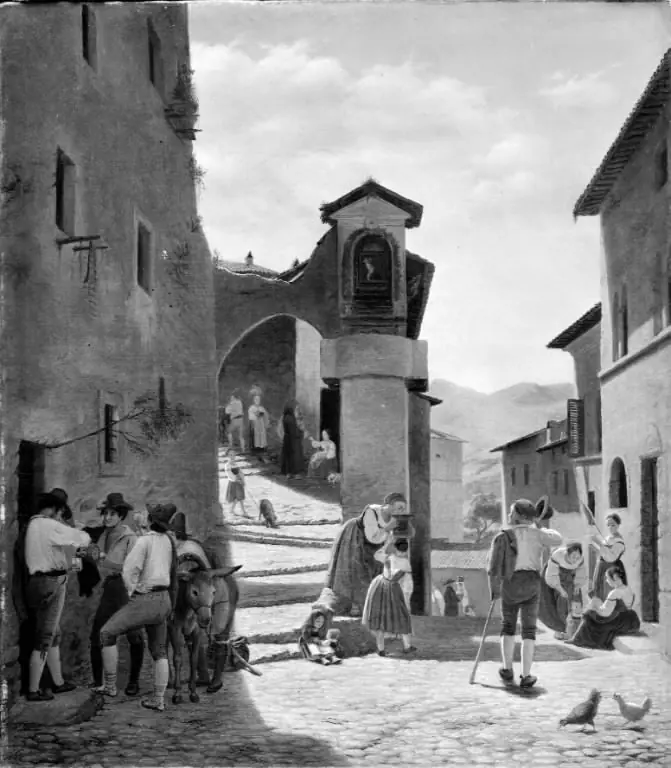
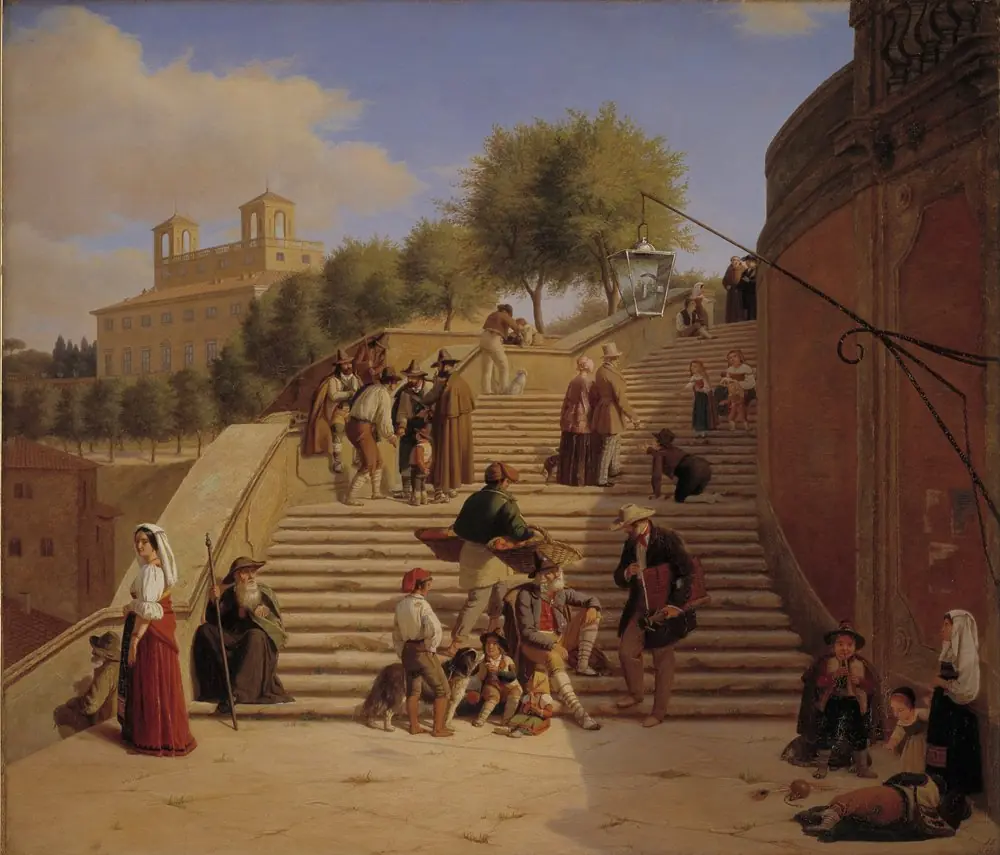
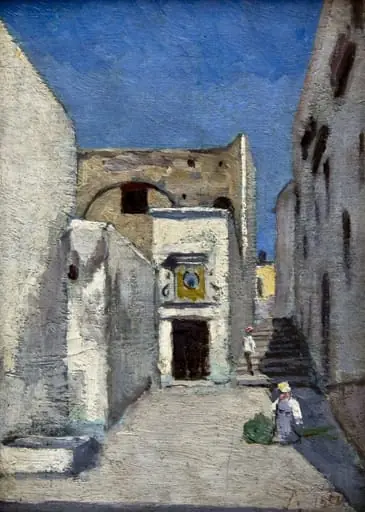
Street Scene in Subiaco, Italy is an oil painting by Julius Friedlænder. It dates from 1844 and is held in the collection of the Statens Museum for Kunst.
About this work
Overview
Its composition centers on a narrow urban alleyway, rendered with attention to natural light and architectural detail.
Painted in 1844 by Julius Friedlænder, this oil work captures a quiet moment in the Italian town of Subiaco. The painting is part of the collection at Statens Museum for Kunst in Copenhagen. Its composition centers on a narrow urban alleyway, rendered with attention to natural light and architectural detail. The scene avoids dramatic action, instead offering a contemplative view of daily life in mid-19th-century Italy.
Subject & Meaning
Two figures anchor the composition: one standing near a stone staircase, hat in place, and another seated on the ground to the right. Their presence suggests ordinary routines—waiting, resting—without narrative emphasis. The empty street and modest architecture imply a pause in time, reflecting a quiet rhythm of provincial life. The painting conveys no overt symbolism; its significance lies in its unembellished observation of place and stillness.
Technique & Style
Friedlænder employed oil paint to model form through subtle gradations of light and shadow. Warm ochres and umbers define the stone buildings, contrasting with the pale blue sky. Chiaroscuro enhances spatial depth, particularly along the staircase and wall surfaces. Textures are rendered with restrained brushwork—fabric folds, rough masonry—without excessive detail, favoring atmospheric cohesion over precision.
History & Provenance
Created during Friedlænder’s time in Italy, the painting entered the Danish national collection in the 19th century. Its acquisition by Statens Museum for Kunst reflects contemporary European interest in Italian genre scenes. No significant alterations or documented restorations are recorded. The work has remained in the museum’s holdings since its acquisition, with limited public exposure over time.
Context
Friedlænder painted this during a period when Nordic artists frequently traveled to Italy, drawn by its light and classical landscapes. While many focused on ruins or grand vistas, he chose an unremarkable street, aligning with emerging trends in realistic, everyday observation. This approach echoed broader shifts in European art toward intimate, non-heroic subjects, distinct from academic grandeur.
Legacy
The painting remains a quiet example of 19th-century Nordic realism influenced by Italian topography. It contributes to understanding how Northern artists interpreted Southern light and architecture without romanticizing them. Though not widely exhibited, it holds value as a representative work of its time—unassuming, carefully observed, and grounded in place.
Artist & collection