Artwork
The Upper Flights of the Spanish Steps in Rome
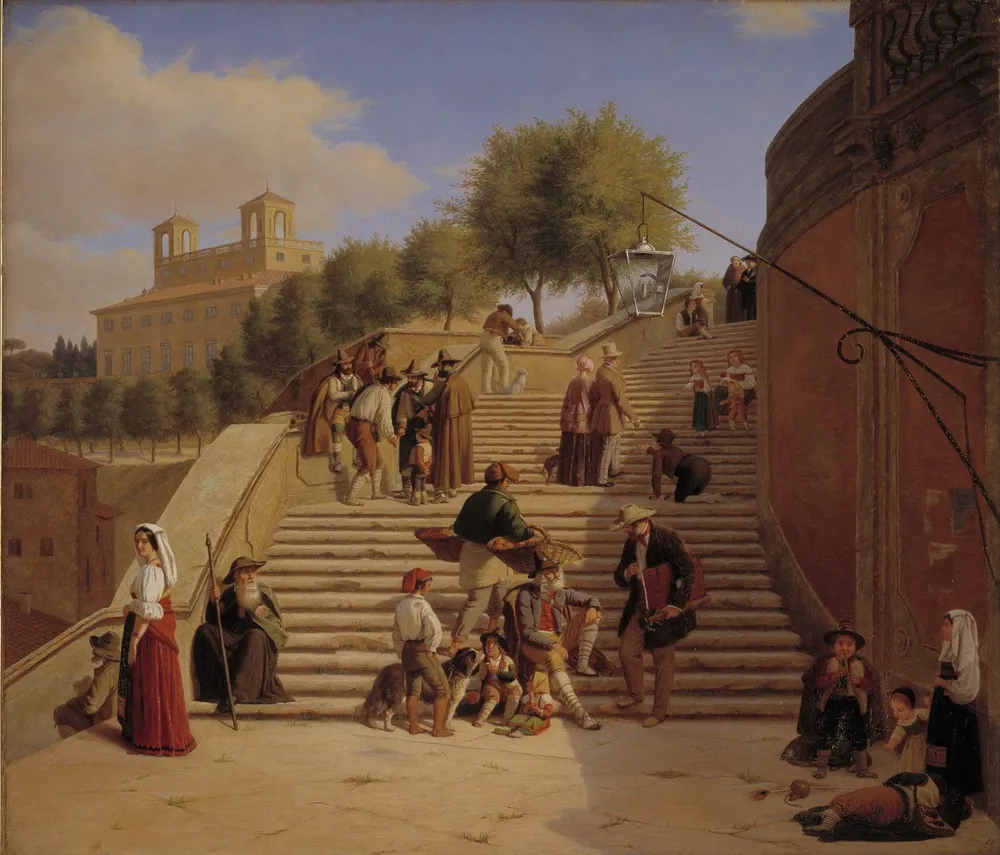
The Upper Flights of the Spanish Steps in Rome is an oil painting by Julius Friedlænder. It dates from 1847 and is held in the collection of the Statens Museum for Kunst.
About this work
Overview
Painted in 1847 by Julius Friedlænder, this oil on canvas captures the upper portion of Rome’s Spanish Steps during a lively daytime scene. The work belongs to the genre of everyday urban life, portraying a moment of public activity rather than a formal portrait or historical narrative. It is currently held in the collection of the Statens Museum for Kunst in Copenhagen.
Subject & Meaning
The scene presents a cross-section of Roman society—women in traditional dress, laborers carrying goods, children at play—gathered on the stone steps. No single figure dominates; instead, the composition emphasizes collective movement and quiet routine. The painting suggests a fascination with public space as a stage for ordinary human interaction, without overt symbolism or moralizing.
Technique & Style
Friedlænder employs chiaroscuro to define forms and suggest spatial depth, with light falling sharply across the steps and garments, casting distinct shadows. Brushwork is precise yet fluid, capturing textures like fabric, stone, and foliage without excessive detail. The sky, rendered in soft blues and whites, balances the grounded figures, creating a sense of airiness above the bustling stairs.
History & Provenance
It entered the Danish national collection in the 19th century, likely acquired through official channels or private donation.
The painting was completed during Friedlænder’s time in Italy, where he traveled to study European art and culture. It entered the Danish national collection in the 19th century, likely acquired through official channels or private donation. Its presence in Copenhagen reflects Denmark’s 19th-century interest in Italian scenes and genre painting, though the artist himself remained relatively obscure outside Nordic circles.
Context
Friedlænder worked during a period when Northern European artists increasingly traveled to Italy to document its architecture and daily life. The Spanish Steps, a well-known landmark, attracted painters seeking authentic urban scenes. This work aligns with broader trends in Romantic-era genre painting, where the mundane was elevated through careful observation and atmospheric lighting.
Legacy
Though not widely reproduced or studied today, the painting remains a quiet example of 19th-century Nordic engagement with Italian visual culture. It preserves a specific moment in Rome’s public life, offering insight into how foreign artists perceived and recorded local customs. Its preservation in a national museum underscores its value as a historical document rather than a celebrated work of art.
Artist & collection

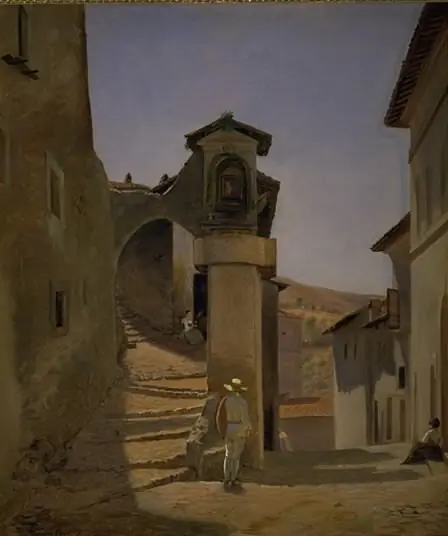
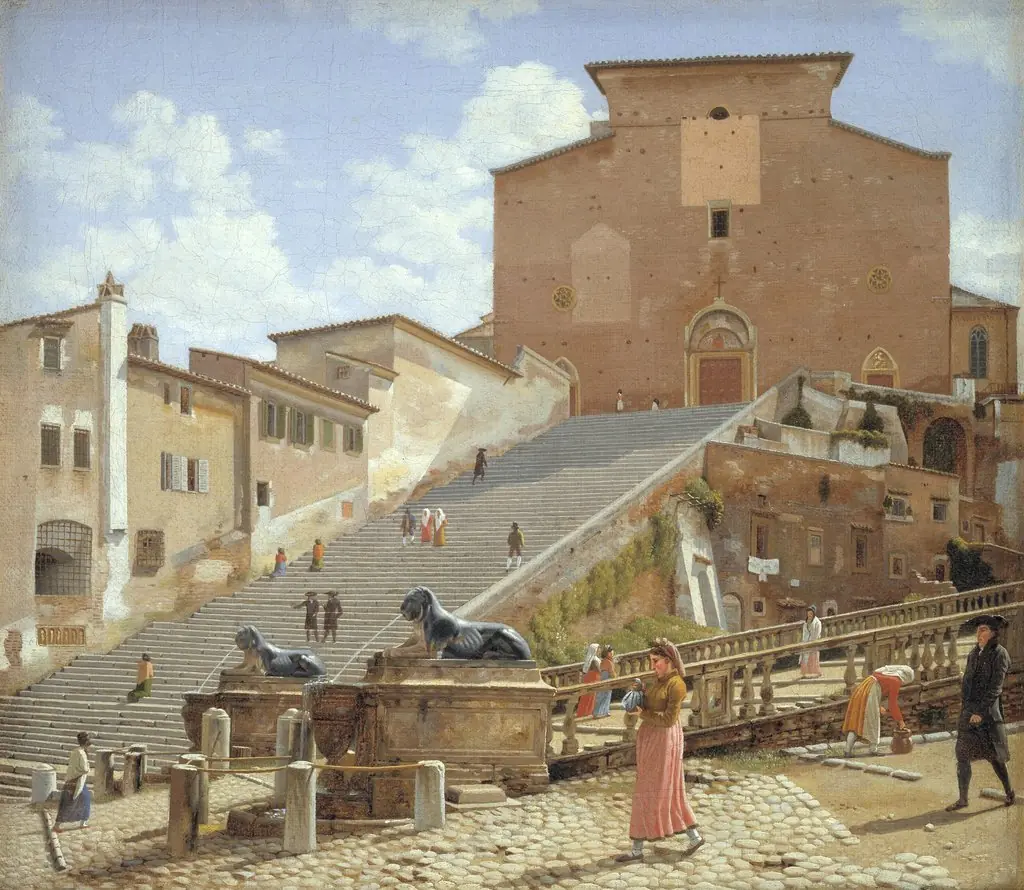 The Marble Steps Leading to the Church of Santa Maria in Aracoeli in Rome
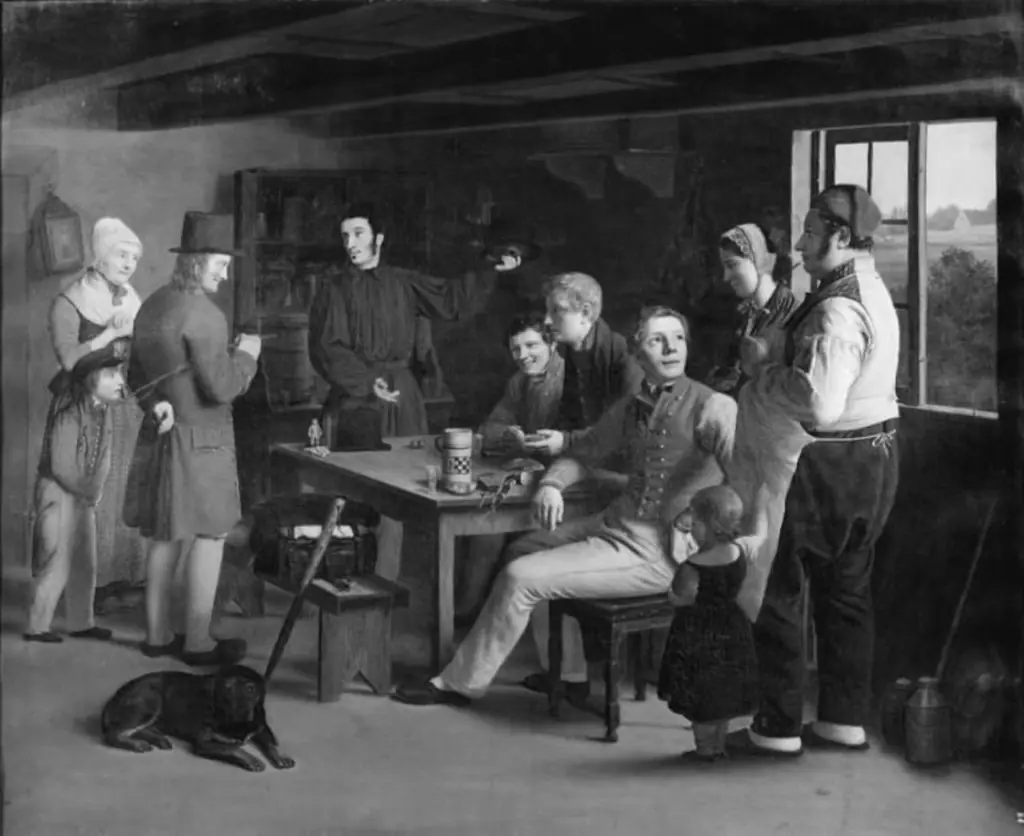
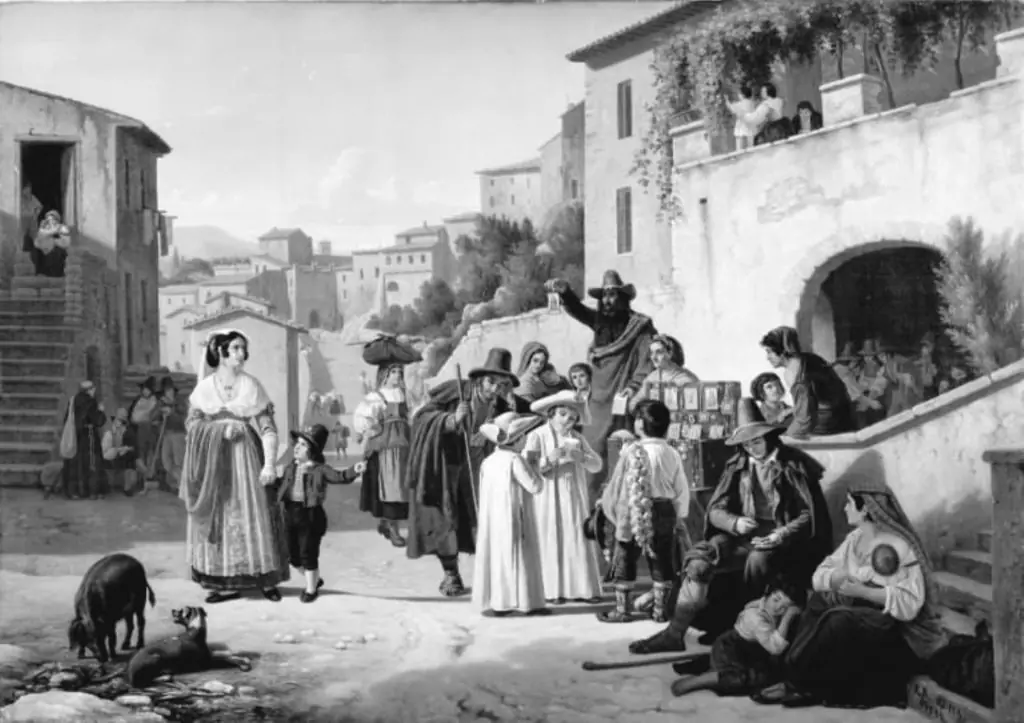 A Relic Dealer in Olevano
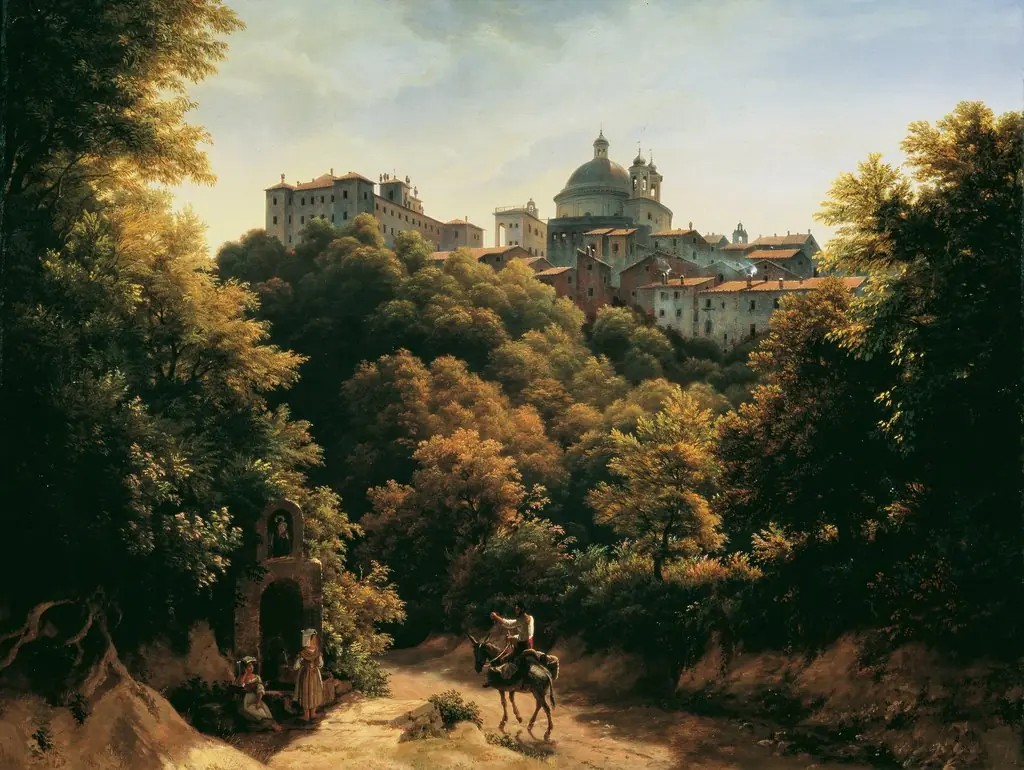 View of Ariccia
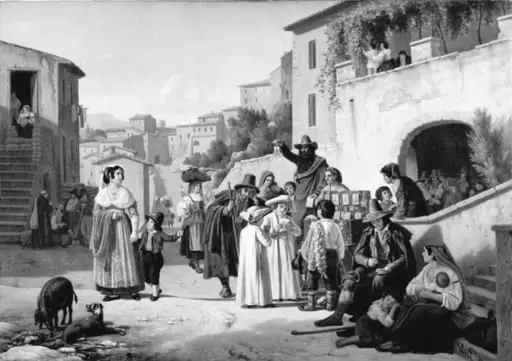 A Relic Dealer in Olevano
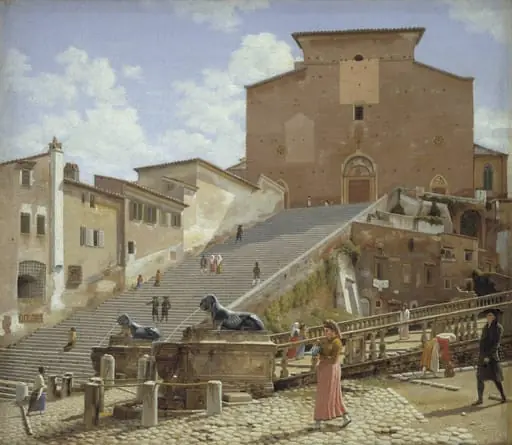 The Marble Steps leading up to the Church of Santa Maria in Aracoeli in Rome
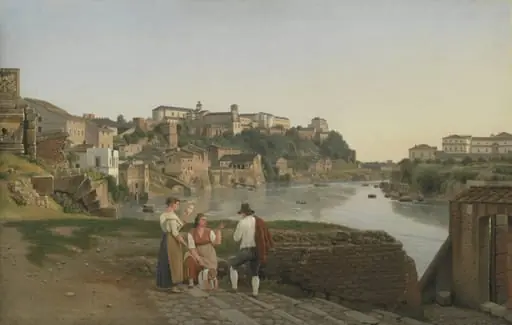 View of the Tiber towards the Aventin Hill in Rome
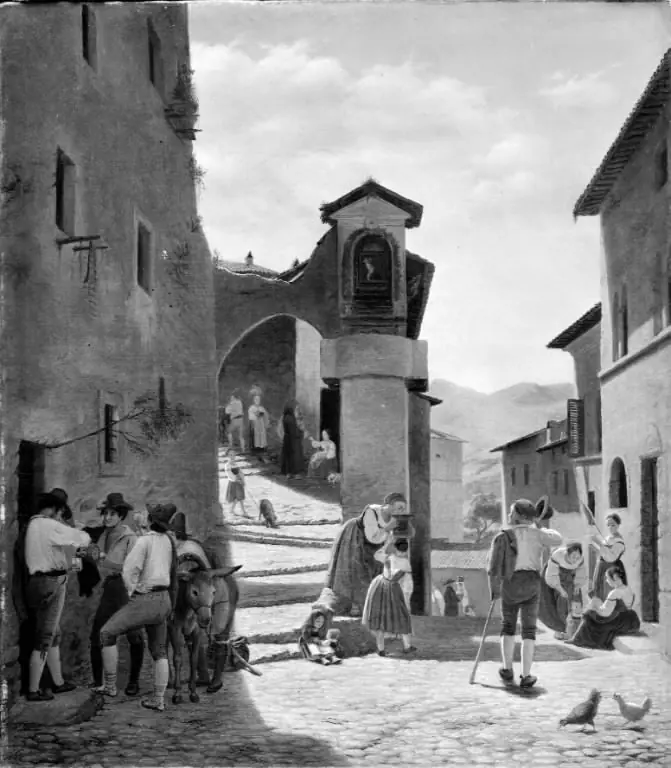
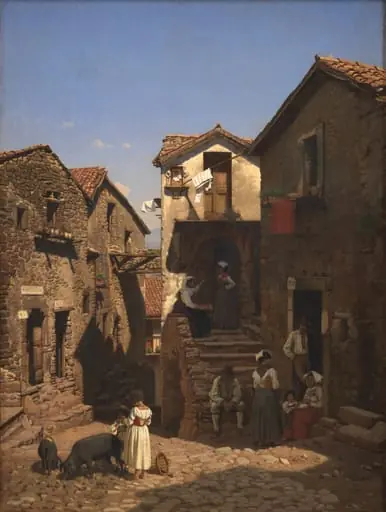 A Street in Gerano
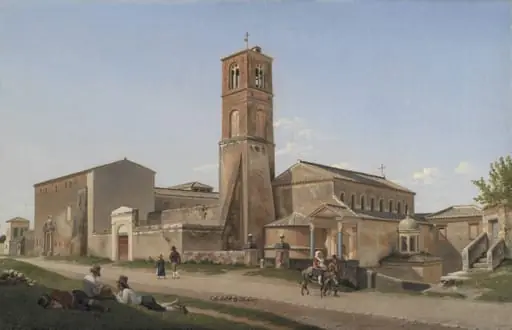 Sant'Agnese fuori le mura, Rome
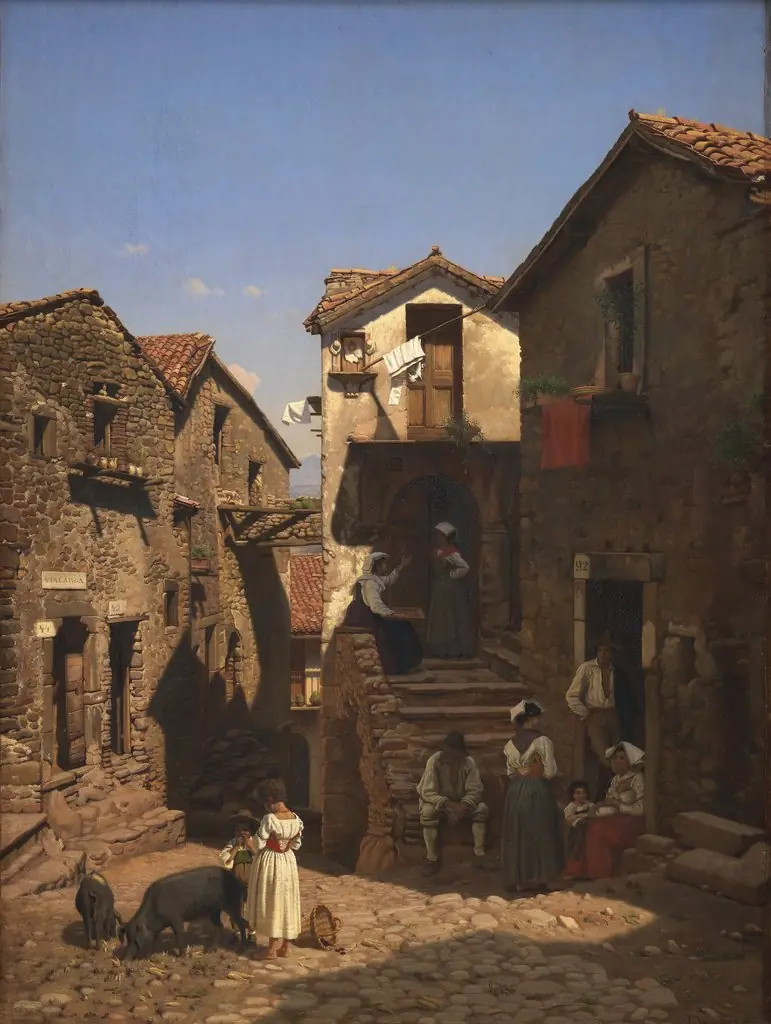 A Street in Gerano