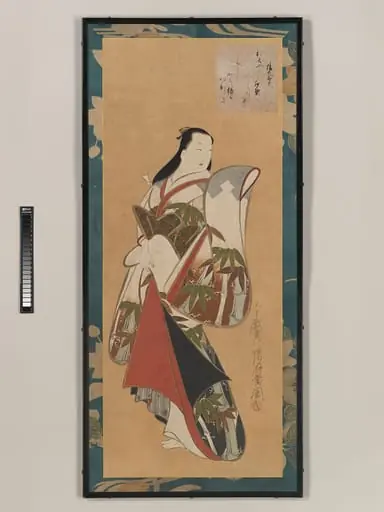
Artwork
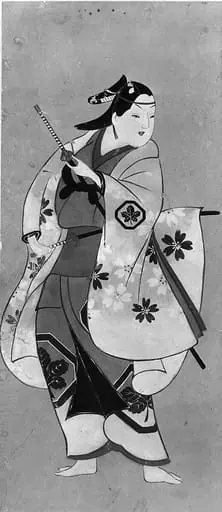
Sanjo Kantaro II in the Role of Urashima Taro
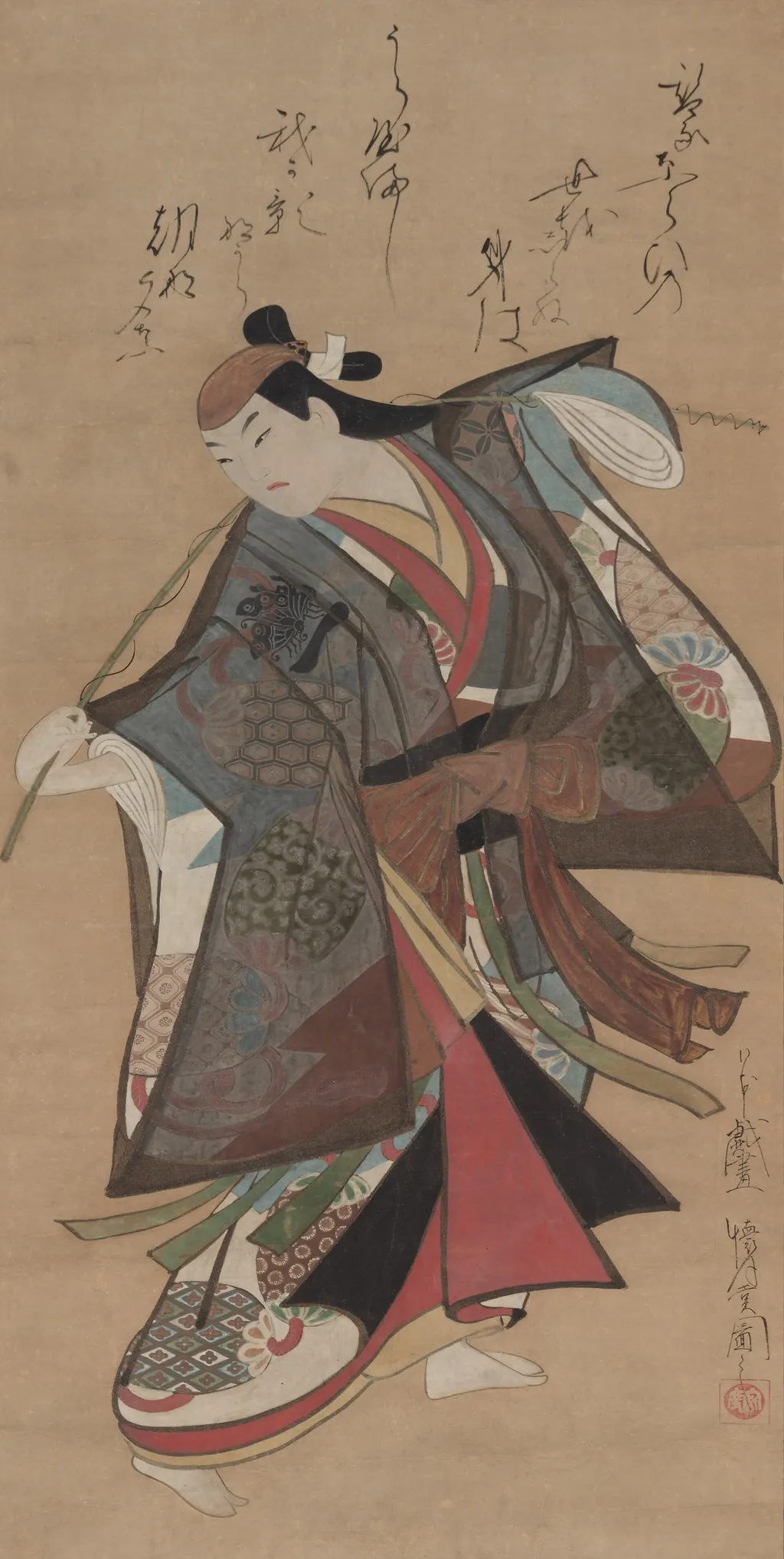
Sanjo Kantaro II in the Role of Urashima Taro is an unspecified painting by the Ukiyo-e artist Kaigetsudō. It dates from 1710 and is held in the collection of the Cleveland Museum of Art.
About this work
Overview
Created in 1710, this work is attributed to Kaigetsudō Ando, the founder of the Kaigetsudō school within the ukiyo‑e tradition. Unlike many of his contemporaries, Ando focused on painted works rather than woodblock prints. The composition presents a theatrical figure dressed in a vivid costume, set against a muted, light‑brown backdrop that emphasizes the central figure.
Subject & Meaning
The portrait depicts a kabuki actor portraying Urashima Taro, the legendary fisherman who journeys to an undersea palace in Japanese folklore. By selecting this role, the painting links popular theater with mythic narrative, reflecting the Edo period’s fascination with dramatizing traditional stories for urban audiences.
Technique & Style
Executed in the delicate brushwork characteristic of early eighteenth‑century ukiyo‑e painting, the piece combines bold color blocks with fine patterning on the kimono. The actor’s calm expression and poised stance are rendered with subtle gradations, while the white fan in his right hand provides a focal point that balances the composition.
History & Provenance
Although the Kaigetsudō workshop often involved contributions from apprentices, this painting is generally credited to Ando himself. It remains a representative example of the school’s output during its peak, illustrating the transition from exclusive painting to the later dominance of woodblock reproduction in ukiyo‑e.
Artist & collection