Artwork
Untitled
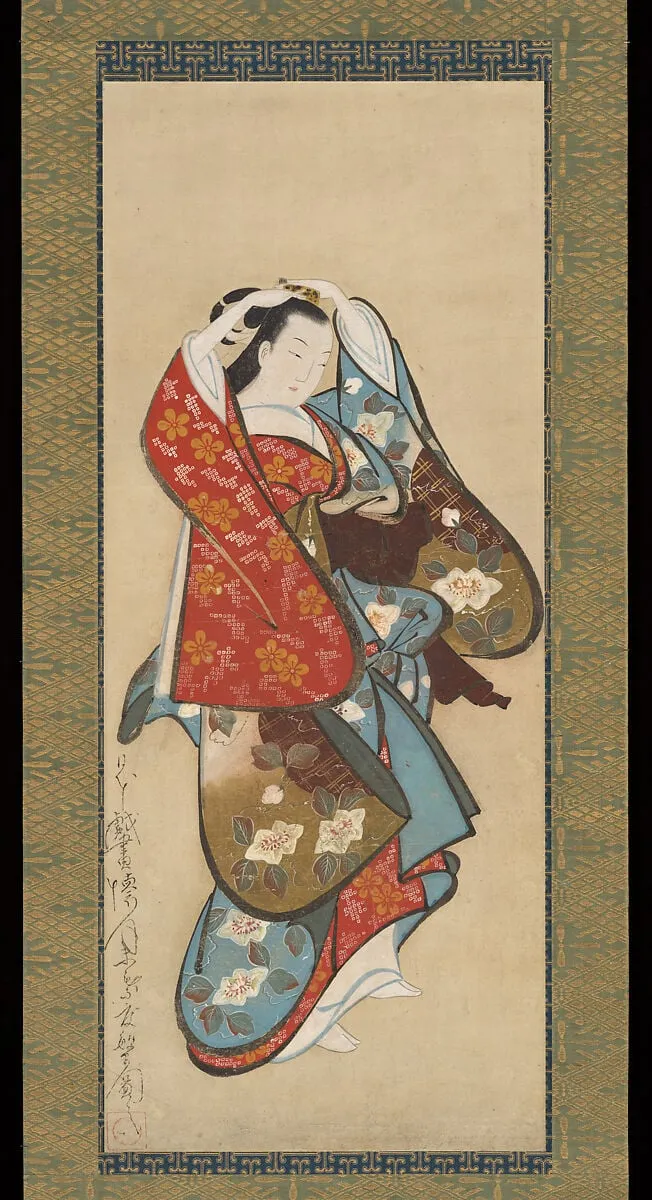
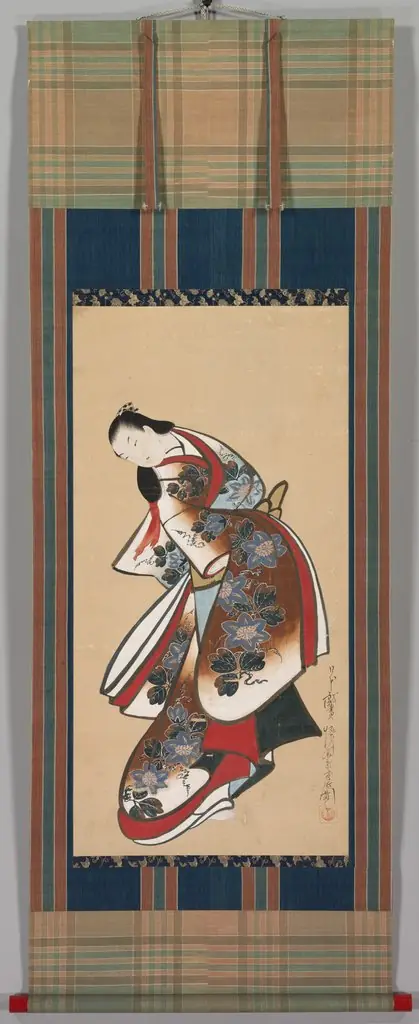
Untitled is an ink painting by the Baroque artist Kaigetsudō Dohan. It dates from 1713 and is held in the collection of the Metropolitan Museum of Art.
About this work
The robes are imaginary, not real kimono, so the folds and patterns become a kind of quiet poetry.
A woman in a bright red robe stands against a blank background. Her sleeves are so long they pool on the floor, and her black hair is swept into a high knot.
Kaigetsudō Dohan painted only women like this—elegant, still, and slightly larger than life. The robes are imaginary, not real kimono, so the folds and patterns become a kind of quiet poetry. No one knows why he stopped signing his work after 1716.
Look up *ukiyo-e* next to see how other Japanese artists showed women in the same era.
Overview
Created in 1713, this hanging scroll by Kaigetsudō Dohan presents a solitary female figure rendered in ink and color on paper. The work, catalogued without a formal title, exemplifies the artist’s focus on portraiture within the early Edo period, offering a glimpse into the stylized representation of women that characterized his brief but distinctive output.
Subject & Meaning
The central figure is a woman clad in a vivid red garment, her elongated sleeves spilling onto the floor. Her hair is gathered into a high knot, a conventional coiffure of the time. The composition emphasizes poise and stillness, suggesting an idealized femininity that transcends specific identity, inviting contemplation of grace and presence.
Technique & Style
Executed as a hanging scroll, the piece combines delicate ink lines with subtle color washes. Dohan’s treatment of the robe’s folds departs from realistic kimono patterns, instead employing imagined drapery that creates a rhythmic visual poetry. The exaggerated proportions—slightly larger than life—enhance the figure’s elegance while maintaining a restrained, almost meditative atmosphere.
History & Provenance
Kaigetsudō Dohan’s career is marked by a sudden cessation of signatures after 1716, leaving the chronology of his later works uncertain. This 1713 scroll belongs to the early phase of his practice, when he exclusively depicted women. Its provenance traces through private collections before entering the museum’s holdings, where it remains a representative example of his singular approach to portraiture.
Artist & collection