Artwork
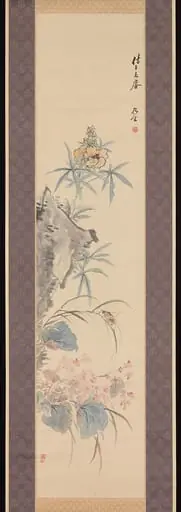
Amaranthus and Mynah Bird
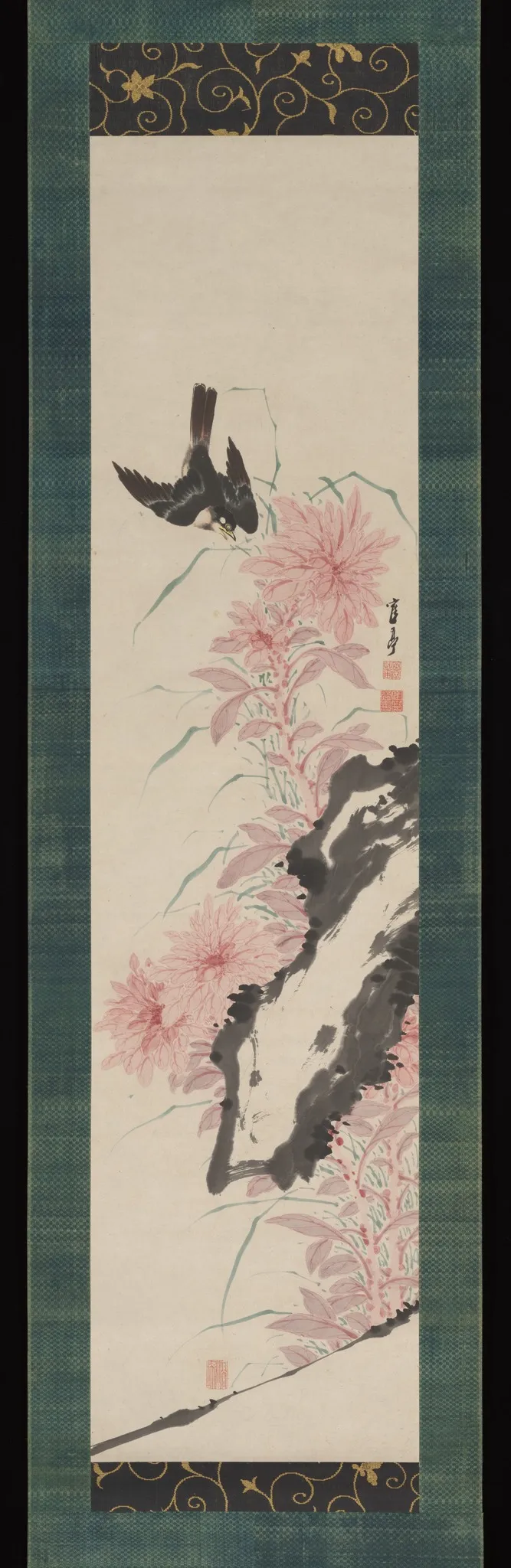
Amaranthus and Mynah Bird is an unspecified painting by the Ukiyo-e artist Kakutei. It dates from 1753 and is held in the collection of the Metropolitan Museum of Art.
About this work
Overview
Amaranthus and Mynah Bird is a mid‑eighteenth‑century painting attributed to the Japanese artist Kakutei, dated 1753. The work is part of the collection of the Metropolitan Museum of Art in New York. It presents a solitary black bird in flight juxtaposed with delicate pink amaranth blossoms, set against a largely unfilled background that emphasizes the central motif.
Subject & Meaning
The composition pairs a mynah bird, poised as if about to alight, with slender stems crowned by vivid pink flowers. The contrast between the bird’s dark silhouette and the luminous petals may suggest a dialogue between movement and stillness, or the fleeting nature of life against the enduring beauty of flora, a theme common in East Asian visual poetry.
Technique & Style
Kakutei employs restrained brushwork, using bold, dark strokes to define the bird’s wings while rendering the blossoms with softer, lighter touches. The limited palette and the sparseness of the background create a sense of immediacy, allowing the viewer’s eye to focus on the interplay of form and color without decorative distraction.
History & Provenance
Created in 1753, the painting entered the Metropolitan Museum of Art’s holdings through acquisition in the early twentieth century, though the precise path from its original Japanese context to the museum’s collection is not fully documented. Its presence in a major Western institution reflects the broader interest in Edo‑period Japanese art that grew among collectors during that period.
Artist & collection