Artwork
După târg (La încercat de basmale)
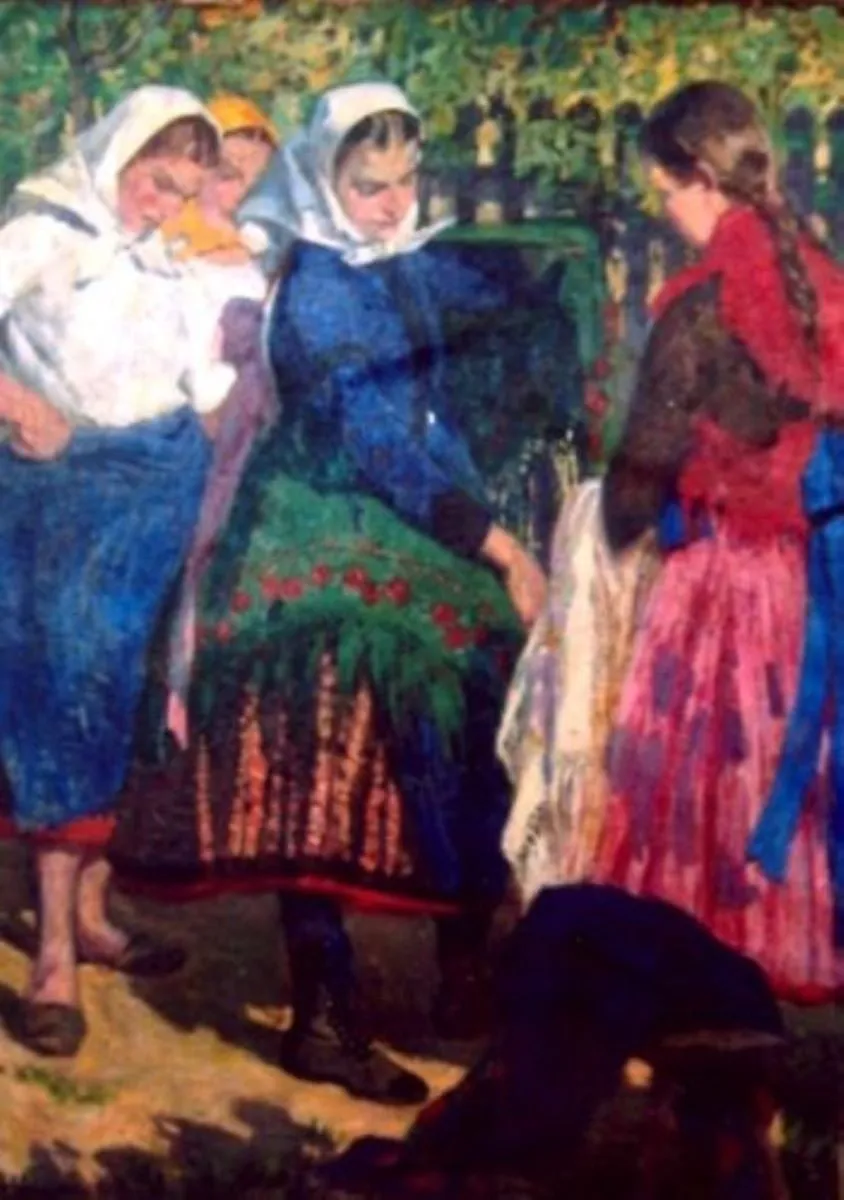
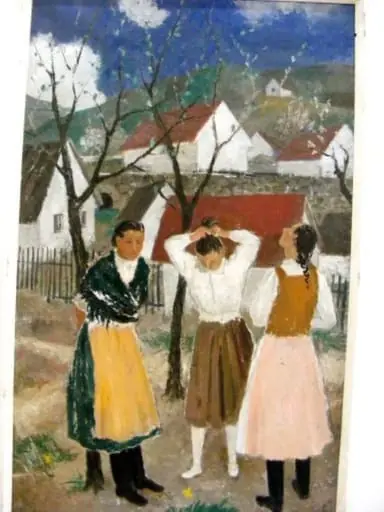
După târg (La încercat de basmale) is an unspecified painting by Katalin Kaliova. It dates from 1909 and is held in the collection of the Mureș County Museum - Art Museum.
About this work
Overview
The painting is held in the collection of the Museum of Ethnography and reflects an interest in everyday life among Transylvanian communities.
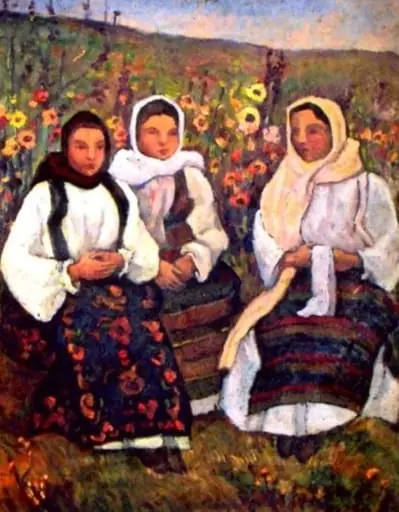
Painted around 1909 by Katalin Kaliova, După târg (La încercat de basmale) depicts three women in a rural setting, their figures rendered with bold, tactile brushwork. The painting is held in the collection of the Museum of Ethnography and reflects an interest in everyday life among Transylvanian communities. Its thick application of paint gives the surface a physical presence, emphasizing texture over fine detail.
Subject & Meaning
The three women, standing in close proximity, appear to have just concluded a market transaction. The central figure, holding a woven basket, wears a dress adorned with red floral embroidery, suggesting regional dress traditions. The others, dressed in simpler garments, may represent familial or communal ties. The scene conveys quiet dignity in routine labor, without overt narrative or symbolism.
Technique & Style
Kaliova employs impasto to build the surfaces of fabric and foliage, creating a sense of material weight. Colors—earthy greens, deep blues, and vivid reds—are applied with visible, energetic strokes that enhance the tactile quality of the scene. The background is loosely rendered, with blurred shapes suggesting a garden or field, allowing the figures to dominate the composition through texture and color contrast.
History & Provenance
The painting entered the Museum of Ethnography’s collection in the early 20th century, likely acquired as part of efforts to document regional folk culture. Its attribution to Kaliova, a lesser-known artist of the period, reflects a broader interest in preserving vernacular visual traditions. No significant changes in ownership are recorded, and it has remained in institutional care since acquisition.
Context
Created during a period of heightened interest in rural life across Eastern Europe, the work aligns with ethnographic documentation movements. Kaliova’s focus on women’s attire and post-market activity mirrors scholarly efforts to record traditional dress and social rituals. The painting avoids romanticism, instead presenting its subjects with observational clarity and restrained emotion.
Legacy
Though not widely exhibited beyond its institutional home, După târg remains a significant example of early 20th-century Romanian ethnographic painting. It contributes to the visual record of Transylvanian peasant life, valued for its unembellished portrayal and material richness. The work continues to inform studies of regional identity and the role of women in rural economies.
Artist & collection
Artist