Artwork
狩野探幽・狩野尚信・清原雪信 花鳥図屏風|Birds and Flowers
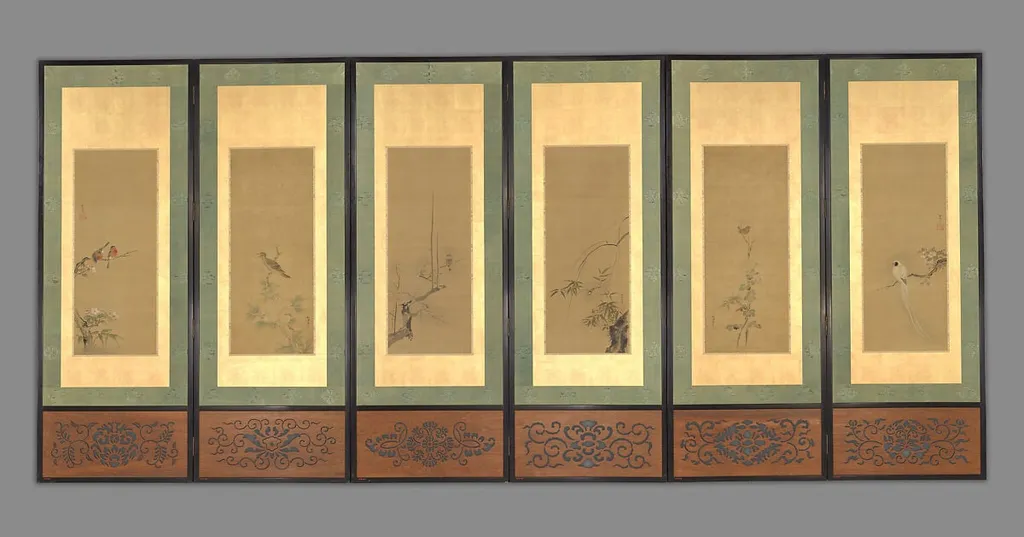
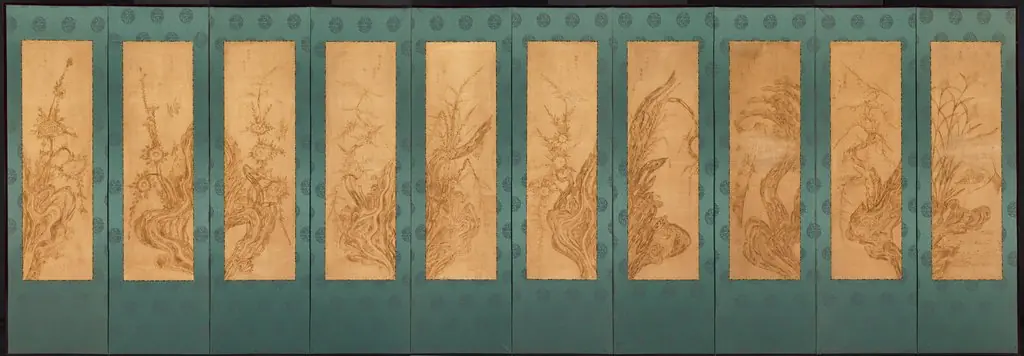
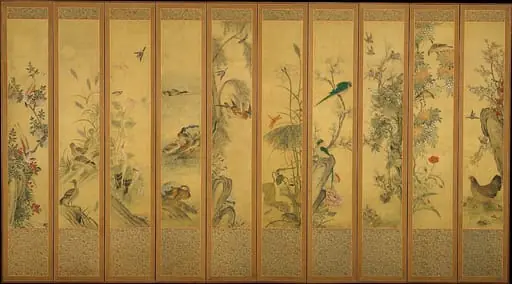
狩野探幽・狩野尚信・清原雪信 花鳥図屏風|Birds and Flowers is an ink painting by the Baroque artist Kano Tan'yū|Kiyohara Yukinobu|Kano Naonobu. It dates from 1650 and is held in the collection of the Metropolitan Museum of Art. This six-panel folding screen, titled Birds and Flowers, is a collaborative work created around 1650.
About this work
Overview
The inclusion of a female artist, Kiyohara Yukinobu, on a prominent piece from 17th-century Japan is a distinctive aspect of this painting.
This six-panel folding screen, titled Birds and Flowers, is a collaborative work created around 1650. It features intricate depictions of birds among flowering branches, rendered in ink and color on silk. Notably, three artists contributed to its creation: Kano Tan'yū, Kano Naonobu, and Kiyohara Yukinobu. The inclusion of a female artist, Kiyohara Yukinobu, on a prominent piece from 17th-century Japan is a distinctive aspect of this painting.
Subject & Meaning
The screen's imagery centers on the natural world, specifically birds perched amidst vibrant flowering branches. This "birds and flowers" (kacho-ga) motif was a popular theme in Japanese painting, often symbolizing the changing seasons or conveying auspicious meanings. The composition fills each of the six panels, creating a continuous landscape that celebrates the delicate beauty and vitality of flora and fauna.
Technique & Style
Executed with ink and color on silk, the screen showcases meticulous brushwork. The artists employed fine brushes to apply numerous tiny strokes, carefully building up the textures of feathers and petals. This layering technique creates a rich visual depth, reminiscent of the intricate detail found in fine textiles or embroidery. The delicate rendering highlights a sophisticated approach to depicting natural forms.
Context
This screen represents a significant collaboration within the Kano school, a prominent lineage of Japanese painters. The involvement of Kiyohara Yukinobu alongside male artists Kano Tan'yū and Kano Naonobu is particularly noteworthy. During the 17th century, it was uncommon for women artists to receive public recognition on major commissions, making her contribution to this large-scale work a rare historical instance.
Artist & collection

Artist
Kano Tan'yū|Kiyohara Yukinobu|Kano Naonobu
Japanese, 1602–1674|Japanese, 1643–1682|Japanese, 1607–1650