Artwork
Wave I
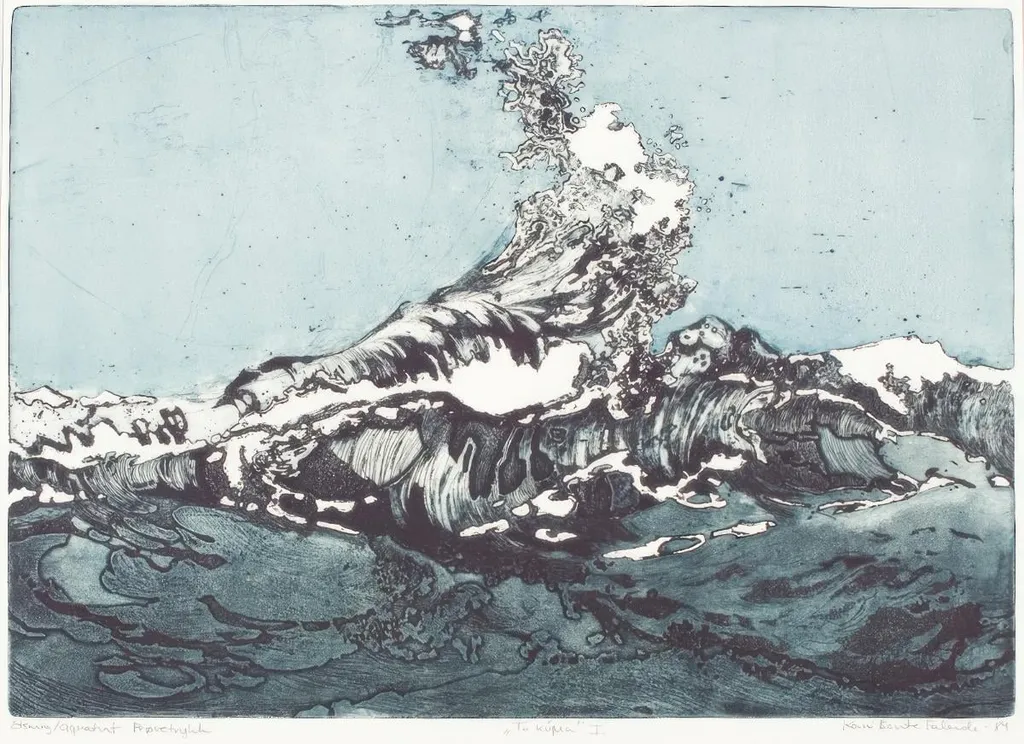
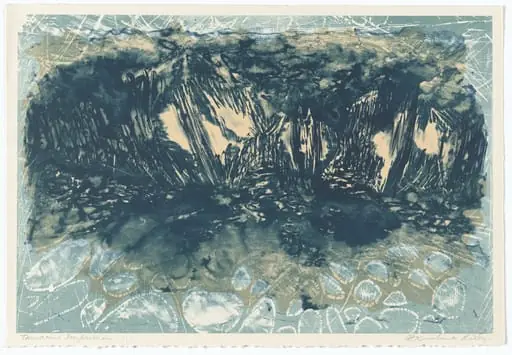
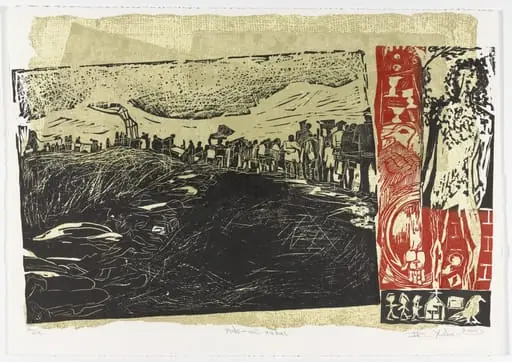
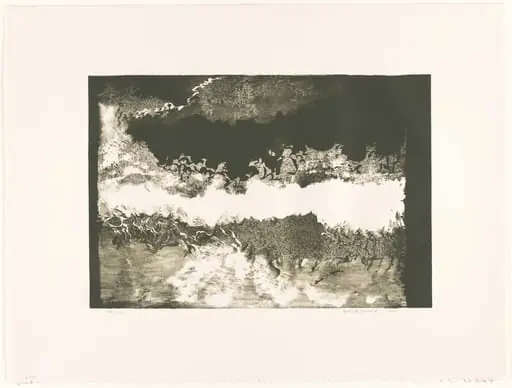
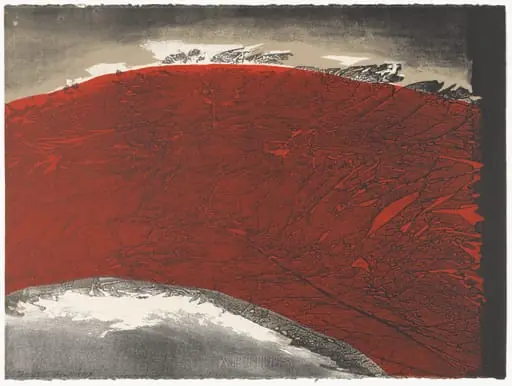
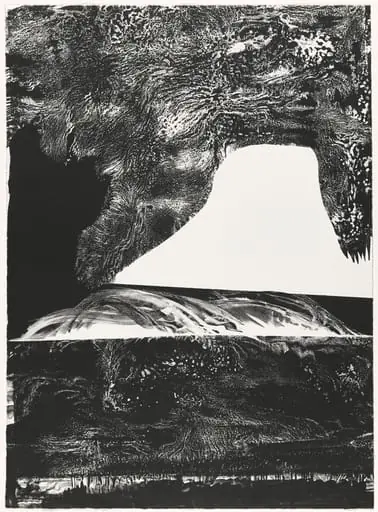
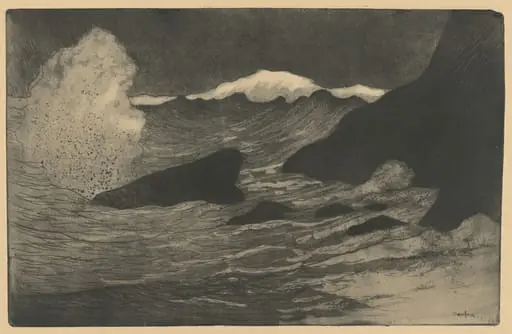
Wave I is a print by Kari Faleide. It is held in the collection of the Athens School of Fine Arts. This print depicts a dramatic ocean wave colliding with rugged coastal cliffs.
About this work
Overview
Rendered in high-contrast ink, the composition emphasizes motion and force through dense, swirling lines and abrupt tonal shifts.
This print depicts a dramatic ocean wave colliding with rugged coastal cliffs. Rendered in high-contrast ink, the composition emphasizes motion and force through dense, swirling lines and abrupt tonal shifts. The pale sky and minimal cloud suggest a vast, indifferent atmosphere, underscoring the wave’s raw energy. The work belongs to a tradition of landscape prints that prioritize emotional intensity over topographical accuracy.
Subject & Meaning
The subject is the moment of impact between sea and land, capturing nature’s untamed power. The wave is not merely a natural phenomenon but a force that overwhelms the immovable cliffs, suggesting themes of impermanence and elemental conflict. The absence of human figures or signs of civilization reinforces a sense of isolation and the primacy of natural forces.
Technique & Style
The artist employs bold black ink lines to define the wave’s crest and the cliffs’ edges, while lighter washes suggest foam and spray. The texture is built through layered, almost chaotic brushwork, evoking turbulence rather than precision. The stark contrast between dark water and pale rock enhances the sense of violence in the collision, creating a dynamic visual rhythm.
History & Provenance
The print’s origins are undocumented in public records, and no known exhibition history or collector lineage has been established. It is attributed to an anonymous or lesser-known artist working within a modern printmaking tradition that draws from Japanese ukiyo-e and Western expressionist techniques. Its production date remains uncertain.
Context
This work aligns with early 20th-century print movements that sought to convey emotional states through abstraction and bold graphic forms. While not part of a named school, its aesthetic echoes contemporaneous experiments in Japan and Europe, where artists used ink and paper to explore nature’s sublime and destructive qualities outside academic conventions.
Legacy
The print’s stylistic approach—emphasizing texture, contrast, and movement over detail—has influenced independent printmakers interested in nature’s raw expression. Though not widely reproduced or studied, its visual language continues to resonate with artists exploring the intersection of printmaking and environmental themes.
Artist & collection
Artist
This printmaker captured the ocean’s energy in bold, rhythmic lines. “Wave I” shows a curling crest frozen in black and white, its lines sharp enough to suggest sound. There’s no label for style or era in the notes, so…