Artwork
Trouville (Grey and Green, the Silver Sea)
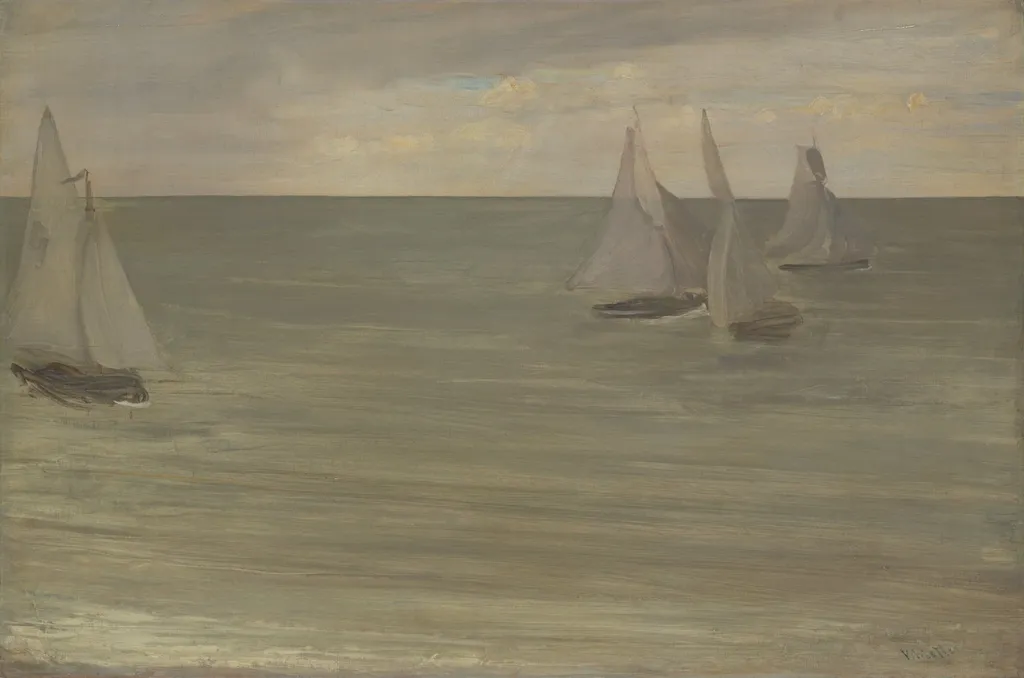
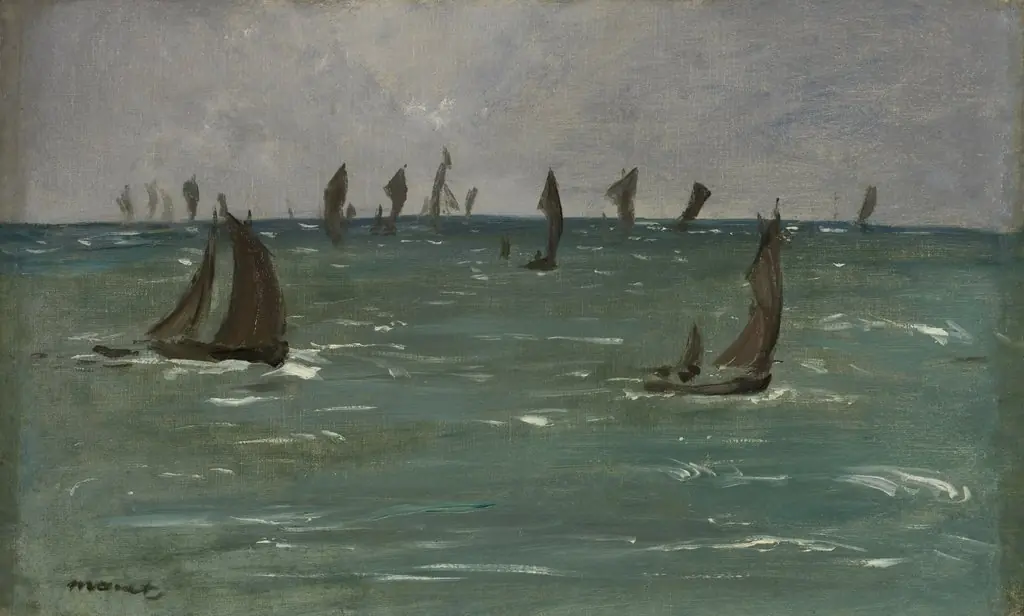
Trouville (Grey and Green, the Silver Sea) is an oil painting by the American Impressionist artist James McNeill Whistler. It dates from 1865 and is held in the collection of the Art Institute of Chicago. Painted in 1865 during Whistler’s stay in Trouville, this oil on canvas captures a quiet coastal scene at twilight.
About this work
Overview
Painted in 1865 during Whistler’s stay in Trouville, this oil on canvas captures a quiet coastal scene at twilight. Departing from traditional narrative painting, Whistler reduced the composition to essential forms—sky, sea, and distant boats—emphasizing tonal harmony over detail. The work reflects his growing commitment to art focused on aesthetic arrangement rather than storytelling.
Subject & Meaning
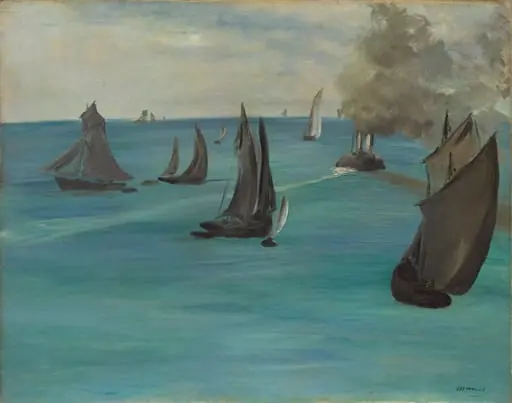
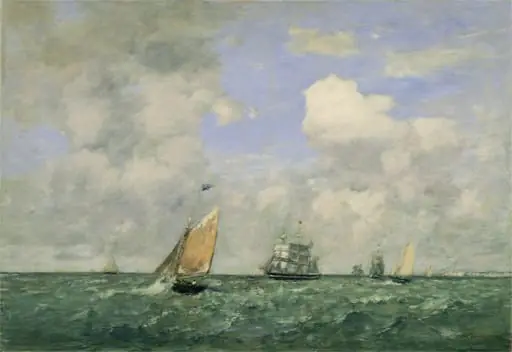
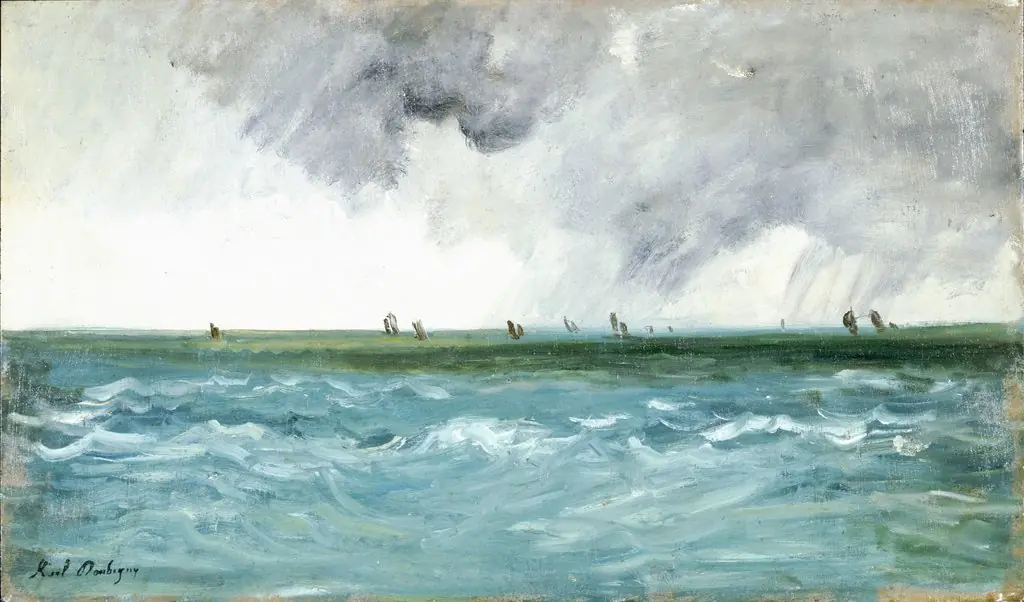
The scene depicts a tranquil beach at dusk, with no human figures or dramatic action. A high horizon line divides a pale gray sky from a silvery sea, punctuated only by a few indistinct boats. By eliminating conventional elements like waves or activity, Whistler shifts focus to mood and atmosphere, inviting contemplation of light, space, and color relationships.
Technique & Style
Whistler employed broad, horizontal brushstrokes and a restrained palette of soft grays and pale greens, creating a flattened, almost abstract surface.
Whistler employed broad, horizontal brushstrokes and a restrained palette of soft grays and pale greens, creating a flattened, almost abstract surface. The thin layers of paint and subtle tonal shifts suggest glazing techniques, enhancing the sense of atmospheric depth without modeling form. This approach echoes the compositional clarity and minimalism found in Japanese woodblock prints he admired.
History & Provenance
Created during Whistler’s time in Trouville, where he painted alongside Gustave Courbet, the work emerged from a period of artistic experimentation. It belongs to a series of seascapes in which he progressively simplified forms, moving away from realism toward tonal abstraction. The painting remained in Whistler’s possession until his death, later entering a major public collection.
Context
In mid-1860s France, Whistler’s approach stood apart from prevailing academic and Realist traditions. His focus on formal qualities aligned with emerging ideas of aesthetic autonomy, influenced by Japanese prints and the writings of Théophile Gautier. Trouville’s quiet shoreline offered an ideal setting for his exploration of light and tone beyond narrative convention.
Legacy
This painting exemplifies Whistler’s pivotal role in shifting Western art toward abstraction and tonal harmony. Its reduction of subject to color and composition influenced later movements, including Impressionism and modernist abstraction. The work remains a key example of his belief that art’s value lies in its visual structure, not its subject matter.
Own this work as a print
Artist & collection
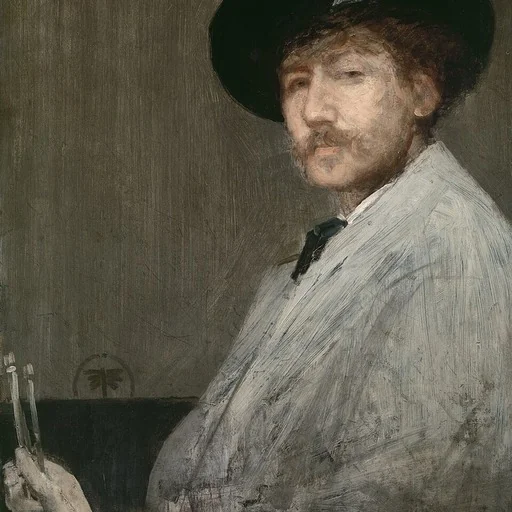
Artist
James Abbott McNeill Whistler was an American painter in oils and watercolor, and printmaker, active during the American Gilded Age and based primarily in the United Kingdom.

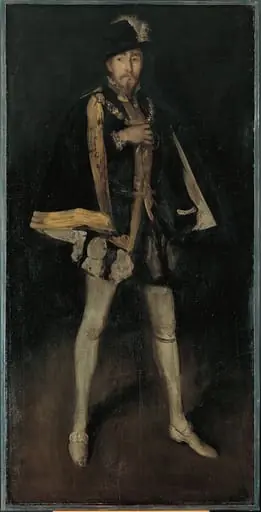 Arrangement in Black, No. 3: Sir Henry Irving as Philip II of Spain
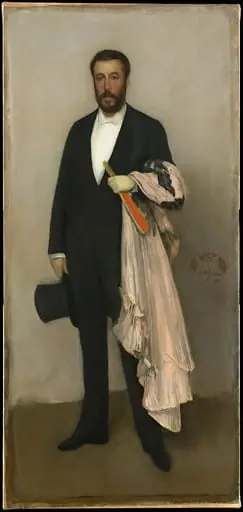 Arrangement in Flesh Colour and Black: Portrait of Theodore Duret
 Gold and Brown: Self-Portrait
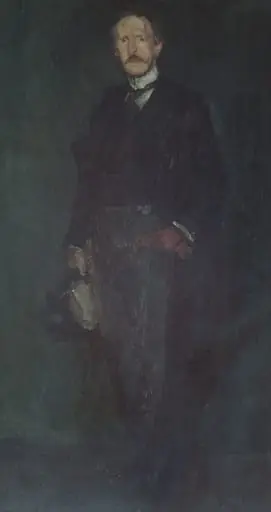 Edward Guthrie Kennedy
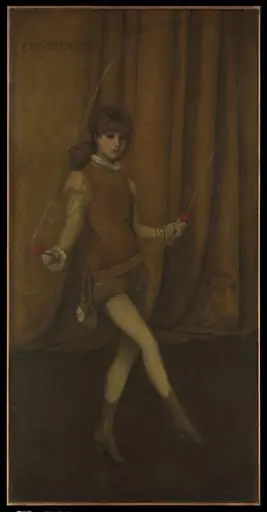 Harmony in Yellow and Gold: The Gold Girl—Connie Gilchrist
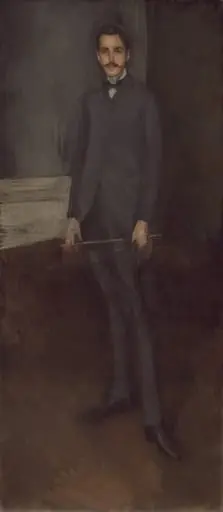 George W. Vanderbilt
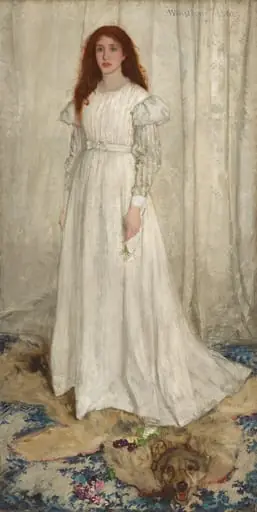 Symphony in White, No. 1: The White Girl
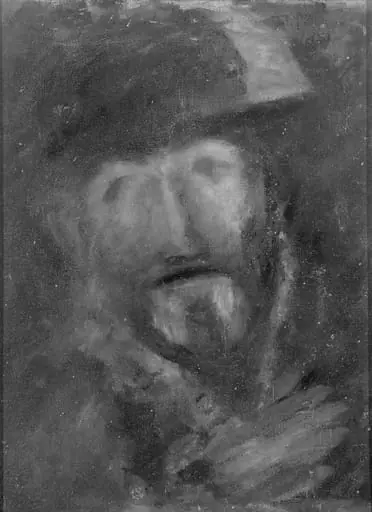 Henry Irving as Philip II of Spain