Artwork
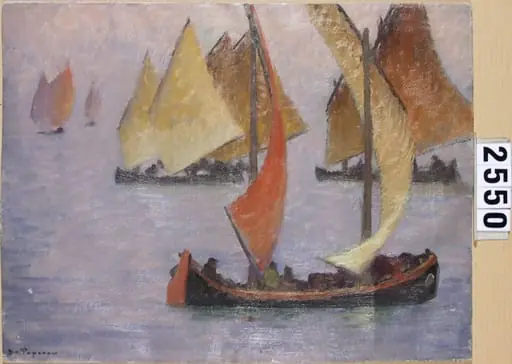
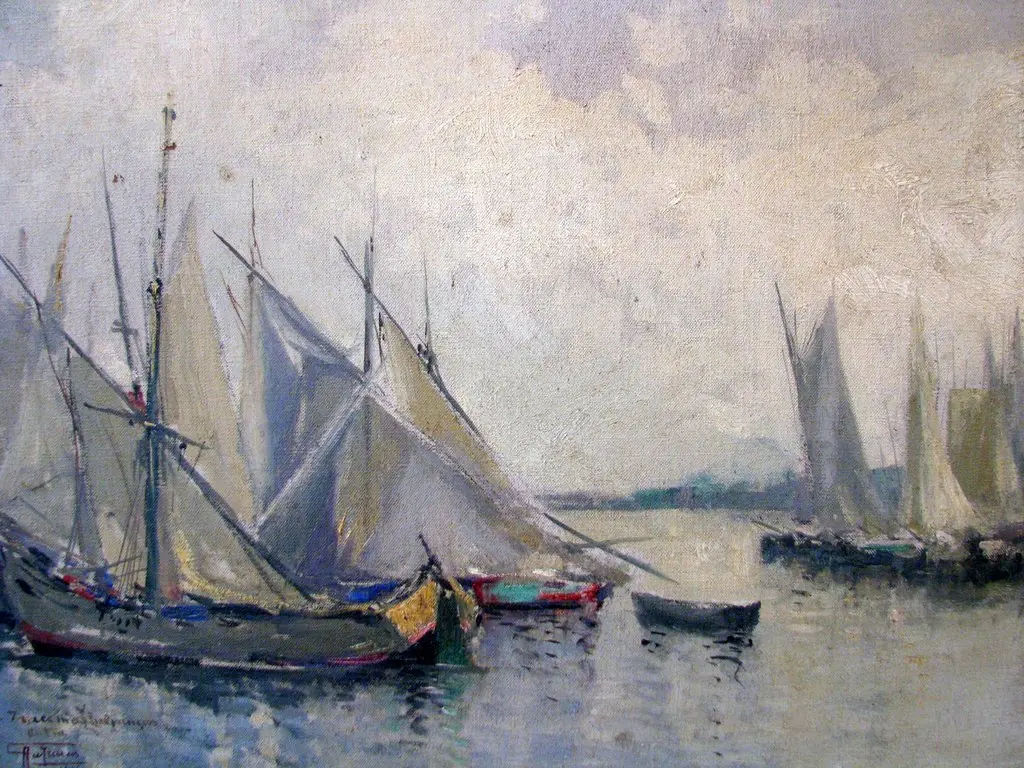
Sailing Boats at Chioggia, near Venice
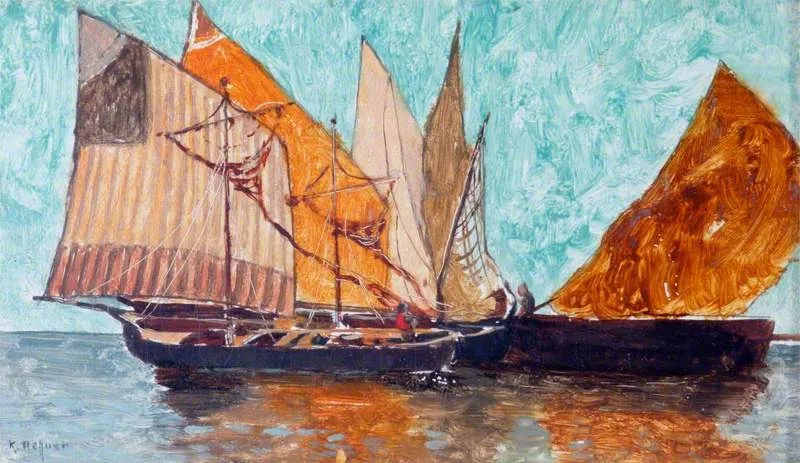
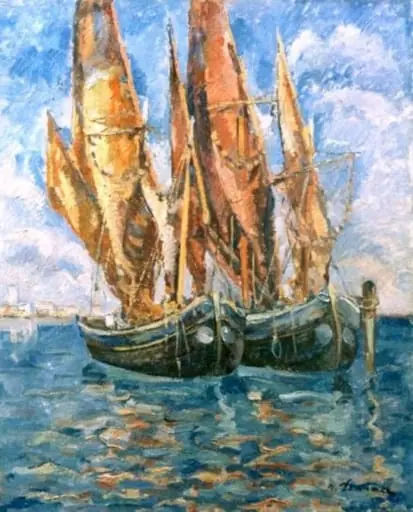
Sailing Boats at Chioggia, near Venice is an oil painting by the Impressionist artist Karl Heffner. It dates from 1890 and is held in the collection of the Victoria and Albert Museum.
About this work
Overview
Painted in 1890, Sailing Boats at Chioggia, near Venice is an oil on canvas work by German artist Karl Heffner. It portrays a quiet harbor scene in the Venetian lagoon town of Chioggia. The painting is part of the Victoria and Albert Museum’s collection, where it is held as an example of late 19th-century European landscape painting focused on maritime life.
Subject & Meaning
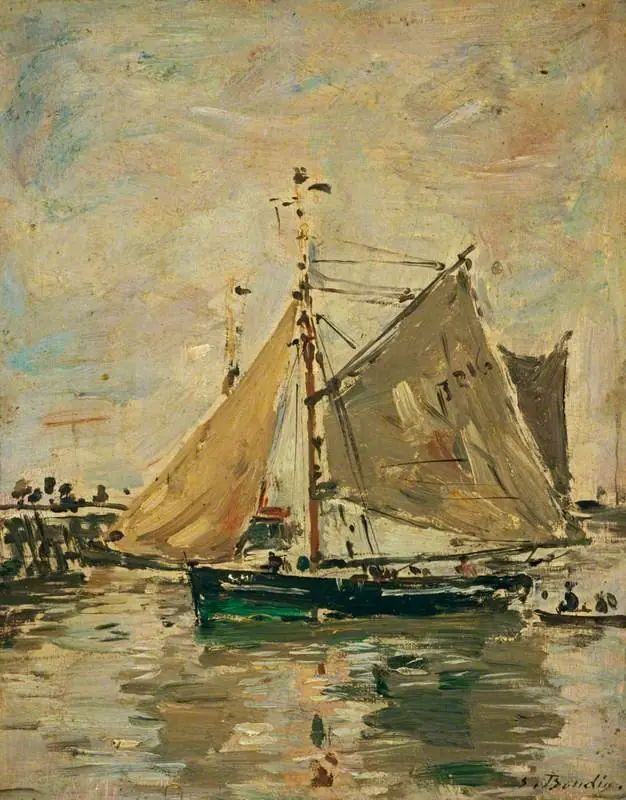
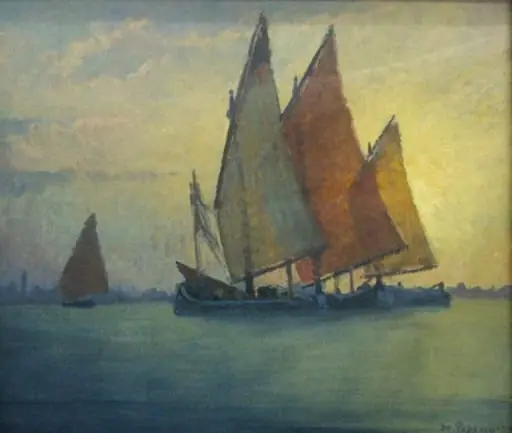
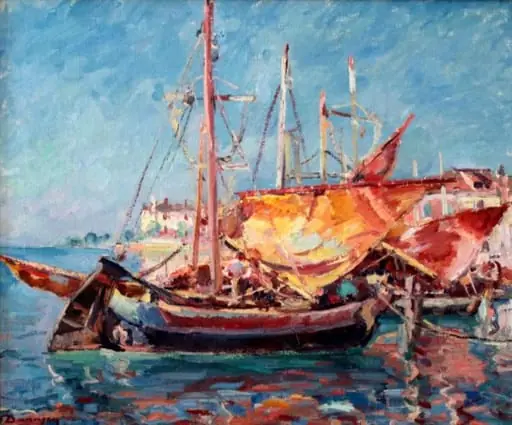
The painting presents a group of sailing vessels anchored or gently drifting in calm waters, their masts and sails aligned in a rhythmic pattern.
The painting presents a group of sailing vessels anchored or gently drifting in calm waters, their masts and sails aligned in a rhythmic pattern. There is no human presence, emphasizing solitude and the quiet rhythm of coastal life. The scene evokes stillness rather than activity, suggesting a moment suspended between motion and rest, reflective of the artist’s interest in atmospheric tranquility.
Technique & Style
Heffner employed oil paint to render subtle shifts in light across water and wood surfaces. Brushwork is restrained, favoring soft transitions over sharp detail. The sails and hulls are rendered with muted earth tones, contrasting with the cool blues and greens of the sea and sky. This tonal harmony creates a cohesive mood, prioritizing atmosphere over narrative or dramatic effect.
History & Provenance
The painting was completed during Heffner’s period of travel in northern Italy, where he studied coastal scenes. It entered the Victoria and Albert Museum’s collection in the early 20th century, likely through acquisition or donation. Its provenance remains largely undocumented beyond its museum record, with no known exhibition history prior to its inclusion in the V&A’s holdings.
Context
Heffner worked during a time when European artists increasingly turned to everyday landscapes over grand historical themes. Chioggia, a quieter alternative to Venice, attracted painters seeking unidealized coastal views. His approach aligns with broader trends in plein air painting and the quiet realism of regional scenes, reflecting a shift toward intimate, observational art in the late 1800s.
Legacy
Though not widely exhibited or reproduced, the painting contributes to the understanding of lesser-known German artists working in Italy during the late 19th century. It stands as a modest but thoughtful example of how light, color, and composition were used to convey mood rather than spectacle, offering insight into the quieter currents of European landscape painting at the time.
Artist & collection