Artwork
冨嶽三十六景 相州仲原|Nakahara in Sagami Province (Sōshū Nakahara), from the series Thirty-six Views of Mount Fuji (Fugaku sanjūrokkei)
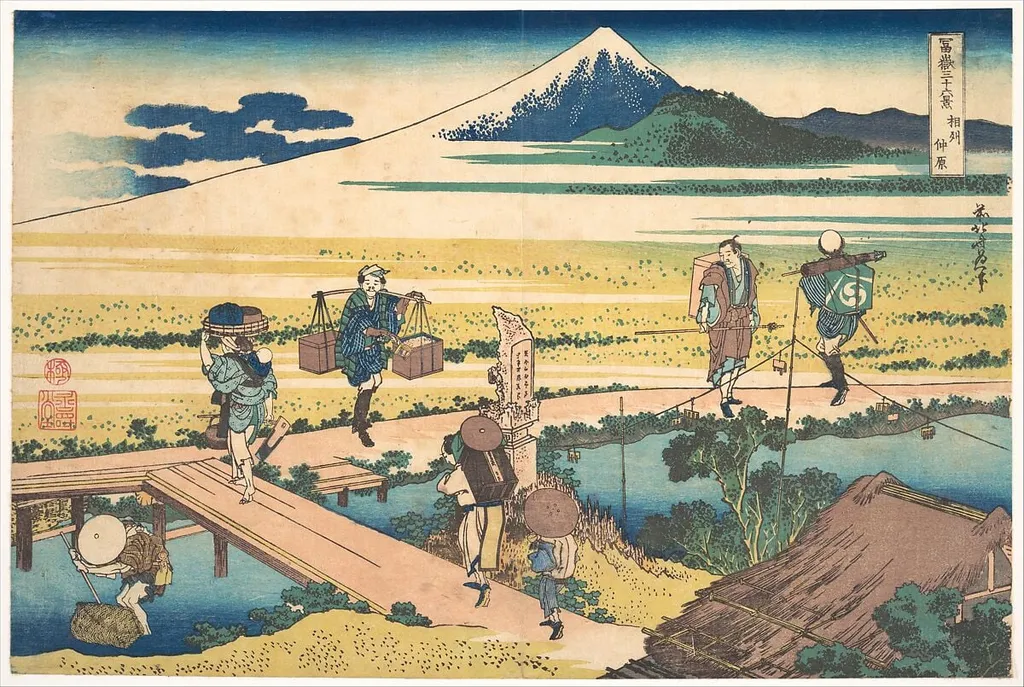
冨嶽三十六景 相州仲原|Nakahara in Sagami Province (Sōshū Nakahara), from the series Thirty-six Views of Mount Fuji (Fugaku sanjūrokkei) is an ink print by the Japonisme artist Katsushika Hokusai. It dates from 1831 and is held in the collection of the Metropolitan Museum of Art.
About this work
Overview
It is currently held in the collection of The Metropolitan Museum of Art, where it represents one of many perspectives on Japan’s most revered mountain.
Created around 1831, this woodblock print is part of Katsushika Hokusai’s series Thirty-six Views of Mount Fuji. It depicts a quiet rural scene in Sagami Province, now part of modern Kanagawa. The print combines ink and color on paper, typical of ukiyo-e production during the Edo period. It is currently held in the collection of The Metropolitan Museum of Art, where it represents one of many perspectives on Japan’s most revered mountain.
Subject & Meaning
The scene captures travelers crossing a wooden bridge over a river, burdened with baskets and bundles, suggesting daily commerce or pilgrimage. Behind them, Mount Fuji rises calmly, framed by trees and open fields. The mountain is not the focal point but a constant presence, symbolizing endurance and spiritual continuity. Human activity unfolds without drama, reflecting the quiet rhythm of rural life in early 19th-century Japan.
Technique & Style
Hokusai employed fine linework and layered pigments to suggest depth and texture, particularly in the foliage and water. The use of Prussian blue, newly available in Japan at the time, lends the sky and distant mountain a cool, atmospheric tone. Perspective is subtly manipulated, with the bridge leading the eye toward Fuji, while the figures are rendered with minimal detail, emphasizing their role as elements within the landscape rather than individual subjects.
History & Provenance
Produced during the peak of Hokusai’s career, this print was part of a commercially successful series published by Nishimura Yohachi. Original impressions were widely distributed across Edo, appealing to urban audiences fascinated by distant landscapes. The Metropolitan Museum of Art acquired its copy in the 20th century, preserving one of the few surviving early printings from the original woodblocks.
Context
This work emerged during a period of growing domestic travel and print culture in Edo-period Japan. While Mount Fuji was a sacred symbol, the series also catered to popular interest in geography and scenery. Unlike Western landscape traditions, Hokusai’s compositions integrate human presence as a natural component of the environment, reflecting a distinctly Japanese aesthetic of harmony between people and place.
Legacy
The Thirty-six Views of Mount Fuji influenced later generations of artists, both in Japan and abroad, particularly in the development of modern printmaking and Western Impressionism. Nakahara in Sagami Province exemplifies Hokusai’s ability to elevate everyday moments into enduring visual poetry. Its quiet composition continues to inform contemporary understandings of Japanese visual culture and the role of nature in daily life.
Artist & collection

Artist
Katsushika Hokusai spent his life in Edo, now Tokyo, where he drew and carved prints for a living.

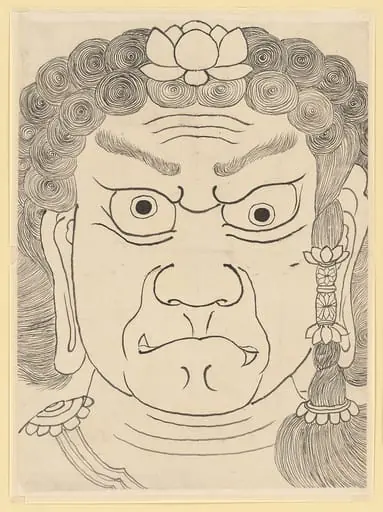
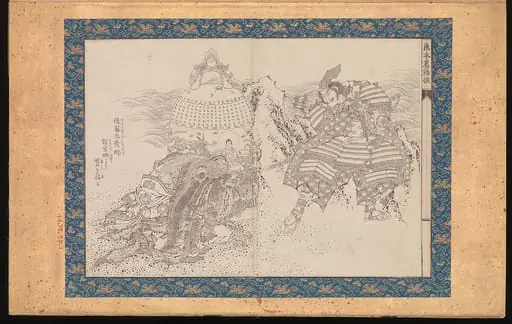
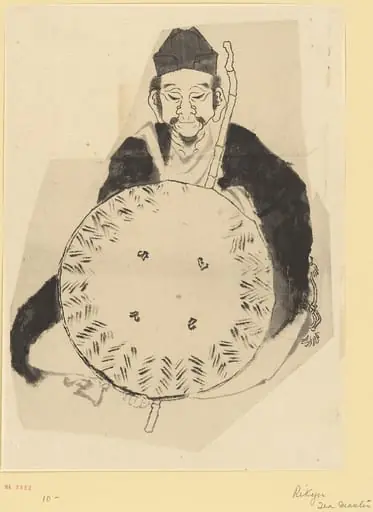
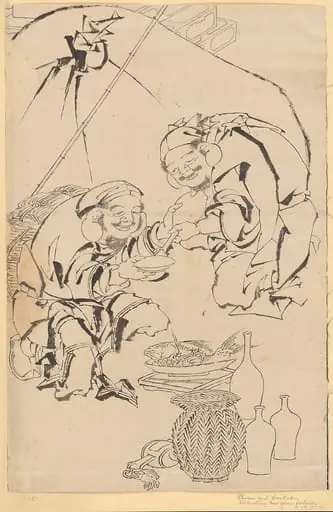
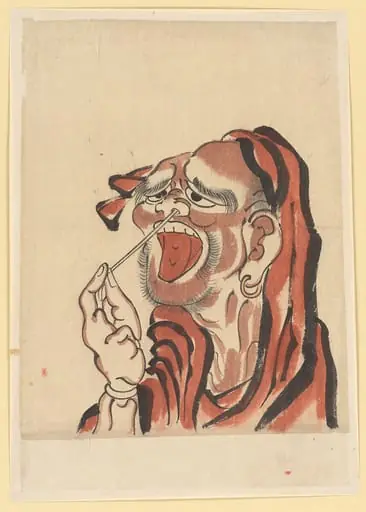
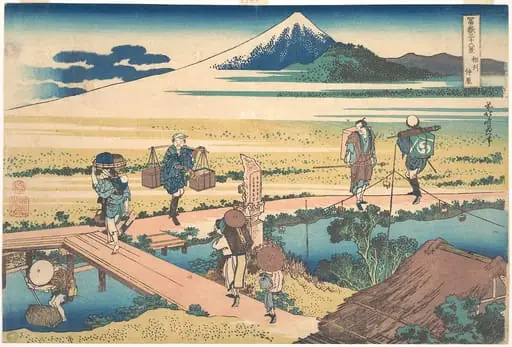 冨嶽三十六景 相州仲原|Nakahara in Sagami Province (Sōshū Nakahara), from the series Thirty-six Views of Mount Fuji (Fugaku sanjūrokkei)
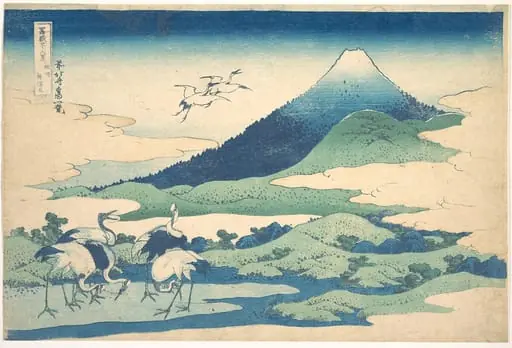 冨嶽三十六景 相州梅沢左|Umezawa Manor in Sagami Province (Sōshū Umezawa zai), from the series Thirty-six Views of Mount Fuji (Fugaku sanjūrokkei)
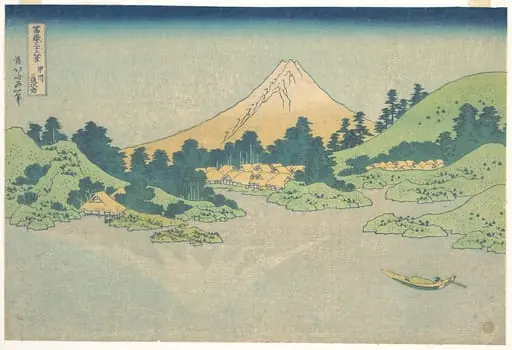 冨嶽三十六景 甲州三坂水面|Reflection in Lake at Misaka in Kai Province (Kōshū Misaka suimen), from the series Thirty-six Views of Mount Fuji (Fugaku sanjūrokkei)
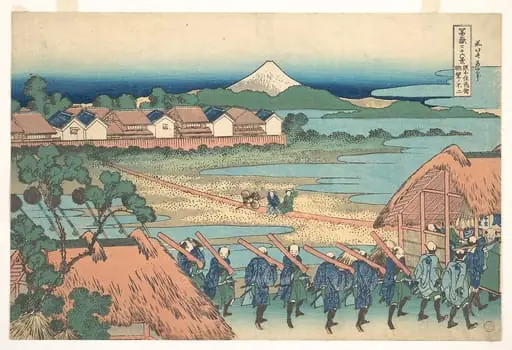 冨嶽三十六景 従千住花街眺望の不二|Fuji Seen in the Distance from Senju Pleasure Quarter (Senju kagai yori chōbō no Fuji), from the series Thirty-six Views of Mount Fuji (Fugaku sanjūrokkei)
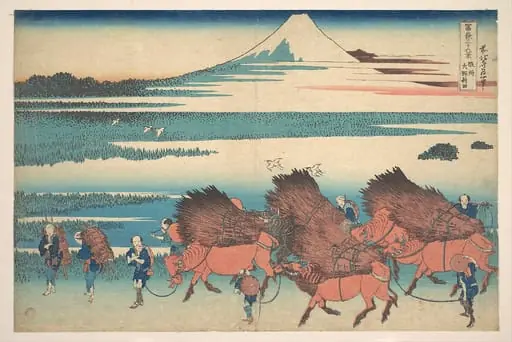 冨嶽三十六景 駿州大野新田|The New Fields at Ōno in Suruga Province (Sunshū Ōno shinden), from the series Thirty-six Views of Mount Fuji (Fugaku sanjūrokkei)