Artwork
Women Carrying Pots for the Tsukuma Festival
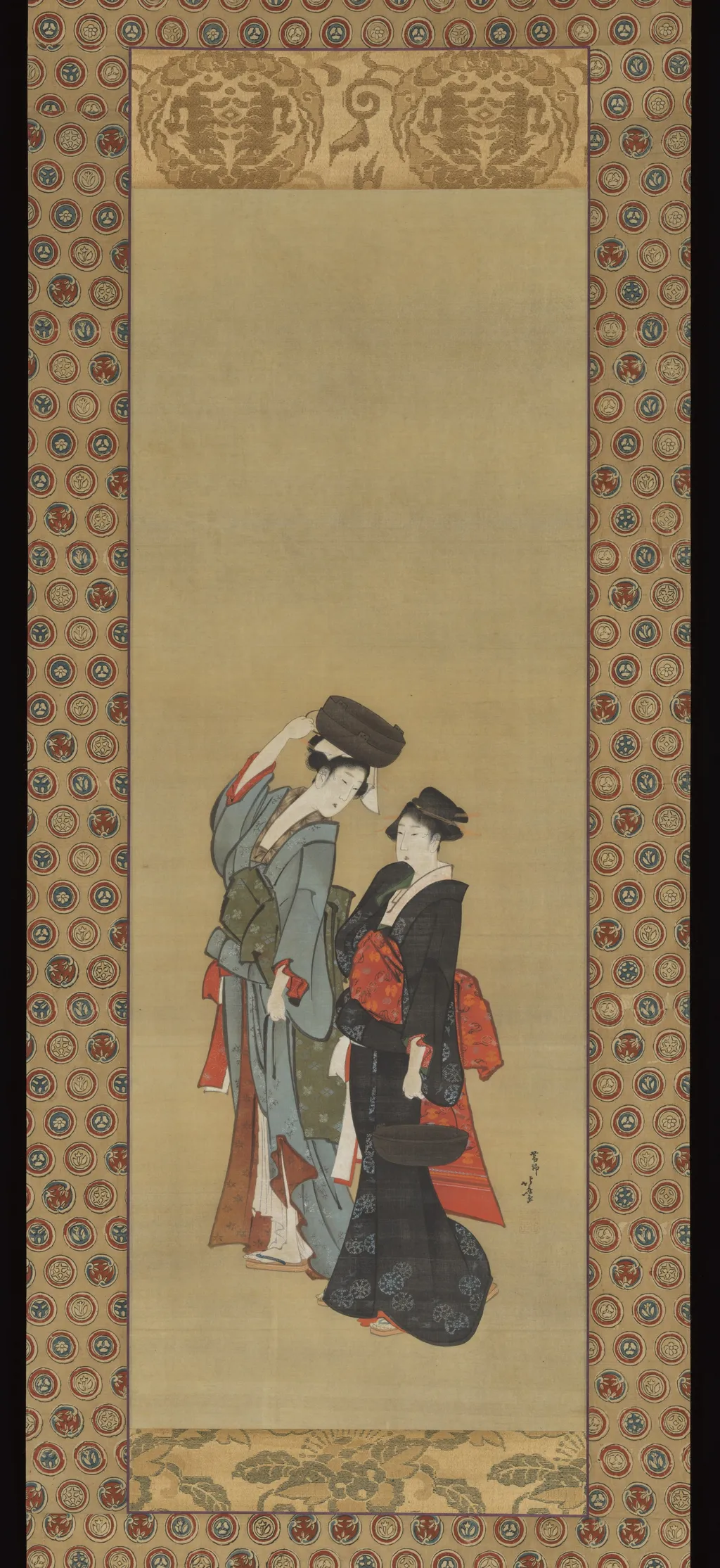
Women Carrying Pots for the Tsukuma Festival is an unspecified painting by the Ukiyo-e artist Katsushika Hokusai. It is held in the collection of the Metropolitan Museum of Art.
About this work
Overview
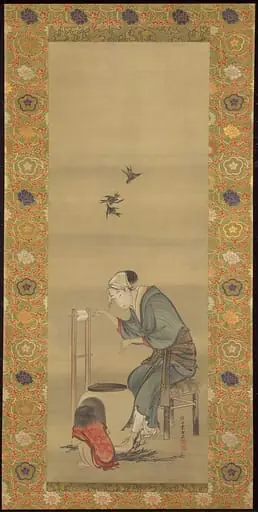
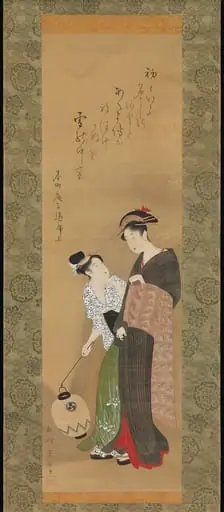
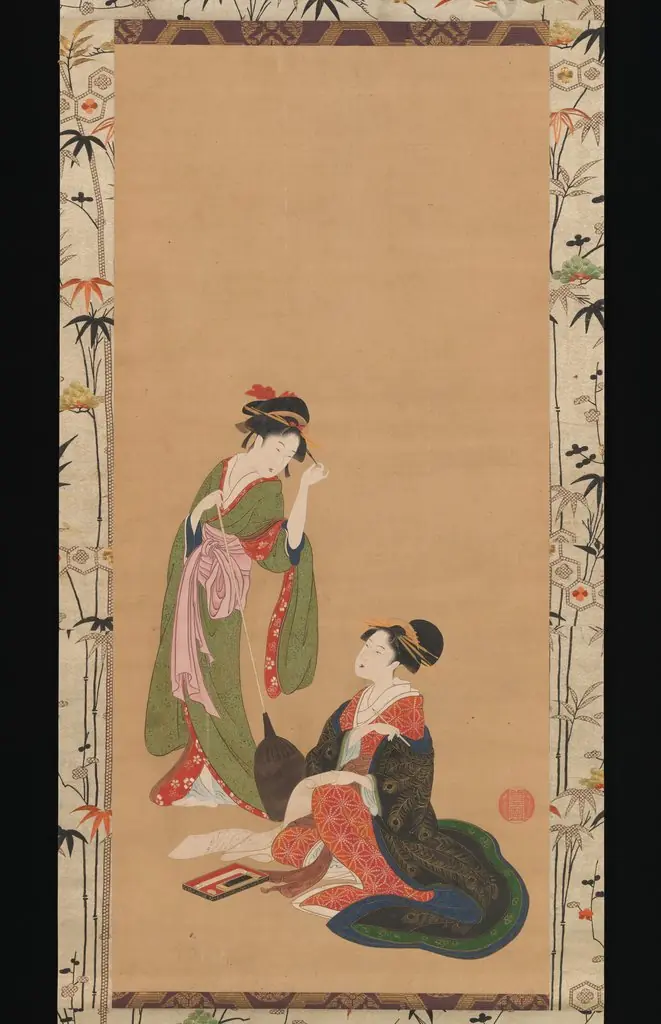
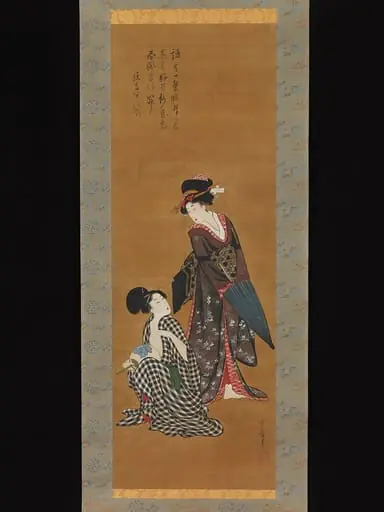
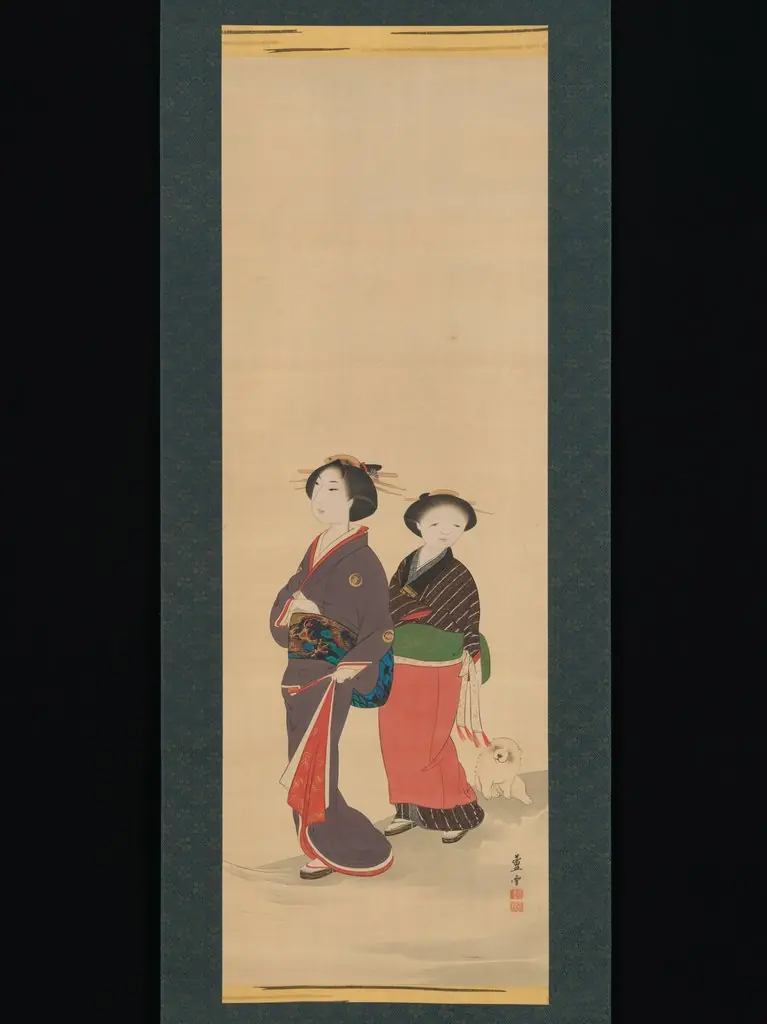
Katsushika Hokusai’s painting *Women Carrying Pots for the Tsukuma Festival* (1891) depicts a pair of women moving together in traditional attire. The work is part of the collection at the Metropolitan Museum of Art, where it is displayed as an example of late Edo‑period genre painting.
Subject & Meaning
The scene captures two female participants in the Tsukuma Festival, a local celebration that involved women transporting ceremonial vessels. One figure bears a red bundle on her back while the other supports a round container, suggesting a shared responsibility in the ritual procession.
Technique & Style
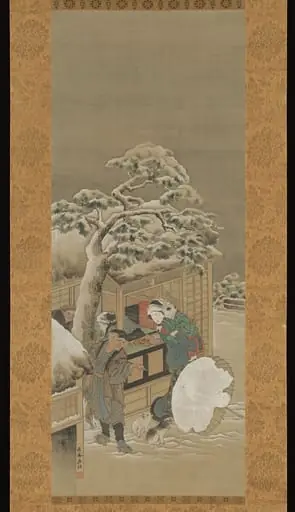
Hokusai renders the figures with flat, saturated hues of dark blue, green, and red, emphasizing the wide sleeves and tall hats characteristic of the period costume. The faces are reduced to minimal line work, and the background is largely empty, framed only by a repetitive border of red, blue, and gold circles that accentuate the composition’s decorative quality.
History & Provenance
Created in 1891, the painting entered the Metropolitan Museum of Art’s holdings through acquisition in the early 20th century. Its provenance traces back to private Japanese collections before crossing to the United States, where it has been conserved as part of the museum’s Japanese prints and paintings department.
Context
The work belongs to Hokusai’s later period, when he explored everyday scenes and festival life in addition to his more famous landscape studies. By focusing on ordinary participants rather than grand vistas, the painting reflects a broader Edo‑era interest in documenting communal rituals and the roles of women within them.
Artist & collection

Artist
Katsushika Hokusai spent his life in Edo, now Tokyo, where he drew and carved prints for a living.