Artwork
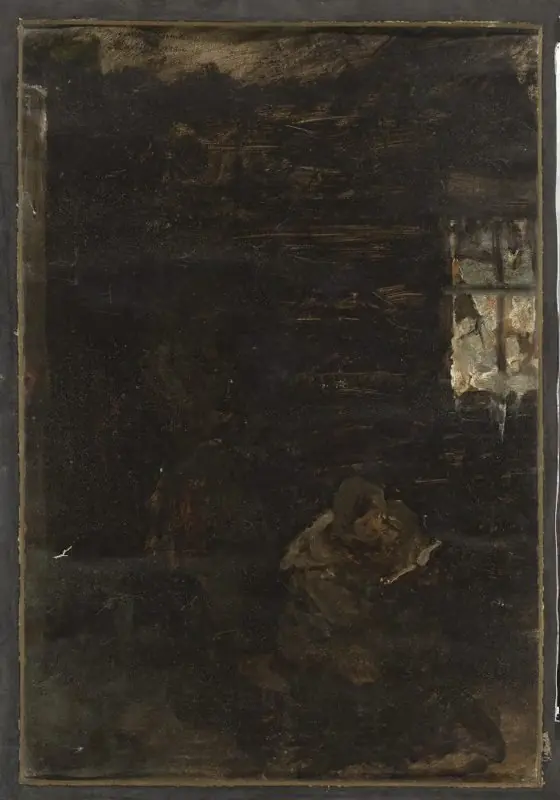
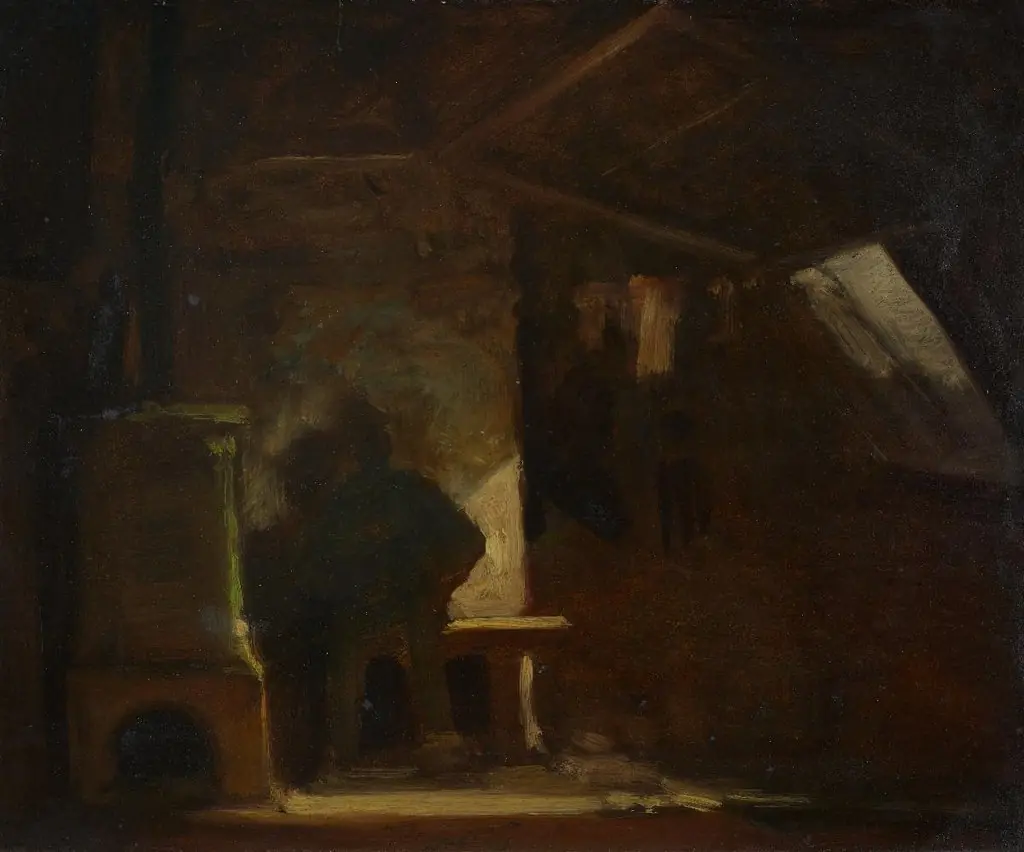
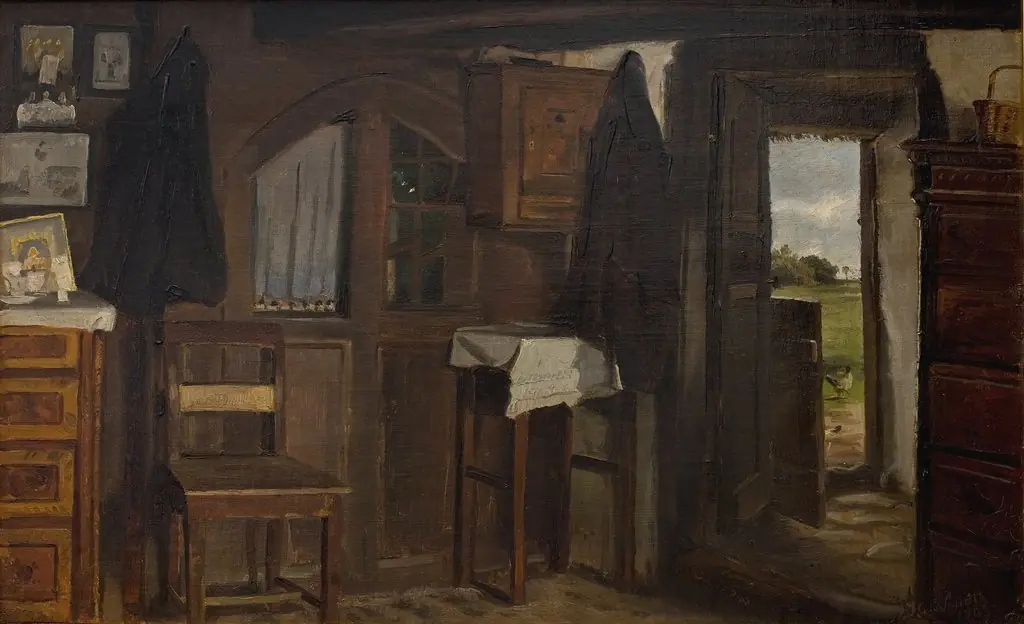
Interior of a peasant cottage, sketch
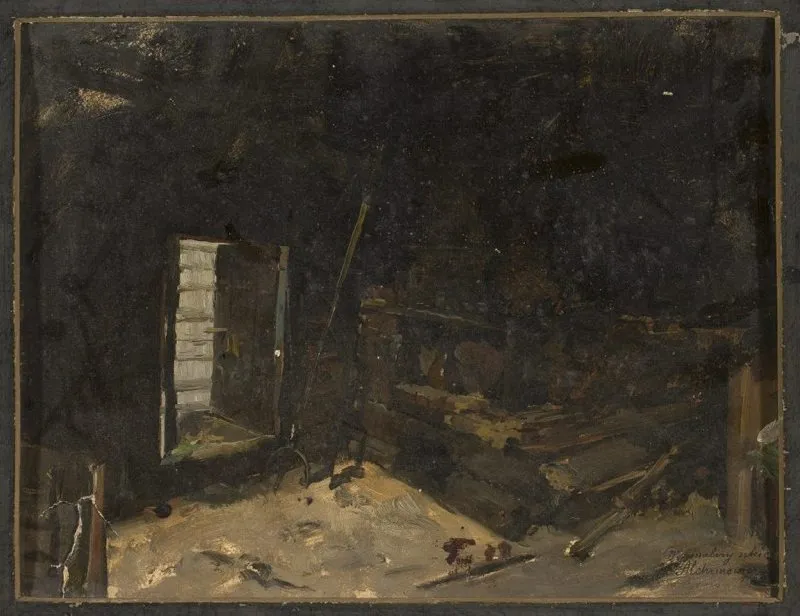
Interior of a peasant cottage, sketch is an oil painting by Kazimierz Alchimowicz. It dates from 1888 and is held in the collection of the National Museum in Warsaw.
About this work
Overview
Kazimierz Alchimowicz, a Polish artist active in the late 19th century, produced this oil sketch around 1888 as a quiet study of rural domestic life.
Kazimierz Alchimowicz, a Polish artist active in the late 19th century, produced this oil sketch around 1888 as a quiet study of rural domestic life. Though labeled a sketch, the work carries the weight of a finished composition, capturing the austerity of a peasant home with deliberate economy. It resides today in the National Museum in Warsaw, part of a broader body of work that reflects Alchimowicz’s engagement with national themes during a period of political fragmentation.
Subject & Meaning
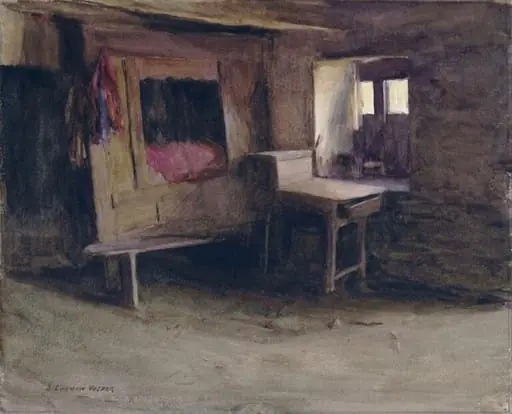
The painting portrays a sparse interior, devoid of ornament or luxury, suggesting the daily reality of rural Polish life. No figures are present, yet the arrangement of objects and the worn surfaces imply human presence. The absence of narrative or drama invites reflection on solitude and endurance, aligning with Romantic ideals that found dignity in humble, unadorned existence rather than grand historical themes.
Technique & Style
Alchimowicz employed loose, assertive brushwork to suggest texture rather than define it precisely. The dim interior is rendered in muted earth tones, with a sliver of light from a left-side window casting subtle gradients across walls and floor. The technique prioritizes atmosphere over detail, using contrast and gesture to evoke the tactile quality of wood, stone, and woven materials without literal representation.
History & Provenance
Created near the end of Alchimowicz’s career, this sketch emerged during a time when Polish artists were redefining national identity under foreign rule. It entered the National Museum in Warsaw’s collection in the early 20th century, likely through acquisition or donation from a private collector aligned with cultural preservation efforts. Its survival reflects its value as a document of everyday life in a suppressed culture.
Context
In the late 1800s, Polish Romanticism shifted from heroic narratives toward intimate portrayals of folk life, especially as political autonomy waned. Alchimowicz, influenced by earlier Romantic traditions, turned to rural interiors as sites of cultural memory. This work aligns with similar studies by contemporaries who sought to preserve the visual language of the peasantry as a symbol of enduring national spirit.
Legacy
Though not widely exhibited, the painting contributes to an understudied strand of Polish art that valued quiet observation over spectacle. It anticipates later realist and regionalist tendencies in 20th-century Polish painting, serving as a bridge between Romantic sentiment and modernist simplicity. Its preservation underscores its role as a quiet testament to the dignity of ordinary life under historical constraint.
Artist & collection
Artist
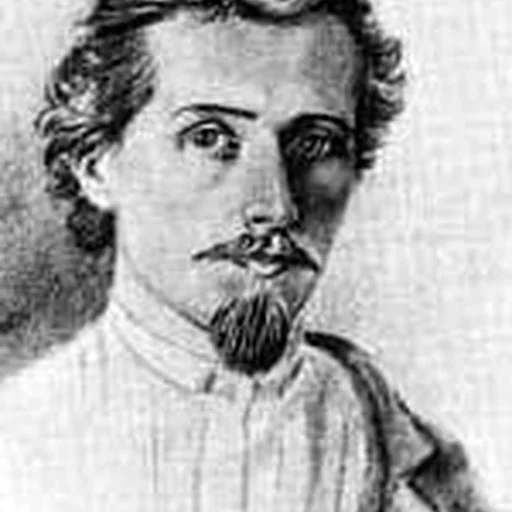
Kazimierz Alchimowicz (December 20, 1840 – December 31, 1916) was a Polish romantic painter born in the Vilna Governorate of the Russian Empire (present-day Belarus).