Artwork
Hever Castle
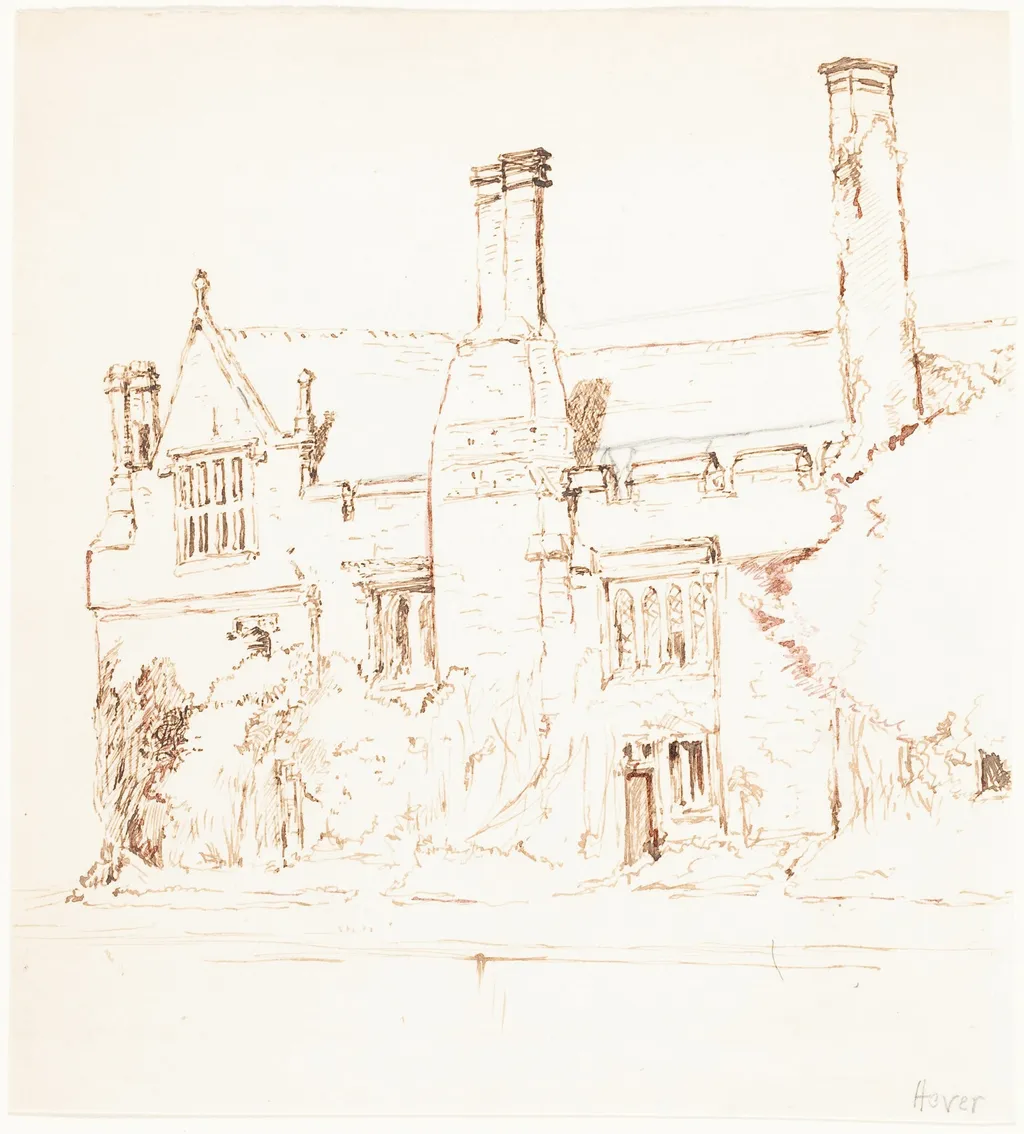
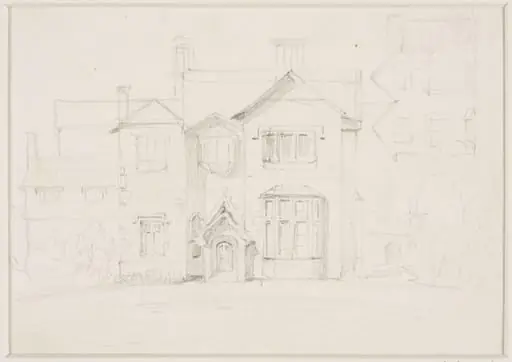
Hever Castle is an ink drawing by the Romanticist artist Henry Eddowes Keene. It dates from 1866 and is held in the collection of the National Gallery of Art.
About this work
Overview
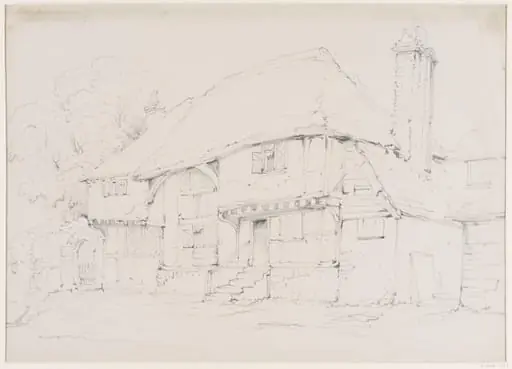
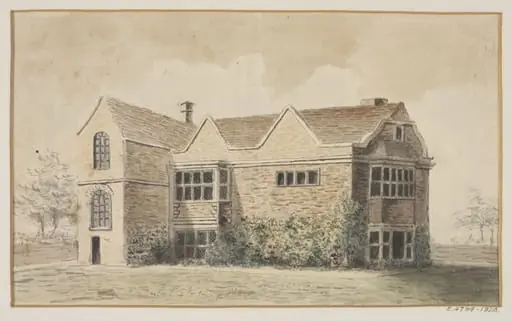
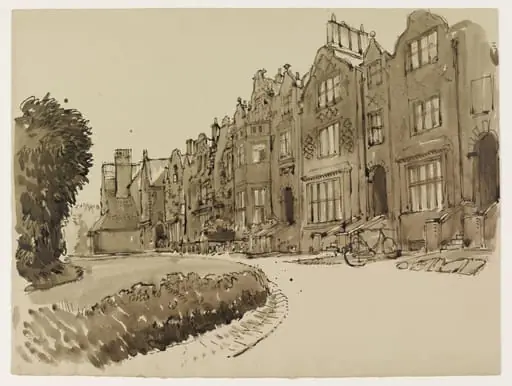
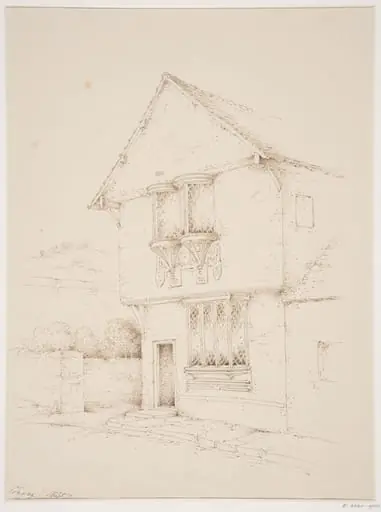
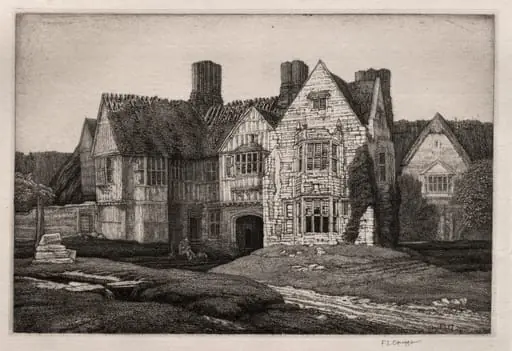
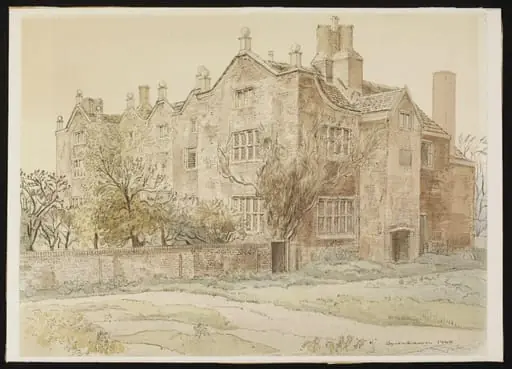
Hever Castle is a pen-and-brown‑ink drawing on wove paper, executed by Henry Eddowes Keene in 1866. The work presents a detailed architectural study of a fortified residence, rendered in a monochrome palette that emphasizes line and form over colour.
Subject & Meaning
The composition shows a central tower flanked by a smaller adjoining tower, both set within a wooded landscape. A prominent window and a broad entrance dominate the façade, while surrounding trees frame the structure, suggesting a harmonious relationship between built and natural environments.
Technique & Style
Keene employed graphite underdrawing to establish the basic structure before applying brown ink for the final rendering. The careful hatching and cross‑hatching convey texture and depth, characteristic of mid‑nineteenth‑century Romantic drawing, which favored expressive line work and atmospheric detail.
History & Provenance
Created in 1866, the drawing is attributed to Henry Eddowes Keene, an English artist known for topographical and architectural subjects. The piece has remained within private collections before entering a museum holding focused on 19th‑century British draftsman works.
Context
The work aligns with the Romantic era’s fascination with medieval architecture and the picturesque. By depicting Hever Castle—a historic Tudor residence—Keene participates in a broader cultural interest in England’s heritage, reflecting contemporary tastes for evocative, historically rooted landscapes.
Own this work as a print
Artist & collection