Artwork
Untitled
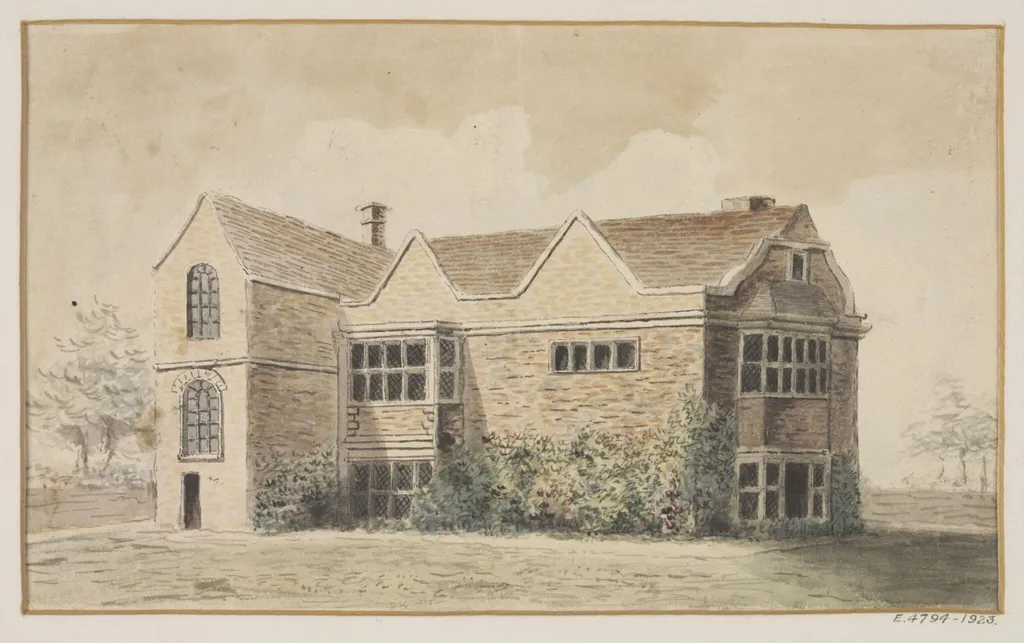
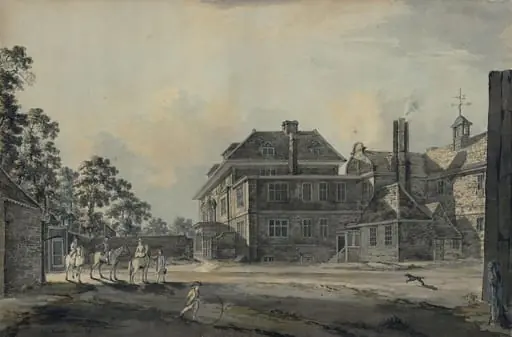
Untitled is a watercolor work on paper by the Romanticist artist T. Prattent. It dates from 1793 and is held in the collection of the Victoria and Albert Museum. This 1793 watercolour by T.
About this work
Overview
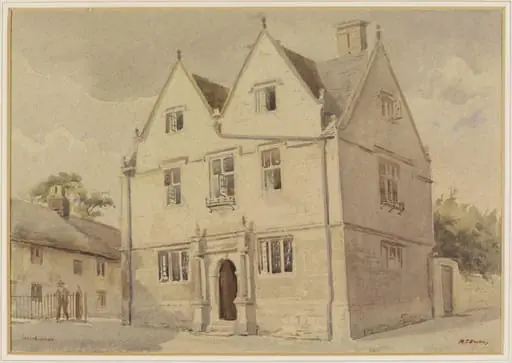
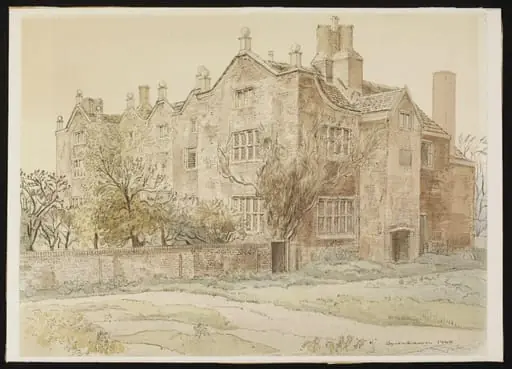
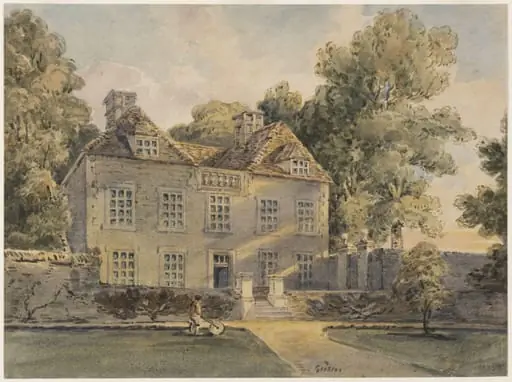
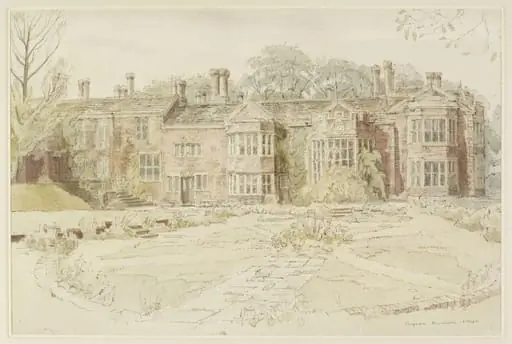
This 1793 watercolour by T. Prattent records a modest stone house in Clapton, traditionally linked to the early life of prison reformer John Howard. Rendered in delicate washes, the image captures a quiet moment, emphasizing the building’s weathered walls, steep tiled roofs and the surrounding vegetation.
Subject & Meaning
The depicted structure is identified as Howard’s birthplace, a detail that situates the work within the broader narrative of social reform in late‑18th‑century England. By focusing on the unadorned domestic architecture, Prattent underscores the ordinary origins of a figure later associated with humanitarian change.
Technique & Style
Prattent employs soft, translucent watercolours to model light along the house’s edges, allowing the stone texture and climbing vines to emerge subtly. The composition balances the main building with a smaller annex featuring a pointed‑arch window, linked by a low wall, and a bare‑leafed tree that frames the scene.
History & Provenance
The drawing entered the John Edmund Gardner collection of London topographical prints and drawings, a notable assemblage of urban imagery. After passing through several private hands, the collection was broken up in 1923. The segment covering Hoxton, Homerton, Hackney and Bethnal Green was later purchased by the Hon. Arthur Villiers, who donated it to the Bethnal Green Museum.
Context
Created during a period of heightened interest in documenting London’s expanding suburbs, the work reflects contemporary topographical interests. Its focus on a specific, historically significant residence aligns with the era’s practice of linking architecture to notable individuals.
Artist & collection
Artist
This British artist left behind a single known watercolor from 1793. It’s a quiet, unnamed piece that shows everyday scenes with careful brushwork—think of a slice of life captured on paper. Because so little is known…