Artwork
Untitled
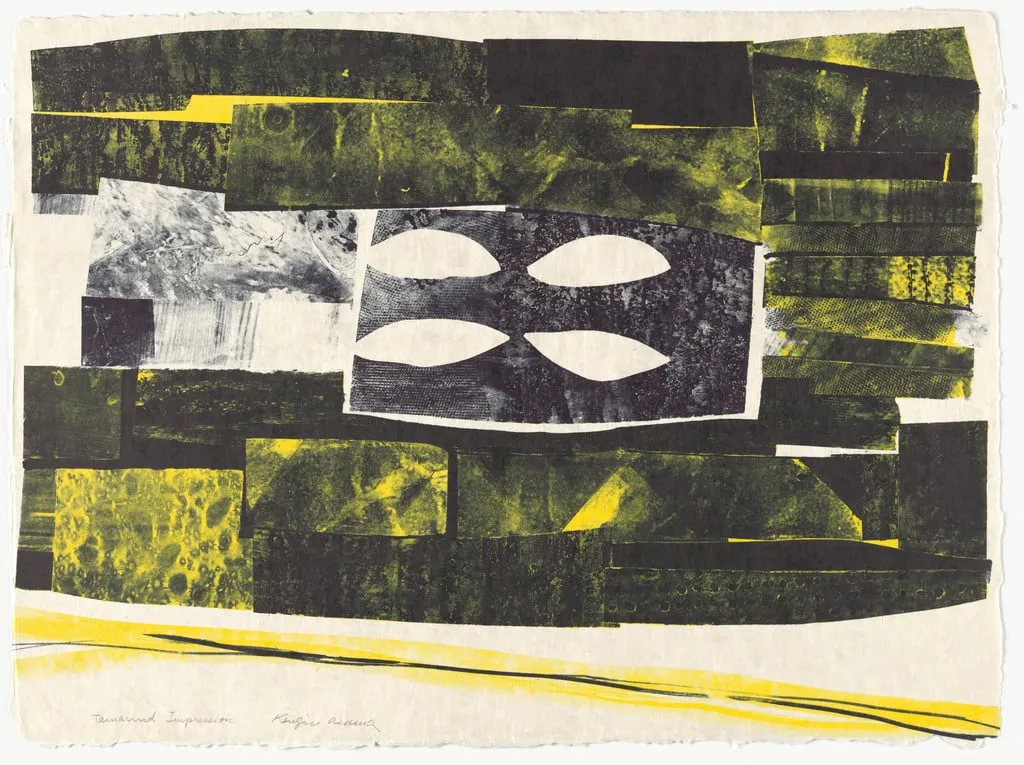
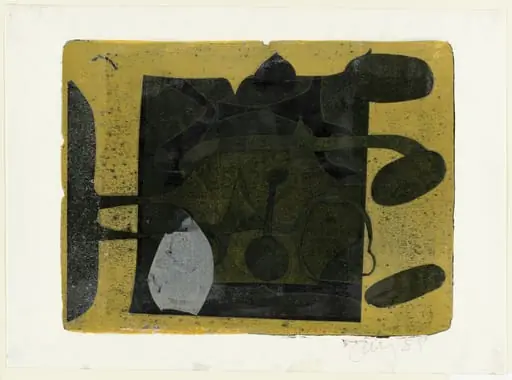
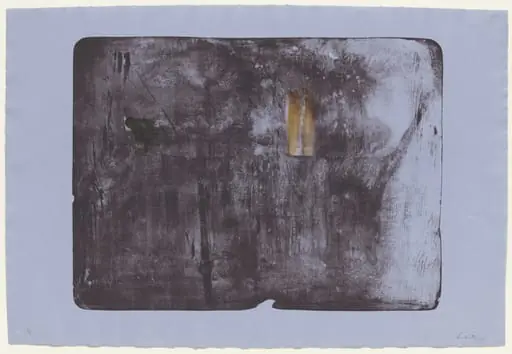
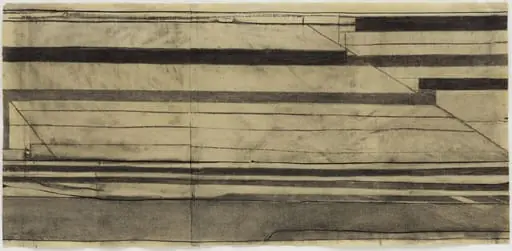
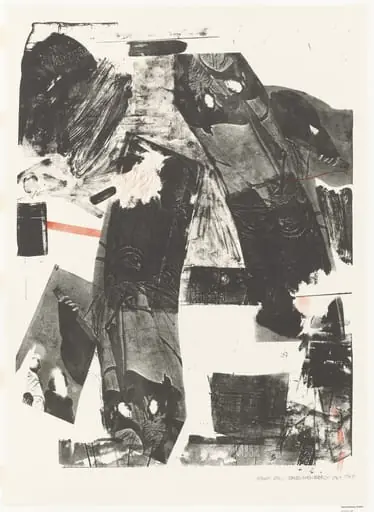
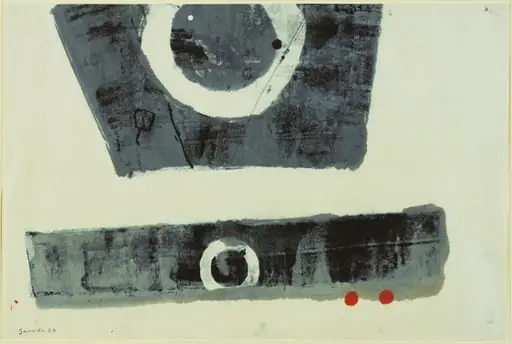
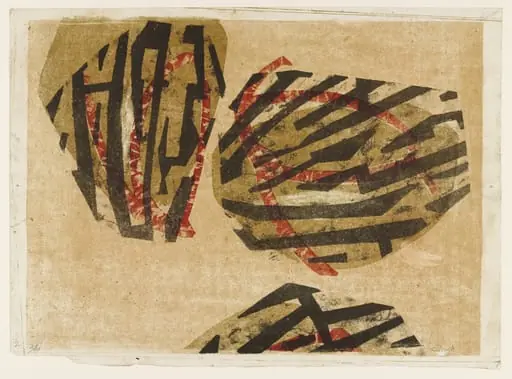
Untitled is an ink print by Kengiro Azuma. It dates from 1965 and is held in the collection of the Museum of Modern Art.
About this work
If you're interested in learning more about this style of art, you might want to explore the technique of lithography.
This painting is a lithograph, created in 1965 by Japanese artist Kengiro Azuma. It's titled "Untitled" and is part of The Museum of Modern Art's collection.
The artwork features a mix of black and yellow shapes, with some resembling eyes or leaves. The shapes are arranged in a collage style, overlapping each other. The background is a light beige color, with some yellow streaks at the bottom.
If you're interested in learning more about this style of art, you might want to explore the technique of lithography.
Overview
Kengiro Azuma produced this 1965 lithograph during a period when he was actively engaged in multiple artistic disciplines. Though trained as a sculptor and educator, he explored printmaking as a parallel mode of expression. The work is part of The Museum of Modern Art’s collection and exemplifies his engagement with abstraction through the medium of lithography, reflecting a broader interest in form and spatial relationships.
Subject & Meaning
The composition consists of irregular black and yellow forms, some suggesting organic elements like leaves or eyes, though no explicit subject is named. Their arrangement—overlapping, asymmetrical, and loosely collaged—invites interpretation without anchoring meaning in representation. The absence of a title reinforces the work’s open-endedness, aligning with postwar abstract tendencies that prioritized visual experience over narrative.
Technique & Style
Azuma employed lithography to achieve subtle tonal contrasts and layered textures. The light beige background, streaked with faint yellow, provides a muted ground for the dense black shapes. The print’s edges are irregular, suggesting hand-drawn elements transferred directly to stone. This method allowed for spontaneity, bridging the precision of printmaking with the immediacy of drawing, characteristic of his hybrid approach to abstraction.
History & Provenance
Created in 1965, the lithograph entered The Museum of Modern Art’s collection shortly after its production. Azuma, who moved from Japan to the United States in the 1950s, was part of a generation of artists navigating transnational influences. While his sculptural work received more public attention, this print represents a quieter but significant strand of his output, preserved as part of a broader institutional interest in postwar Japanese-American abstraction.
Context
In the mid-1960s, many Japanese artists in the U.S. were redefining abstraction beyond traditional Eastern or Western categories. Azuma’s work emerged amid this flux, engaging with geometric minimalism while retaining a tactile, hand-made quality. His prints, like this one, reflect a dialogue between Japanese aesthetics and American modernism, contributing to a less visible but vital current in postwar print culture.
Legacy
Though not widely exhibited, this lithograph remains a representative example of Azuma’s printmaking practice. It underscores his role as a bridge between disciplines—sculpture, painting, and print—and highlights how artists of his generation used print media to explore abstraction without the constraints of large-scale production. The work continues to inform scholarly discussions on transpacific modernism and the diversity of postwar Japanese artistic expression.
Artist & collection
Artist
Kenjirō Azuma (吾妻 兼治郎, Azuma Kenjirō; March 12, 1926 – October 15, 2016) was a Japanese-born sculptor, painter and teacher.