Artwork
Young Anglers
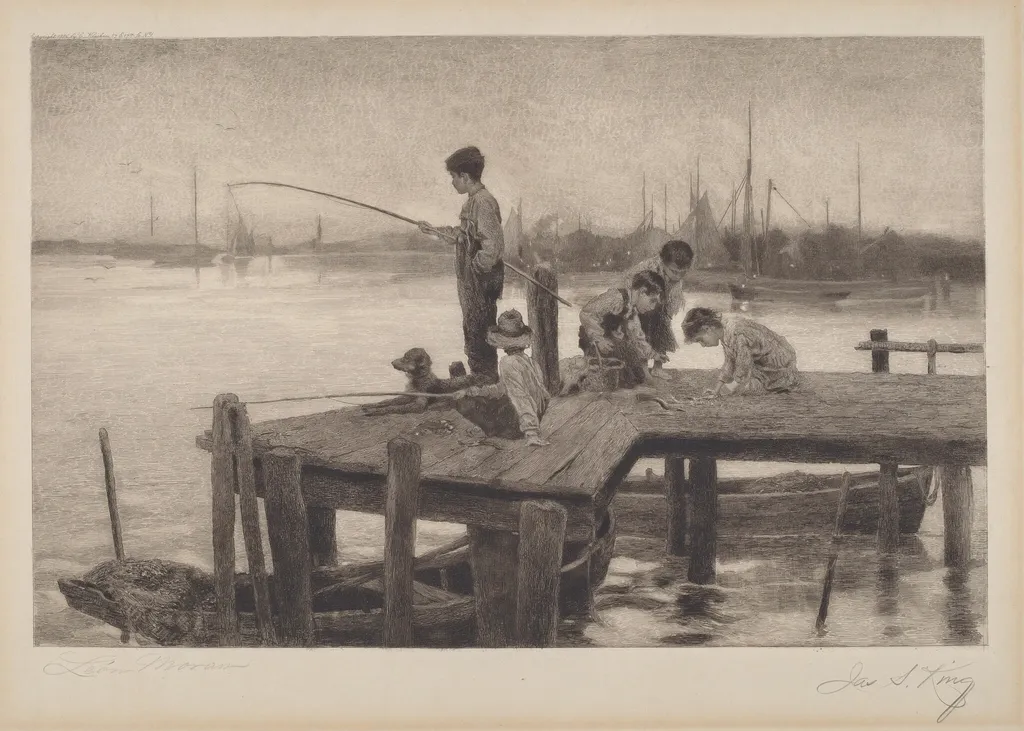
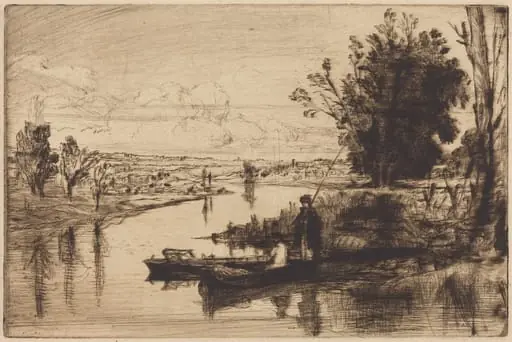
Young Anglers is an ink print by the Impressionist artist James S. King. It dates from 1886 and is held in the collection of the National Gallery of Art.
About this work
Overview
The technique allows for fine, delicate lines that define the figures and their surroundings with subtle detail.
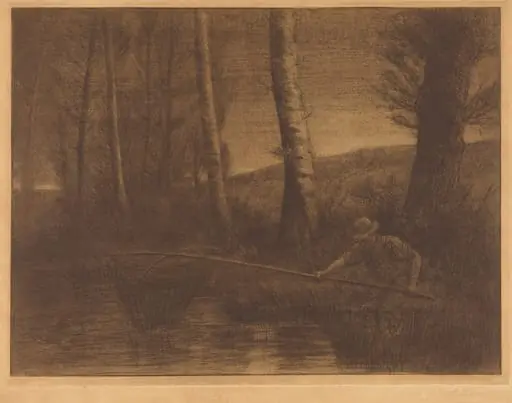
Young Anglers is an 1886 etching by American artist James S. King. The work captures a quiet moment along a riverbank, where three boys prepare to fish. Unlike painted scenes, this image was produced through the etching process, in which acid bites lines into a metal plate, which is then inked and pressed onto paper to create a printed impression. The technique allows for fine, delicate lines that define the figures and their surroundings with subtle detail.
Subject & Meaning
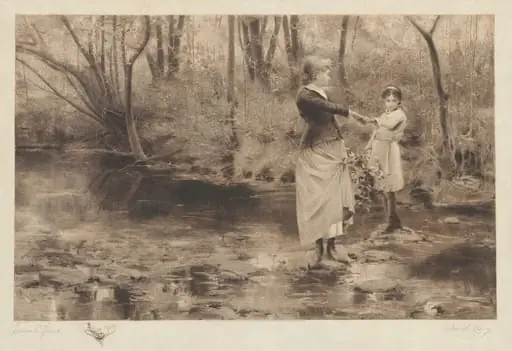
The scene depicts three boys engaged in the simple, everyday activity of fishing. Two hold nets, suggesting preparation for gathering catch, while one crouches low, intently observing the water. Their plain clothing and unposed posture convey a sense of rural labor and childhood routine. The image avoids idealization, instead presenting a grounded, observational moment that reflects the quiet rhythms of rural life in late 19th-century America.
Technique & Style
King employed etching to render the scene with precise, controlled lines. The acid-bitten plate allowed for fine textures in the boys’ clothing, the rippling water, and the grassy bank. The composition is restrained, with figures arranged naturally along the river’s edge. The monochrome palette enhances the tonal contrasts between light and shadow, emphasizing atmosphere over color. The medium’s capacity for detail supports the work’s quiet realism.
History & Provenance
Created in 1886, Young Anglers was produced during a period when American artists were increasingly turning to printmaking to reach broader audiences. While specific early ownership records are not widely documented, the etching was likely circulated through art societies or sold as a standalone print. It remains one of King’s better-known works in the medium, reflecting his interest in everyday American subjects.
Context
In the late 1800s, American printmakers like King sought to elevate etching beyond mere reproduction, using it to capture authentic scenes of domestic and rural life. Young Anglers aligns with this movement, echoing the realist tendencies of contemporaries who depicted ordinary people with dignity. The work reflects a cultural interest in childhood, nature, and the moral value of labor during a time of rapid industrialization.
Legacy
Young Anglers stands as a modest but enduring example of American etching from the Gilded Age. Though King is not among the most widely recognized artists of his time, this print continues to be studied for its technical clarity and unembellished portrayal of rural youth. It contributes to a broader archive of 19th-century American prints that document everyday life with quiet sincerity.
Artist & collection