Artwork
The Gleaners
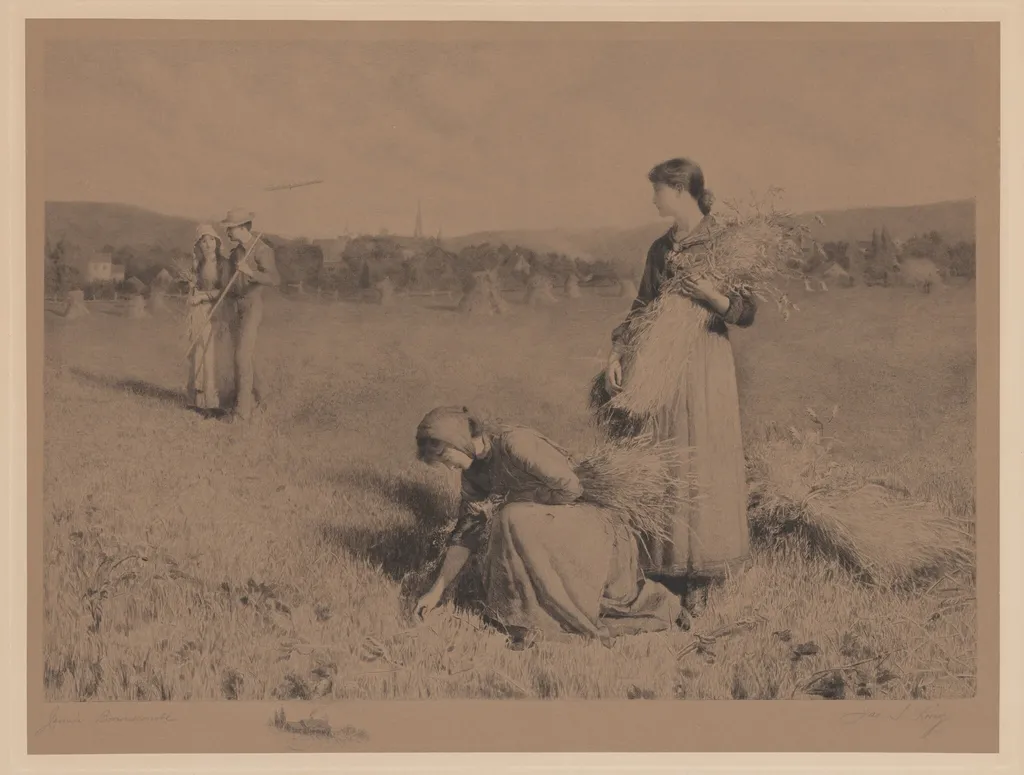
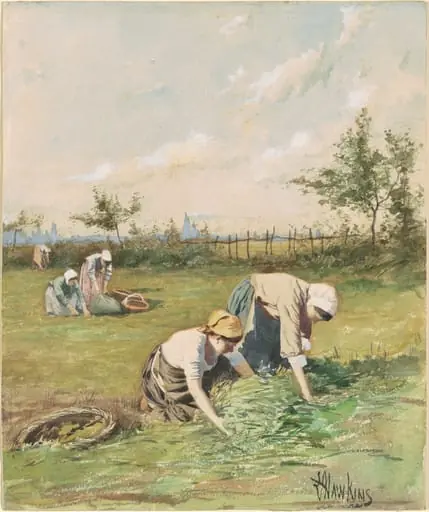
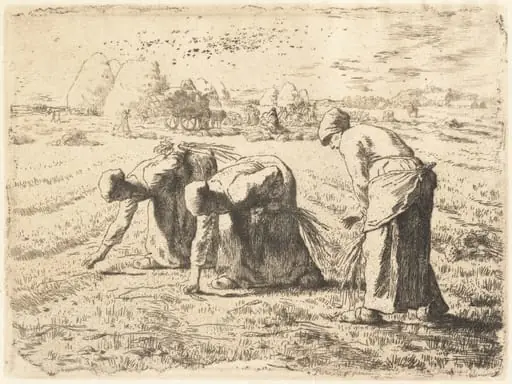
The Gleaners is an ink print by the Impressionist artist James S. King. It dates from 1888 and is held in the collection of the National Gallery of Art. Created in 1888 by James S.
About this work
Overview
The print captures a quiet moment of agricultural work, rendered with delicate line work that emphasizes texture and atmosphere.
Created in 1888 by James S. King, The Gleaners is an etching depicting rural laborers harvesting leftover grain after the main crop has been collected. The print captures a quiet moment of agricultural work, rendered with delicate line work that emphasizes texture and atmosphere. Unlike bold lithographs or paintings, this technique relies on incised metal plates and ink to produce subtle tonal gradations, lending the scene a restrained, intimate quality.
Subject & Meaning
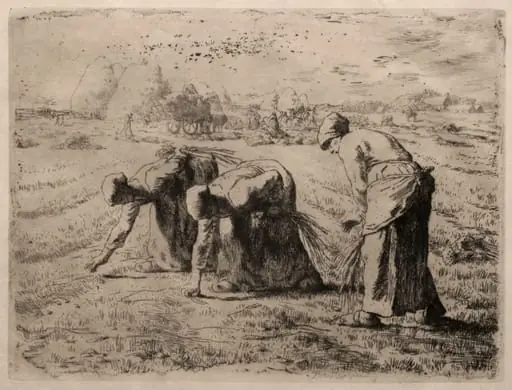
Three women are shown engaged in the labor of gleaning—picking up scattered wheat stalks in a harvested field. Their postures suggest fatigue and routine: one carries a bundle, another binds the grain, and a third rests beside a scythe. The distant village and church steeple imply a social hierarchy, with the workers positioned at the edge of both land and community. The scene reflects the quiet dignity of subsistence labor without overt sentimentality.
Technique & Style
King employed etching to achieve fine, controlled lines that model light across the wheat field and figures. The plate was incised with acid, allowing for precise, hair-thin strokes that define shadow and form. The background fades into soft, blurred hills, contrasting with the sharper detail of the foreground figures. This approach merges the realism of 19th-century genre painting with the tonal subtlety of printmaking traditions.
History & Provenance
The etching was produced in 1888 during a period when printmaking experienced a revival among artists seeking alternatives to academic painting. King, active in the American and British art circles, focused on rural themes. While no early ownership records are widely documented, the work appears in several late 19th-century exhibition catalogs, suggesting modest circulation among collectors interested in domestic realism.
Context
The Gleaners emerges amid broader 19th-century interest in peasant life, influenced by French artists like Millet and English social realists. King’s version avoids overt political messaging, instead emphasizing atmosphere and quiet endurance. The timing coincides with industrialization’s displacement of agrarian labor, making such images both nostalgic and quietly critical of changing rural economies.
Legacy
Though not widely reproduced or studied today, The Gleaners remains a representative example of late Victorian printmaking that valued observation over drama. It reflects a generation of artists who turned to etching for its intimacy and technical discipline. The work contributes to a quieter strand of realism that prioritized daily life over spectacle, influencing later regionalist printmakers in the early 20th century.
Artist & collection