Artwork
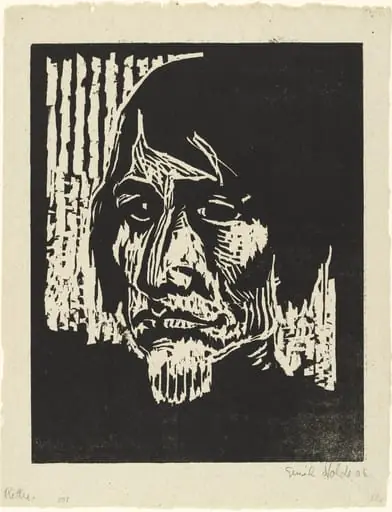
Head of Prof. Dr. Graef
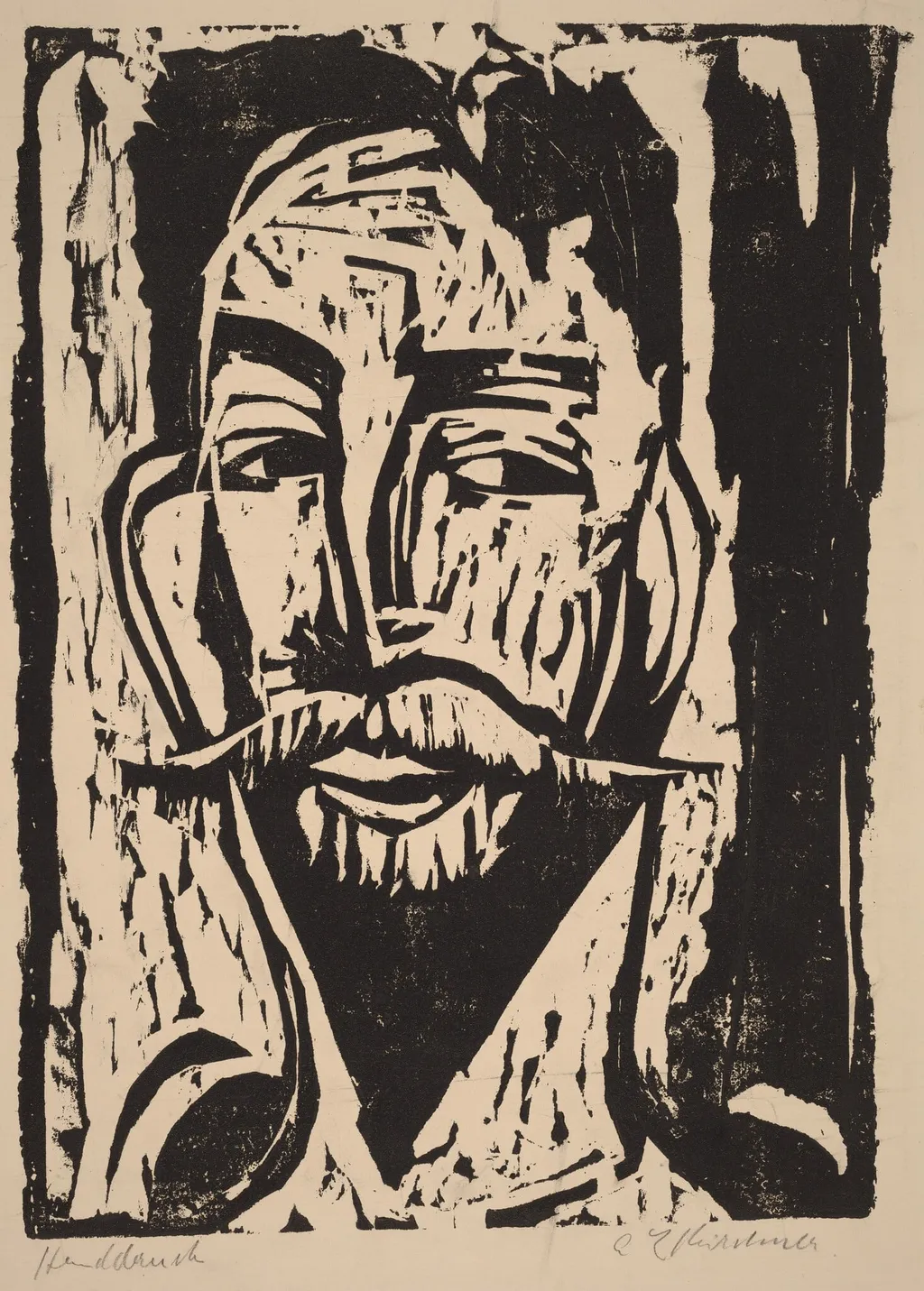
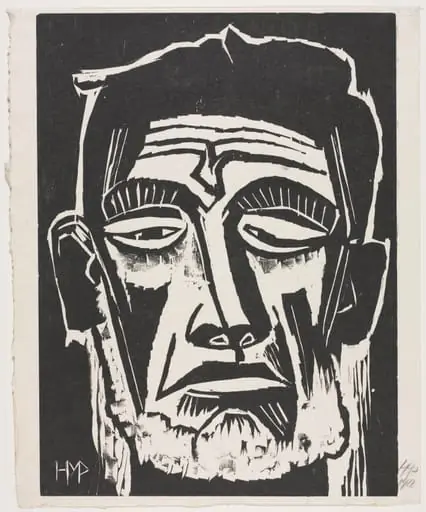
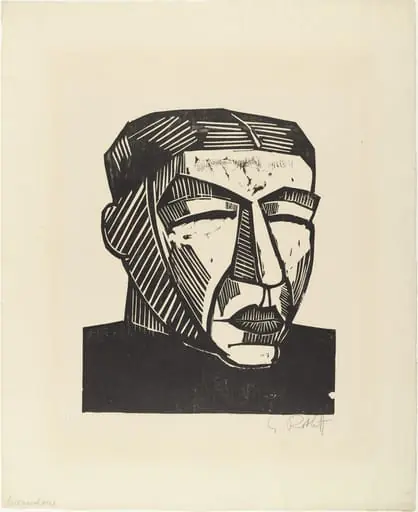
Head of Prof. Dr. Graef is an ink print by Ernst Ludwig Kirchner. It dates from 1915 and is held in the collection of the National Gallery of Art. Created in 1915, *Head of Prof.
About this work
Overview
This portrait, rendered through carved wood and hand-printed ink, exemplifies his commitment to expressive form over naturalism.
Created in 1915, *Head of Prof. Dr. Graef* is a black ink woodcut by German artist Ernst Ludwig Kirchner. As a founding member of Die Brücke, Kirchner embraced printmaking as a direct, physical medium. This portrait, rendered through carved wood and hand-printed ink, exemplifies his commitment to expressive form over naturalism. The work’s stark contrasts and tactile surface reflect the artist’s interest in the materiality of the print process.
Subject & Meaning
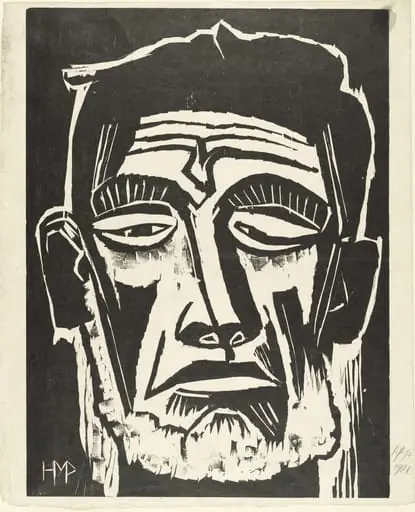
The portrait depicts Prof. Dr. Graef, likely an academic figure known to Kirchner. Rather than a flattering likeness, the face is rendered with angular severity—hollow eyes, a sharply defined nose, and a parted mouth suggest inner tension or intellectual intensity. The absence of contextual detail isolates the subject, emphasizing psychological presence over physical identity. The image feels less like a record and more like an emotional encounter.
Technique & Style
Kirchner carved the image directly into a woodblock, removing areas that would remain white, then inked the raised surfaces for printing. Bold, uneven lines and rough textures result from the tool’s interaction with the wood grain. The background is left flat and unmodulated, heightening the contrast with the dark, sculpted face. This method prioritizes immediacy and force over refinement, aligning with Expressionist ideals of emotional authenticity.
History & Provenance
Produced during Kirchner’s time in Switzerland, where he sought refuge from the pressures of war and urban life, this print belongs to a series of portraits made between 1914 and 1917. While specific ownership history before institutional acquisition is not widely documented, the work is recognized as part of Kirchner’s mature print output. It entered public collections in the mid-20th century as interest in Expressionist prints grew.
Context
In 1915, Europe was engulfed in war, and Kirchner’s work increasingly turned inward, focusing on psychological states rather than social scenes. His woodcuts from this period reflect a broader shift in Expressionism toward introspection and formal economy. The rejection of academic realism in favor of raw, simplified forms aligned with a wider cultural questioning of tradition and rationality during the war years.
Legacy
This woodcut exemplifies how printmaking became a vehicle for modernist experimentation. Kirchner’s approach influenced later artists who valued the directness of carving and the physical imprint of the artist’s hand. The portrait’s emotional intensity and formal boldness remain significant in discussions of early 20th-century print culture, particularly in how it redefined portraiture as a site of psychological exploration.
Own this work as a print
Artist & collection
Artist
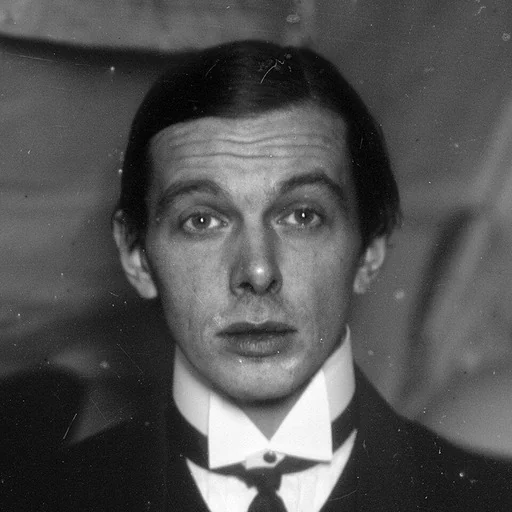
Ernst Ludwig Kirchner (6 May 1880 – 15 June 1938) was a German expressionist painter and printmaker.

![Dance Hall Bellevue [obverse], by Ernst Ludwig Kirchner](https://artifactworldgallery.com/img/ernst-ludwig-kirchner--dance-hall-bellevue-obverse--d1e14aac4297c69e-w320.webp)
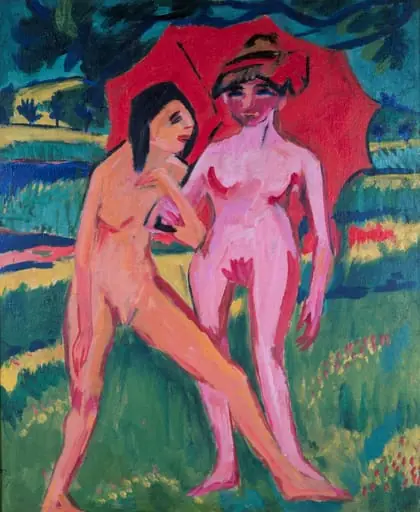
![Nude Figure [reverse], by Ernst Ludwig Kirchner](https://artifactworldgallery.com/img/ernst-ludwig-kirchner--nude-figure-reverse--4b135f0364753e98-w320.webp)
![Two Nudes [obverse], by Ernst Ludwig Kirchner](https://artifactworldgallery.com/img/ernst-ludwig-kirchner--two-nudes-obverse--eb3914183f0bc96d-w320.webp)
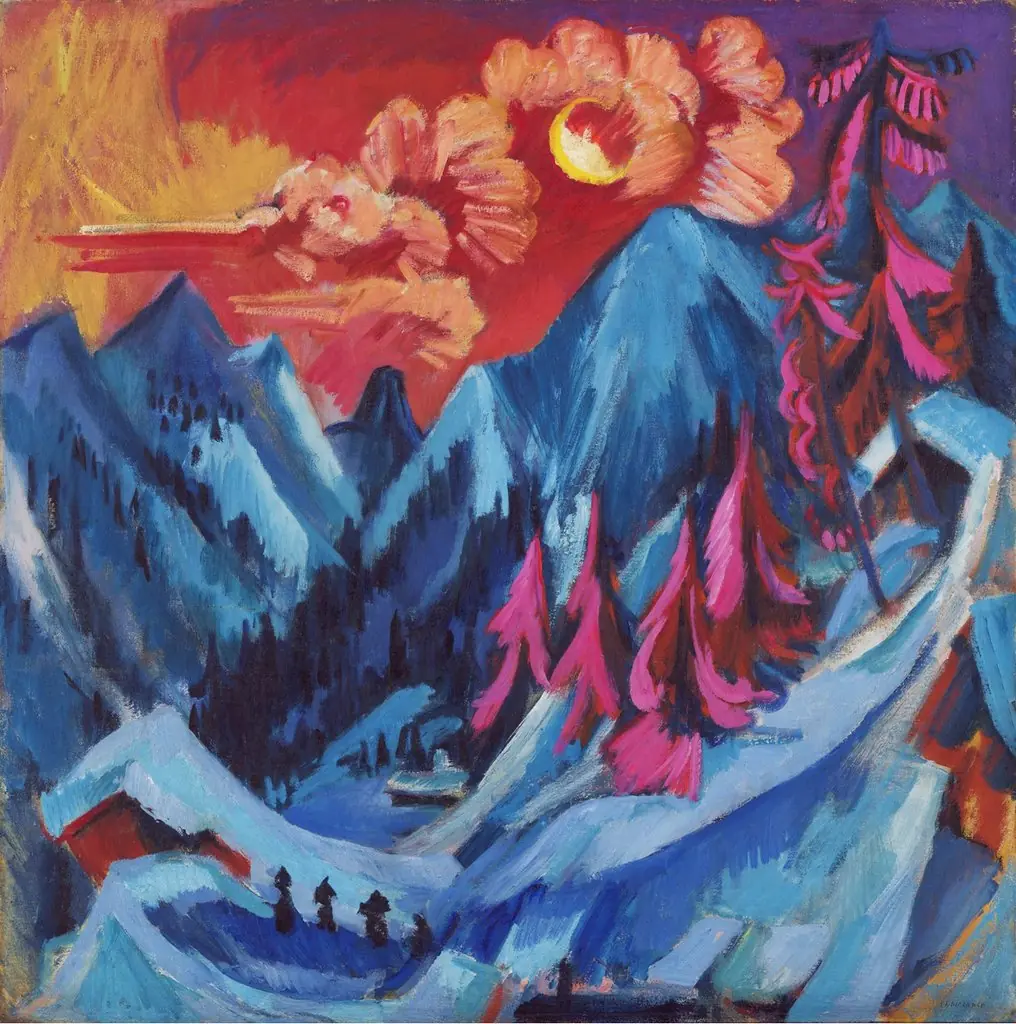
![Dancing Couple in the Snow [reverse], by Ernst Ludwig Kirchner](https://artifactworldgallery.com/img/ernst-ludwig-kirchner--dancing-couple-in-the-snow-reverse--87ca007d7c05b553-w320.webp)