Artwork
Chushingura: Act I (from the series Perspective Pictures for The Treasure House of Loyalty)
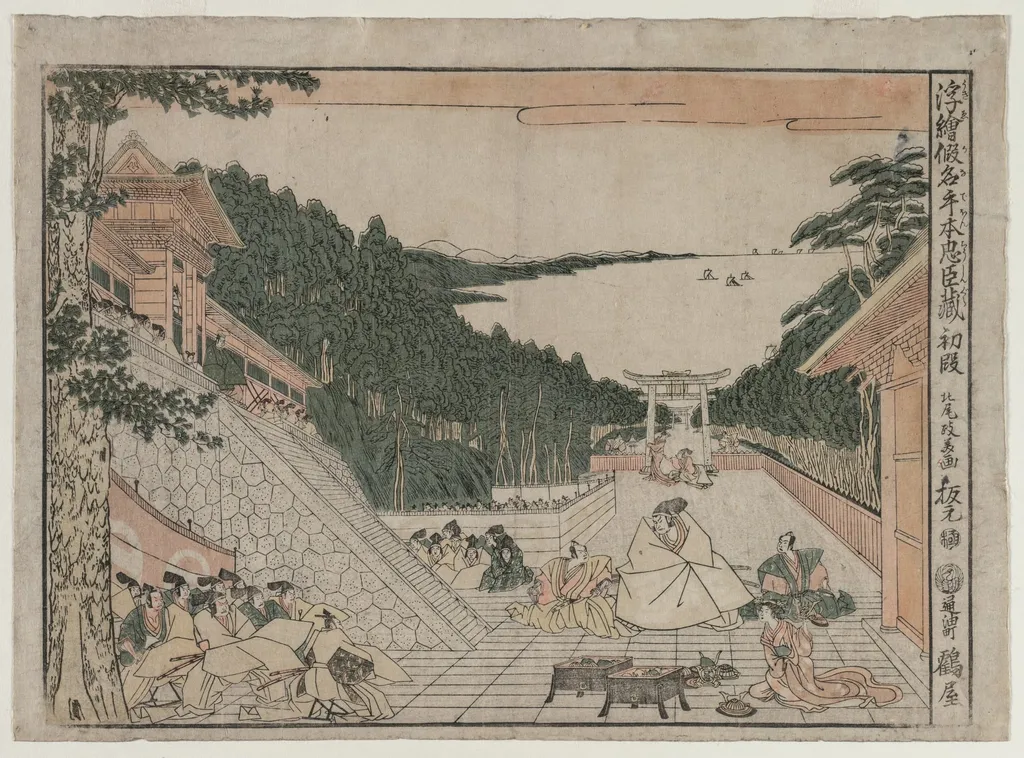
Chushingura: Act I (from the series Perspective Pictures for The Treasure House of Loyalty) is a print by the Romanticist artist Kitao Masayoshi. It dates from 1794 and is held in the collection of the Cleveland Museum of Art.
About this work
Overview
Created around 1794 by Kitao Masayoshi, this woodblock print is part of a series titled Perspective Pictures for The Treasure House of Loyalty.
Created around 1794 by Kitao Masayoshi, this woodblock print is part of a series titled Perspective Pictures for The Treasure House of Loyalty. It depicts a scene from the Chūshingura narrative, a tale of samurai loyalty. The composition draws the viewer’s eye upward along a winding staircase, emphasizing movement and spatial depth through diminishing scale. The print is held in the collection of The Cleveland Museum of Art.
Subject & Meaning
The scene illustrates the pilgrimage of loyal retainers toward a temple, symbolizing their devotion and moral resolve. Figures ascend in varied states—some burdened, others pausing—reflecting the physical and emotional weight of their quest. The temple at the summit represents spiritual and ethical culmination, reinforcing the story’s central theme of unwavering duty to one’s lord.
Technique & Style
Masayoshi employed linear perspective, a technique adapted from Western prints, to create a convincing sense of depth. Stairs and figures decrease in size as they climb, guiding the eye toward the distant temple. Soft, muted tones—olive greens, earthy browns, and faint pink in the sky—convey quiet solemnity. The absence of bold outlines and dramatic contrasts distinguishes this from more theatrical ukiyo-e styles.
History & Provenance
The print was produced during the late Edo period, when interest in historical narratives and moral tales surged among urban audiences. As part of a series promoting loyalty, it aligned with contemporary cultural values. It entered The Cleveland Museum of Art’s collection through established acquisition channels, likely in the early 20th century, as part of growing Western interest in Japanese prints.
Context
This work emerged during a time when Japanese artists increasingly experimented with spatial depth, influenced by limited exposure to European engravings. The Chūshingura story, based on real 18th-century events, was widely popular in theater and literature. Masayoshi’s print translates this narrative into a visual meditation on perseverance, blending traditional subject matter with emerging pictorial techniques.
Legacy
Masayoshi’s use of perspective in this print reflects a broader shift in ukiyo-e toward spatial realism without abandoning Japanese aesthetic principles. While not as widely known as works by Hokusai or Hiroshige, this series contributed to the evolution of narrative printmaking. Its quiet composition continues to inform scholarly discussions on cross-cultural visual exchange in late Edo art.
Artist & collection

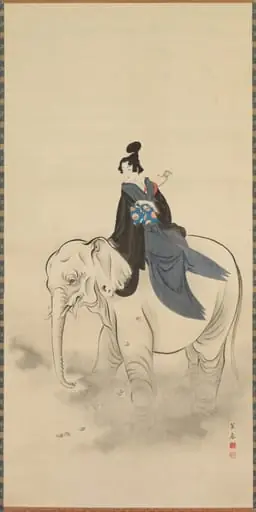 Stand-in Fugen
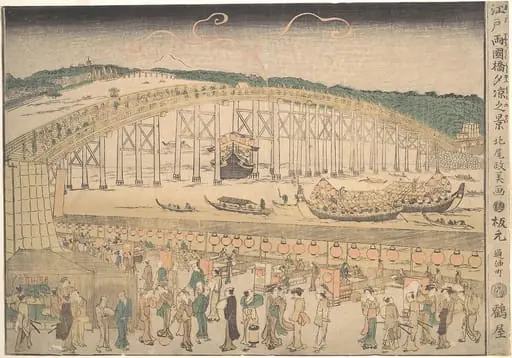 Untitled
 Untitled
 Untitled
 Untitled
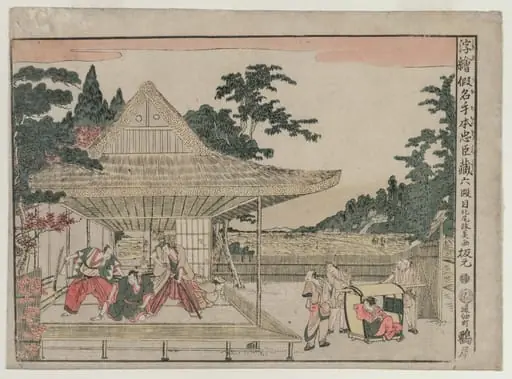 Chushingura: Act VI (from the series Perspective Pictures for The Treasure House of Loyalty)
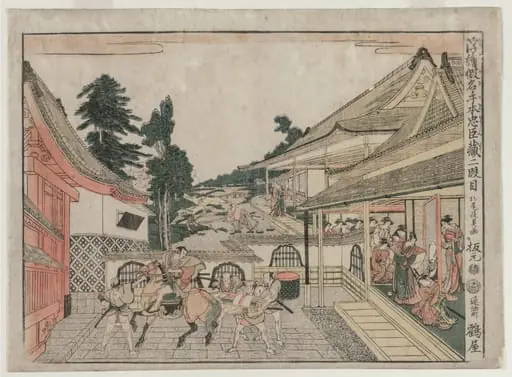 Chushingura: Act II (from the series Perspective Pictures for The Treasure House of Loyalty)
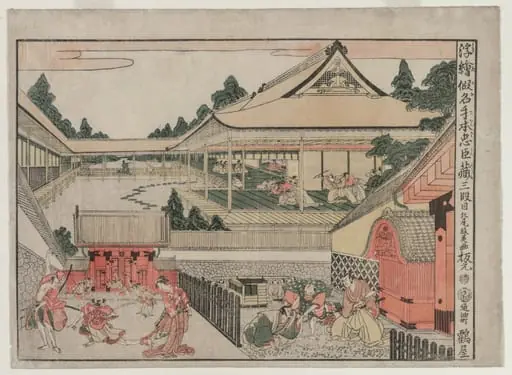 Chushingura: Act III (from the series Perspective Pictures for The Treasure House of Loyalty)
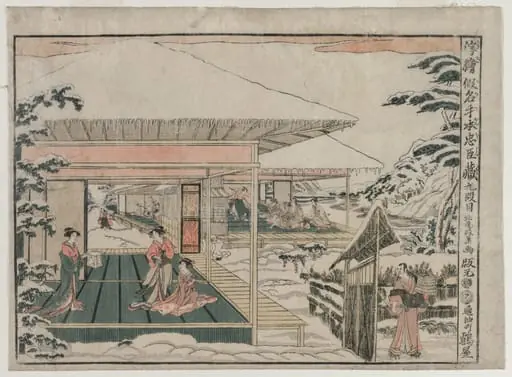 Chushingura: Act IX (from the series Perspective Pictures for The Treasure House of Loyalty)
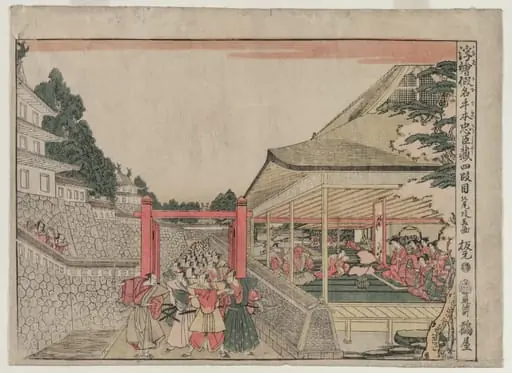 Chushingura: Act IV (from the series Perspective Pictures for The Treasure House of Loyalty)
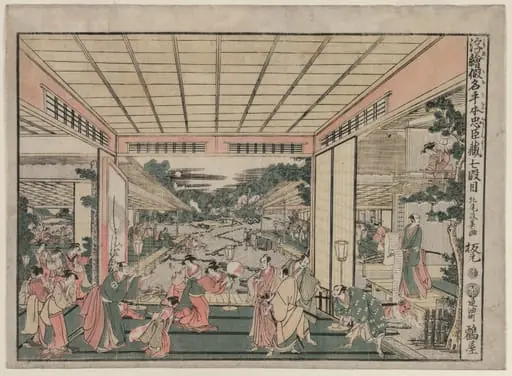 Chushingura: Act VII (from the series Perspective Pictures for The Treasure House of Loyalty)
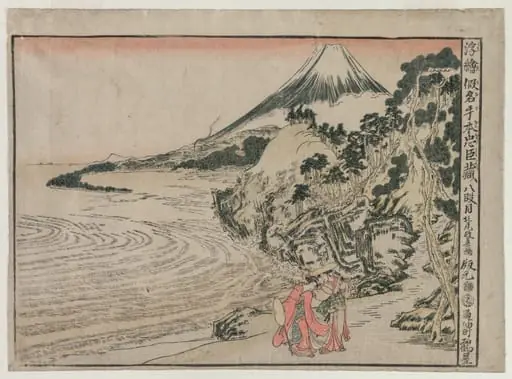 Chushingura: Act VIII (from the series Perspective Pictures for The Treasure House of Loyalty)
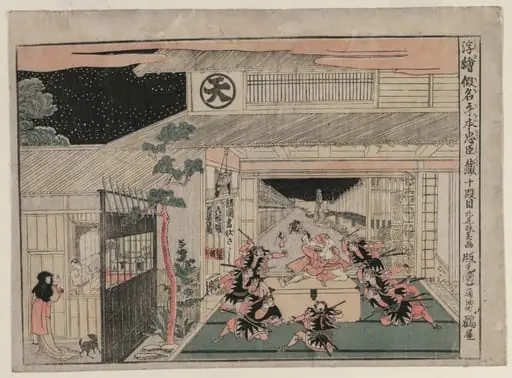 Chushingura: Act X (from the series Perspective Pictures for The Treasure House of Loyalty)