Artwork
Feuer Clown I (Fire Clown)
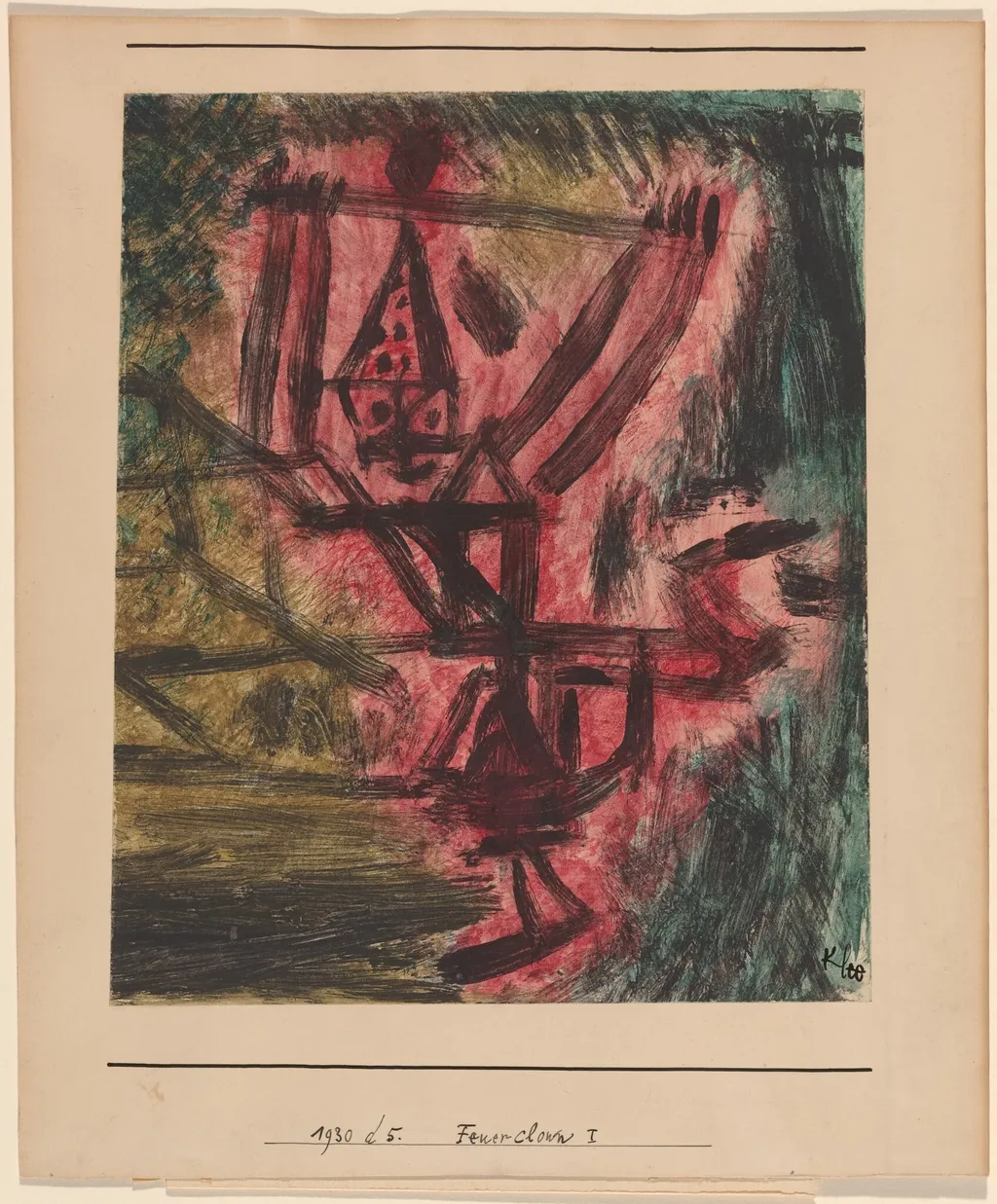
Feuer Clown I (Fire Clown) is a watercolor drawing by Paul Klee. It dates from 1921 and is held in the collection of the National Gallery of Art.
About this work
Overview
Paul Klee produced Feuer Clown I in 1921 as a watercolor on paper, mounted onto cardboard. The piece belongs to a series of works from his time at the Bauhaus, where he explored the interplay of line, color, and symbolic form. Though small in scale, it embodies his broader interest in transforming simple visual elements into expressive, almost theatrical compositions.
Subject & Meaning
Rather than depicting a literal performer, Klee evokes a symbolic presence—perhaps a metaphor for the artist’s role or the chaotic energy of creativity.
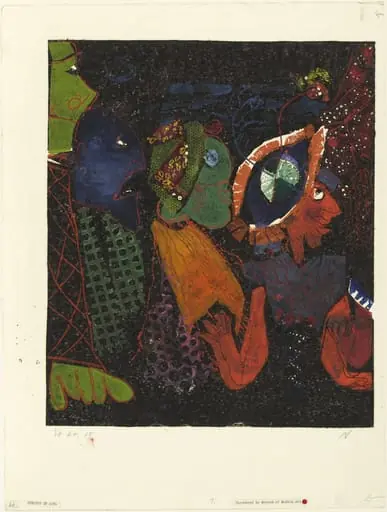
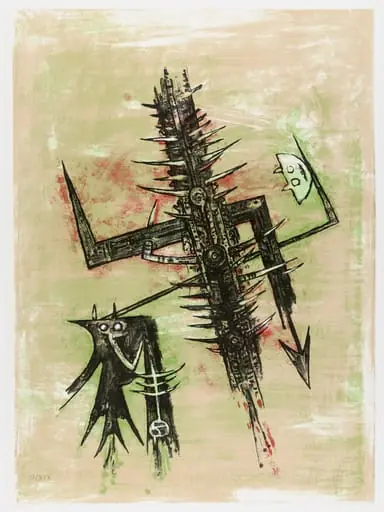
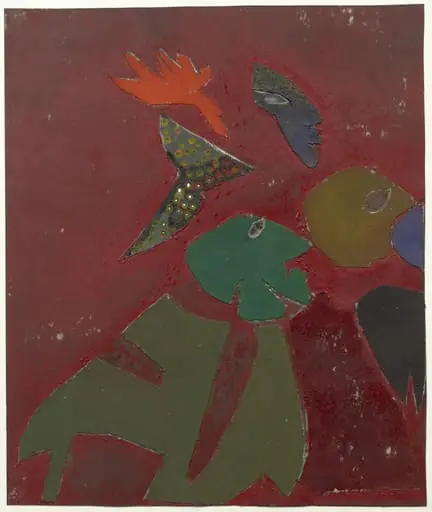
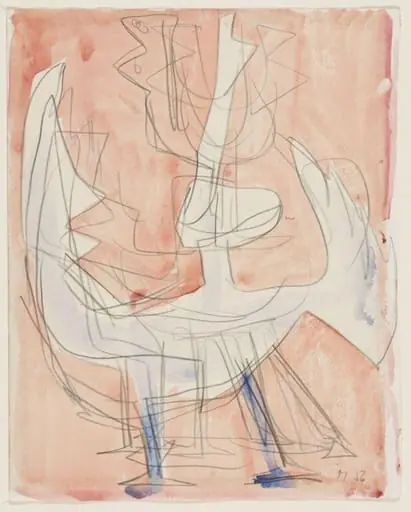
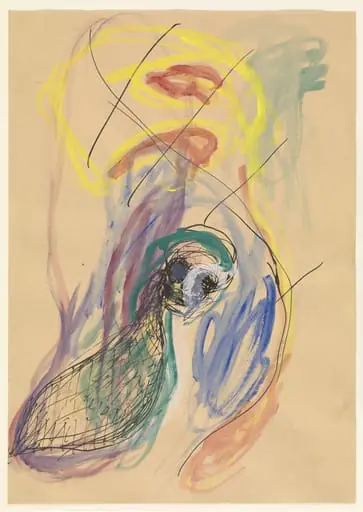
The figure in Feuer Clown I suggests a clown-like entity, its form abstracted and animated by bold strokes and vivid hues. Rather than depicting a literal performer, Klee evokes a symbolic presence—perhaps a metaphor for the artist’s role or the chaotic energy of creativity. The title implies fire as both destructive and illuminating, aligning with Klee’s fascination with opposing forces in art and life.
Technique & Style
Klee applied watercolor with precision, layering translucent washes to build subtle tonal shifts. The lines are deliberate yet fluid, suggesting movement and instability. By adhering the paper to cardboard, he stabilized the fragile medium while preserving its delicate texture. His approach blends the spontaneity of drawing with the control of compositional structure, reflecting his theoretical interest in visual rhythm.
History & Provenance
Created during Klee’s tenure at the Bauhaus in Weimar, Feuer Clown I emerged from a period of intense artistic experimentation. It remained in his personal collection until his death in 1940, after which it passed to his heirs. The work was later acquired by a public institution, where it is now preserved as part of his documented oeuvre from the early 1920s.
Context
In 1921, Klee was deeply engaged with the Bauhaus curriculum, teaching color theory and form. His work during this time responded to broader modernist inquiries into abstraction and symbolism. Feuer Clown I reflects influences from Expressionist emotion, Cubist fragmentation, and the emerging language of Surrealism, yet remains distinctly his own—a visual language rooted in personal symbolism and disciplined experimentation.
Legacy
Feuer Clown I exemplifies Klee’s ability to distill complex ideas into compact, poetic forms. It contributed to his reputation as a theorist-artist whose writings on art’s underlying structures gained lasting influence. The work continues to be studied for its synthesis of playfulness and precision, offering insight into how abstract imagery can carry emotional and philosophical weight without literal representation.
Artist & collection
Artist
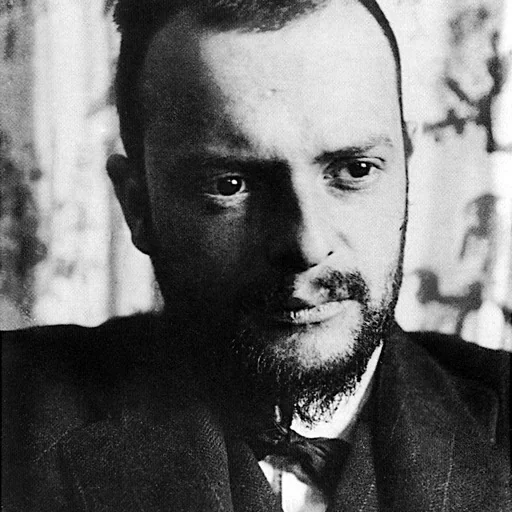
Paul Klee (German: ; 18 December 1879 – 29 June 1940) was a Swiss-born German artist.