Artwork
Untitled
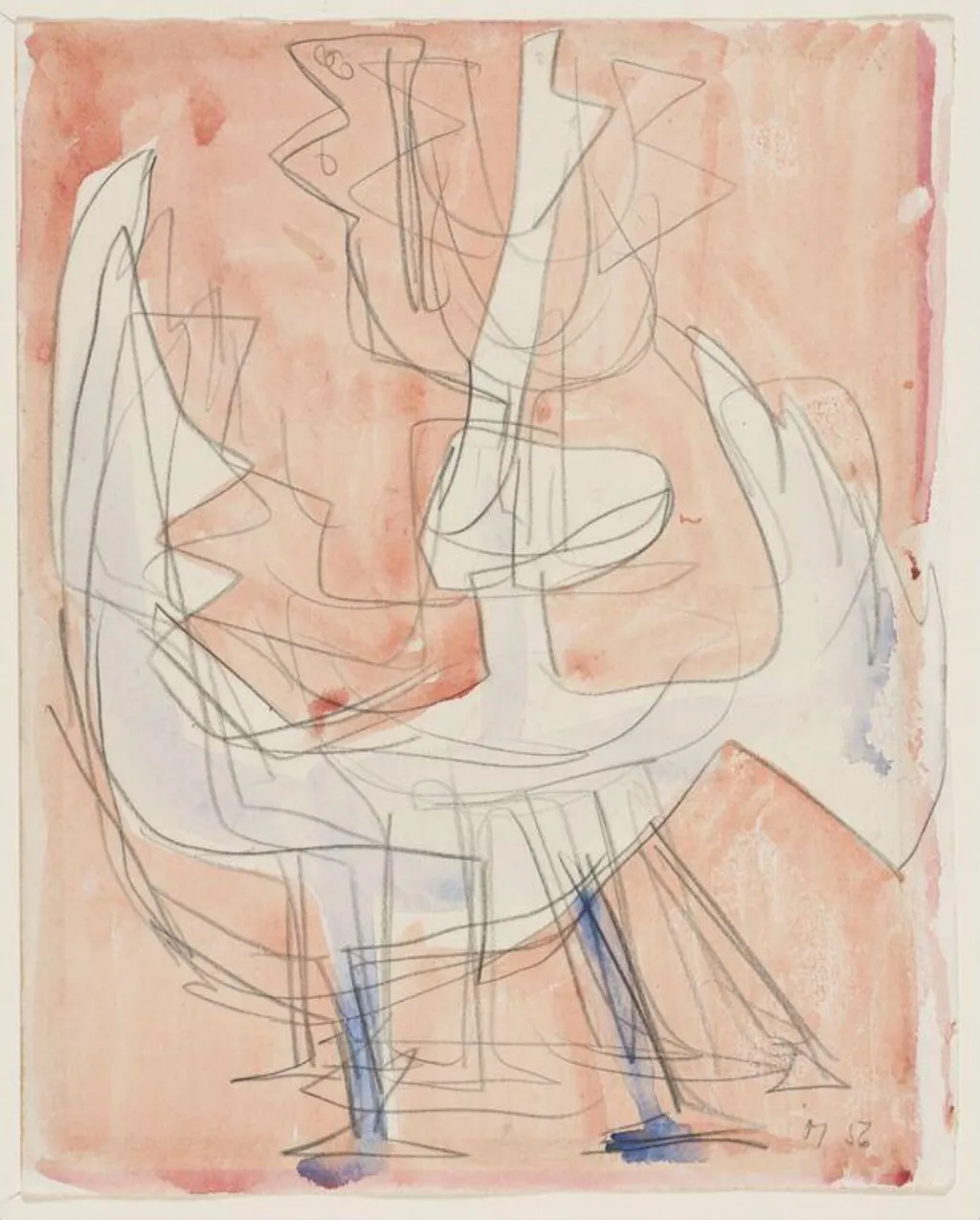
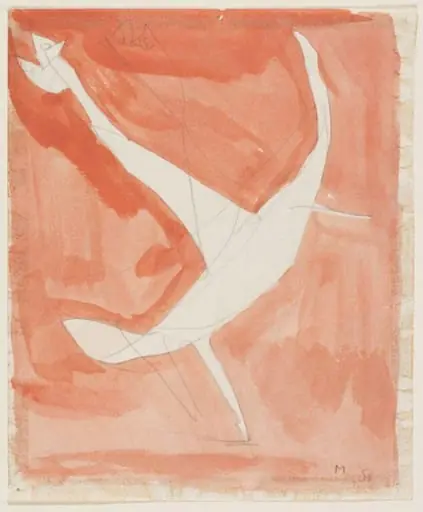
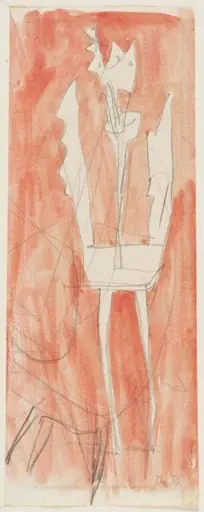
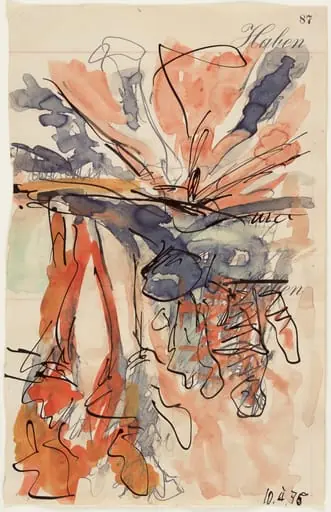
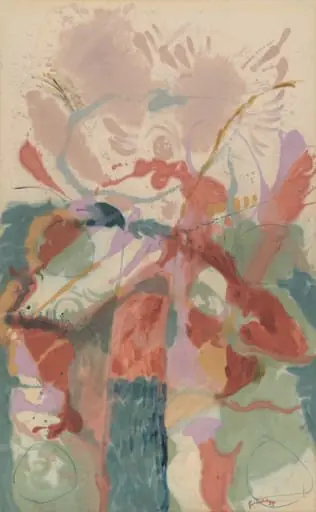
Untitled is a drawing by Bernard Meadows. It is held in the collection of the Victoria and Albert Museum.
About this work
Overview
Its pink ground serves as a neutral field against which darker tones interact dynamically, suggesting rhythm without narrative.
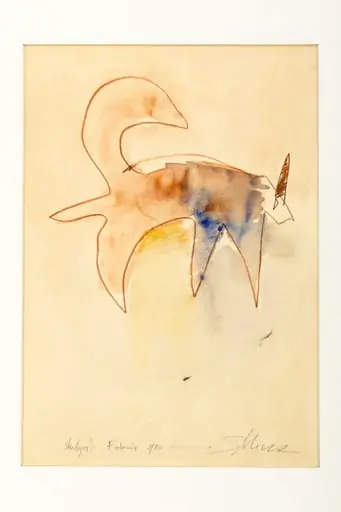
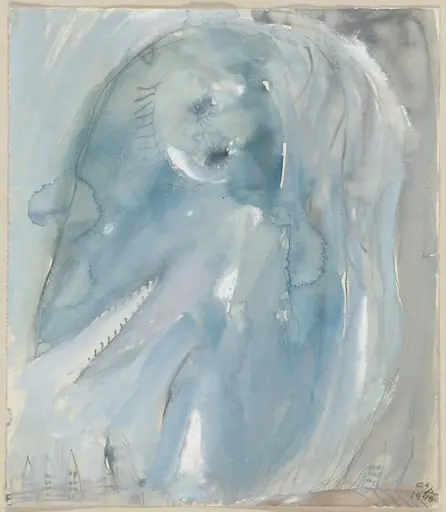
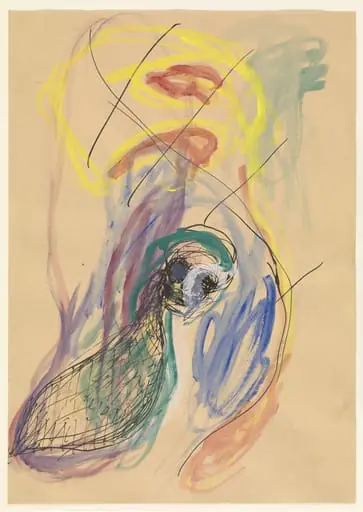
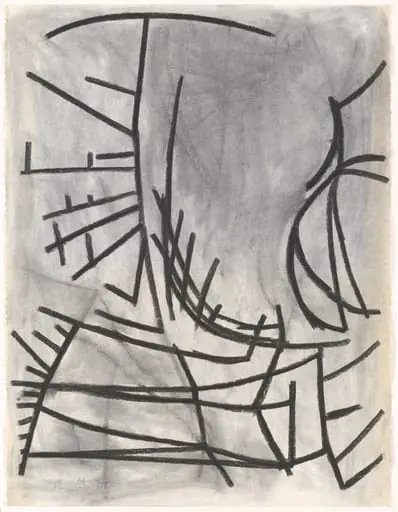
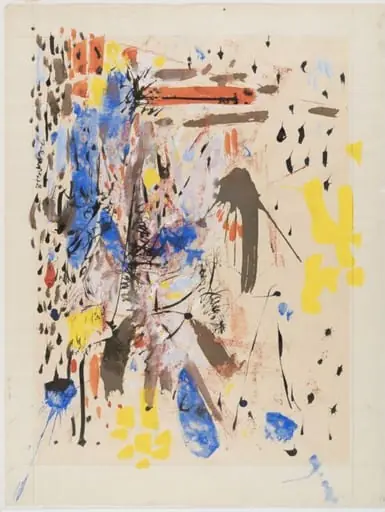
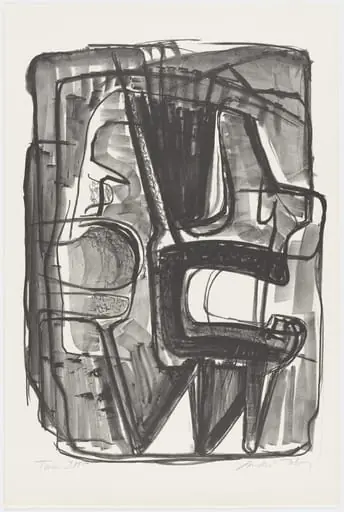
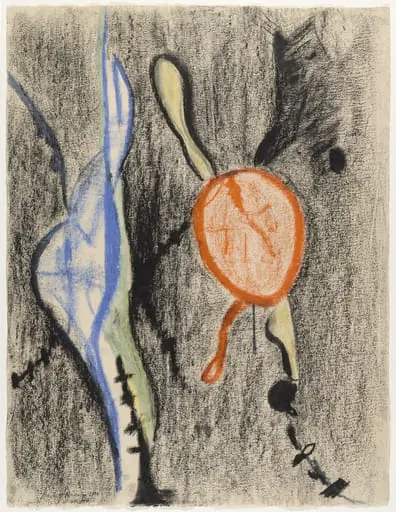
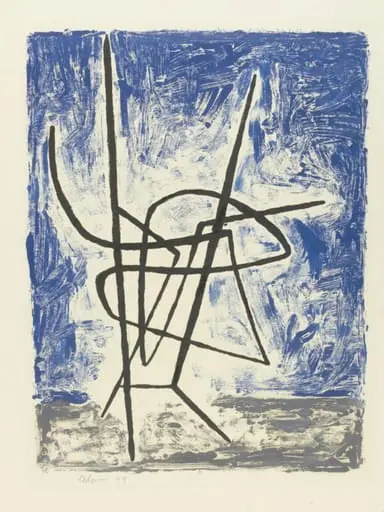
Bernard Meadows created this untitled drawing as part of his exploration of abstract form. Executed in pencil, ink, and watercolor, it resides in the Victoria and Albert Museum’s collection. The work avoids representational imagery, instead emphasizing gesture and spatial relationships. Its pink ground serves as a neutral field against which darker tones interact dynamically, suggesting rhythm without narrative.
Subject & Meaning
The drawing does not depict a recognizable subject. Its meaning emerges from the interplay of abstract marks—curving lines, smudged areas, and irregular shapes—that resist fixed interpretation. Meadows invites contemplation of movement and balance rather than storytelling. The absence of a focal point encourages the viewer to experience the work as a field of visual energy, not a depiction of something external.
Technique & Style
Meadows employed a range of tools to vary line weight and texture, from fine pen strokes to broad washes of blue and gray. The pink paper remains partially visible, acting as both background and active element. Deliberate use of negative space enhances the sense of motion, while subtle layering adds depth without opacity. The style reflects a post-war abstraction rooted in spontaneous mark-making and material sensitivity.
History & Provenance
The drawing entered the Victoria and Albert Museum’s collection as part of its postwar British art holdings. It was likely acquired in the mid-20th century, during a period when Meadows was actively exhibiting with other British abstract artists. No record of prior ownership is publicly documented, suggesting it may have been acquired directly from the artist or a gallery exhibition.
Context
Created in the decades following World War II, this work aligns with a broader British shift toward abstraction in the 1950s and 60s. Meadows, associated with the Geometry of Fear group, engaged with existential themes through non-representational forms. This drawing reflects a wider artistic interest in expressing inner states through gesture, influenced by European modernism and the psychological weight of the postwar era.
Legacy
Though not among Meadows’s most widely reproduced works, this drawing exemplifies his commitment to abstraction as a means of emotional and formal inquiry. It contributes to the understanding of British mid-century drawing practices, where materiality and spontaneity held equal weight to composition. The piece remains a quiet but significant example of his sustained engagement with non-objective art.
Artist & collection

Artist
Bernard Meadows was a British modernist sculptor. Meadows was Henry Moore's first assistant; then part of the Geometry of Fear school, a loose-knit group of British sculptors whose prominence was established at the 1952…