Artwork
Pauză pentu masă
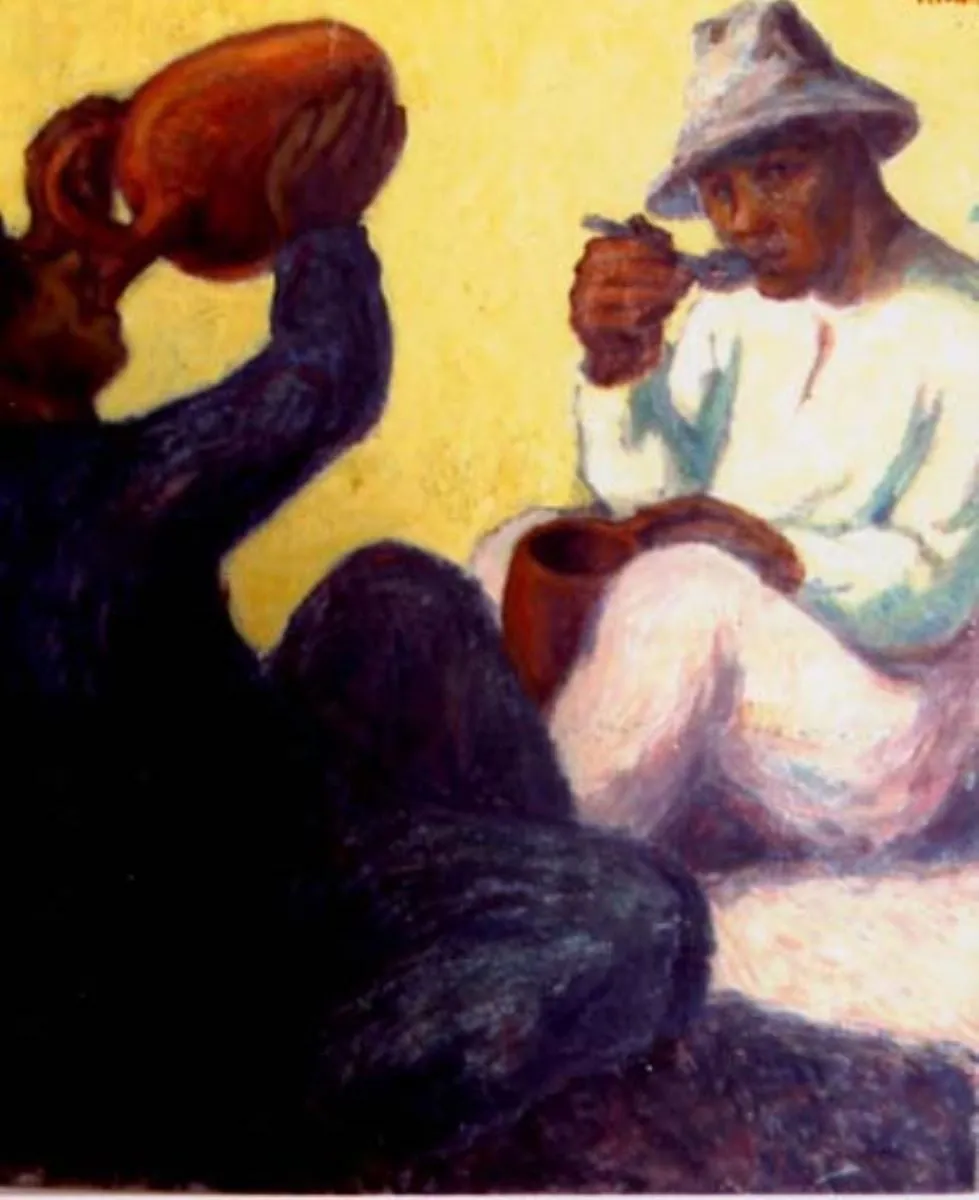
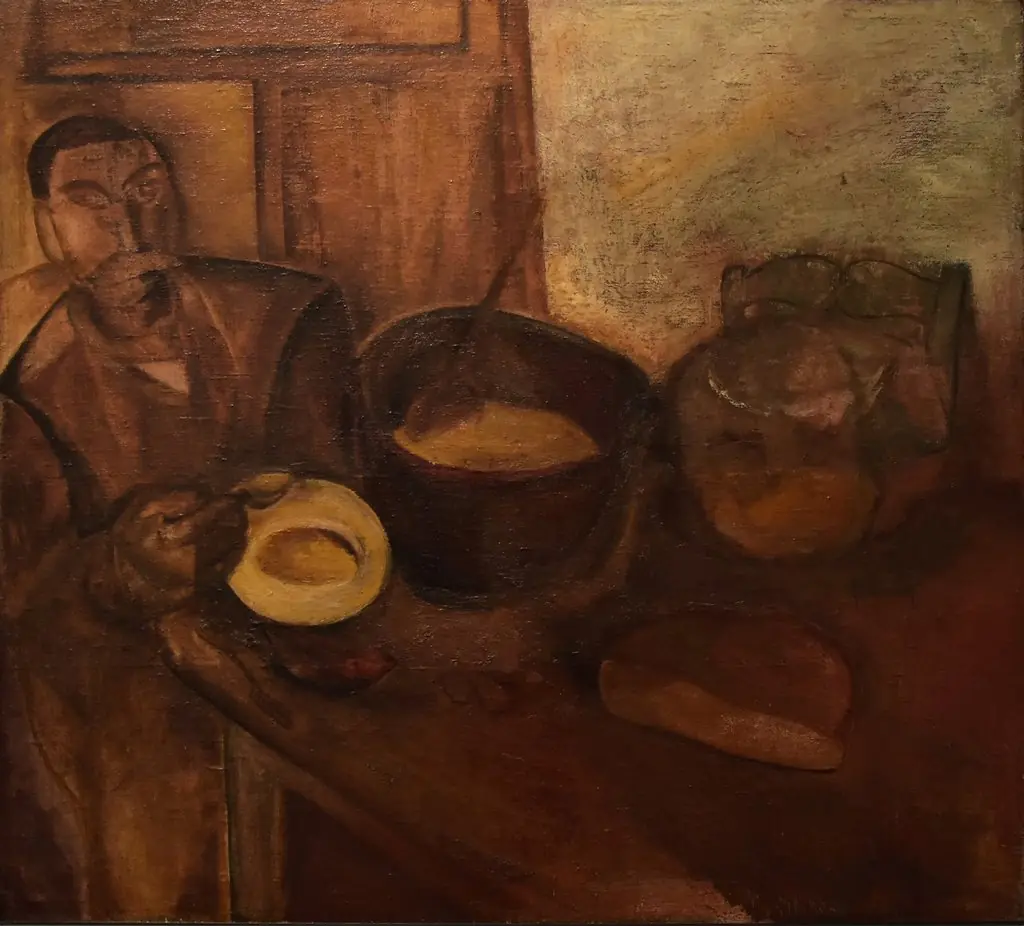
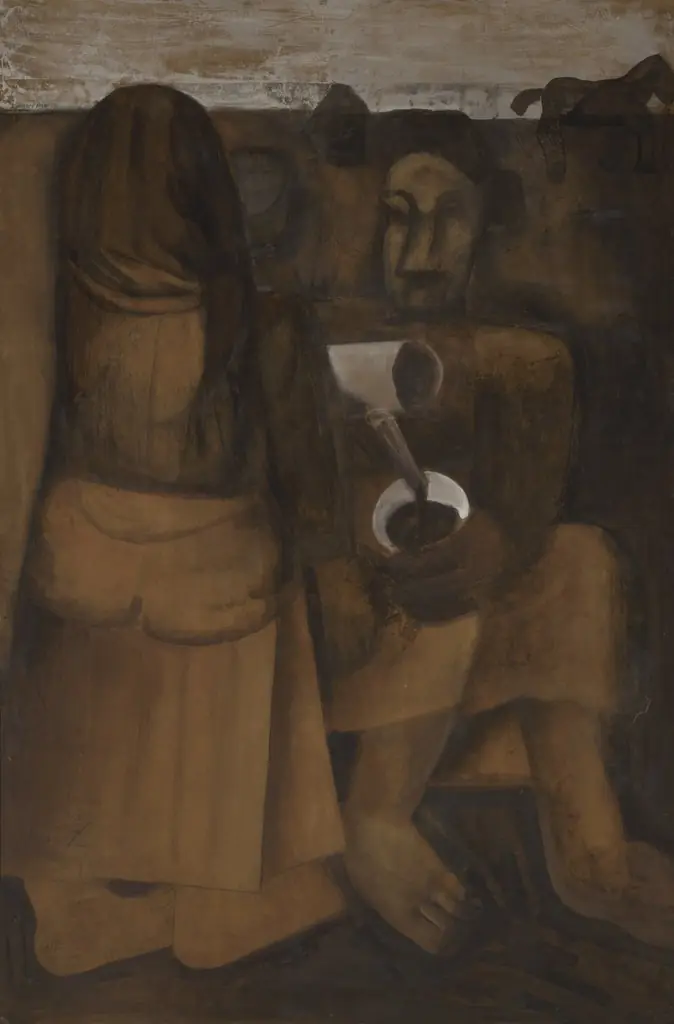
Pauză pentu masă is an unspecified painting by Jozsef Klein. It dates from 1949 and is held in the collection of the Baia Mare Artistic Centre County Art Museum.
About this work
Overview
The composition is intimate, focusing on the subject’s posture and material textures rather than a specific setting.
Pauză pentru masă, dated around 1949, is a painted portrait by Hungarian artist Jozsef Klein. The work is part of the collection at the Museum of Ethnography. It depicts a solitary figure in a quiet, contemplative pose, rendered with a tactile application of paint that emphasizes physical presence over narrative detail. The composition is intimate, focusing on the subject’s posture and material textures rather than a specific setting.
Subject & Meaning
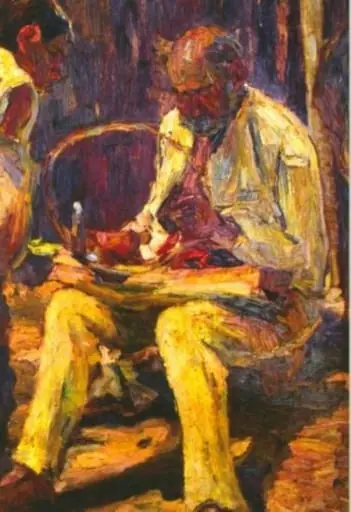
The figure, seated on a dark surface, wears a wide-brimmed hat and a light shirt, holding a pipe and a large gourd. These objects suggest a moment of pause, possibly after labor or during a break. The absence of context or facial detail invites interpretation rooted in everyday ritual rather than symbolic storytelling. The stillness of the pose and the simplicity of the props evoke a sense of quiet endurance.
Technique & Style
Klein employed impasto to build texture, particularly in the fabric of the shirt, where thick layers of paint create a sense of volume and tactile weight. Loose, visible brushstrokes define the form without fine detail, favoring expressive gesture over realism. The warm, yellowish background contrasts with the darker tones of the figure, enhancing the subject’s solidity without distracting from it.
History & Provenance
The painting was created in the late 1940s, during a period of cultural redefinition in postwar Hungary. It entered the Museum of Ethnography’s collection as part of efforts to document vernacular life through art. Its preservation there reflects an institutional interest in portraying ordinary individuals, not elite or historical subjects, during a time of social transition.
Context
In postwar Eastern Europe, artists often turned to scenes of rural or working-class life as a form of quiet resistance to state-sanctioned idealism. Klein’s focus on a solitary, unidealized figure aligns with this tendency. The gourd and pipe, common in peasant culture, ground the image in regional customs, offering a subtle counterpoint to the era’s dominant political imagery.
Legacy
Pauză pentru masă remains a quiet example of mid-century Hungarian realism, valued for its emotional restraint and material honesty. While not widely exhibited beyond its home institution, it contributes to a broader understanding of how artists in the region used everyday subjects to convey dignity without rhetoric. Its preservation underscores the museum’s commitment to non-monumental narratives.
Artist & collection
Artist
Museum
Baia Mare Artistic Centre County Art Museum
Continue through works from the same source collection.