Artwork
伝近衛信尋書・伝長谷川宗也絵 葛下絵色紙貼付 『和漢朗詠集』 屏風|Anthology of Japanese and Chinese Poems (Wakan rōeishū) with Underpainting of Arrowroot Vines
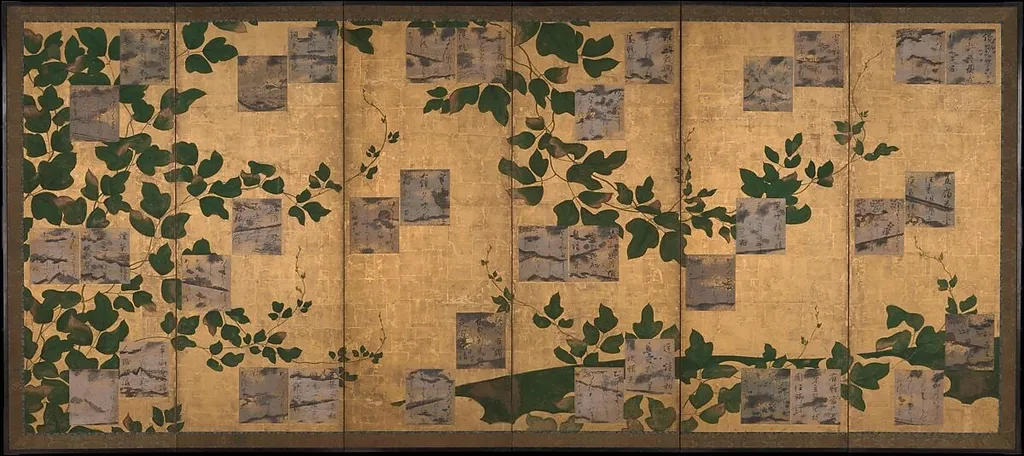
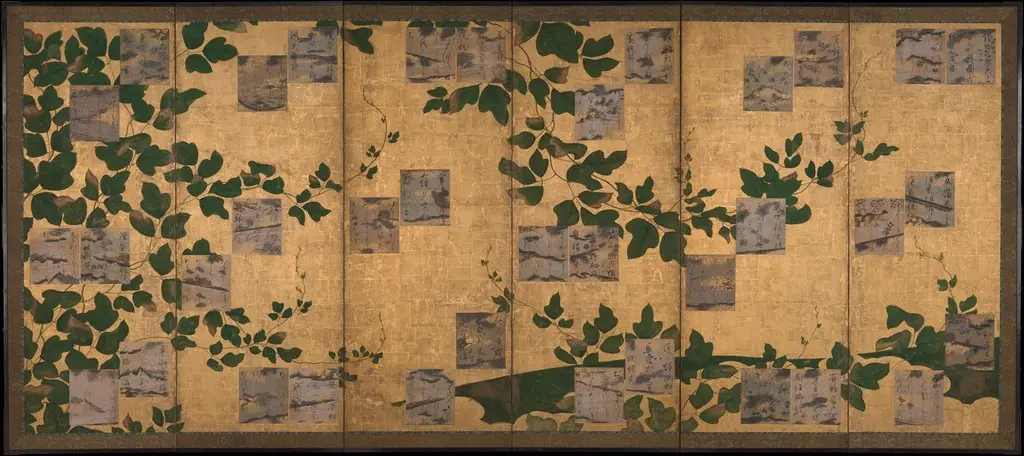
伝近衛信尋書・伝長谷川宗也絵 葛下絵色紙貼付 『和漢朗詠集』 屏風|Anthology of Japanese and Chinese Poems (Wakan rōeishū) with Underpainting of Arrowroot Vines is an ink painting by the Baroque artist Konoe Nobuhiro|Hasegawa Sōya. It dates from 1616 and is held in the collection of the Metropolitan Museum of Art. This six-panel folding screen combines calligraphy and painting on gilt paper, attributed to Konoe Nobuhiro and Hasegawa Sōya.
About this work
Overview
The background glows with gold leaf, while the foliage is rendered in soft green pigments, creating a subdued yet richly textured surface.
This six-panel folding screen combines calligraphy and painting on gilt paper, attributed to Konoe Nobuhiro and Hasegawa Sōya. Created around 1616, it presents excerpts from the Wakan rōeishū, an anthology of Japanese and Chinese verse, arranged as small paper inserts amid an intricate underpainting of arrowroot vines. The background glows with gold leaf, while the foliage is rendered in soft green pigments, creating a subdued yet richly textured surface.
Subject & Meaning
The screen visually anchors literary culture through fragments of classical poetry, embedded within a naturalistic vine motif. The arrowroot vines, symbolizing endurance and quiet growth, frame the textual fragments as if nature itself preserves the verses. The pairing of literary and botanical elements reflects a Zen-inflected aesthetic, where poetry and the natural world coexist as expressions of transient beauty and contemplative stillness.
Technique & Style
The screen employs ink and color on gold-leafed paper, with delicate brushwork defining the sinuous vines and their veined leaves. The paper slips bearing poems are minimally affixed, their ink faded, suggesting deliberate impermanence. The contrast between the luminous gold ground and muted greens creates depth without bold contrast. Textures are built through fine, controlled strokes rather than heavy shading, emphasizing restraint and subtlety.
History & Provenance
Attributed to Konoe Nobuhiro, a court noble and calligrapher, and Hasegawa Sōya, a painter linked to the Kanō school, the screen likely originated in early Edo-period Kyoto. It entered The Metropolitan Museum of Art’s collection through documented acquisitions in the 20th century, preserving its original format and materials. Its survival in near-original condition is rare for works of this type, which often suffered from environmental or structural degradation.
Context
Produced during a time when aristocratic culture still valued classical poetry, the screen reflects the continued practice of waka and kanshi recitation among court elites. Folding screens like this served both decorative and ceremonial roles, often placed in private chambers for quiet reflection. The integration of text and image aligns with broader trends in Japanese art that treated writing as a visual and spiritual act, not merely a communicative one.
Legacy
This screen exemplifies the Edo-period synthesis of literary tradition and refined pictorial form. While not widely reproduced or publicly celebrated, it remains a quiet testament to the aesthetic values of its time—where understatement, material harmony, and the preservation of cultural memory took precedence over spectacle. Its preservation offers insight into how poetry was physically and spiritually embedded in domestic spaces.
Artist & collection

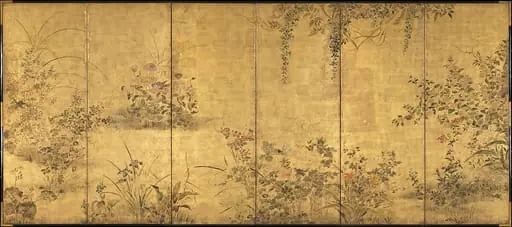 四季花野菜図屏風|Flowering Plants and Vegetables of the Four Seasons
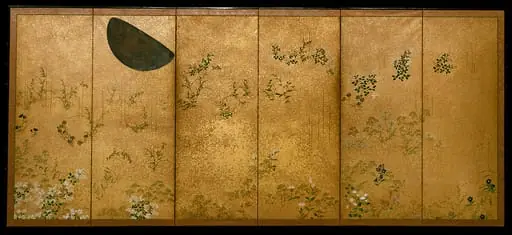 俵屋宗達工房 月に秋草図屏風|Moon and Autumn Grasses
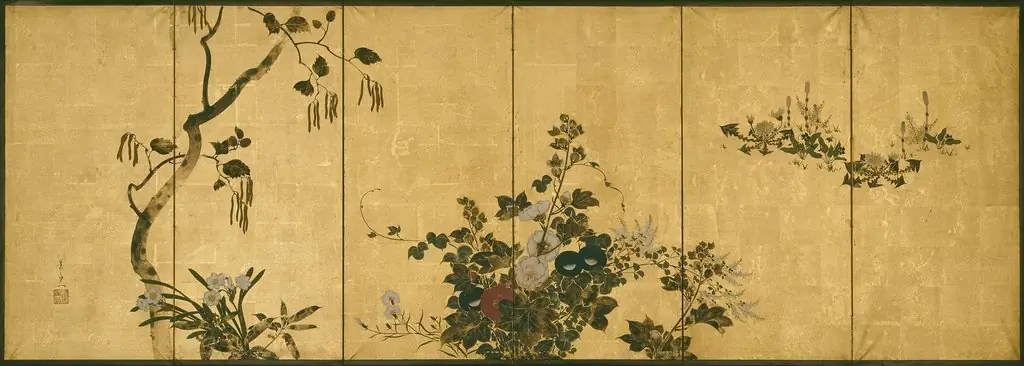 Flowers of Autumn and Winter
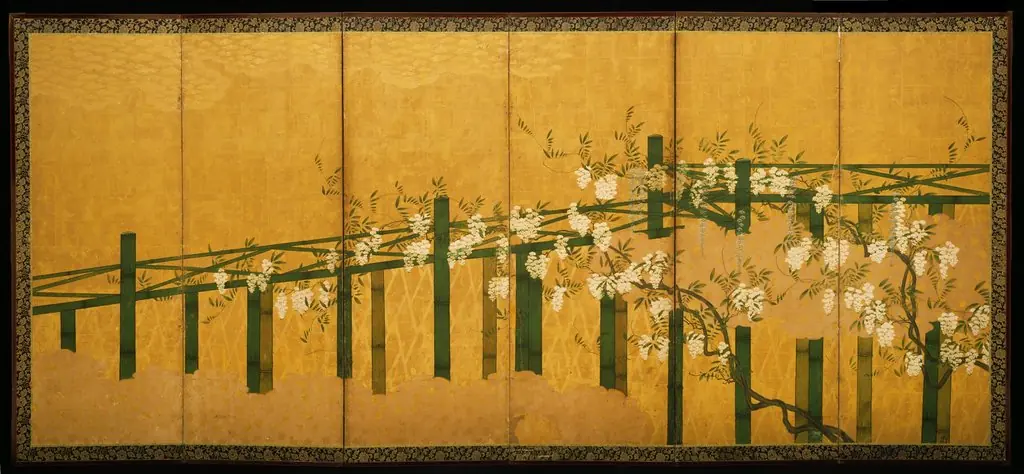 Blue and White Wisteria on a Bamboo Trellis
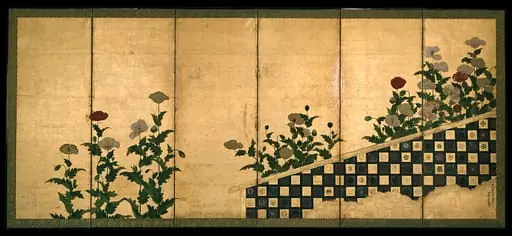 伝土佐光茂筆 芥子図屏風|Red and White Poppies
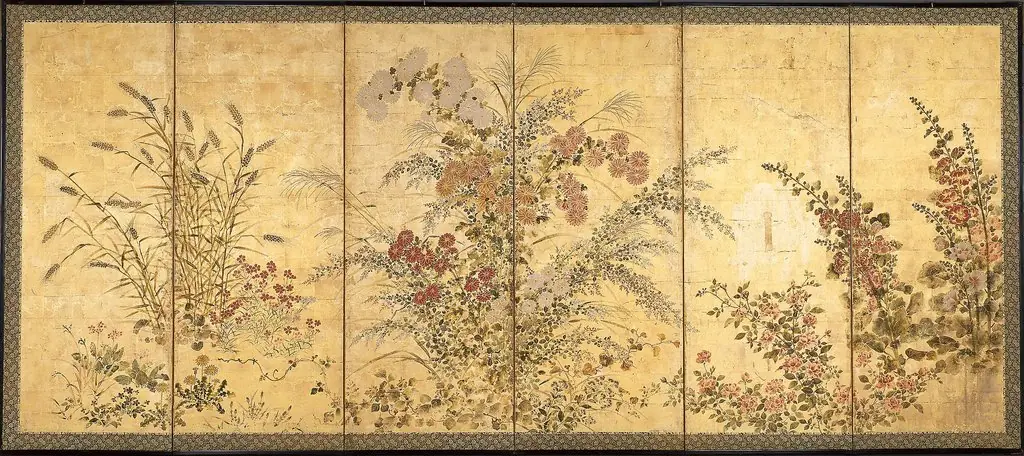 Flowers of All Seasons
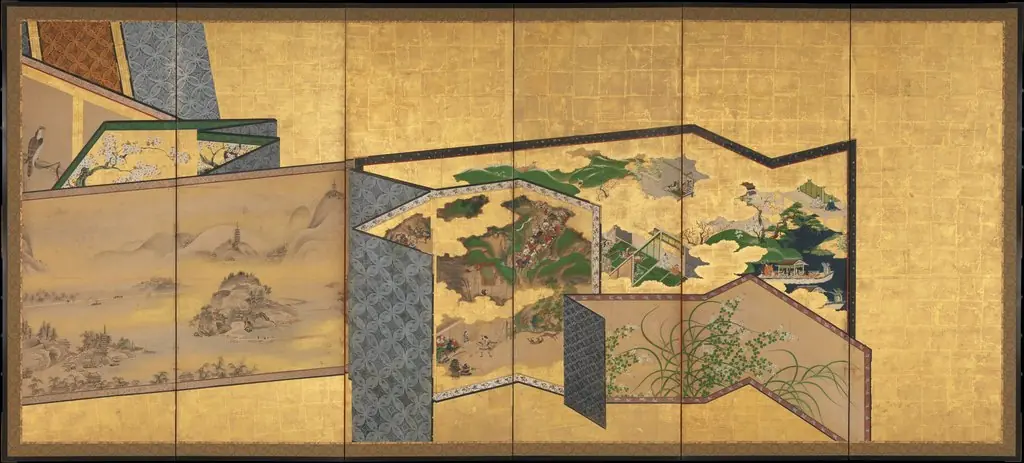 Screens within Screens
 Anthology of Japanese and Chinese Poems (Wakan rōeishū) with Underpainting of Arrowroot Vines