Artwork
Bathsheba Reading David's Letter (after Rembrandt)
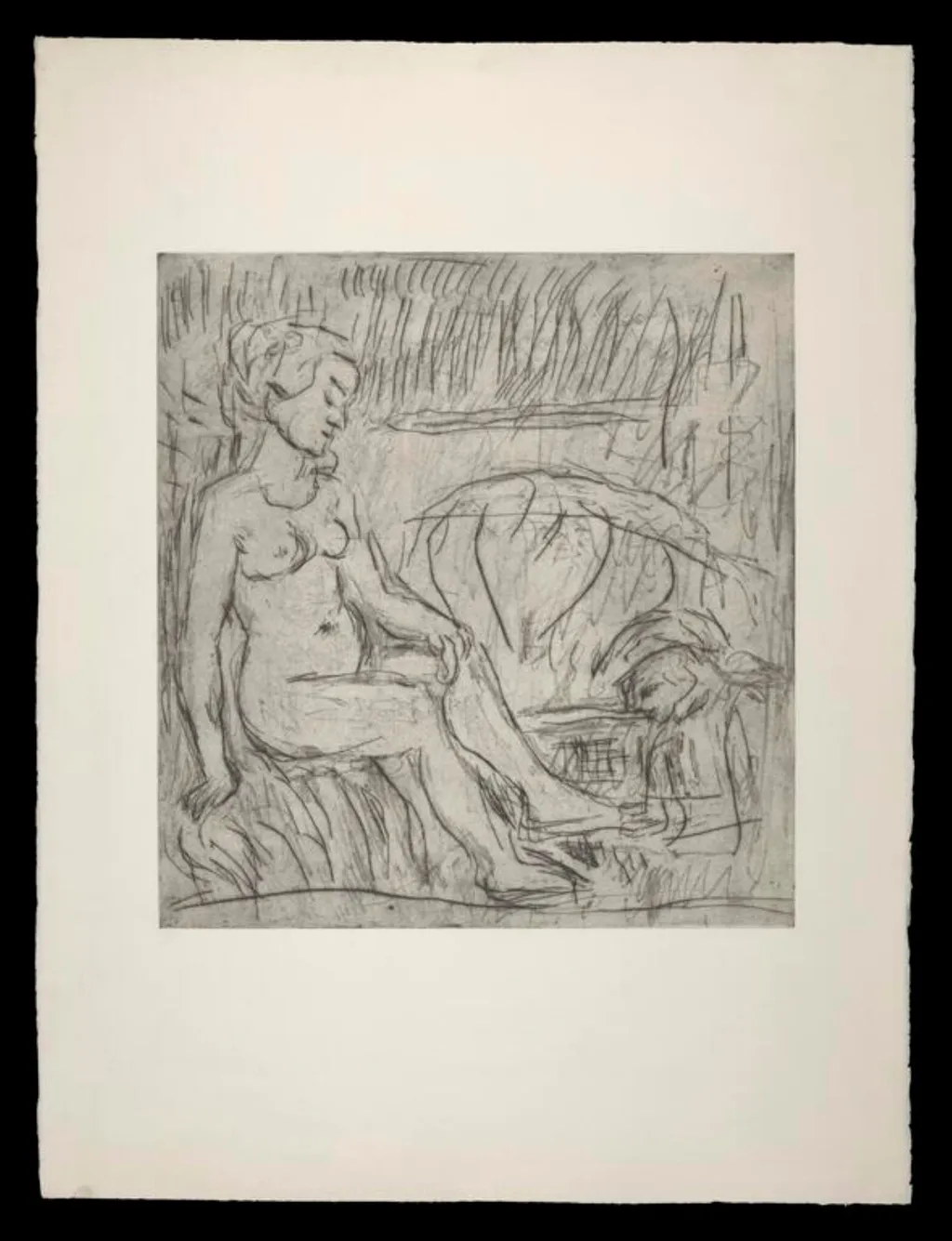
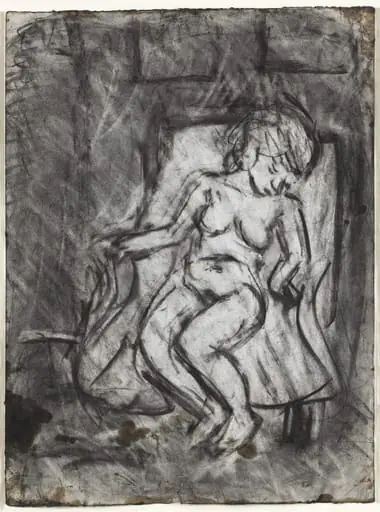
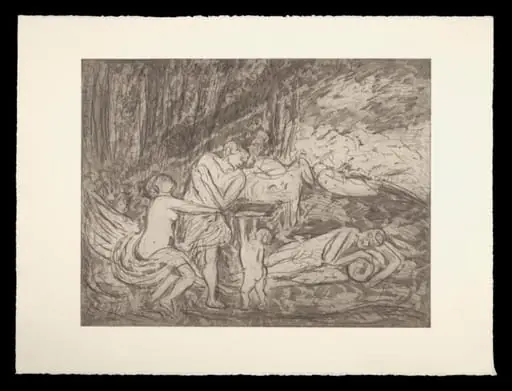
Bathsheba Reading David's Letter (after Rembrandt) is a print by Leon Kossoff. It dates from 1998 and is held in the collection of the Victoria and Albert Museum.
About this work
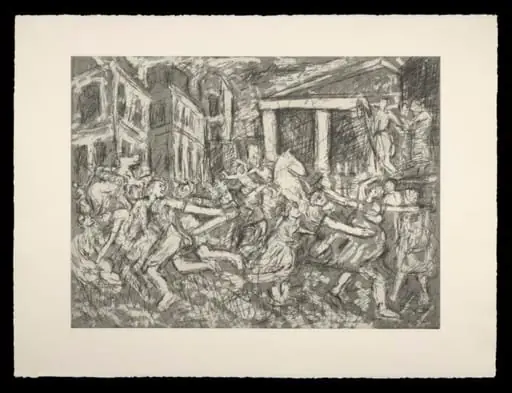
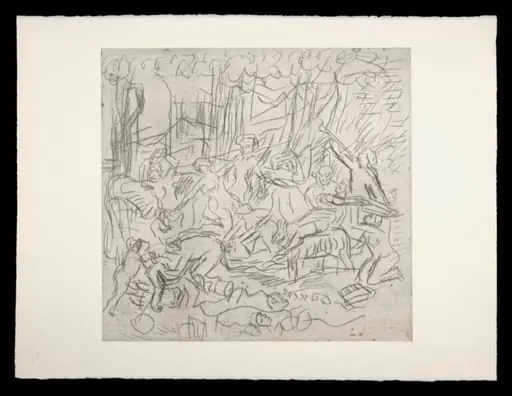
Kossoff made many etchings after Rembrandt, Poussin, and Veronese, but these weren’t copies—they were his own deep look.
Leon Kossoff’s 1998 print reimagines an Old Master scene in fresh lines. It shows Bathsheba reading David’s letter, a nude figure in quiet focus. Kossoff made many etchings after Rembrandt, Poussin, and Veronese, but these weren’t copies—they were his own deep look.
He kept reworking proofs, sometimes long after the prints were done, chasing the right feel through line and tone. Printmaking let him dig into drawing, not color.
Next, check the Victoria and Albert Museum.
Overview
Leon Kossoff’s 1998 etching reinterprets a scene from Rembrandt’s depiction of Bathsheba, stripping away color to focus on line and tonal structure. Unlike a reproduction, the work is a personal engagement with the original, emerging from prolonged study and repeated revision. Kossoff treated printmaking as an extension of drawing, using the etching plate as a surface to test and refine his perception of the Old Master’s composition.
Subject & Meaning
The print captures Bathsheba in a moment of quiet introspection, reading King David’s letter while nude and alone. Kossoff emphasizes her solitude and gravity, avoiding narrative drama. By removing color and ornament, he shifts attention to the psychological weight of the moment, aligning with his broader interest in human presence and emotional stillness over theatricality.
Technique & Style
Kossoff employed etching to explore the expressive potential of line and texture, reworking the plate through multiple states even after initial editions. His marks are dense, gestural, and layered, revealing a process of continuous revision. The absence of color forces reliance on tonal variation and contour, reflecting his belief that drawing, not pigment, reveals the essence of a composition.
History & Provenance
The print was produced in 1998 as part of a series in which Kossoff responded to works by Rembrandt, Poussin, and Veronese. Initial proofs were developed with printmaker Ann Dowker, and later editions were printed by Marc Balakjian at Studio Prints. Surviving states of the plate show Kossoff’s persistent revisions, underscoring his view of printmaking as an evolving dialogue with the past.
Context
Kossoff belonged to a generation of British artists—alongside Auerbach and Freud—who prioritized direct observation and material presence. His engagement with Old Masters was not homage but inquiry: he sought to understand their methods by reworking their compositions in his own hand. This practice reflected a broader postwar interest in re-examining tradition through personal, tactile means.
Legacy
Kossoff’s etchings after Old Masters remain significant for their unromanticized approach to artistic inheritance. They demonstrate how historical works can be reactivated not through replication, but through sustained, physical engagement. His process—marked by doubt, revision, and tactile persistence—offers a model of artistic learning rooted in humility and attention rather than imitation.
Artist & collection
Artist
Leon Kossoff (10 December 1926 – 4 July 2019) was a British figurative painter known for portraits, life drawings and cityscapes of London, England.