Artwork
Untitled
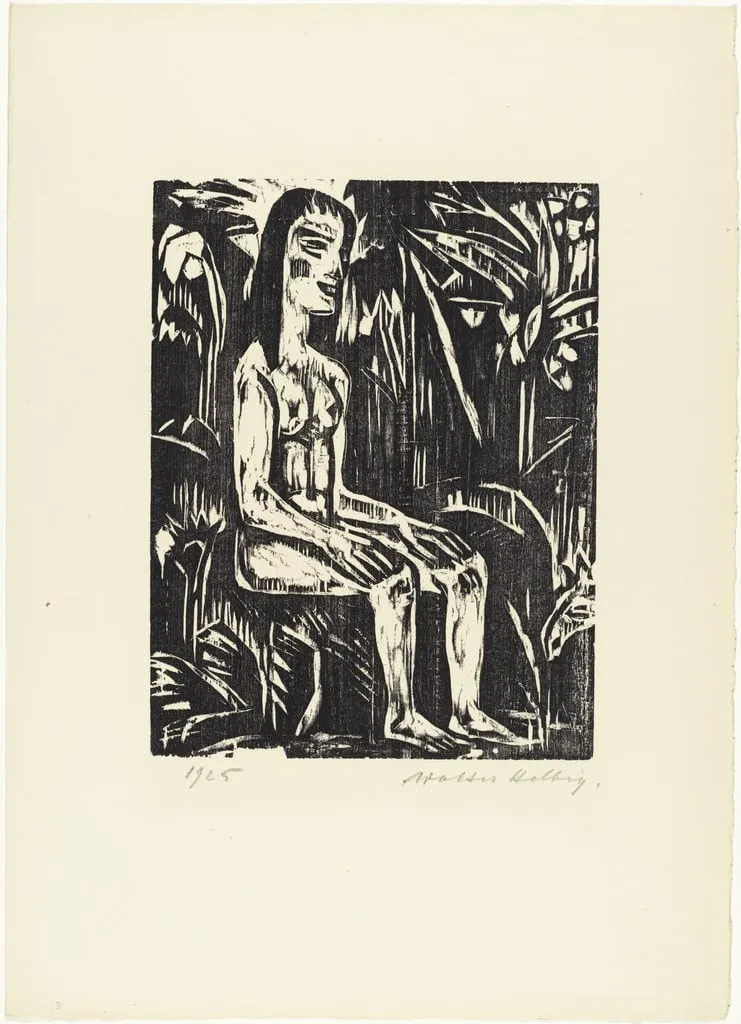
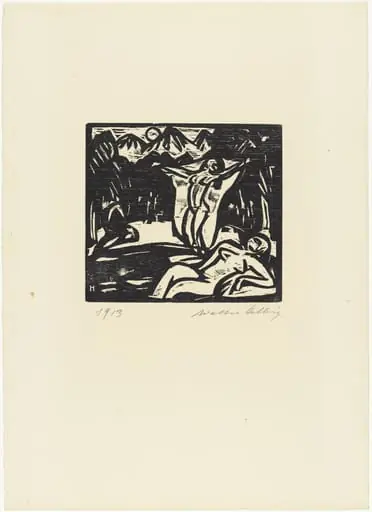
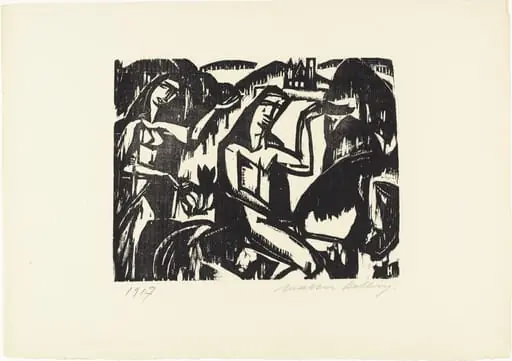
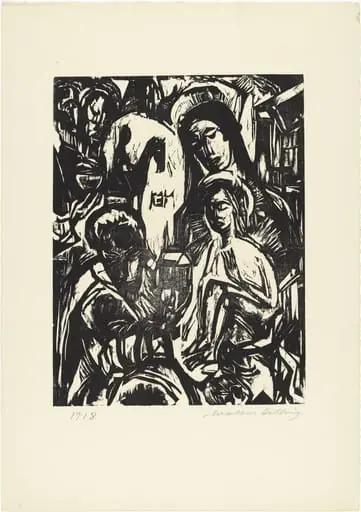
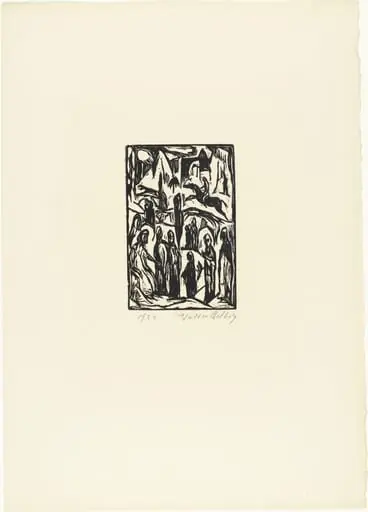
Untitled is an ink print by Walter Helbig. It dates from 1925 and is held in the collection of the Museum of Modern Art.
About this work
Overview
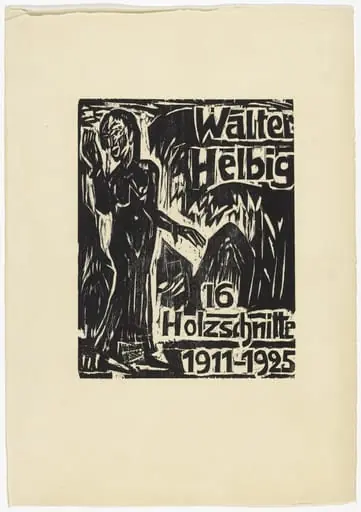
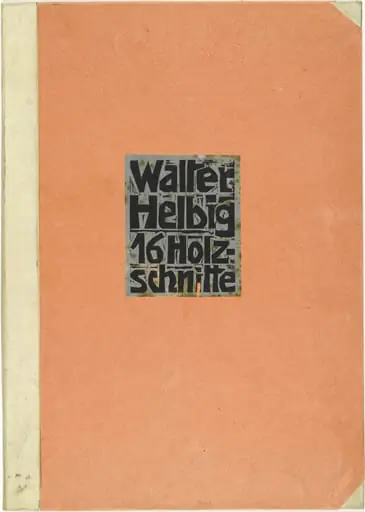
It is part of a unified set that includes a title page, table of contents, cover, and colophon, all produced using the same relief printing technique.
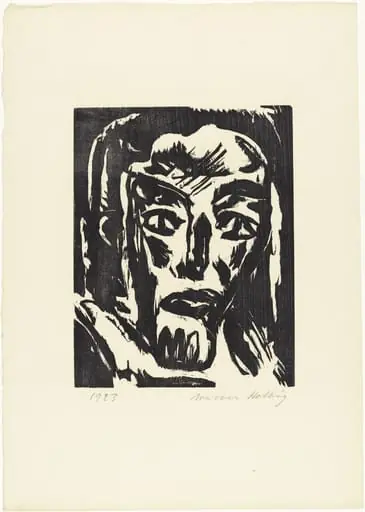
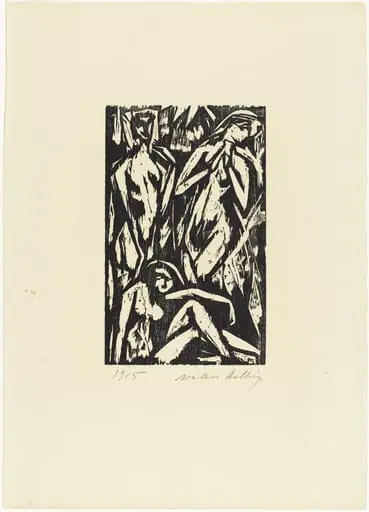
Created in 1925, this woodcut is one of sixteen prints in a portfolio by Walter Helbig. It is part of a unified set that includes a title page, table of contents, cover, and colophon, all produced using the same relief printing technique. The work is held in the collection of The Museum of Modern Art, where it represents early 20th-century German printmaking practices centered on stark formal contrasts and simplified forms.
Subject & Meaning
A solitary figure, shirtless and seated, occupies the foreground amid dense, stylized vegetation. The angular features and rigid posture suggest a sense of isolation or introspection. The jungle setting, rendered without naturalistic detail, functions more as an abstract environment than a literal landscape. The figure’s stillness and the surrounding vegetation may imply a tension between human presence and wild nature, though no explicit narrative is provided.
Technique & Style
The image was carved from a single wood block, a traditional relief method that produces bold, unbroken lines and high contrast. The artist exploited the medium’s capacity for sharp delineation, using only black ink on a light ground to define form. The jagged foliage and angular anatomy reflect a deliberate simplification of detail, emphasizing structure over realism. This approach aligns with Expressionist tendencies in interwar German printmaking.
History & Provenance
The woodcut was produced in 1925 as part of a limited portfolio, likely intended for private or artistic circulation rather than mass distribution. It entered The Museum of Modern Art’s collection in the decades following its creation, where it has been preserved as an example of early modernist printmaking. No public record of earlier ownership or exhibition history is widely documented.
Context
Helbig’s work emerged during a period when German artists were redefining printmaking through expressive abstraction and formal economy. Woodcuts, once associated with religious or folk imagery, were revived by modernists seeking direct, tactile methods of visual communication. This piece reflects broader trends in Weimar-era art, where primal forms and emotional intensity replaced academic naturalism.
Legacy
Though not widely known outside specialized circles, Helbig’s portfolio contributes to the understanding of interwar German print culture. Its inclusion in MoMA’s collection affirms its role as a representative example of the woodcut’s modernist revival. The work remains a quiet testament to the medium’s capacity for evocative minimalism, influencing later generations interested in the intersection of craft and abstraction.
Artist & collection