Artwork
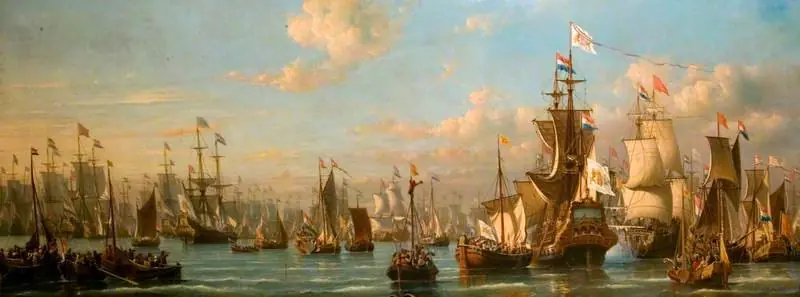
William III Reviewing the Dutch Fleet in 1691
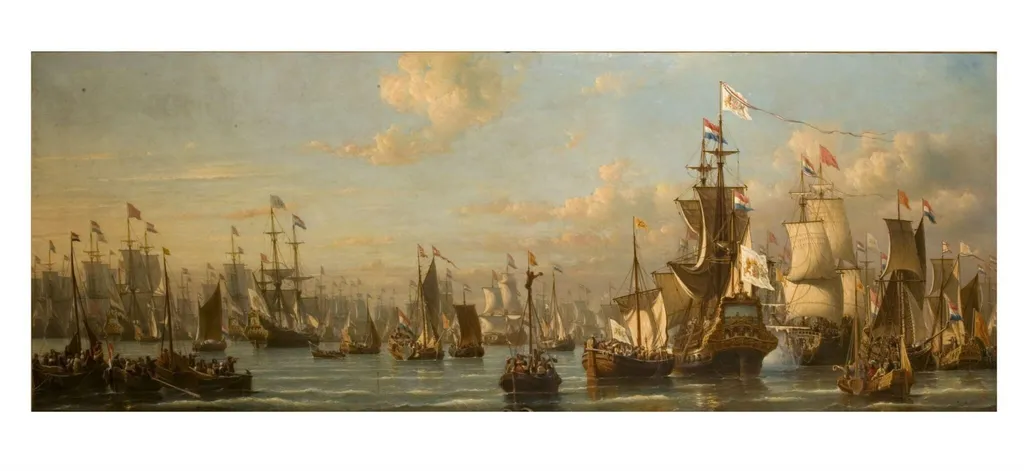
William III Reviewing the Dutch Fleet in 1691 is an oil painting by the Dutch Golden Age artist Everhardus Koster. It dates from 1859 and is held in the collection of the Victoria and Albert Museum.
About this work
The paint is thin in places, thick in others—you can almost feel the waves.
You see a big, detailed painting of a man on a ship deck. He wears a blue coat and a white wig. Sailors line the deck below him. Ships fill the calm sea in the background.
Koster painted this years after the 1691 event. He shows William III like a real person, not a hero. The paint is thin in places, thick in others—you can almost feel the waves.
Look next at how chiaroscuro works in Dutch Golden Age art.
Overview
Everhardus Koster, a 19th-century Dutch artist trained in The Hague and active in Amsterdam, produced this oil painting as part of his extensive series of maritime scenes. Created decades after the historical event it depicts, the work reflects his mastery of marine subjects and his engagement with the legacy of 17th-century Dutch naval painting. The large scale and careful composition align with traditions of historical maritime art, though executed with the observational precision characteristic of Koster’s later career.
Subject & Meaning
The painting portrays William III, King of England and Stadtholder of the Netherlands, inspecting a fleet of Dutch warships in 1691, likely in connection with the Treaty of Limerick. Rather than idealizing the monarch as a heroic figure, Koster presents him as a grounded, human presence on deck, surrounded by attentive sailors. The scene emphasizes naval authority and state function rather than triumph, reflecting a sober, documentary approach to historical representation.
Technique & Style
Koster employed varied brushwork to convey texture and movement: thin layers suggest the sheen of water, while thicker impasto captures the heft of sails and rigging. The use of chiaroscuro, rooted in Dutch Golden Age conventions, enhances the spatial depth and atmospheric realism of the scene. The calm sea and orderly arrangement of vessels reinforce a sense of controlled power, with light falling naturally across the composition to guide the viewer’s eye toward the central figure.
History & Provenance
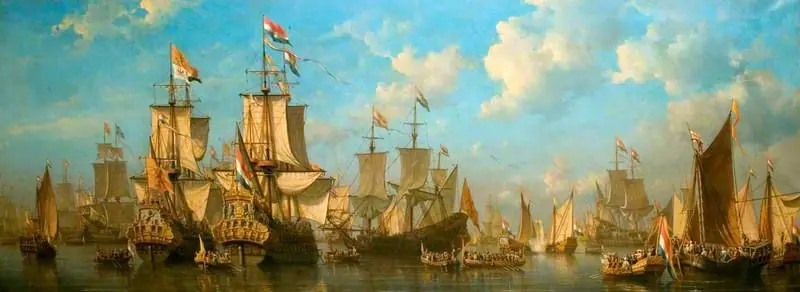
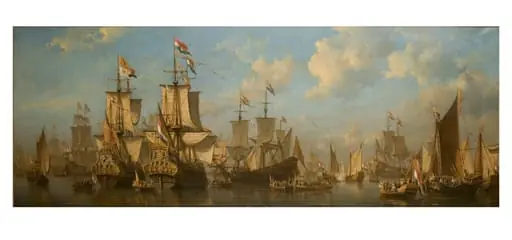
Painted in the mid-19th century, the work was created long after the 1691 event it illustrates, indicating Koster’s interest in historical memory rather than contemporary reportage. It was originally paired with another painting, now cataloged as 376-1876, forming a thematic diptych. Koster’s later career included curatorial roles in Haarlem, where his engagement with historical art likely influenced his approach to this subject.
Context
Koster worked in a period when Dutch artists revisited 17th-century marine traditions to assert national identity through historical imagery. While 17th-century painters like Willem van de Velde documented actual naval events, Koster reinterpreted them with 19th-century realism. His focus on maritime scenes responded to both public interest in naval heritage and the institutional growth of art museums in the Netherlands during his lifetime.
Legacy
Koster’s body of work, including this painting, contributed to the continuity of Dutch marine painting into the 19th century. Though less celebrated than his predecessors, his careful rendering of ships and sea conditions preserved technical standards of the genre. His role as a museum director also helped shape public access to historical art, ensuring that such works remained part of the national visual discourse.
Artist & collection
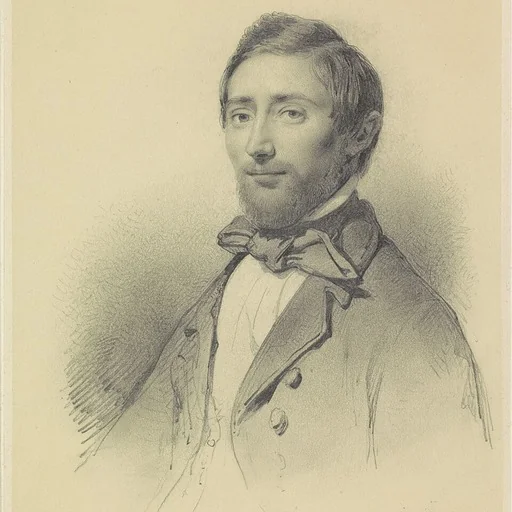
Artist
Everhardus Koster (17 February 1817, The Hague – 8 January 1892, Dordrecht) was a Dutch painter who specialized in sea and river scenes.

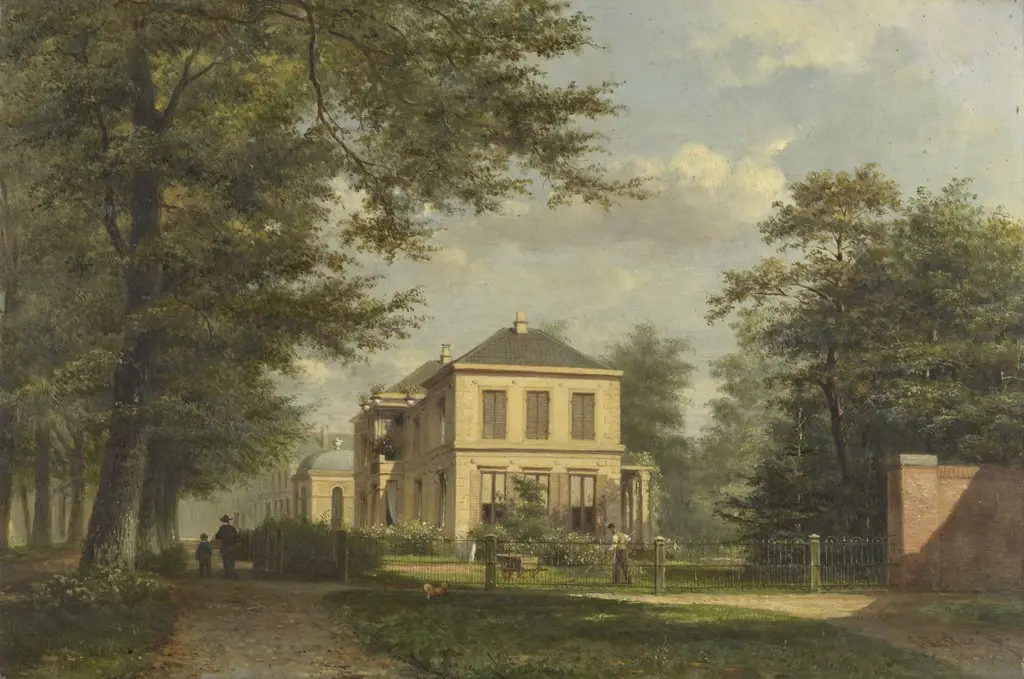
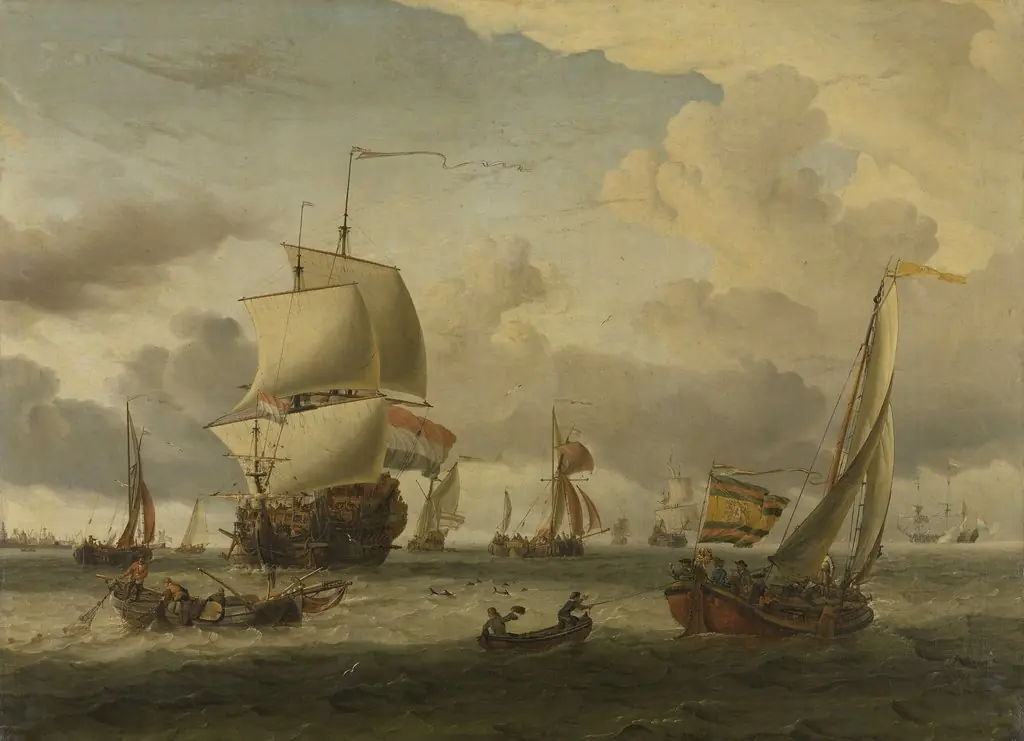 The roads of Enkhuizen
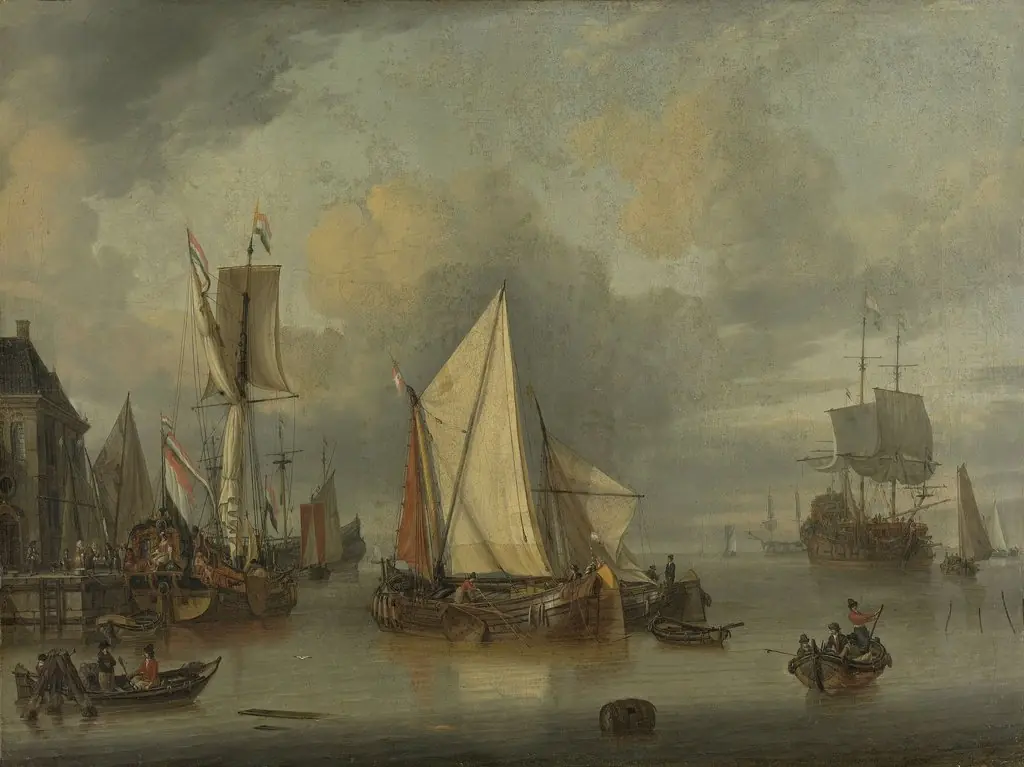 A Calm (Ships in the Harbor by Calm Weather)
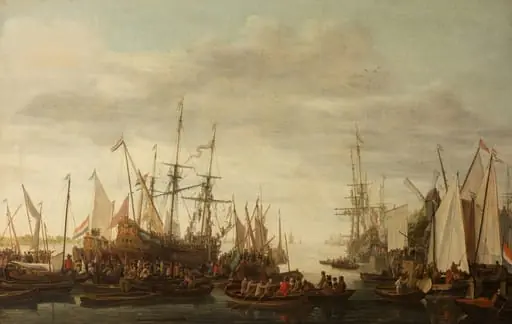 Het kielhalen van de scheepschirurgijn van admiraal Jan van Nes
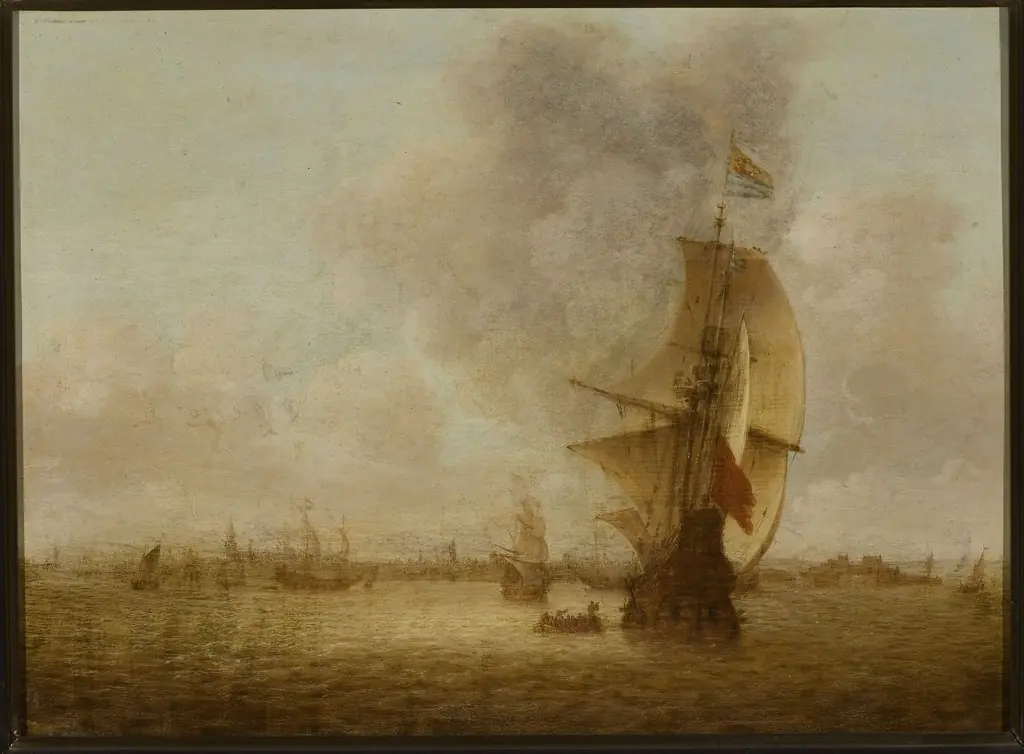 Marine view with the Vlissingen port in the background
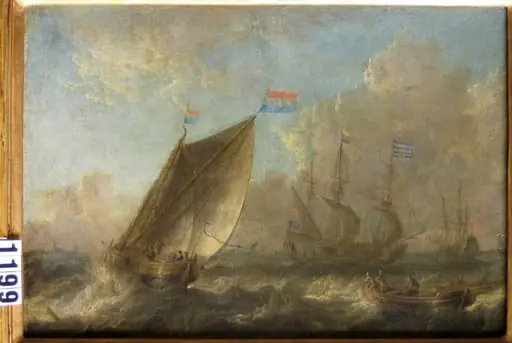 Mare furtunoasă
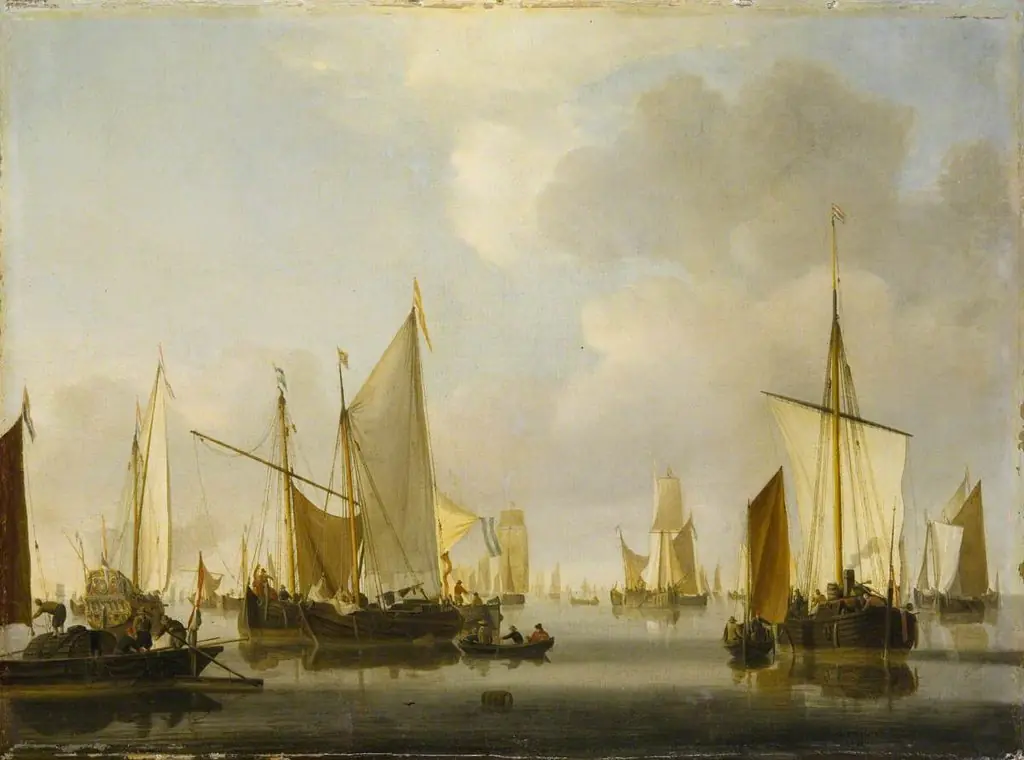 Fishing Boats in a Calm
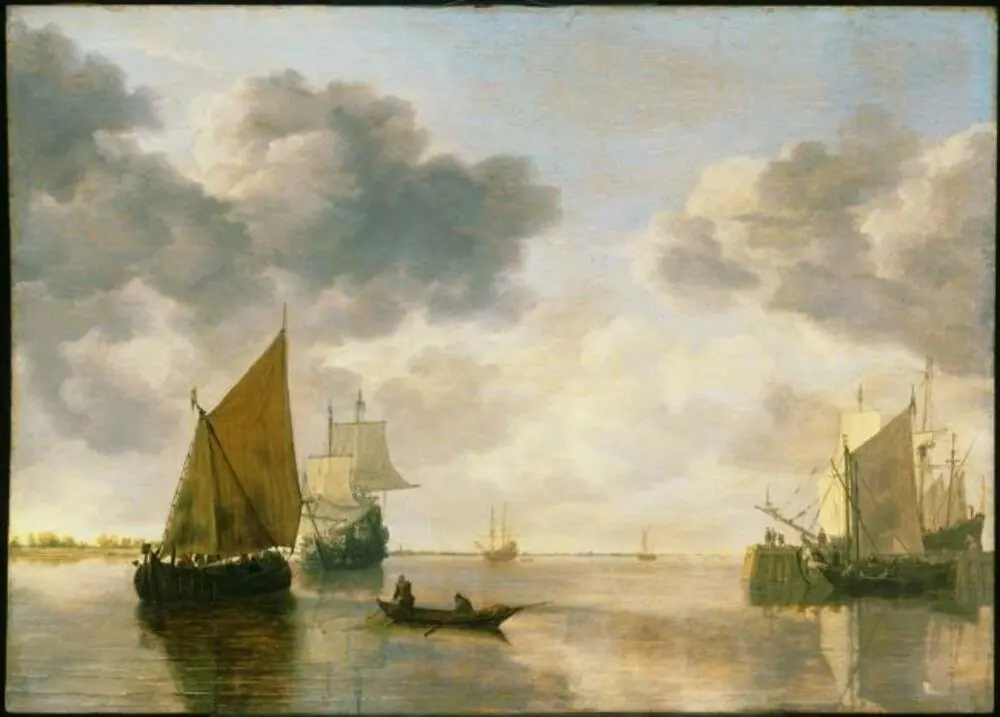 Ships on a calm Sea
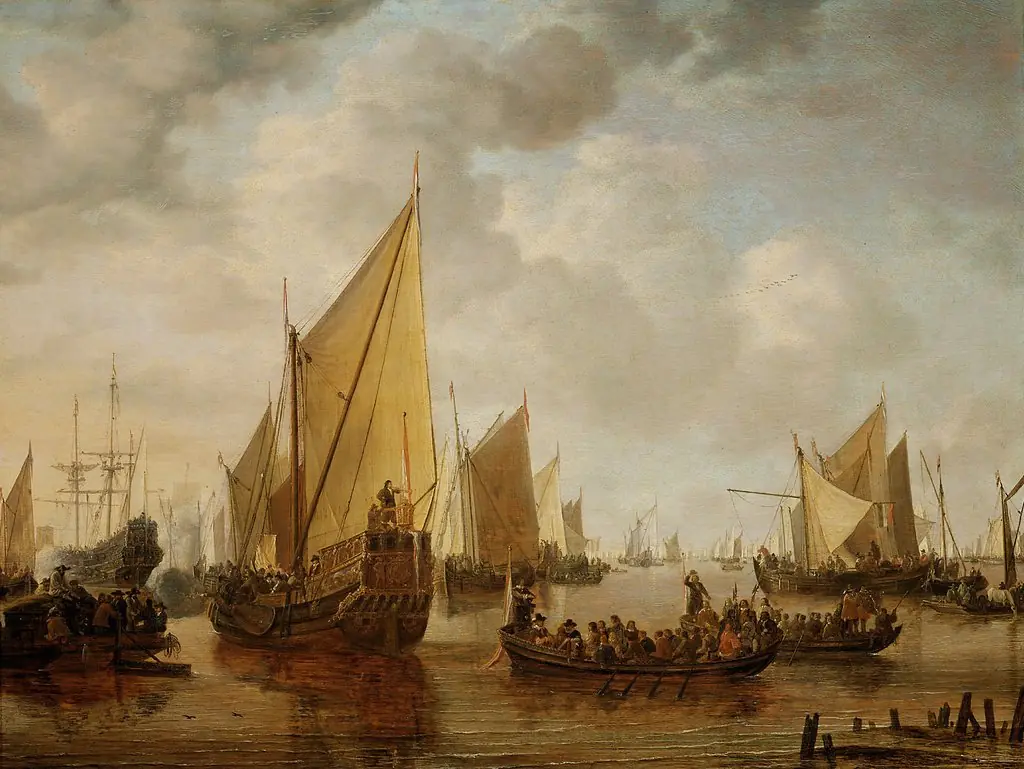 Visiting the Fleet
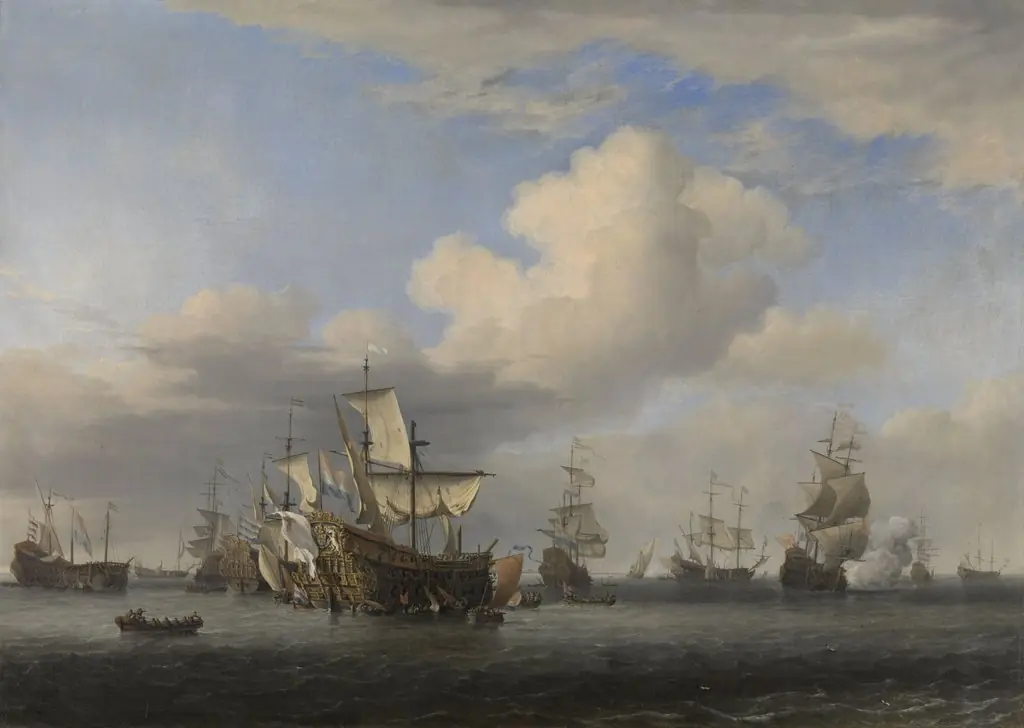 Captured English Ships after the Four Days’ Battle
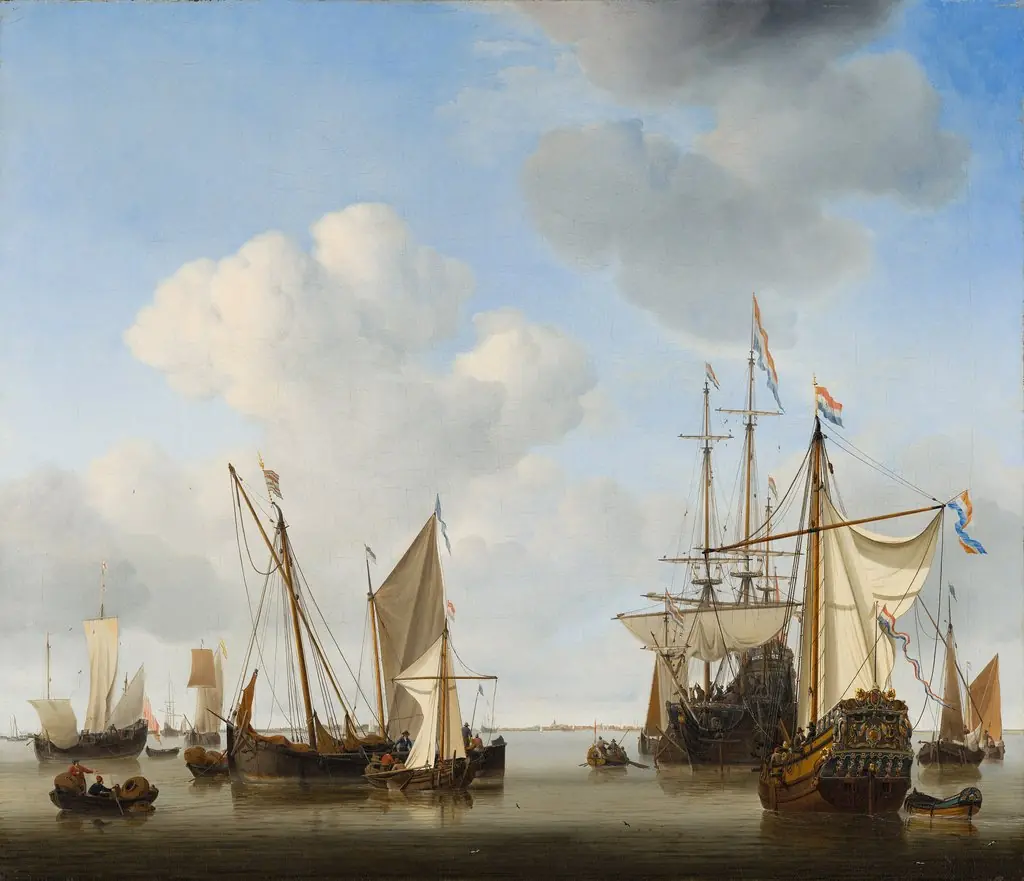 Ships on a Calm Sea