Artwork
Γραμμική Σύνθεση
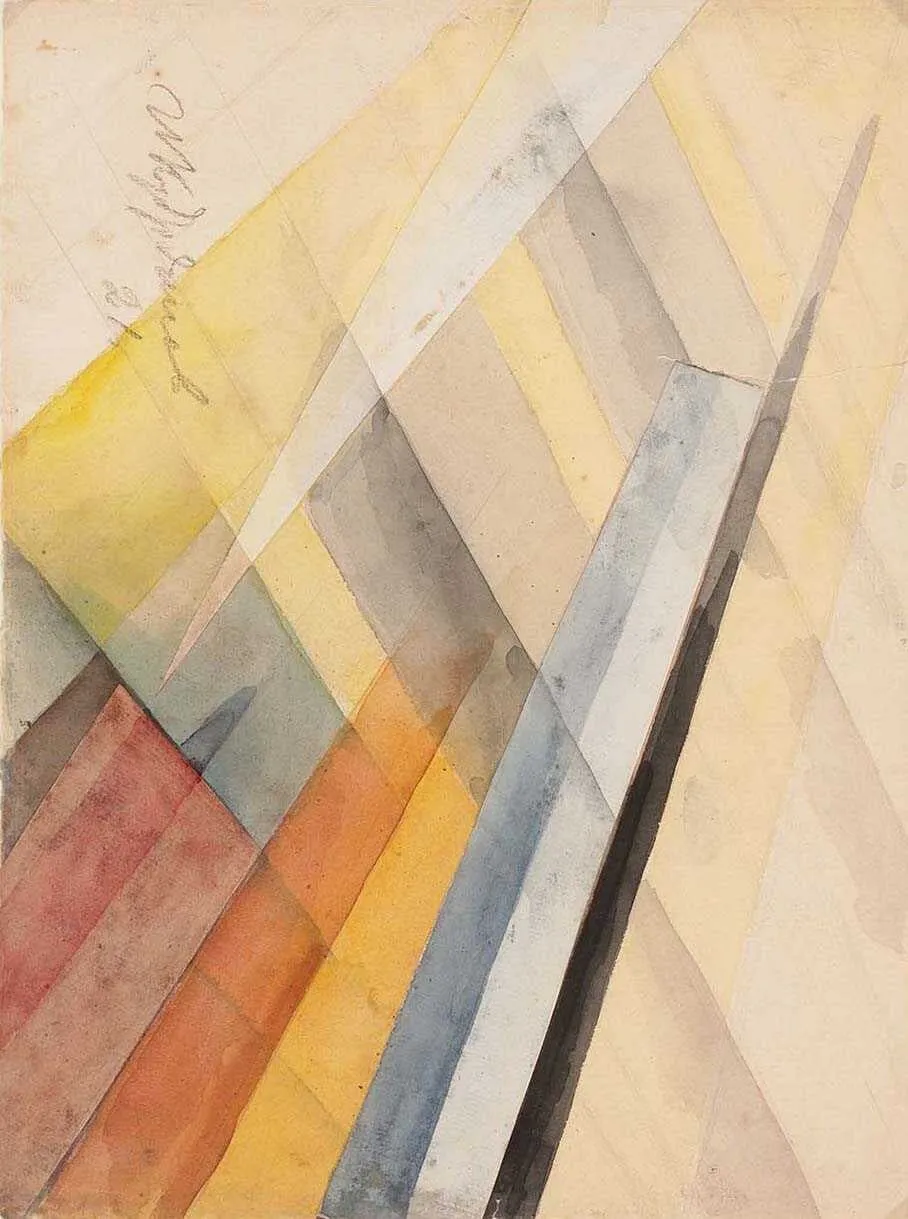
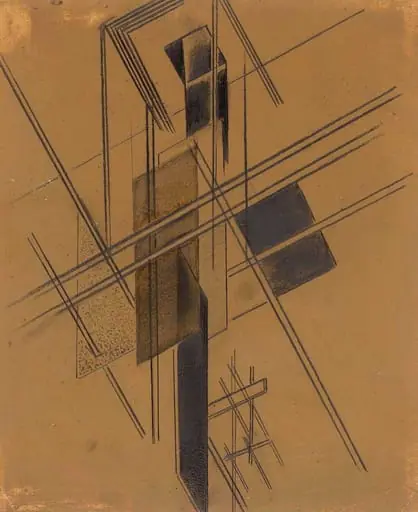
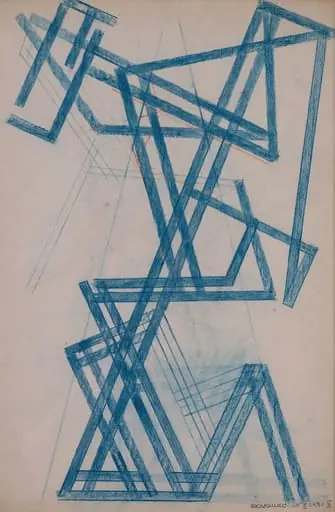
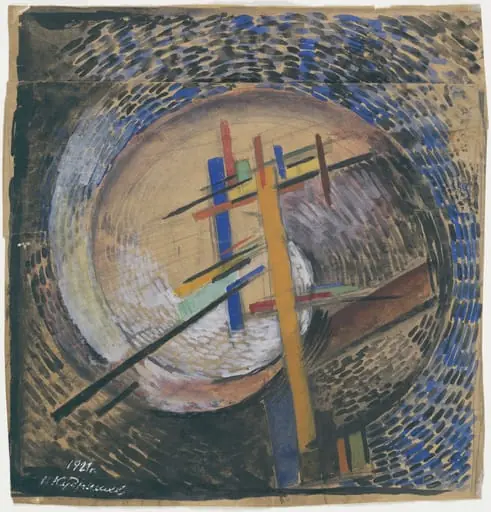
Γραμμική Σύνθεση is a drawing by Ivan Kudriashev. It dates from 1921 and is held in the collection of the Metropolitan Organisation of Museums of Visual Arts of Thessaloniki – MOMus.
About this work
Overview
Created in the late 1910s, Γραμμική Σύνθεση is a drawing by Ivan Kudriashev that reflects the Russian avant-garde’s engagement with scientific thought.
Created in the late 1910s, Γραμμική Σύνθεση is a drawing by Ivan Kudriashev that reflects the Russian avant-garde’s engagement with scientific thought. It belongs to a group of works that sought to translate abstract physical concepts—particularly light and energy—into visual form. The piece uses dense, intersecting lines to suggest motion and luminosity, aligning with contemporary ideas about light as a measurable force rather than a mere visual effect.
Subject & Meaning
The drawing evokes the trajectory of unseen motion through space, implying movement beyond terrestrial boundaries. Its network of sharp, overlapping lines suggests the passage of an object through a vast, undefined field—possibly referencing interplanetary travel or cosmic energy flows. Rather than depicting tangible subjects, Kudriashev aimed to materialize the invisible: the energy of light, the rhythm of motion, and the scale of the cosmos.
Technique & Style
Kudriashev employed precise, angular lines layered in dense cross-hatching to build tonal depth and suggest luminous intensity. The black lines intersect in multiple directions, creating areas of visual density that mimic the accumulation of energy. The absence of curves and organic forms reinforces a mechanized, almost electrical aesthetic, aligning with the era’s fascination with scientific precision and dynamic forces.
History & Provenance
The work is part of the collection at the Museum of Contemporary Art, alongside other pieces by Kudriashev from the same period. It emerged during a brief but intense phase of Russian avant-garde experimentation, when artists like Kliment Redko and others were developing theories linking art to physics and electromagnetism. Though little documented, Kudriashev’s output from this time reflects a shared intellectual current among artists engaged with emerging scientific paradigms.
Context
In the post-revolutionary years, Russian artists turned to science, astronomy, and new technologies as sources of inspiration. Theories about light as energy, cosmic expansion, and electromagnetic fields permeated artistic circles. Kudriashev’s work responds to this climate, merging abstract form with speculative science. His imagery resonates with contemporaneous interests in space, relativity, and the unseen structures of the universe.
Legacy
Though Kudriashev’s practice remained on the margins of mainstream avant-garde history, his approach influenced later explorations of kinetic and non-objective art. His use of line to imply energy rather than form prefigured aspects of mid-century abstract expressionism and op art. The drawing stands as a quiet but distinct example of how scientific thought reshaped visual language in early 20th-century Russia.
Artist & collection
Museum
Metropolitan Organisation of Museums of Visual Arts of Thessaloniki – MOMus
Continue through works from the same source collection.