Artwork
H Beard Print Collection
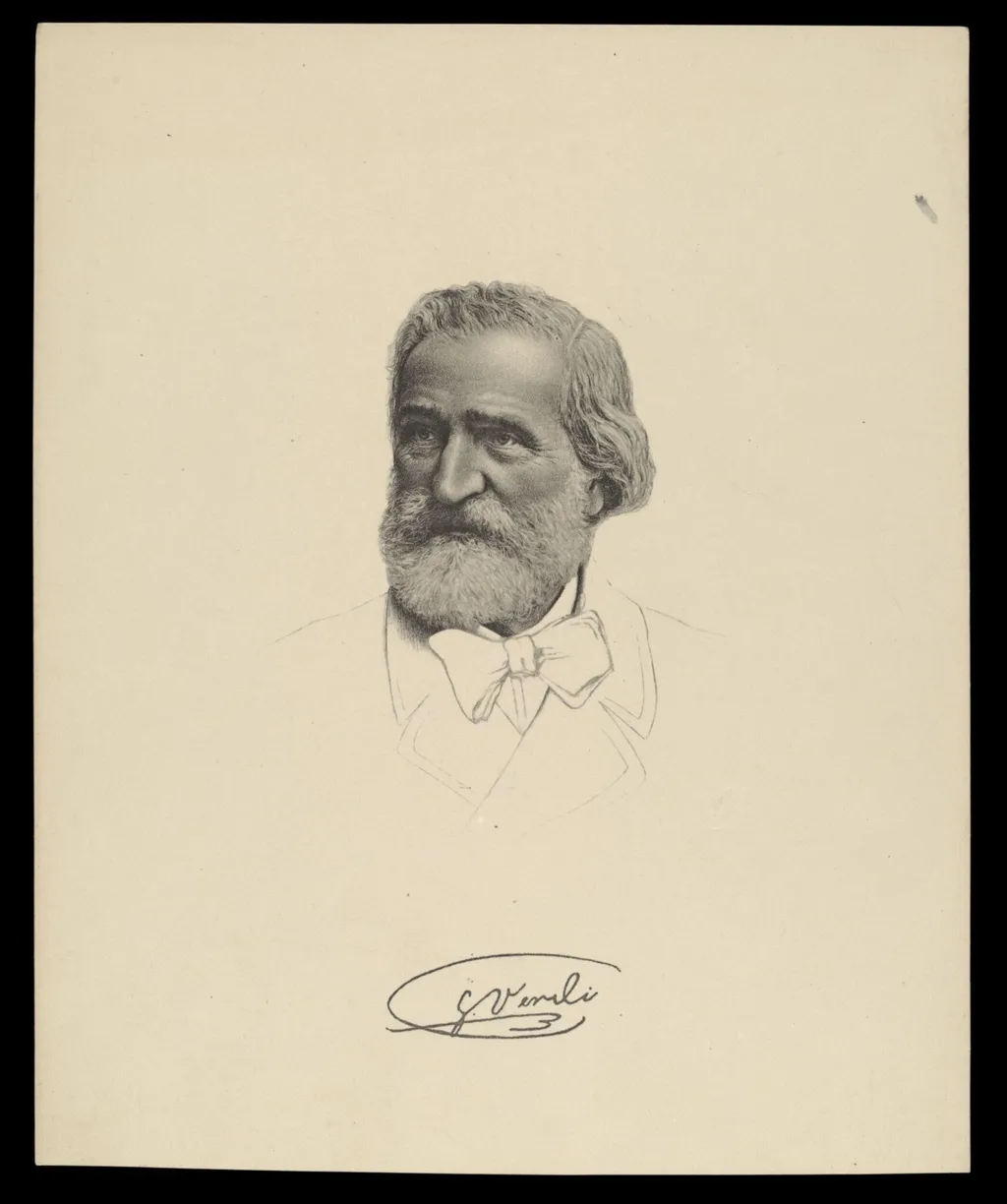
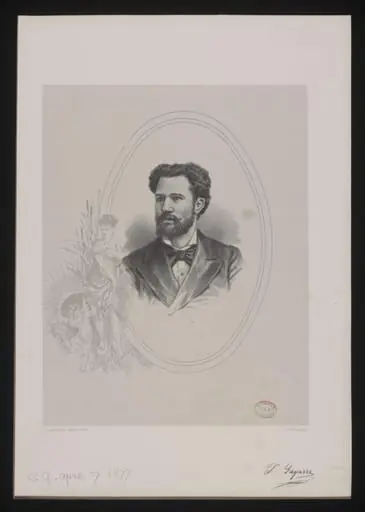
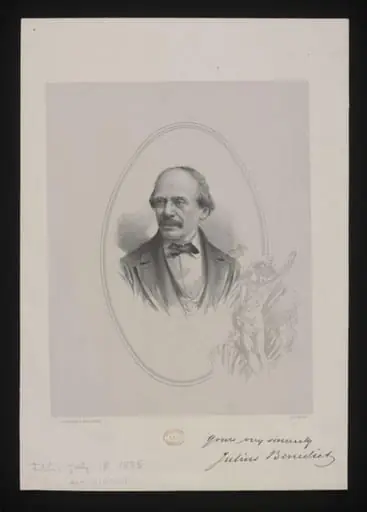
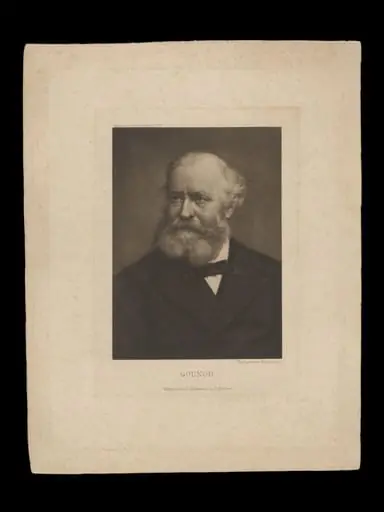
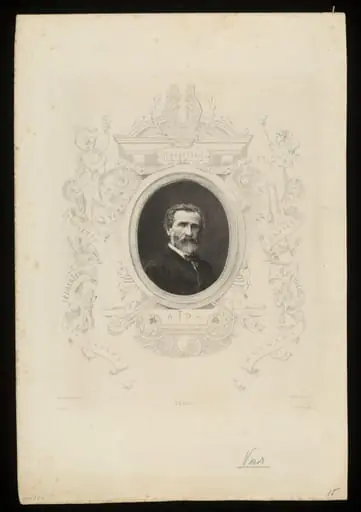
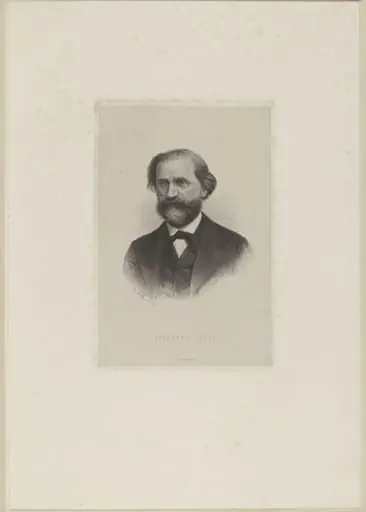
H Beard Print Collection is a print by the Impressionist artist Kunstanstalt Stengel & Co.. It dates from 1880 and is held in the collection of the Victoria and Albert Museum. A printed portrait of Giuseppe Verdi, produced after 1880 by Kunstanstelt Stengel & Co.
About this work
This print shows Giuseppe Verdi with his signature below.
It was made after 1880 by Kunstanstelt Stengel & Co.
It mixes Impressionism and Realism styles.
The print pairs the famous composer’s face with a real signature.
This connects the artwork to Verdi himself.
It’s a portrait done as a print, not a painting.
Next, look up the Victoria and Albert Museum to see more prints.
Overview
The inclusion of the signature anchors the image to Verdi’s physical presence, transforming it into a tangible artifact of his identity.
A printed portrait of Giuseppe Verdi, produced after 1880 by Kunstanstelt Stengel & Co., presents the composer in a straightforward likeness accompanied by a facsimile of his handwritten signature. Unlike painted portraits, this work relies on printmaking techniques to disseminate his image. The inclusion of the signature anchors the image to Verdi’s physical presence, transforming it into a tangible artifact of his identity.
Subject & Meaning
The portrait centers on Giuseppe Verdi, one of Italy’s most influential composers, capturing him in middle or later life. The addition of his authentic signature elevates the image beyond mere representation, functioning as a kind of autographic seal. This pairing suggests a desire to authenticate the likeness, linking the viewer directly to the man behind the music through his own hand.
Technique & Style
Executed in a hybrid style blending Realism and Impressionism, the print renders Verdi’s features with careful attention to detail while allowing softer, looser brushwork in the background and clothing. The technique reflects late 19th-century printmaking trends, where mechanical reproduction met evolving aesthetic sensibilities. The signature, reproduced with precision, contrasts with the more atmospheric rendering of the face.
History & Provenance
Produced by Kunstanstelt Stengel & Co., a German firm known for artistic prints, this work was likely part of a broader effort to popularize cultural figures through affordable imagery. Its publication after 1880 places it within a period of heightened public interest in Verdi following his major operatic successes. The print’s survival in collections such as the V&A suggests its circulation among collectors and music enthusiasts.
Context
In the decades following Verdi’s rise to fame, his image was widely reproduced in newspapers, posters, and prints to meet public demand. This portrait aligns with a trend of using facsimile signatures to lend authority to printed likenesses of celebrities. The blending of styles reflects a transitional moment in visual culture, where traditional portraiture met the demands of mass reproduction and modern aesthetic experimentation.
Legacy
As a printed artifact, this portrait contributed to the visual canon of Verdi, helping to standardize his public image in the decades after his death. Its combination of realism and signature authenticity influenced later commemorative prints of cultural figures. Surviving examples in institutional collections underscore its role in preserving the material culture of 19th-century musical celebrity.
Artist & collection
Artist
This German print workshop churned out thousands of colorful commercial posters and cards in the late 1800s.