Artwork
"The King of Hearts" No.25
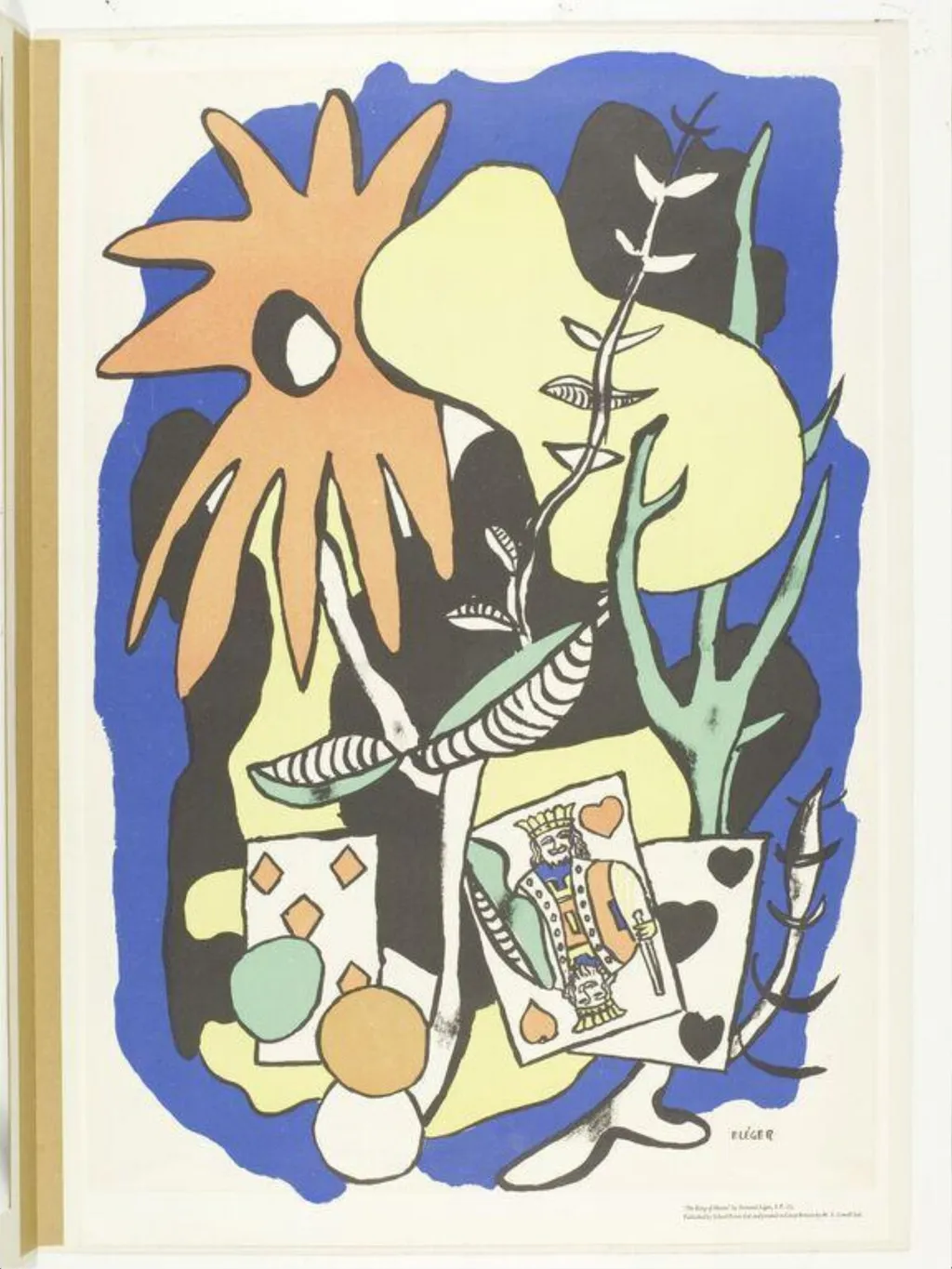
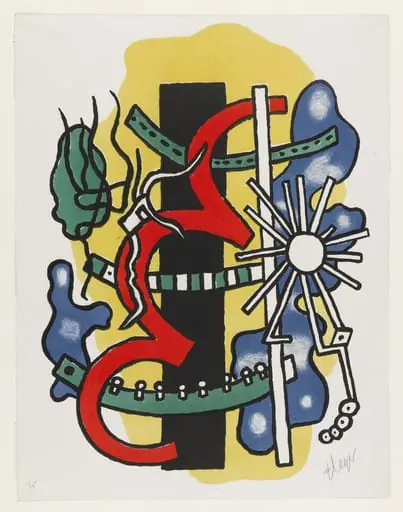
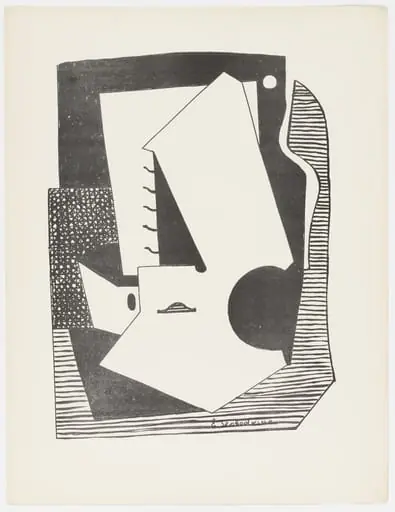
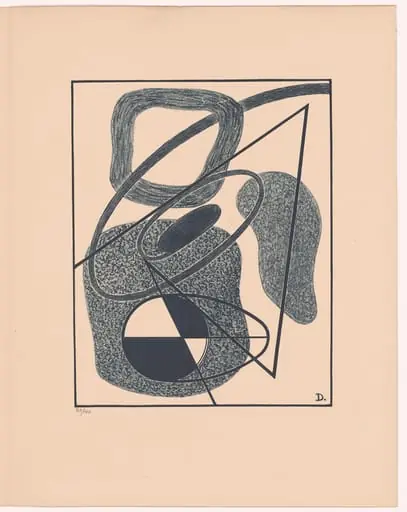
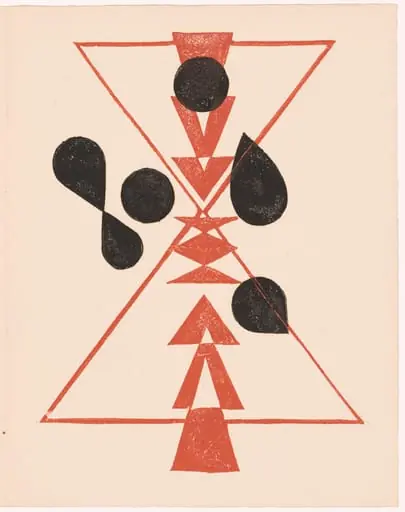
"The King of Hearts" No.25 is a print by Fernand Léger. It dates from 1949 and is held in the collection of the Victoria and Albert Museum.
About this work
Overview
The work blends figuration and abstraction, reflecting Léger’s interest in merging everyday symbols with modernist structure.
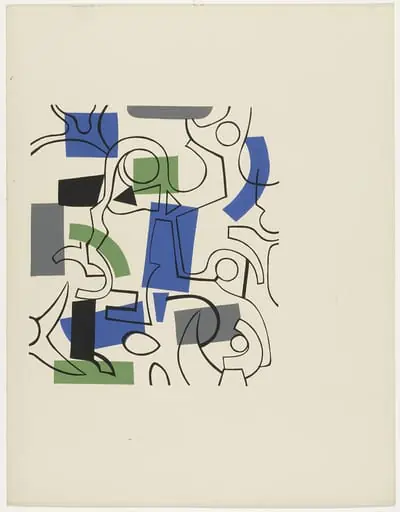
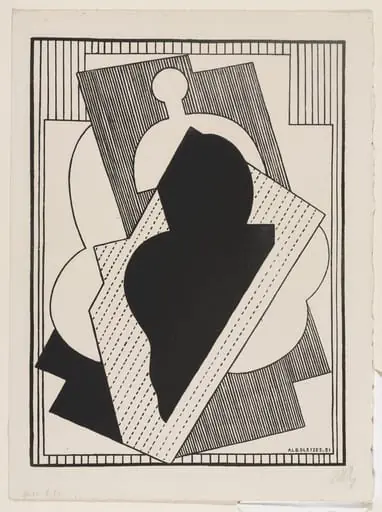
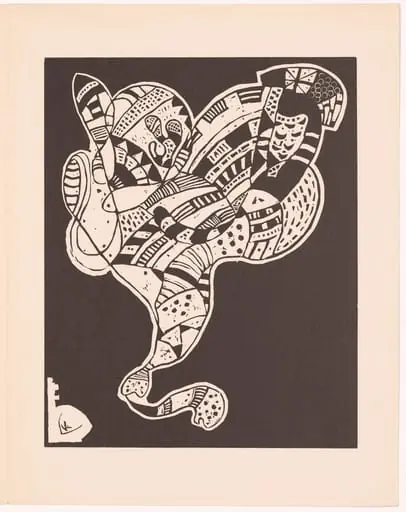
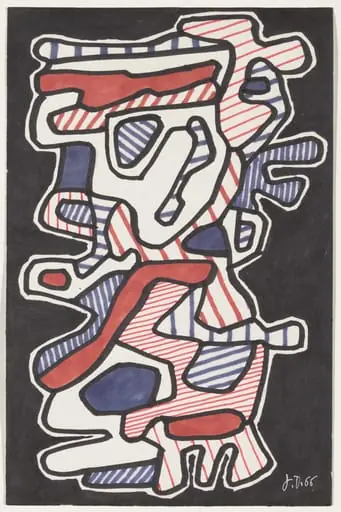
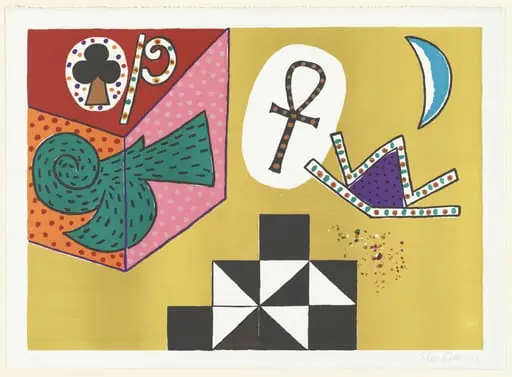
Fernand Léger’s 1949 colour lithograph, *The King of Hearts* No.25, is part of a series exploring symbolic imagery through simplified forms. It features a stylized human figure holding a playing card, surrounded by abstract floral and geometric shapes. The composition uses a limited palette of red, yellow, green, white, black, and blue, arranged with rhythmic clarity. The work blends figuration and abstraction, reflecting Léger’s interest in merging everyday symbols with modernist structure.
Subject & Meaning
The central figure, with a sun-like face and striped limbs, appears both human and symbolic, suggesting vitality or mythic presence. The card it holds—depicted as the King of Hearts—carries traditional iconography: a crown and sword, rendered in bold outlines. Surrounding elements, including circles, triangles, and elongated petals, evoke nature and playfulness without literal representation. The work invites interpretation as a metaphor for power, emotion, or the surreal logic of dreams.
Technique & Style
Léger employed colour lithography to achieve sharp, flat planes of hue with minimal gradation. Forms are reduced to essential shapes—circles, arcs, and stripes—emphasizing graphic clarity over depth. The background’s blue and nude tones contrast with the vibrant foreground, enhancing the figure’s prominence. Lines are clean and deliberate, reflecting Léger’s commitment to mechanical precision while retaining a sense of whimsy. The technique aligns with his postwar focus on accessible, decorative modernism.
History & Provenance
Created in 1949, this print belongs to a suite of lithographs Léger produced during the final decade of his life, often inspired by popular imagery and childhood memories. It was published by the Parisian atelier Mourlot, known for collaborating with major 20th-century artists. The work was not part of a public exhibition at the time but entered private collections before being acquired by institutions interested in Léger’s graphic output. Its numbering (No.25) indicates it is one of a limited edition.
Context
In the postwar period, Léger turned increasingly toward themes of joy and accessibility, distancing himself from earlier mechanistic aesthetics. *The King of Hearts* reflects his engagement with popular culture—playing cards, cartoons, and folk motifs—while maintaining a modernist vocabulary. His work during this phase resonated with European audiences seeking renewal through art that was both playful and formally rigorous, bridging high art and common visual language.
Legacy
This print exemplifies Léger’s enduring influence on graphic design and pop art through its use of bold colour and simplified form. While not as widely known as his earlier paintings, *The King of Hearts* No.25 remains a key example of his late graphic work, demonstrating how everyday symbols could be reimagined with poetic clarity. It continues to be studied for its synthesis of accessibility and abstraction, influencing later artists who sought to merge commercial imagery with fine art traditions.
Artist & collection
Artist
Fernand Léger turns everyday shapes into bold, graphic heroes. In "The King of Hearts" No. 25, he stacks flat colors and clean lines into a deck of playing cards that feels more like machinery than royalty. This 1949…