Artwork
Untitled
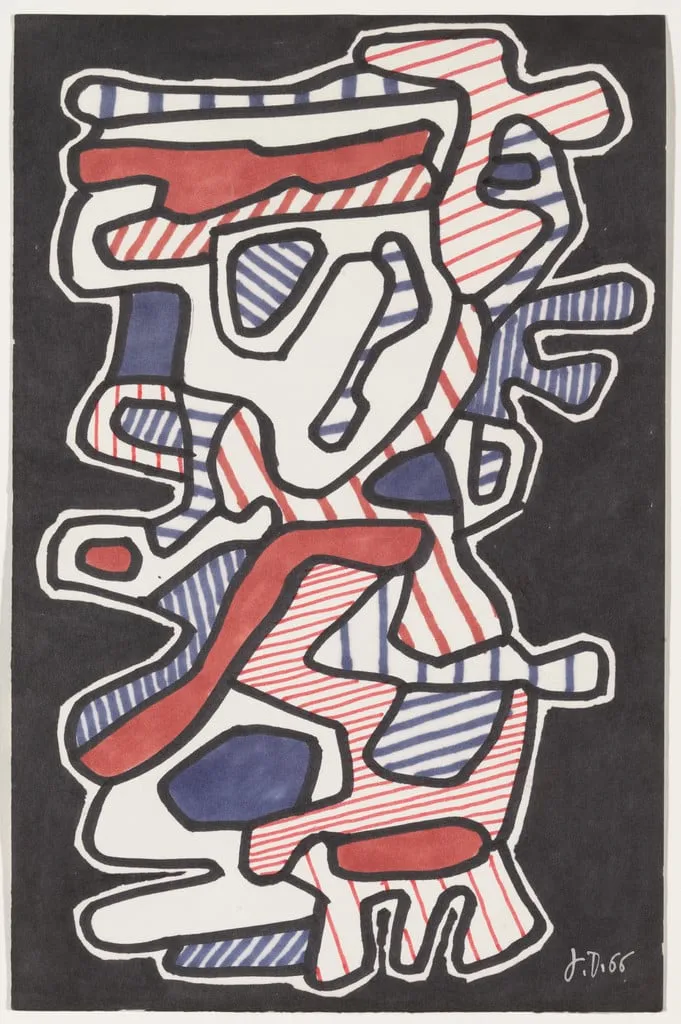
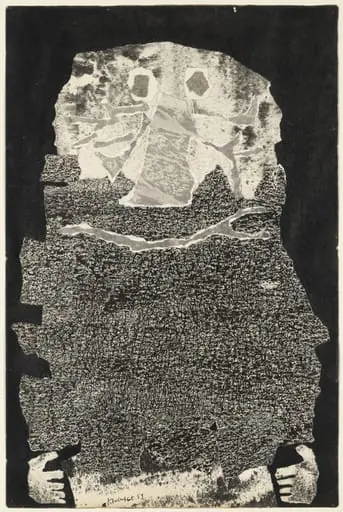
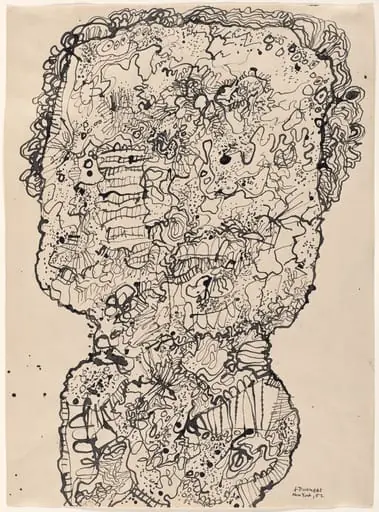
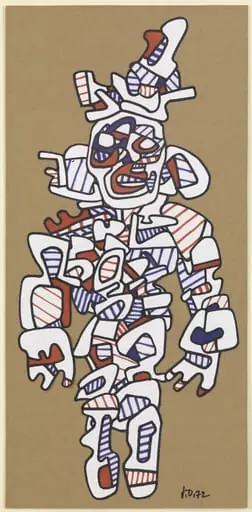
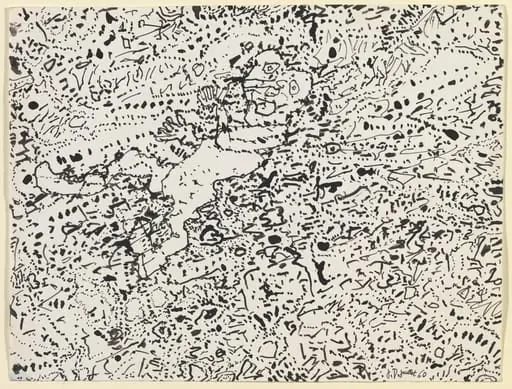
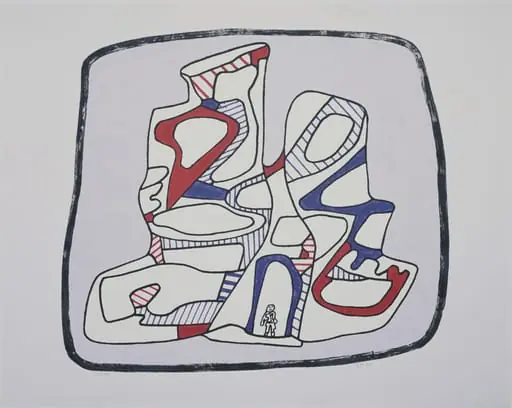
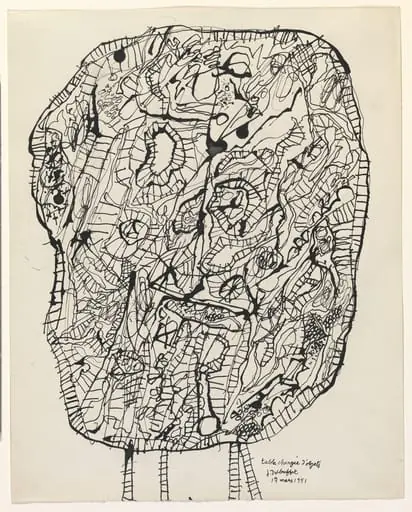
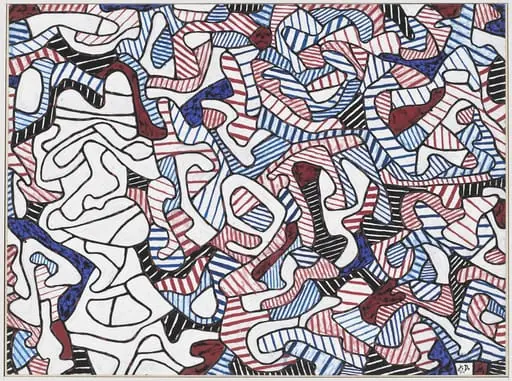
Untitled is an ink drawing by Jean Dubuffet. It dates from 1966 and is held in the collection of the Museum of Modern Art.
About this work
Overview
It is part of The Museum of Modern Art’s collection, reflecting institutional recognition of his radical approach to drawing as a form of unmediated expression.
Jean Dubuffet produced this ink drawing in 1966, using simple materials to challenge traditional notions of composition and representation. Executed on paper, the work belongs to a series in which he prioritized spontaneous gesture over formal structure. It is part of The Museum of Modern Art’s collection, reflecting institutional recognition of his radical approach to drawing as a form of unmediated expression.
Subject & Meaning
The drawing resists recognizable imagery, offering no narrative or symbolic reference to the physical world. Instead, it presents abstract fields of color and irregular lines that suggest movement and fragmentation. Dubuffet intended such forms to evoke inner states rather than external reality, aligning with his belief that authentic creativity emerges outside cultural conventions and trained skill.
Technique & Style
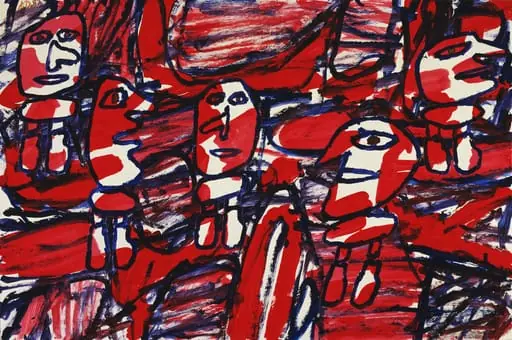
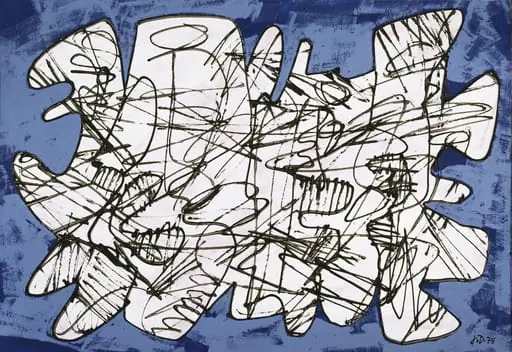
Dubuffet applied ink with direct, unrefined strokes, using bold red, blue, and white areas against a dark ground. Shapes appear to collide and dissolve, their edges blurred or uneven. Wavy, looping lines intersect without hierarchy, creating visual tension. The absence of perspective or modeling reinforces a sense of immediacy, as if the marks were made in a single, unbroken act of intuition.
History & Provenance
Created during a period when Dubuffet was deeply engaged with art brut, this work emerged from his sustained critique of academic art. It entered The Museum of Modern Art’s collection through established channels of mid-century modernist acquisition, reflecting growing interest in non-traditional practices. Its preservation underscores its significance within the broader context of postwar experimental drawing.
Context
In the 1960s, Dubuffet continued to champion the work of psychiatric patients, children, and self-taught creators as more genuine than that of trained artists. This drawing reflects his theoretical stance: that artistic value lies in unfiltered impulse, not technical polish. His rejection of aesthetic norms placed him in dialogue with contemporaries exploring abstraction, yet his methods remained distinct in their deliberate crudeness.
Legacy
Dubuffet’s approach influenced later movements that valued process over product, including Neo-Expressionism and certain strands of contemporary drawing. His insistence on the legitimacy of raw, untrained mark-making expanded the boundaries of what could be considered art. This work remains a touchstone for artists seeking to bypass conventional aesthetics in favor of visceral, unmediated expression.
Artist & collection
Artist
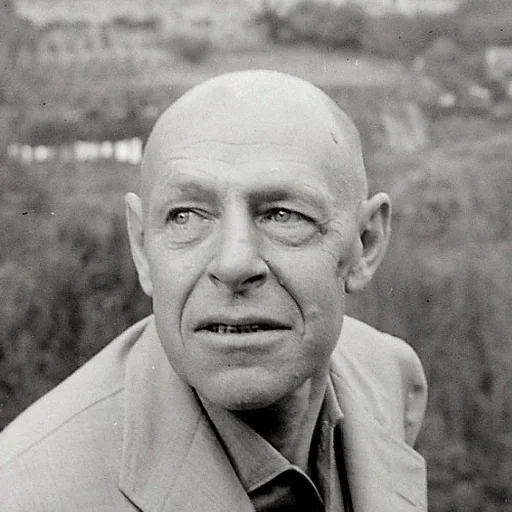
Jean Philippe Arthur Dubuffet (French pronunciation: ; 31 July 1901 – 12 May 1985) was a French painter and sculptor of the École de Paris (School of Paris).