Artwork
Horseman
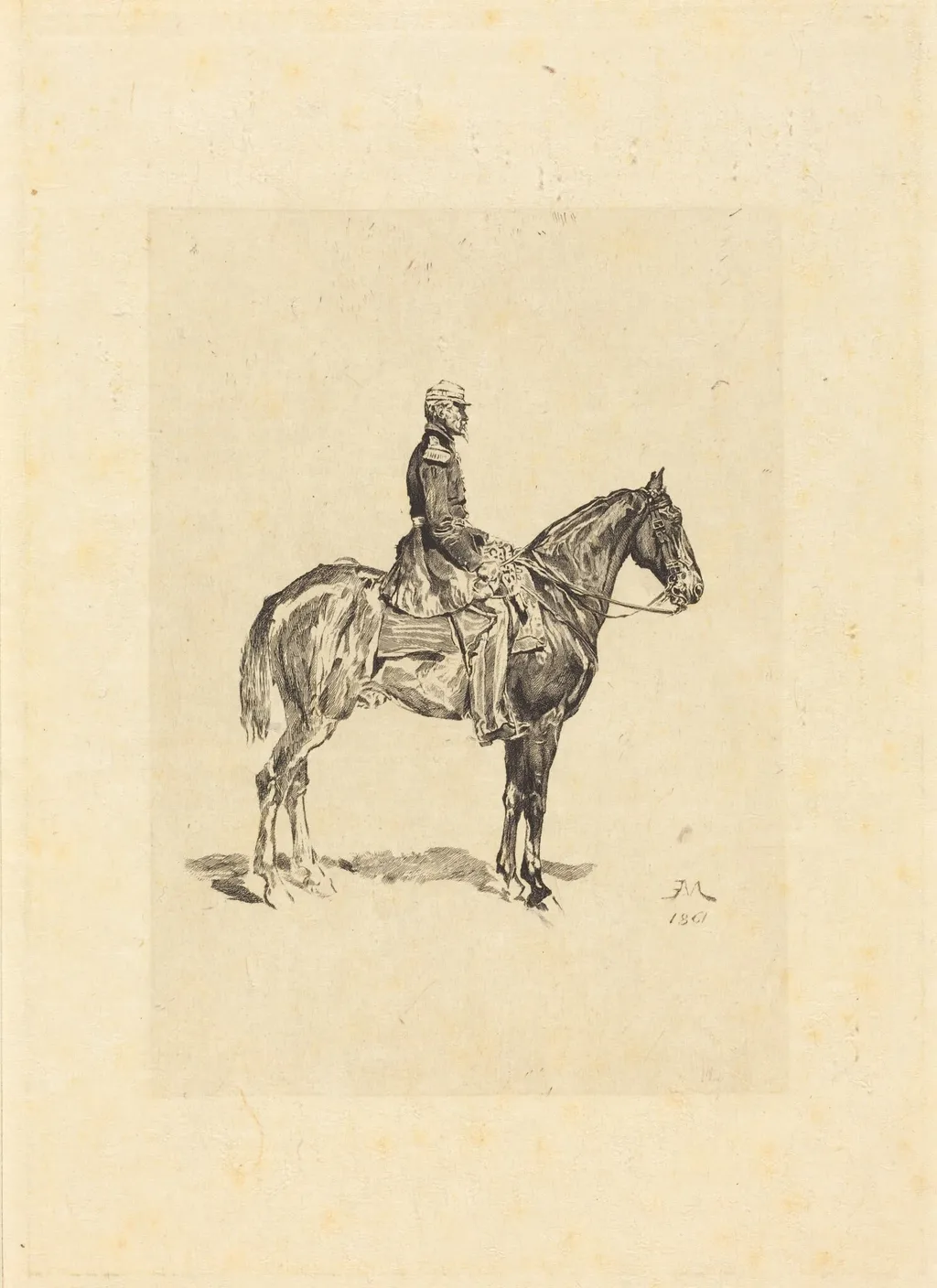
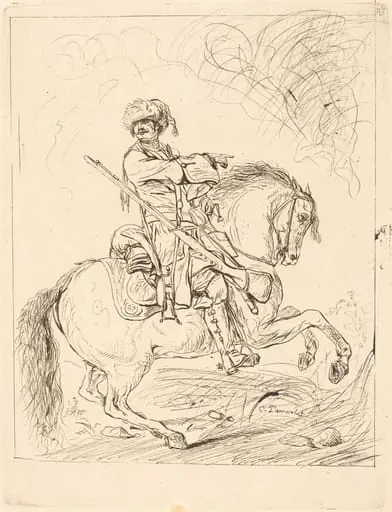
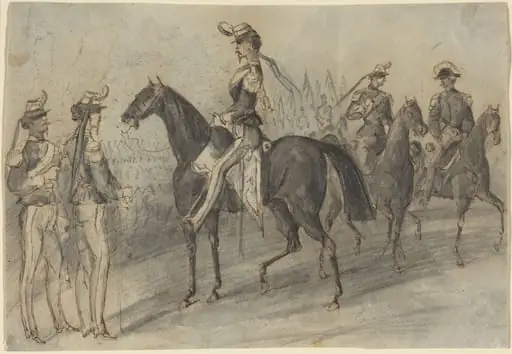
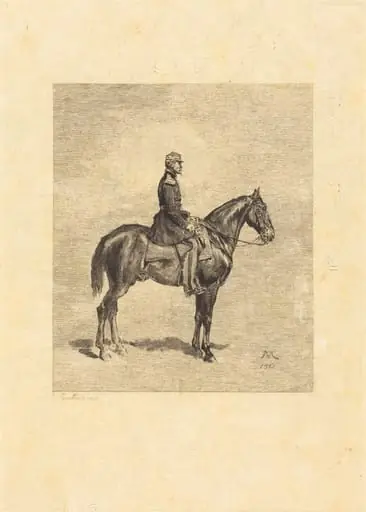
Horseman is an ink print by the Impressionist artist Frédéric Auguste Laguillermie. It dates from 1861 and is held in the collection of the National Gallery of Art.
About this work
Overview
Horseman is an 1861 etching by Frédéric Auguste Laguillermie, executed on Japanese paper. The work captures a solitary equestrian in a moment of quiet stillness, rendered with minimal, energetic lines. Its small scale and direct execution reflect the artist’s interest in spontaneous observation, typical of 19th-century printmakers exploring the boundaries between drawing and print.
Subject & Meaning
The figure, mounted on a motionless horse, suggests a pause in travel or contemplation. Dressed in modest riding attire—dark jacket, light hat, boots—the rider lacks individualizing features, emphasizing anonymity over narrative. The loose reins and calm posture convey restraint, inviting reflection on solitude or the quiet rhythms of rural life rather than action or drama.
Technique & Style
Laguillermie employed etching with a freehand approach, using a needle to incise lines directly into a metal plate. The resulting print retains the rough, uneven quality of the artist’s hand, with broken contours and uneven ink distribution. This deliberate texture mimics the immediacy of a sketch, aligning with contemporary practices that valued expressive line over polished finish.
History & Provenance
Created in 1861, Horseman belongs to a series of equestrian studies Laguillermie produced during his early career. Though not widely exhibited at the time, it reflects his engagement with the French tradition of animal and rural life studies. The use of Japanese paper indicates an interest in the material qualities favored by printmakers seeking subtle tonal effects.
Context
In mid-19th-century France, etching experienced a revival as artists sought alternatives to academic painting. Laguillermie’s work aligns with contemporaries who used the medium to capture fleeting moments with spontaneity. The emphasis on informal, observational subjects—like a single rider—mirrored broader cultural shifts toward realism and the everyday.
Legacy
Horseman exemplifies how etching served as a bridge between drawing and print in the 19th century. While not widely known outside specialist circles, Laguillermie’s approach influenced later printmakers interested in expressive line and material honesty. The work remains a quiet testament to the medium’s capacity for immediacy and restraint.
Own this work as a print
Artist & collection