Artwork
Armed horseman, possibly Russian
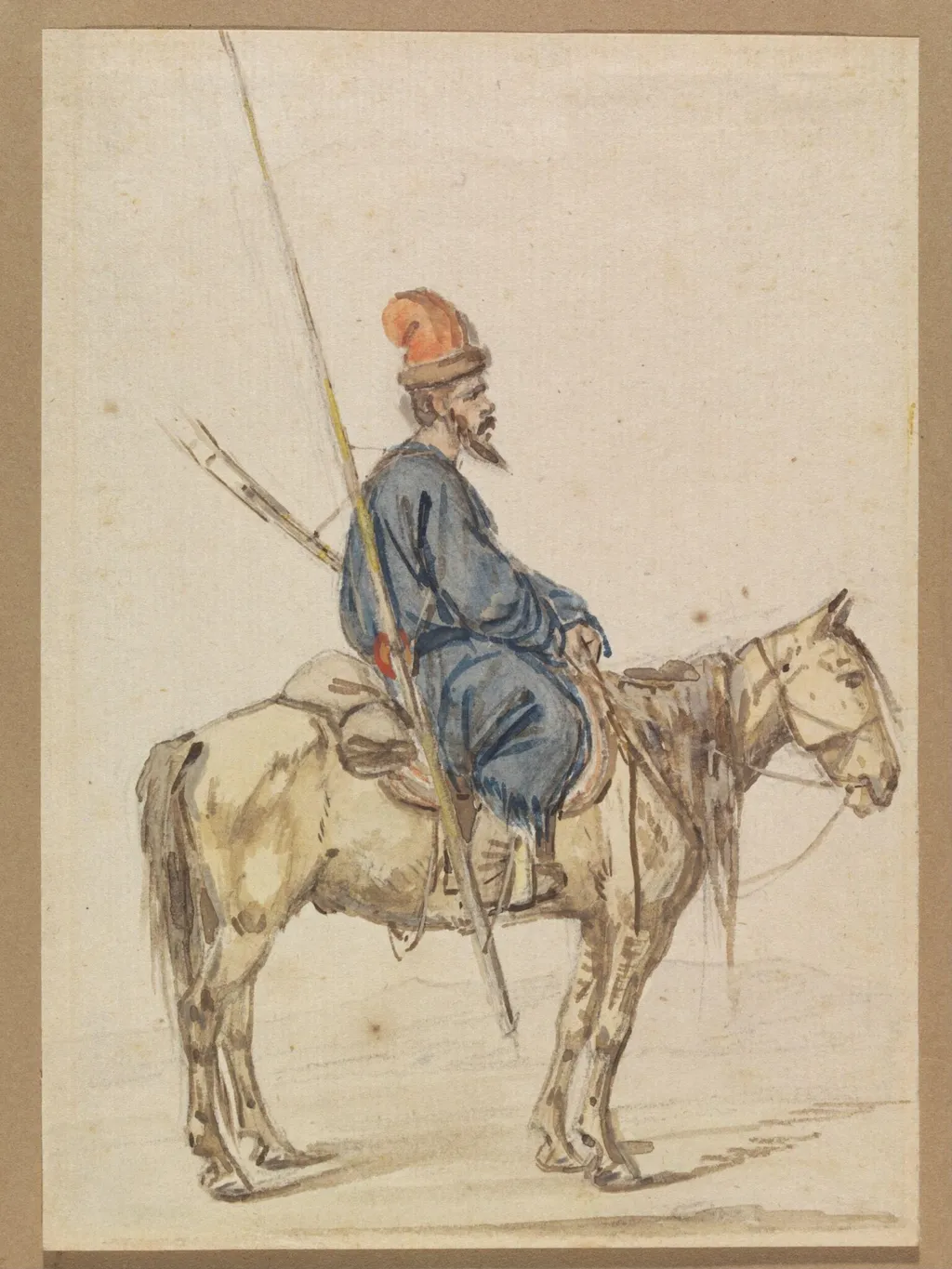
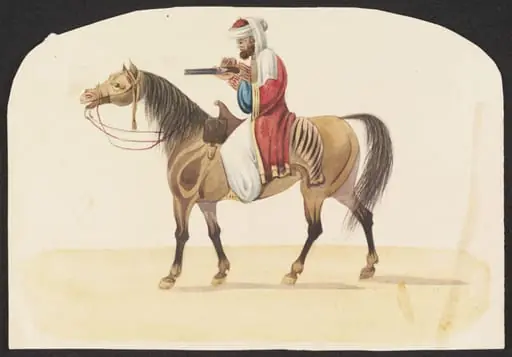
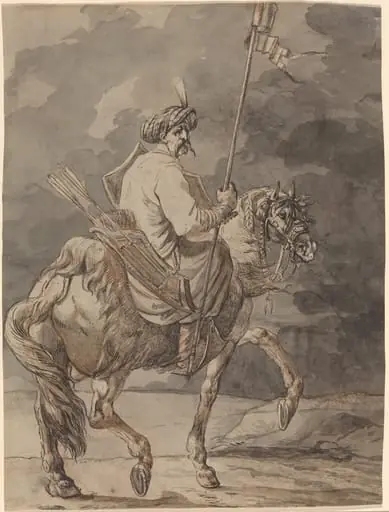
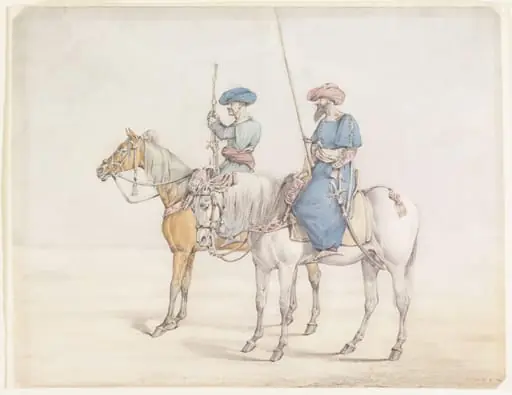
Armed horseman, possibly Russian is a watercolor work on paper by the Romanticist artist Pieter von Hess. It dates from 1839 and is held in the collection of the Victoria and Albert Museum. This watercolour depicts a mounted figure, likely Russian, rendered in loose, expressive brushwork.
About this work
Overview
Its modest scale and spontaneous technique suggest it was made as a preparatory sketch or personal exercise rather than a finished commission.
This watercolour depicts a mounted figure, likely Russian, rendered in loose, expressive brushwork. Attributed to Pieter von Hess and dated 1839, the piece is a small, unadorned study focused on form and colour rather than narrative detail. The background remains blank, emphasizing the solitary rider. Its modest scale and spontaneous technique suggest it was made as a preparatory sketch or personal exercise rather than a finished commission.
Subject & Meaning
The figure is an armed horseman, identifiable by his attire: a dark blue coat, a red sash, and a vivid red hat. These elements align with early 19th-century Russian military dress, possibly indicating a cavalry officer. The absence of context or setting removes any specific historical reference, leaving the subject as a generalized representation of military authority rather than a portrait of an individual or event.
Technique & Style
Executed in watercolour, the work employs rapid, fluid strokes with minimal layering. The palette is restrained, dominated by muted earth tones, save for the striking red of the hat and sash, which draw immediate attention. The horse and rider are suggested rather than meticulously defined, with outlines left deliberately rough. This approach reflects a sketchbook sensibility, prioritizing immediacy over finish.
History & Provenance
The watercolour entered the collection in November 1964, acquired from Gerry Hulme for seven pounds. Its earlier history prior to this purchase is undocumented. The attribution to Pieter von Hess, a German painter known for military subjects, is based on stylistic comparison rather than definitive documentation. Its journey from creation in 1839 to acquisition remains largely unknown.
Context
Pieter von Hess traveled extensively in Eastern Europe during the 1830s, producing sketches of military life. This work likely stems from that period of observation, reflecting his interest in regional uniforms and equestrian culture. Though small and unassuming, it aligns with a broader 19th-century European tradition of field studies made by artists documenting soldiers and cavalry units during peacetime.
Legacy
The watercolour survives as a quiet example of 19th-century observational drawing, valued for its directness rather than its fame. It contributes to understanding how artists like von Hess recorded visual information outside formal commissions. Its preservation in a public collection ensures its continued availability for study, offering insight into the informal practices behind larger historical works.
Artist & collection
Artist
Pieter von Hess kept a crumpled sketchbook in his coat and filled it with charging horses before the ink could dry.

![A Shaykh with his Son[?] on Mules, with their Sais [groom], by S. Bossi](https://artifactworldgallery.com/img/s-bossi--a-shaykh-with-his-son-on-mules-with-their-sais-groom--240d85ba529e2bf3-w320.webp)