Artwork
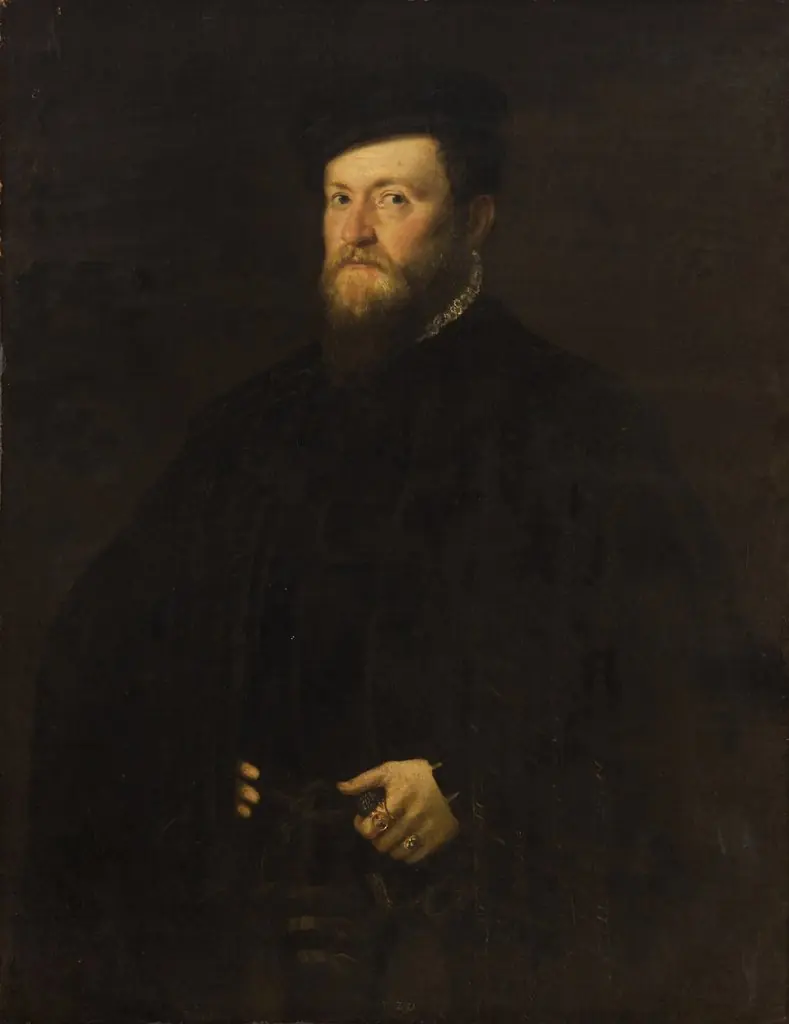
Bildnis des Wilhelm der Ältere, Reichserbtruchsess, Freiherr zu Waldburg, Herr zu Scheer und Trauchburg (1469-1557)
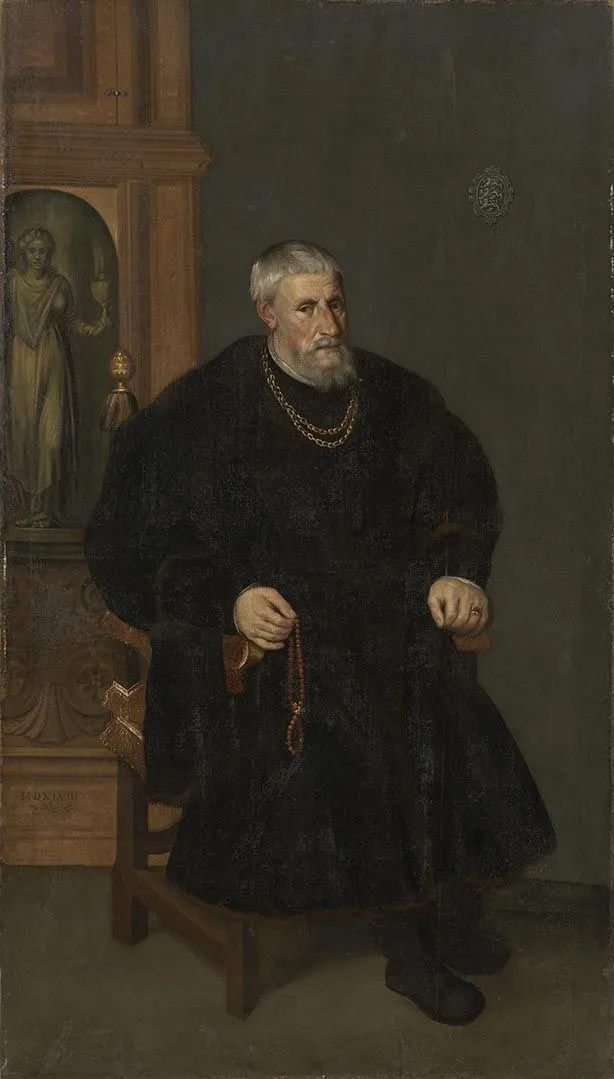
Bildnis des Wilhelm der Ältere, Reichserbtruchsess, Freiherr zu Waldburg, Herr zu Scheer und Trauchburg (1469-1557) is an unspecified painting by the Mannerist artist Lambert Sustris. It dates from 1548 and is held in the collection of the Bavarian State Painting Collections. The canvas presents Wilhelm von Waldburg, an elderly German noble and imperial official, seated in a plain wooden chair.
About this work
Overview
The canvas presents Wilhelm von Waldburg, an elderly German noble and imperial official, seated in a plain wooden chair. He wears a dark robe, a white beard, and a gold chain, while holding a rosary in his right hand. A modest shelf behind him bears a saint’s statue and a golden object, all set against a subdued, shadowed wall.
Subject & Meaning
Wilhelm von Waldburg (1469‑1557) held the titles Reichserbtruchsess and Freiherr zu Waldburg, indicating his high rank within the Holy Roman Empire. The inclusion of a rosary and the saint’s figure underscores his piety and status, while the gold chain signals official authority. The portrait’s solemn pose reflects the Renaissance ideal of dignified representation for elite patrons.
Technique & Style
Executed in 1548 by Lambert Sustris, the work blends Venetian colorism with Mannerist elongation.
Executed in 1548 by Lambert Sustris, the work blends Venetian colorism with Mannerist elongation. Sustris, trained in Titian’s workshop, employs a stark chiaroscuro that illuminates the sitter’s face against a dark backdrop, heightening the three‑dimensional effect. Subtle modeling of the beard and fabric demonstrates a synthesis of naturalistic detail and stylized elegance characteristic of mid‑16th‑century court portraiture.
History & Provenance
Created during Sustris’s Venetian period, the portrait entered the collection of the Alte Pinakothek in Munich, where it remains on display. Documentation traces its acquisition to the museum’s 19th‑century efforts to assemble works by Northern artists active in Italy, highlighting the cross‑regional artistic exchanges of the era.
Context
The painting emerges at a time when German aristocracy sought to affirm their status through Italian artistic conventions. Sustris, a Dutch painter known in Italy as Alberto de Olanda, served as a conduit for Venetian techniques, adapting them to the expectations of Northern patrons. The work thus exemplifies the cultural dialogue between the Holy Roman Empire and the Italian Renaissance courts.
Artist & collection
Artist
Lambert Sustris (c. 1515/1520 – c. 1584) was a Dutch painter active mainly in Venice. The works Sustris completed in Italy exhibit either a Mannerist style or qualities that may be deemed proto-Baroque. He is also…


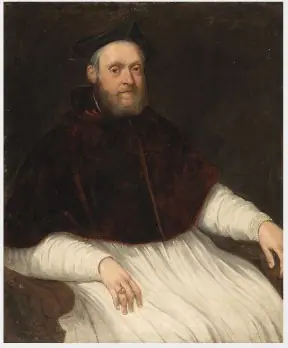 A Cardinal
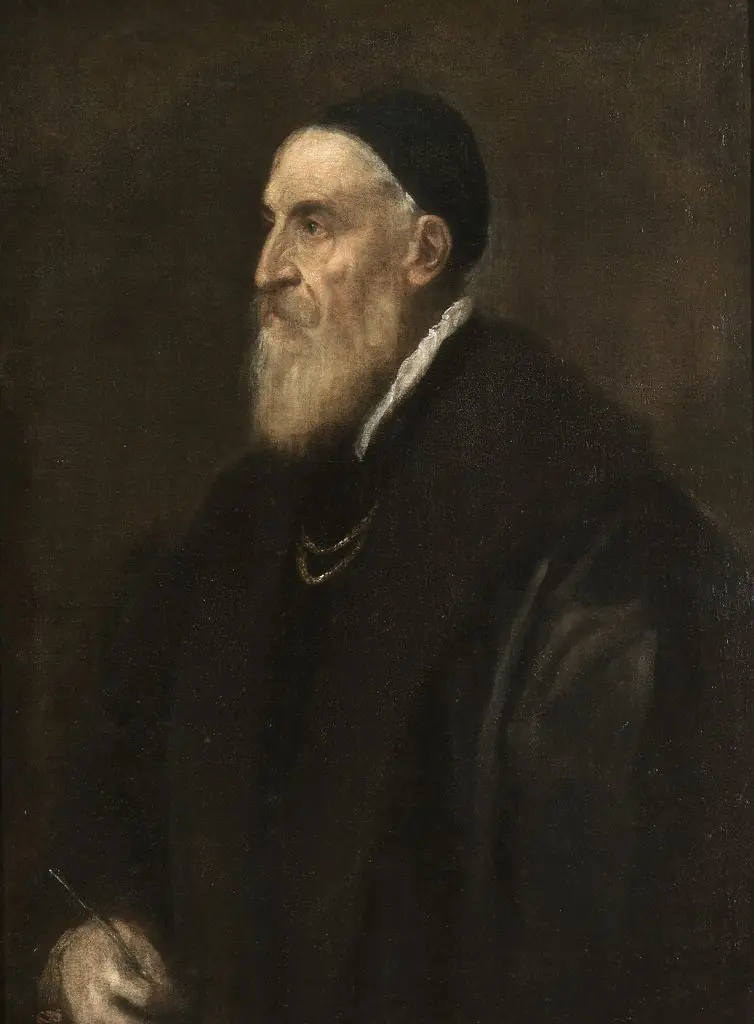 Self-Portrait
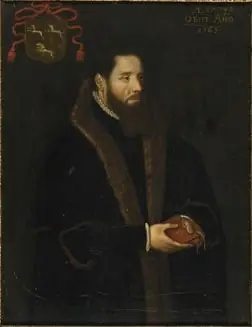 Frans de Witt (1516-1565)
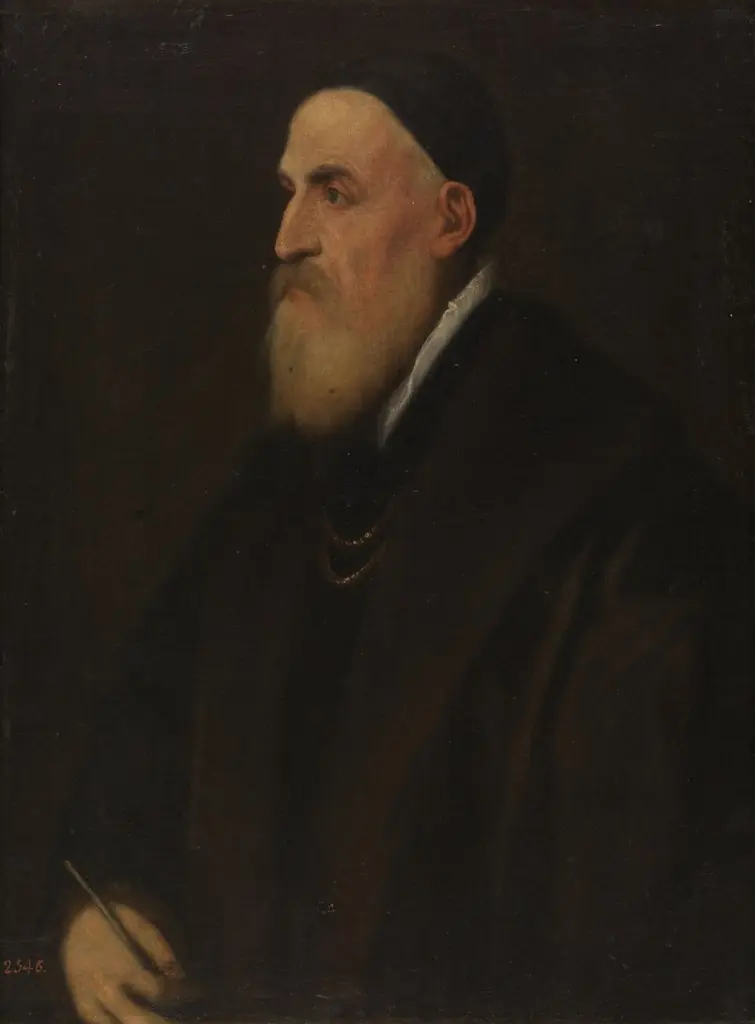 Self-portrait of Titian
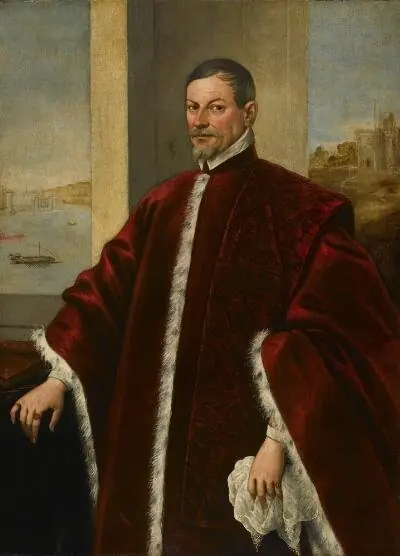 Venetian Nobleman
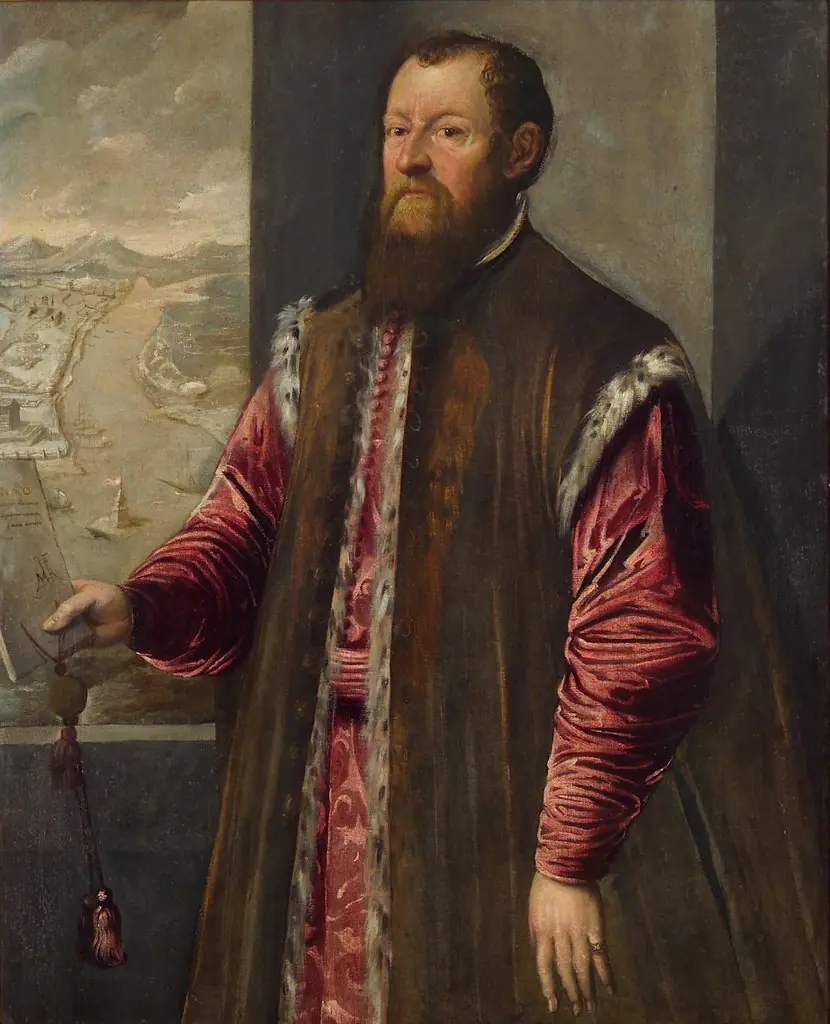 Portrait of Marcantonio Barbaro (1518-1595) as ambassador to Constantinople
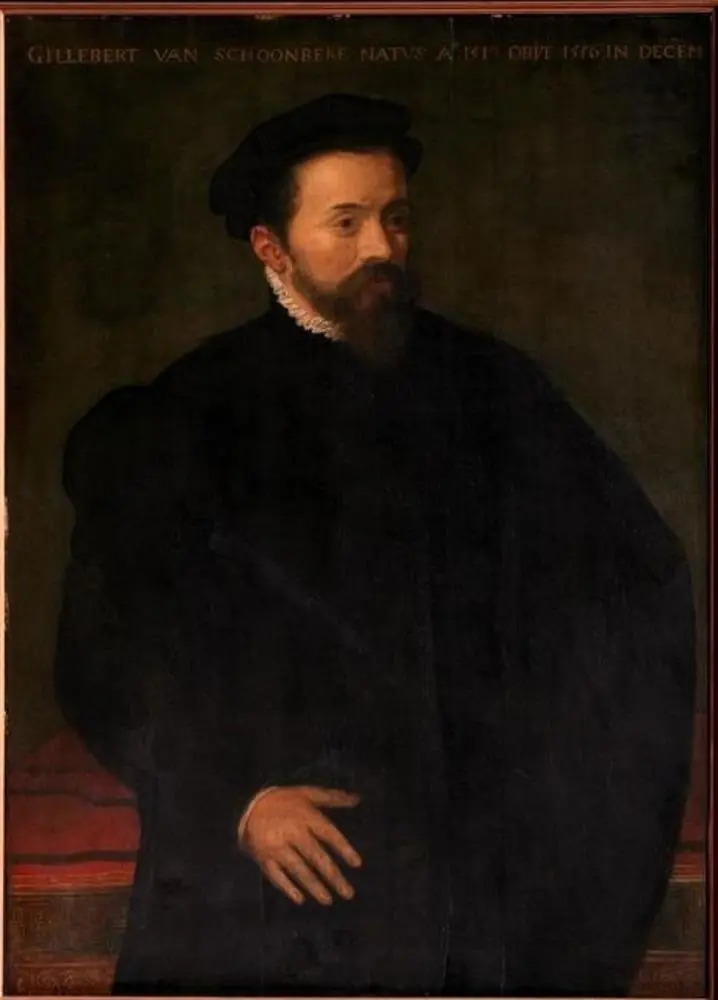 Portrait of Gilbert van Schoonbeke (1519-1556)
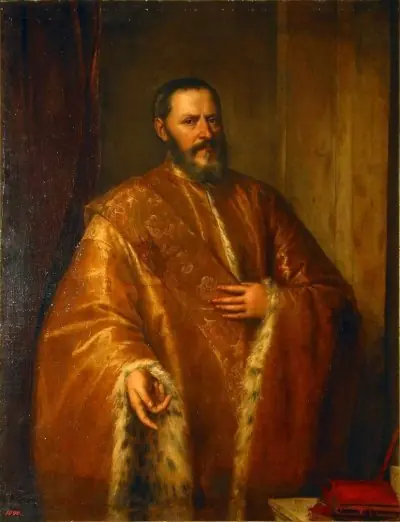 Portrait of a Venetian Senator of the Cappello family
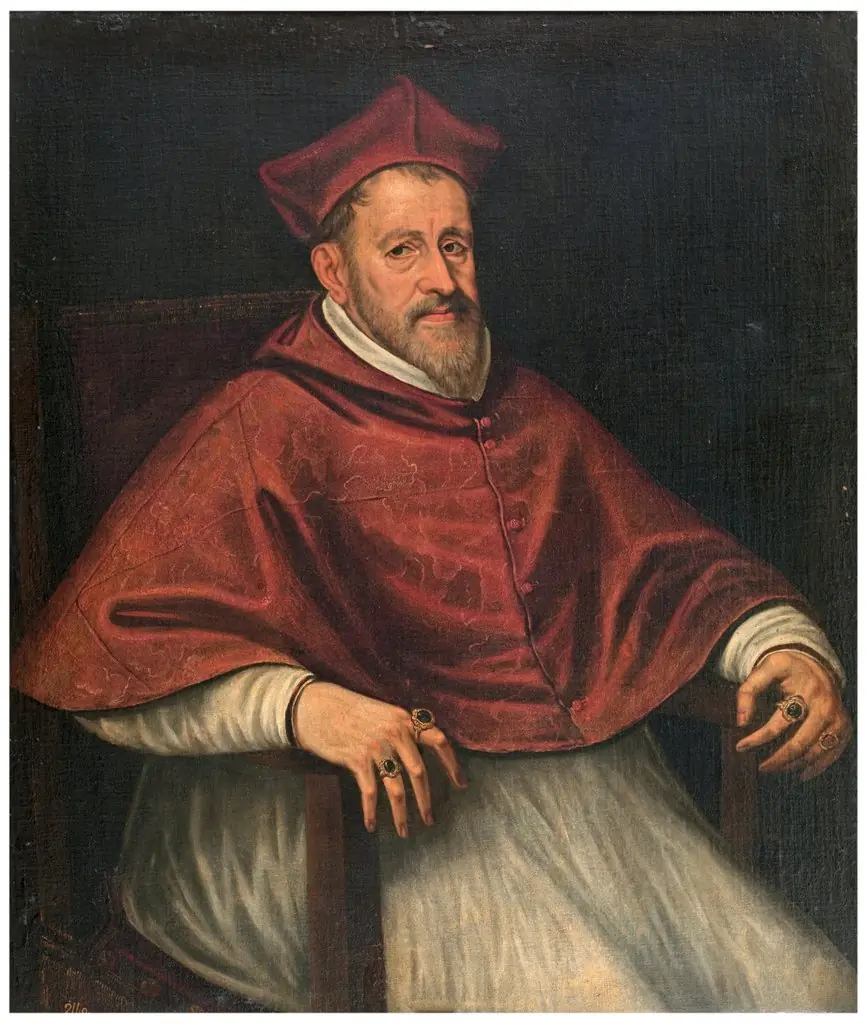 Cardinal Gaspar Quiroga
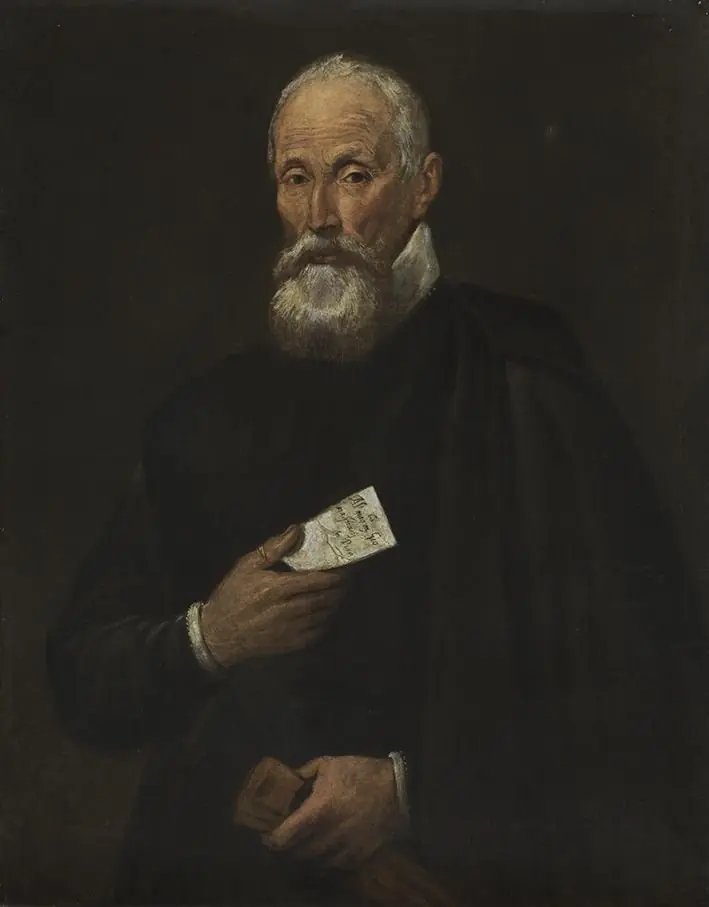 Bildnis des Pisaners Giovanni Magnani