Artwork
A Solider of th 79th Highlanders Cobham Camp
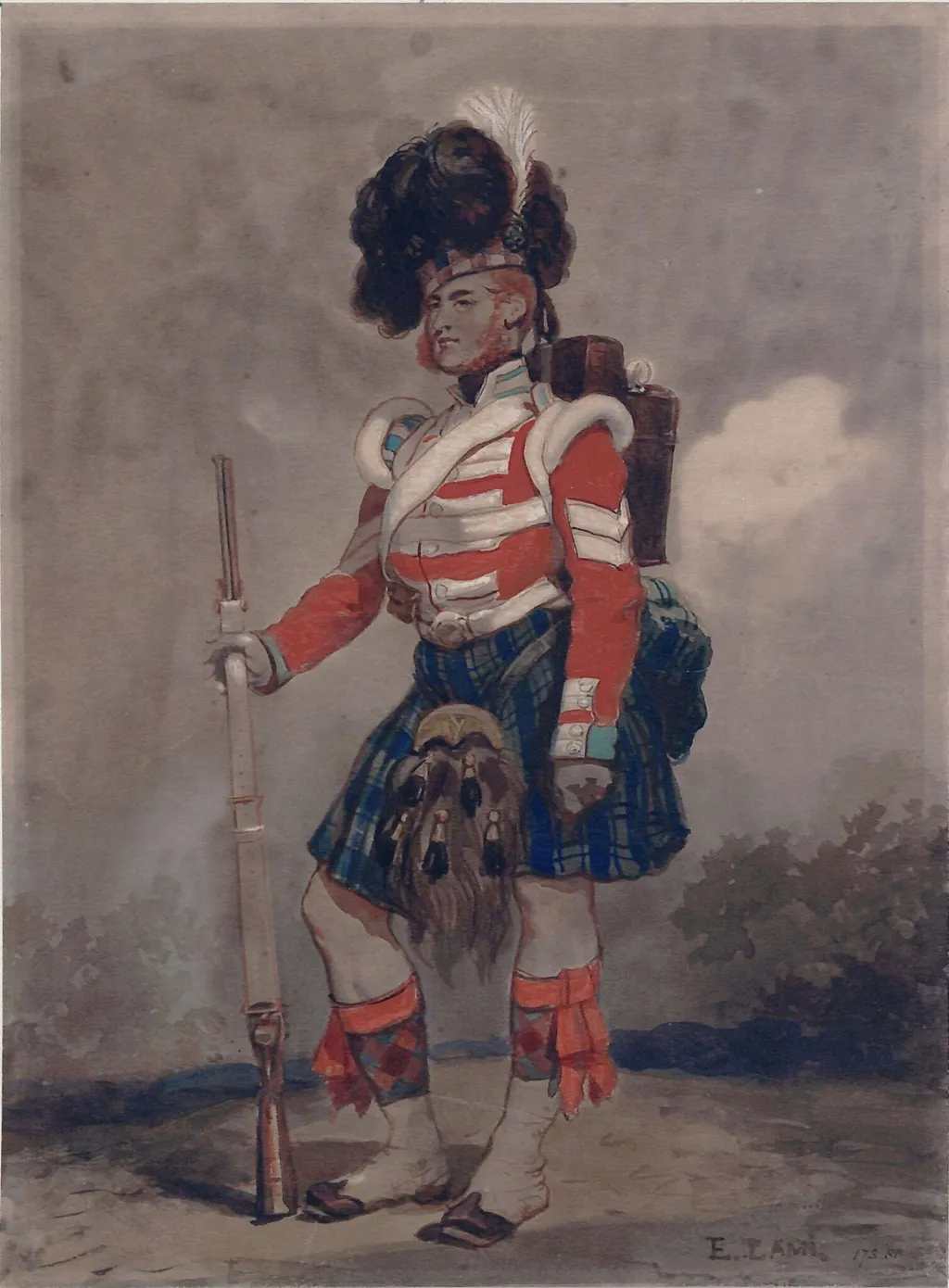
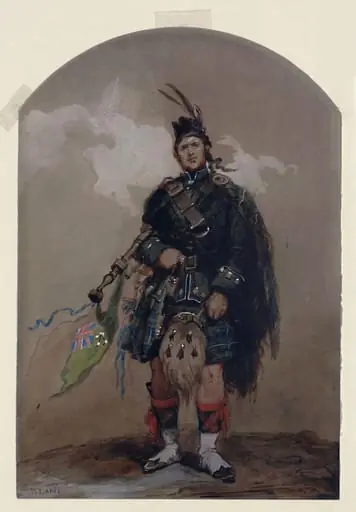
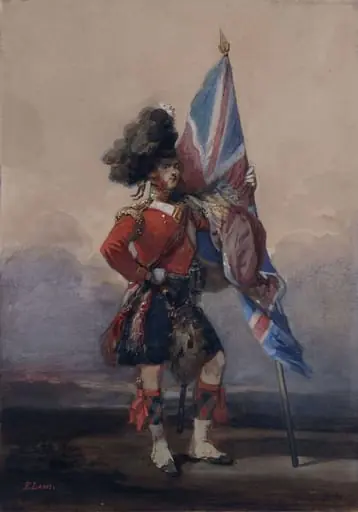
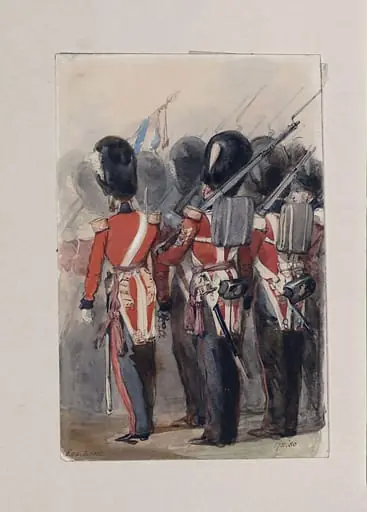
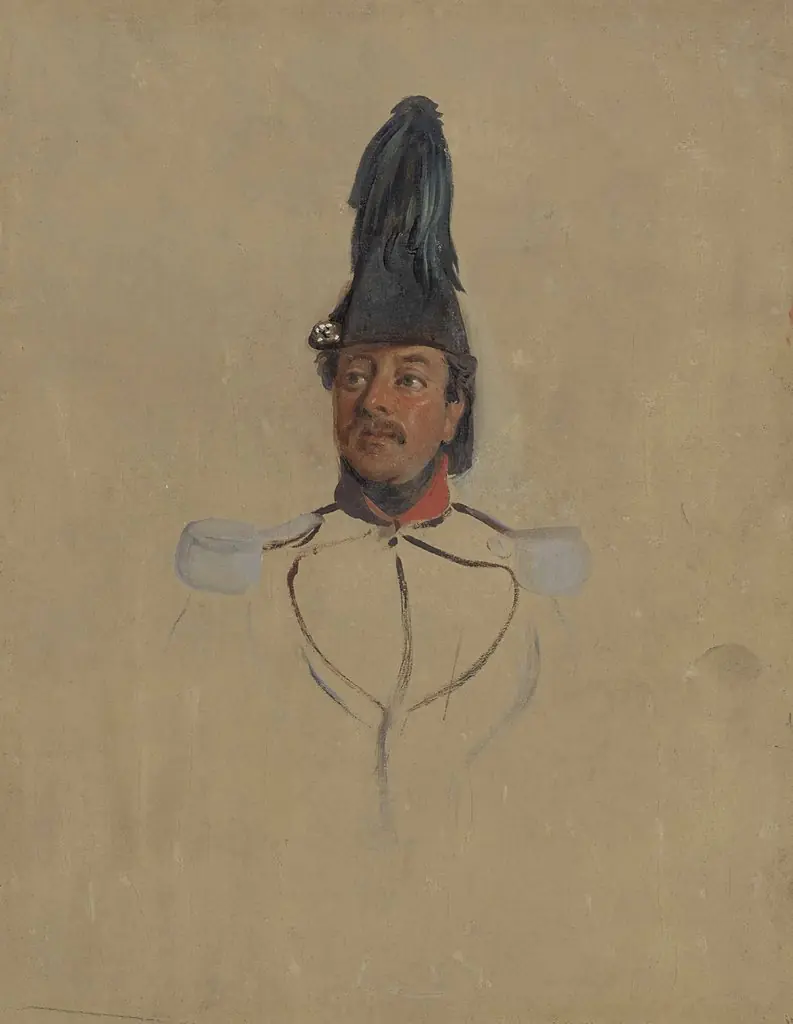
A Solider of th 79th Highlanders Cobham Camp is a watercolor work on paper by the Impressionist artist Lami. It dates from 1854 and is held in the collection of the Victoria and Albert Museum. This watercolor, dated around 1854, depicts a soldier from the 79th Highlanders stationed at Cobham Camp.
About this work
Overview
The medium’s delicacy suits the intimate scale and restrained composition, reflecting a documentary approach common in mid-19th-century military portraiture.
This watercolor, dated around 1854, depicts a soldier from the 79th Highlanders stationed at Cobham Camp. Executed by the artist Lami, the work is part of the Victoria and Albert Museum’s collection. It captures a single figure in a quiet, observational style, emphasizing military dress over narrative action. The medium’s delicacy suits the intimate scale and restrained composition, reflecting a documentary approach common in mid-19th-century military portraiture.
Subject & Meaning
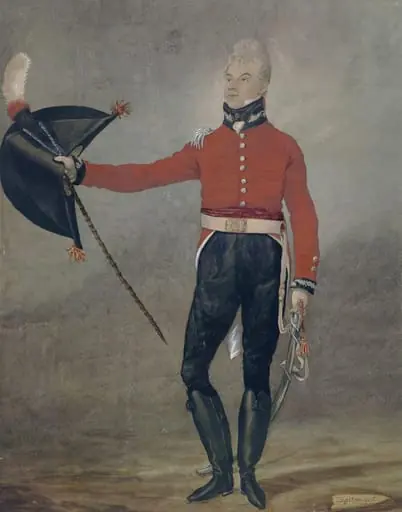
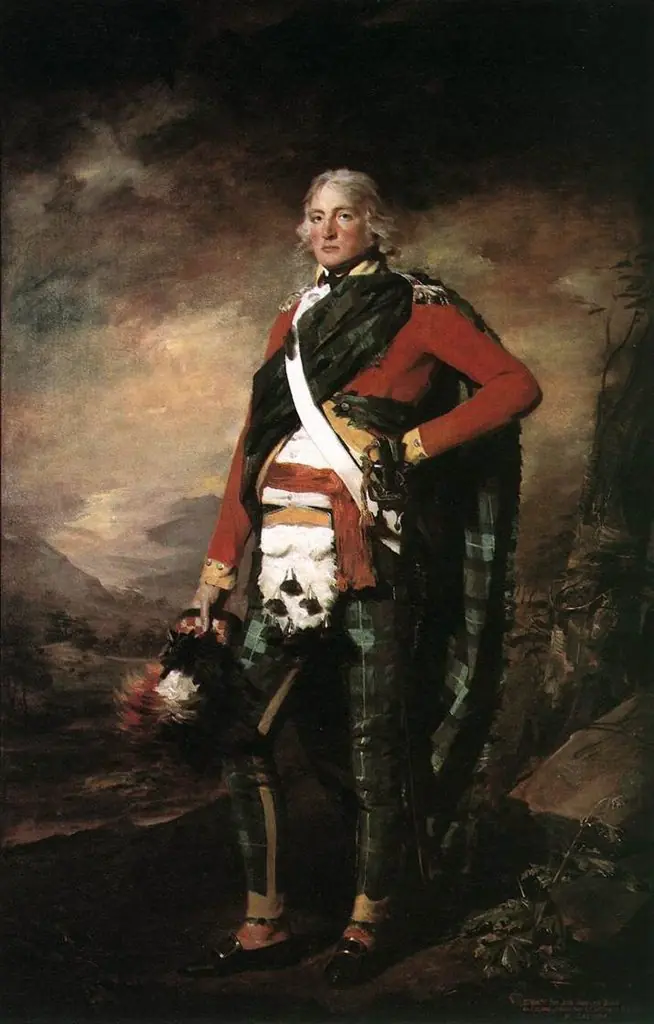
The subject is a private soldier of the 79th Regiment, identified by his distinctive uniform. His posture is still, suggesting a moment of pause between duties. The uniform elements—fur cap, red coat, blue plaid kilt, and accoutrements—serve as markers of regimental identity rather than individual character. The image functions as a visual record of British Army attire during the Crimean War era, prioritizing accuracy over emotional expression.
Technique & Style
Lami employed transparent watercolor washes to render the soldier’s attire with subtle gradations of color. Fine brushwork defines the texture of wool, leather, and fur, while the background remains deliberately muted, with loose strokes suggesting foliage and sky. The palette, though originally vivid, now appears softened by time, lending the scene a quiet, atmospheric quality. The composition centers the figure against minimal surroundings, directing attention to uniform detail.
History & Provenance
The painting was created during the 79th Highlanders’ time at Cobham Camp in Surrey, likely as part of a series documenting British regiments. It entered the Victoria and Albert Museum’s collection through its historical focus on decorative arts and military dress. No record of prior ownership or commission is widely documented, suggesting it may have been produced for institutional or personal archival purposes rather than public display.
Context
Created in 1854, the work coincides with the outbreak of the Crimean War, a period when public interest in British military units surged. Regimental portraits like this one served to reinforce national identity and pride. While not commissioned for official use, such images circulated among military circles and contributed to the visual culture of the British Army, documenting the evolving standardization of Highland dress in active service.
Legacy
The painting remains a reference for historians studying 19th-century British military uniforms and the role of watercolor in documentary art. Its preservation in the V&A underscores its value as a material witness to regimental tradition. Though not widely exhibited, it continues to inform academic and curatorial work on Victorian military life, offering a quiet but precise glimpse into the appearance of a common soldier during a pivotal era.
Own this work as a print
Artist & collection
Artist
This artist left a quiet record of 19th-century life in watercolor, mostly scenes of British soldiers and buildings.