Artwork
Temple of Antoninus and Faustina
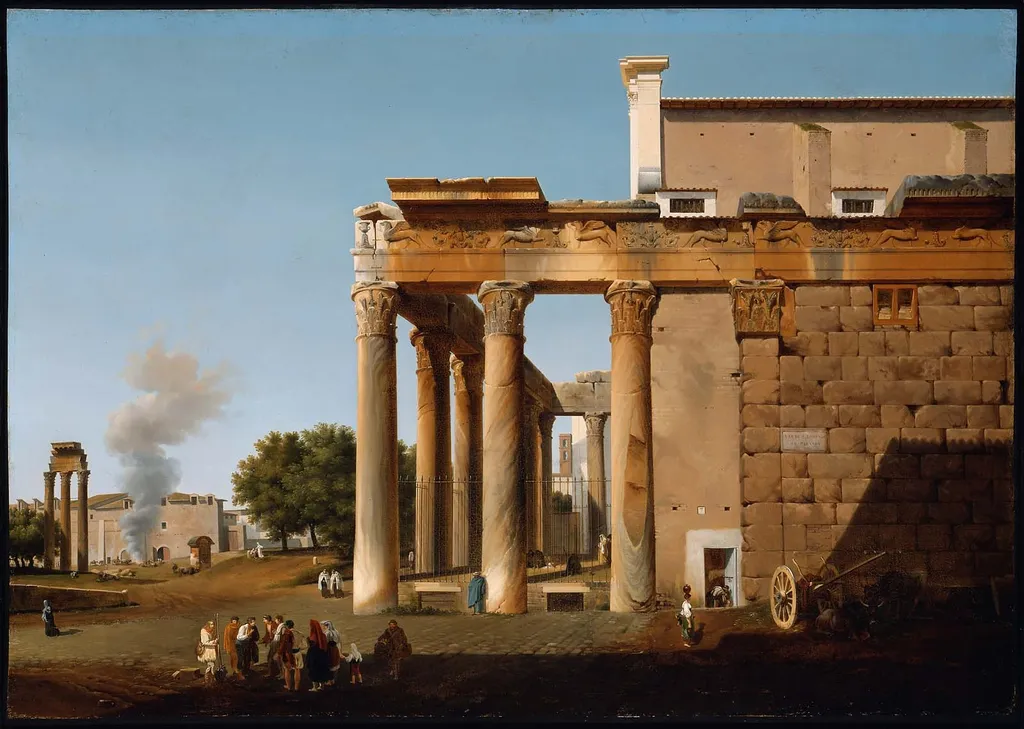
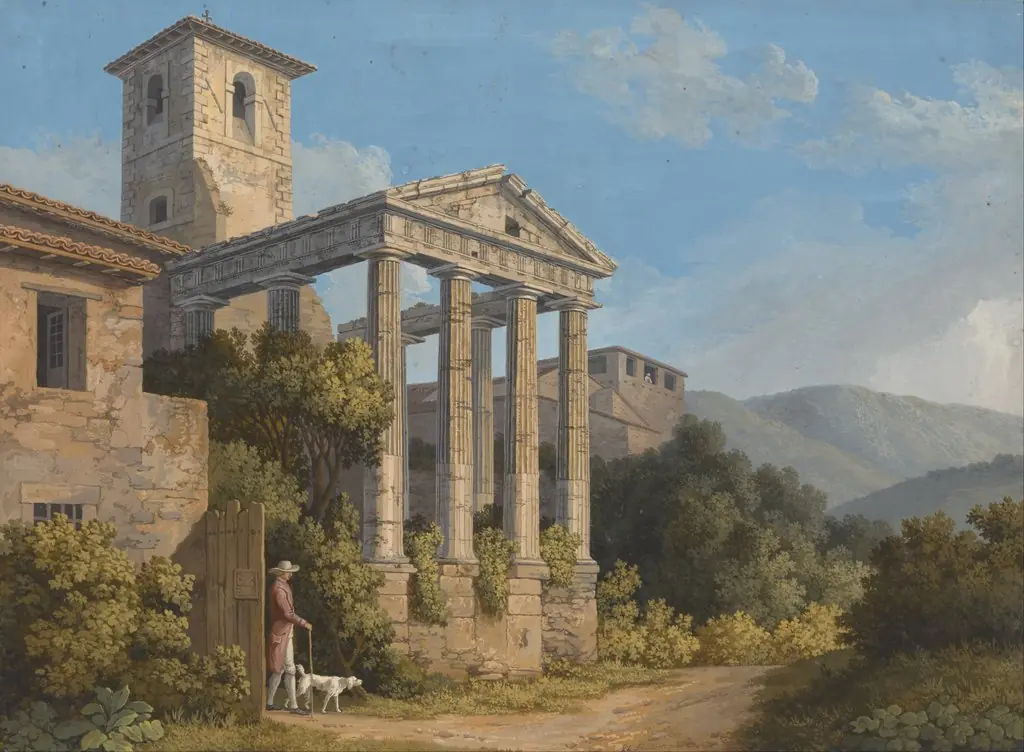
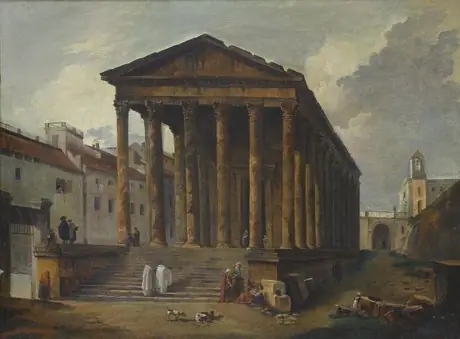
Temple of Antoninus and Faustina is an oil painting by Lancelot-Théodore Turpin de Crissé. It dates from 1808 and is held in the collection of the Museum of Fine Arts Boston.
About this work
Overview
Turpin de Crissé, known for his topographical landscapes, rendered the structure with precision, capturing its enduring presence amid the Italian countryside.
Painted in 1808 by French artist Lancelot-Théodore Turpin de Crissé, this oil on canvas depicts the ancient Temple of Antoninus and Faustina in Rome. Turpin de Crissé, known for his topographical landscapes, rendered the structure with precision, capturing its enduring presence amid the Italian countryside. The work is part of the Museum of Fine Arts, Boston’s collection, reflecting 19th-century European interest in classical antiquity.
Subject & Meaning
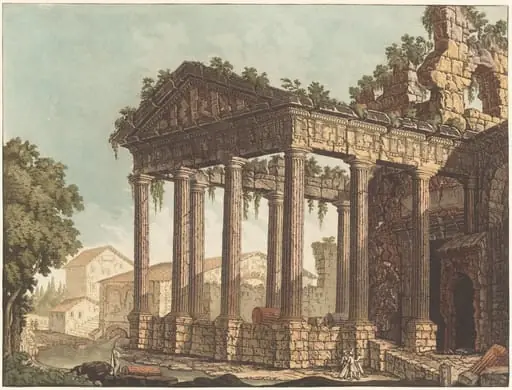
The painting portrays the Roman temple dedicated to Emperor Antoninus Pius and his wife Faustina, now partially incorporated into a medieval church. Figures gathered before it suggest daily life continuing around the ruin, while a parked cart implies practical use of the site. The scene avoids romanticized grandeur, instead presenting the temple as a lived-in relic, embedded in the rhythms of its time.
Technique & Style
Turpin de Crissé employed fine brushwork to render architectural details—carvings on columns, weathered stonework, and the temple’s pediment. The sky is rendered in soft blues, contrasting with the warm tones of the stone. Trees in the distance frame the composition without dominating it. His approach favors observational clarity over dramatic lighting, aligning with topographical traditions of the period.
History & Provenance
Created during Turpin de Crissé’s active years in Paris, the painting emerged from a broader European fascination with Roman ruins. It entered the Museum of Fine Arts, Boston’s collection in the 19th or early 20th century, likely through acquisition by a collector with ties to Grand Tour culture. Its preservation reflects institutional interest in documenting historical architecture through art.
Context
In the early 1800s, French artists increasingly turned to Italy for subject matter, drawn by its layered history and classical remains. Turpin de Crissé’s work aligns with a genre that documented ruins not as lost glory but as functional remnants. This painting reflects a shift from idealized neoclassicism toward more grounded, documentary-style depictions of ancient sites in their contemporary settings.
Legacy
Though not widely exhibited today, the painting contributes to a body of work that records Rome’s architectural evolution through the lens of 19th-century observers. Turpin de Crissé’s focus on accuracy over sentimentality offers a valuable record of how ancient monuments were perceived and integrated into urban life during the early modern era.
Artist & collection
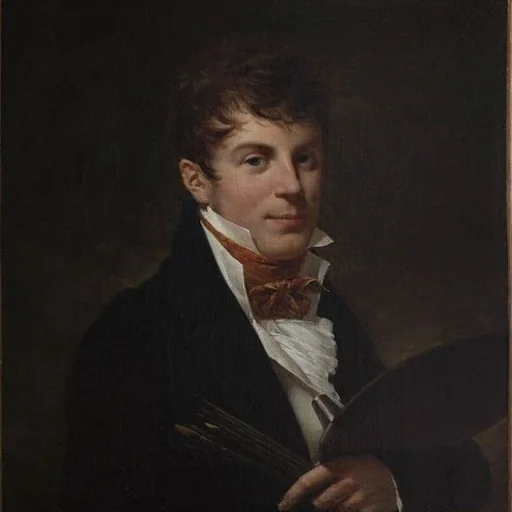
Artist
Lancelot-Théodore Turpin de Crissé
Lancelot-Théodore, Comte de Turpin de Crissé (9 July 1782 – 15 May 1859) was a French writer and painter from Paris. His most familiar works are landscapes with structures, usually set in Italy.