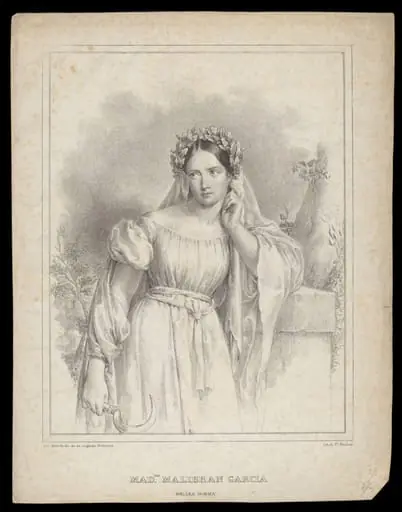
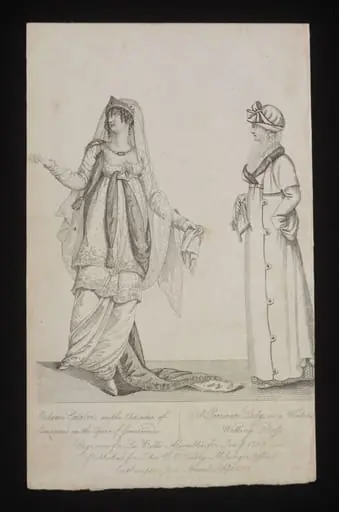
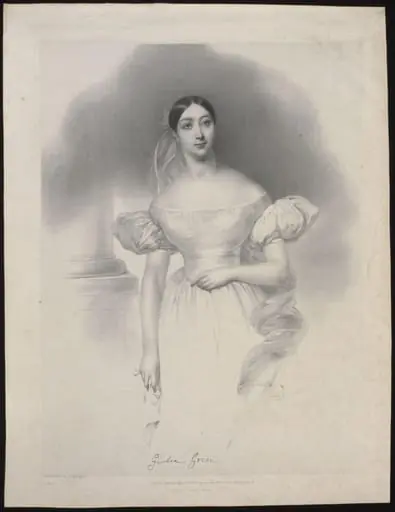
Artwork
H Beard Print Collection
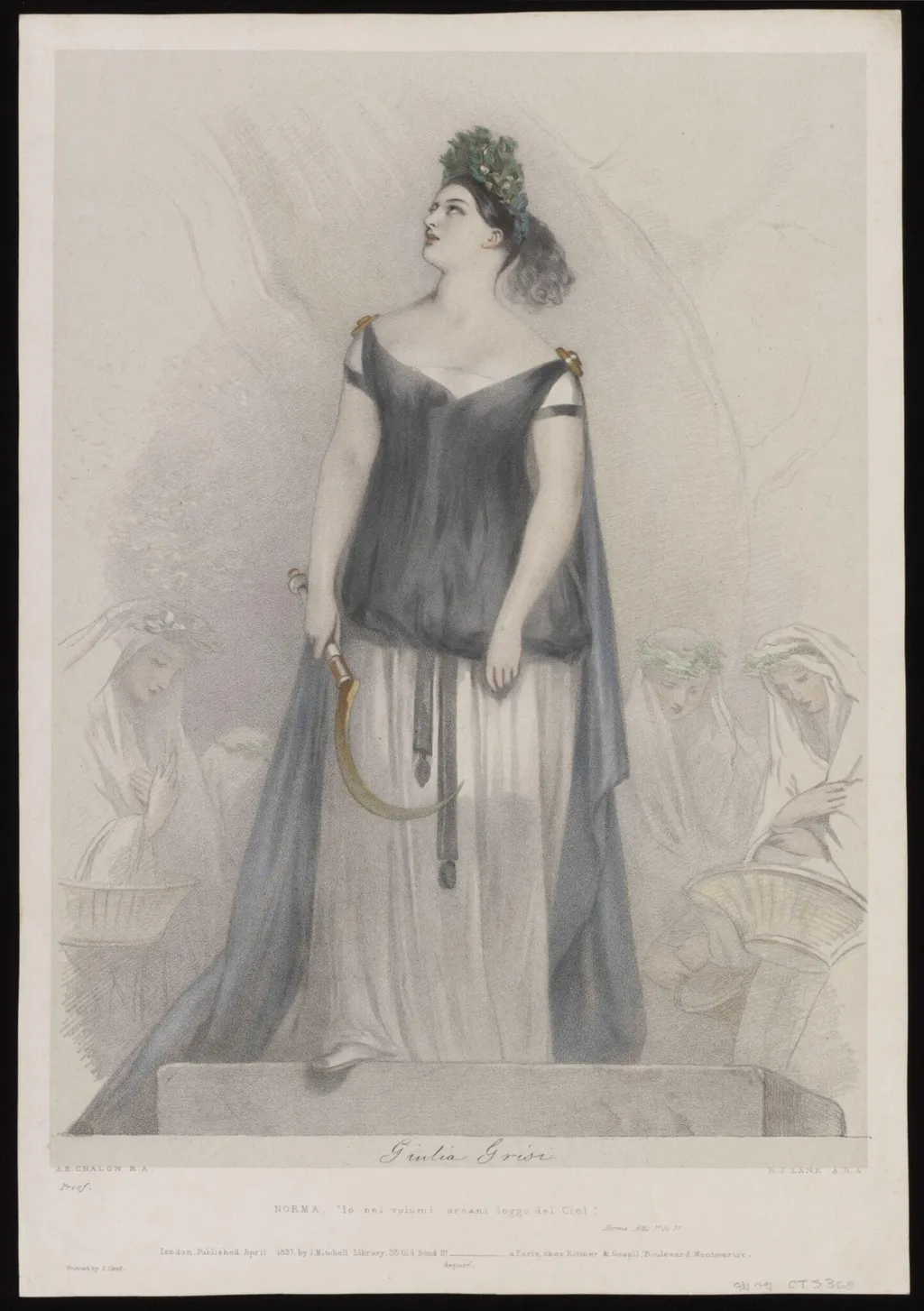
H Beard Print Collection is a print by the Romanticist artist Richard James A.R.A. Lane. It dates from 1837 and is held in the collection of the Victoria and Albert Museum.
About this work
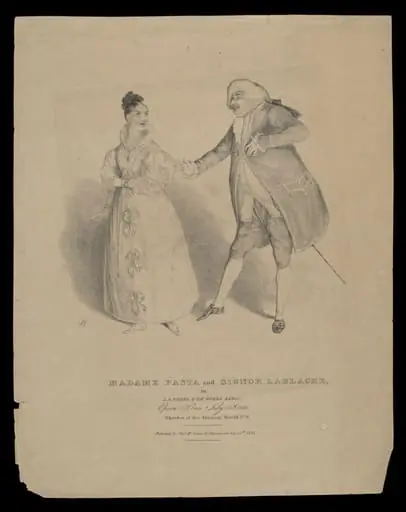
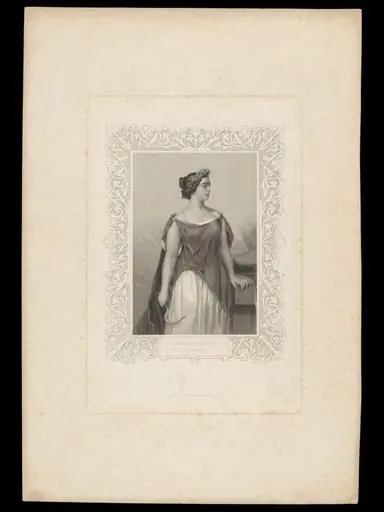
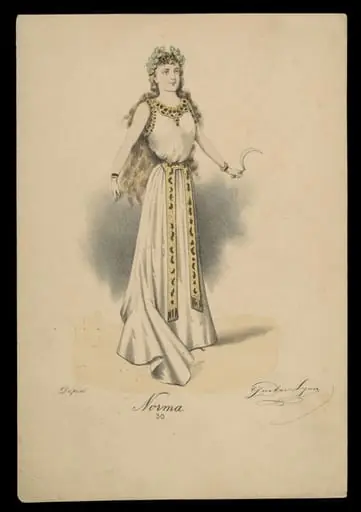
This print shows the opera singer Giulia Grisi dressed as Norma. It’s an engraving from 1837 based on the 1831 premiere of Bellini’s opera at La Scala in Milan.
The print was made by Richard Lane, an English artist known for prints of stage performers and historical subjects.
If you like this kind of Romantic-era theater art, look up the Victoria and Albert Museum.
Overview
This print depicts Giulia Grisi in the role of Norma, the high priestess from Bellini’s opera, as she appeared in the premiere at La Scala in 1831. Created in 1837 by English engraver Richard Lane, it is a reproductive print derived from a live performance, intended to circulate the image of the singer to a wider audience beyond the theater.
Subject & Meaning
Grisi portrays Norma in the opera’s opening scene, capturing the character’s solemn authority and emotional gravity. The image reflects the Romantic ideal of the tragic heroine—noble, introspective, and spiritually charged. As one of the first singers to define the role, her portrayal became a cultural touchstone, and this print helped solidify her public image as the embodiment of the character.
Technique & Style
Executed in line engraving, the print employs fine, controlled strokes to render texture in fabric, hair, and drapery. The composition is formal and centered, emphasizing Grisi’s poised stance and expressive gaze. Lane’s style prioritizes clarity and detail over dramatic lighting, aligning with the period’s preference for documentary accuracy in theatrical portraiture.
History & Provenance
Produced six years after the opera’s debut, the print was part of a wave of commercial engravings that documented celebrated stage performances.
Produced six years after the opera’s debut, the print was part of a wave of commercial engravings that documented celebrated stage performances. Richard Lane, known for his portraits of actors and singers, likely based his work on sketches or eyewitness accounts from La Scala. The print entered the H. Beard Collection, a 19th-century archive of theatrical imagery now held by the Victoria and Albert Museum.
Context
In the 1830s, opera was a dominant cultural force in Europe, and public fascination with performers rivaled that of political figures. Engravings like this served as both souvenirs and promotional tools, bridging elite theater and the growing middle-class audience. The popularity of Norma, combined with Grisi’s rising fame, made her image a desirable commodity in print form.
Legacy
This print preserves a key moment in the reception of Bellini’s opera and the rise of the star singer in 19th-century Europe. As one of the earliest visual records of Grisi in the role, it contributes to the historical documentation of operatic performance practice. It remains a reference point for scholars studying the intersection of music, theater, and visual culture in the Romantic era.
Artist & collection
Artist
Printmaker active around the 1830s and 1840s, Richard James A.R.A. Lane turned out small, detailed prints that were sold in batches—one dated 25 July 1831 shows a London street scene, another from 15 February 1839…